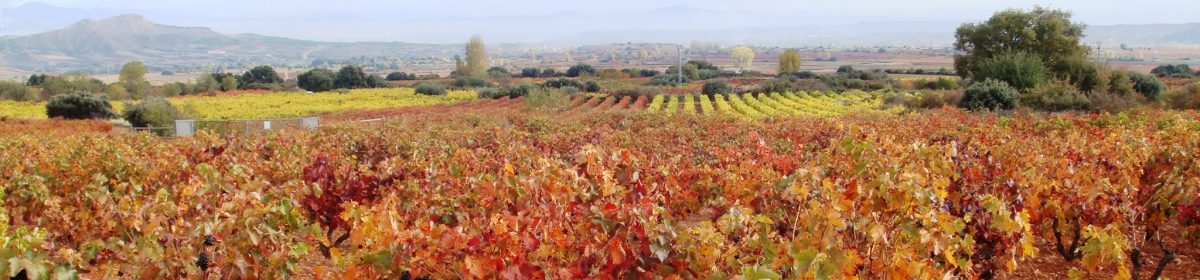
Archived article re Bodegas Tierra Hermosa

HOW A CITY PR MANAGING DIRECTOR SWAPPED THE FRENETIC FAST-LANE OF UK BUISNESS FOR GRANADA’S VERTIGINOUS VINEYARDS – AND SURVIVED, TO DRINK THE STORY!

BODEGAS TIERRA HERMOSA

SPANISH WINE WITH A BRITISH TWIST


HOW A CITY PR MANAGING DIRECTOR SWAPPED THE  FRENETIC FAST-LANE OF UK BUISNESS FOR GRANADA’S VERTIGINOUS VINEYARDS –  AND SURVIVED, TO DRINK THE STORY!


Harry Hunt won’t be the only business exec who has looked out of the rain spattered office window on a grey City of London and said, “Enough is enough!”. Neither is Harry unique in deciding to seek out a more rural, bucolic idyll, though not in convenient France, but over the Pyrenees in Spain.


But I wonder how many other over-stressed and under-satisfied colleagues have gone quite as far as to uproot their young family and relocate to vineyards sitting almost atop the majestic mountains of the Sierra Nevada? Well Harry did just that, and wife Katie and five years old son and 2 years old daughter couldn’t have been happier!


Of course it was a mutual decision that wasn’t taken lightly, nor without a great deal of planning. And yet it started surreptitiously and somewhat mystically during Harry and Katie’s first visit to Spain’s sun-baked Andalucia in the early 90s which was to sow the seeds of discontent with their working lives at the time, only to see further seeds flourish as a change in lifestyle suggested itself to them.


They had both loved wine which is of course an integral part of the life of a PR orientated existence. Harry had spent sixteen years fine wining and dining blue-chip clients at various functions around the world, though with more of an eye on the clock than the contents of the glass. At times his thoughts would take him back to Andalucia and the many and varied styles of wines he and Katie had enjoyed during their first and subsequent visits.


The opportunity to enrol in The University of Brighton’s Plumpton College, Viticulture and Oenology degree course presented itself and Harry took the first step towards realising the dream. However such a degree isn’t a given! A considerable amount of hard academic study with a biological and chemical emphasis, moreover undertaken several years after Harry had thought his exam days were over (and the more taxing for it), along with plenty of practise in the University’s vineyards were necessary before he received his coveted scroll.


But that wasn’t all – students and graduates of such courses are also expected to gain hands-on experience in the vineyards of proper working wineries, tending the vines, bringing in the harvest, making the wines, ageing and even bottling. All the better if such experience is realised in different countries, including in both hemispheres, where climates differ dramatically as well as wine-making techniques and traditions.


Harry’s CV boasts working stints at emerging UK vineyards as well as established Chateaux in Bordeaux and the Rhône Valley which, along with his technical and academic know-how, gave him the confidence to take the plunge. The dream of Bodegas Tierra Hermosa became a little closer to reality!


During their regular subsequent visits to Andalucia Harry had noticed the encouraging diversity of micro-climates and varied topography of the area with which they were slowly falling in love. The importance of altitude is crucial with wine making in hot climates, where continual heat, even after the scorching sun has gone down, can over-ripen the grapes leading ultimately to tired, flabby, high alcohol wines.


Grapes growing at altitude (some parts of Andalucia boast vineyards at between 1,200 and 1,500 metres above sea level!) enjoy the Spanish sunshine during the days of the growing season but also appreciate the dramatic drop in temperature over night – a fall which can be as great as 20ºC (hence the name one of Harry’s wines, Veinte Grados – 20º in Spanish). This diurnal fluctuation aids acidity, a crucial component in quality wines avoiding over-rich offerings, as well as assisting with the delightful colours, aromas and flavours of the finished product.


Of course in Andalucia, if one is looking for altitude one looks to the Sierra Nevada and in Harry’s case, specifically to the mountains above the emblematic, historical Spanish city of Granada! Here, with the assistance of his friend Alberto Villarraso Zafra (a rising talent in the world of Spanish fine wine making, who has one foot in the traditions of the past and the other in the forward thinking and modern techniques of the present, as well as the future), Harry discovered vineyards of 1,000+ meters above sea level with vines of approaching 100 years of age still steadily producing grapes of outstanding quality!


Bodegas Tierra Hermosa is a hands-on negociant style winery, fashioned after the classic French model. In collaboration with Alberto, Harry sources his grapes from plots of land belonging to other growers, using the wine-making facilities of these others to make his own wines. They are in total and direct control of the vines that are to be used for their wines – they decide when to spray, to prune, harvest et cetera, albeit including harnessing local knowledge with reference to advice from the growers, who let’s face it have had generations of experience in the area.


Then, once the must (grape juice) has fermented, a process also under the negociant’s control, they decide if it’s a young wine that is being sought or if ageing is required and if so which barrels are to be used, how long the ageing is to be and when to bottle. In short the wine of a negociant is entirely his, save for ownership of the actual vineyards.


Harry’s philosophy is to make approachable wines for the contemporary consumer. Fruit driven wines which enjoy that blend of tradition and modernity but which have an added depth of complexity. Wines true to the characteristics of the varieties used in the blends but which also speak of their terroir (that almost mystical French word which covers the micro-climate, the soils and even the tradition and history of the area in which the vines are grown), thus conveying a sense of place.


It’s also important to Harry that the resulting wines have been made with an input from other winemakers who have a proven track record with international sales.


“We also make our wines in partnership with regional oenologists, who, importantly, have international experience, so as we can be sure to add a contemporary twist to a wine that is still very much a product of its terroir,” he explained.


Whilst Tierra Hermosa is a passion, something of a vocation in fact, Harry’s previous business experience is also lending a guiding hand. It would be wholly incorrect to say they are in it for the money, but clearly it’s sales that will drive the business onwards and allow their expansion and development plans to flourish.


And plans there certainly are, as Harry intimated:


“Our wines from Alhama de Granada are the first of what we intend to be a whole range of wines from right across Andalucía, all under our Tierra Hermosa brand. Indeed, we are soon to add a white wine to the range and more, exciting wines from other Andalucían regions are in the pipeline.


In the longer term, our plan is to develop and expand the Tierra Hermosa brand to incorporate a ‘vini-tourism’ side to the business, when we will also look to develop our own winery facilities. These should allow visitors to gain hands-on experience of the wine-making process, from vine to bottle, as well as offering wine tutoring/classes, vinous tours of Andalucía and much more besides.”


After a long metaphorical, and actual, journey, Harry’s first wines are now on the market with the next year’s batch undergoing bottle and/or oak ageing ready for a later release. Things are looking good for Tierra Hermosa, with this commentator’s approval for sure, and with the promise of added depth and nuances that will come with time in bottle.


Already there are distributors in the UK handling Harry’s wines and the Michelin Starred restaurant, Casamia in Bristol features Tierre Hermosa wines on the Fine Wine List!


Neblerío Tempranillo 2010, made under the auspices of the Denominación de Origen Protegida Vino de Calidad de Granada, is priced at 8·35€. Neblerío is the local name given to the early morning mists which provide the vines with welcome moisture and some respite from the glaring sun before they are eventually chased away by the rising sun and the forceful winds common to the vineyards here, lying as the do at an average altitude of 1,200 metres above sea level!


The wine has the unmistakeable soft red fruit combined with darker, brambly berries that are characteristic of wines made from 100% Tempranillo. As we’ve said the vineyards used for this wine are at a very high altitude where night time temperatures are dramatically lower that those of the daytime, when the sun beats down mercilessly. The sunshine and consequent high temperatures allow the grapes to ripen perfectly, but the significant heat loss of night time insures against a flabby wine, increasing the acidity so necessary in fine wine.


However Neblerío also has another advantage, indicated perhaps to those who have an understanding of Spanish, in the name. Neblerío is the local name for the mists that form in the early hours of dawn and beyond, until eventually chased away by the rising sun. This mist provides added moisture to help grape production as well as some respite from the sun.


The wine enjoys a short ageing period in small French oak barrels which gives it some added depth with vanilla, slight coffee and dark chocolate aromas and tastes. The oak is handled judiciously, an indication that Harry has not only learned his craft well, but that he is also aware that the modern wine drinker is not keen on wood hiding primary fruit flavours. This is a juicy wine with a mineral quality, drinking well now but with time on its side too. There’s mature tannin, acidity of course, plenty of fruit and a sufficiently high alcohol level making it a wine that can be aged to mellow further.


The name Veinte Grados (20º) 2010 VdlT Laderas del Genil, their other wine, is a reference to the 20ºC drop in temperature between night and day time. Harry has taken the decision to opt out of the DO for this wine’s production. Years ago this might have been considered brave, foolish or even suicidal as there was a time when DO approval was supposed to be the only mark of quality. This is no longer the case as there are many wines that are not DO approved but are often better than some which do carry the epithet Denominación de Origen!


Essentially, if a winemaker wants to have his wine listed under the DO he has to abide by their rules. These are many and can be tiresome. If a winemaker wants to make his wine in a way not approved by the DO he must have it listed by another name (smelling just as sweet!).


20º is made from three grape varieties – Tempranillo, Garnacha and Syrah, and it’s the Syrah that is the reason for opting out of the DO system. Veinte Grados is a 2010 vintage wine, but the 20% Syrah included in the blend is from the 2008 harvest which has subsequently been aged in small French oak barricas, adding to the complexity and structure of the finished product. Making wine using grapes from two different vintages is not permitted!


This super Priorat-esque wine, perhaps because of the similarities in soils and altitude between the hallowed Priorat vineyards and those above Granada, was made from vines that manage to grow at 1,200 metres above sea level, amongst the highest in  Spain!


There’s an abundance of dark fruit with damsons particularly noticeable but that’s not all. Look for some spice and black pepper from the Syrah along with a faint black olive taste too; there’s a whiff of bay leaf and some pleasing, slatey mineral notes with a blackberry fruit, lengthy finish. Again this wine will also be suitable for ageing.


For sales and further information go to www.tierrahermosa.com and click Contact Us.


Colin Harkness

Telitec Tasting Tour @ Nox, Javea

We wanted to match gourmet cuisine with fine wine, using local ingredients paired with local and national wines . .

A CHERRY ON THE TELITEC TASTING TOUR TRIFLE!


Actually, I’m not keen on trifle, so the title may be a little misleading. I’m referring to the old homily where the best is saved to the last. Though . . . .


We are now well into the new year and the Telitec Tasting Tour seems sooo last year! (Watch this space though, it may well rise again, so popular was this series of fine wine and top tapas tastings). However, I couldn’t sign it off without reference to the penultimate tasting of the tour (and the final one, which will appear here, soon).


Javea’s Nox Restaurant is the final eatery of the Arenal beach just before the cove reverts to its natural state of cliff-face rocks and vegetation. It’s interior is plush, to say the least and it’s clear that considerable money has been lavished upon it – and that’s not just in terms of the décor, fittings etc. The staff, including a talented sommelier strike that perfect balance between impeccable professionalism and the open, friendly touch.

Sponsors Telitec enjoying the evening

I was therefore very confident when I first went to Nox to discuss the tasting, way back in the planning stages, in September, in fact. That confidence increased over time following my recall to the restaurant several times to taste and discuss the various wine and tapas combinations being considered – until we collectively made the final choices. Now that’s professional!


It quickly became clear that Sommelier and Chef, respectively Micaela and Sara, and I were reading from the same script. We wanted to match gourmet cuisine with fine wine, using local ingredients paired with local and national wines. The only possible weak point was going to be my delivery!


Chopped Vieras (scallops) were served with finely cut strawberries as the first tapa and we’d all agreed that a Cava would be the ideal accompaniment. From the selection I preferred the Abadia de Montserrat Brut Reserva. Such cava has had the benefit of extra time ‘en rima’ (in bottle with its lees [sediment]) which, whilst retaining the essential fresh acidity which aided the early picked strawberries in cutting through the richness of the scallops, also gave the fizz the necessary body to cope with the whole dish.


Our next wine was MS Chardonnay – no not M&S, but a local DO Alicante Chardonnay! This fresh white has been made from selected bunches of Chardonnay grapes grown at an altitude of 600 – 700 metres above sea level and indeed inland well away from the sea, and yet with a slight Mediterranean Sea breeze influence.


Chablis it aint (Chablis, of course, is made from Chardonnay) but there is a Chablis-esque steeliness running through the wine which, coupled with a chalky minerality from the soils in which the vines grow, was, for me, a wonderful foil for the goats cheese stuffed home-made ravioli.


MS Chardonnay has also had a short time time French Oak, which gives the wine more body and provides just a touch of the buttery aroma and flavour that we often recognise in Chardonnay based wines. This extra fullness was just right for the fig sauce topping which had been flamed in brandy and enriched with a touch of Cassis!


I don’t consider myself to be on a mission, but, when given the opportunity, I do like to include a rosado wine when presenting tastings – the more so when I’m pairing wines with food. Spain has such a vast array of rosado wines, many of which pair perfectly with all manner of dishes, that it’s really foolish to dis miss rosado wines as simple summer drinking.


I’m also keen to reveal to tasters the concept, not always known, of VdlT wines. Vino de la Tierra wines can often equal and sometimes easily beat DO, Denominación de Origen wines – as regular Cork Talk readers know well. Now, when such wines also have an eclectic blend of grape varieties, this is all the better.


Quinta del Obispo from VdlT Castilla y Leon is an interesting mix of Mencia, usually from way out west in DO Bierzo, with Tempranillo, Cabernet Sauvignon, Merlot and Shiraz. It’s a rosado wine with body and a host of light and dark red fruit, including cranberries and brambly blackberries. Served with mushrooms in a Romesco sauce (don’t ask, I did, but the Chef wouldn’t tell me!) it really did the trick!

TELITEC NOX 005

We came came back local for the fourth wine – to Utiel-Requena, in fact, though not to DO Utiel-Requena! There’s another designation of Spanish wine that one sees occasionally – Vino de Pago. If you see it, buy it, it’s certain to be good quality.


There are instances when a bodega feels that its ‘terroir’ and the resulting wines are unique even though they are made within a certain D.O. area. This belief can sometimes persuade them to go it alone and apply for the quality status Vino de Pago.


Mustiguillo wines have had this honour bestowed upon them from 2010. At an average of over 800 metres above sea it’s cold here in the winter, and that’s how it was when I visited a year or so ago. Freezing with a thin dusting of snow at the time.


In the growing season there’s plenty of sunshine, it’s in the Valencia Comunidad, after all. But the beauty is that at night, because of the big drop in temperature – approaching 20ºC , the vines have some respite from the heat. This means fresh, wines with the right acidity, perfumed and fruit driven with good colour too. Six varieties are included in the blend, with the lead being taken by the indigenous Bobal. Others are Tempranillo, Cabernet, Merlot and Shiraz.


It’s a young wine to be enjoyed for its fruit content. But it’s not a frivolous ‘just drink’ wine – it has body and depth of flavour, with some complexity as well, to match and meet the perfectly executed pork fillet with a superb cheese and asparagus sauce!  The 10 months in subtle French oak, has added depth, needed for a meat dish, but the fruit remains to the fore.


Our final wine, Dehesa del Ñañdu, is made with Garnacha, and it’s had 4 mnths in oak. On the nose there is an initial strawberry aroma. It’s rich and full with a marked intensity. It needs some strong flavours so we matched it with canneloni de confit de pato con verduras al dente y salsa de frutas del bosque, and it worked well!


Contact Colin: colin@colinharknessonwine.com  www.colinharknessonwine.com Twitter @colinonwine  Facebook Colin Harkness

Spanish Wine’s Men of the Year 2015

. . . . it’s my intention here to honour those who have made, and are making, a significant, beneficial impact on the world of Spanish wine

SPANISH WINE’S MEN/WOMEN/INSTITUTIONS

OF THE YEAR


In another new, annual article (last week’s Review of the Cork Talk Wine Events of the Year was the first) it’s my intention here to honour those who have made, and are making, a significant, beneficial impact on the world of Spanish wine.


And, once again, I’m setting myself a difficult task. The Spanish Wine World is just about as dynamic as can be, therefore there are many prime movers to consider, in terms of individuals and institutions, and in terms of now, and in the future. This year I’m keeping it to just three, though this is mostly because of space restrictions – there should be more people/institutions honoured!


I’m not a great fan of statistics. Like beauty, they are really in the eye of the beholder. So I can’t quote how many bottles of Cava have been sold over the Christmas celebratory period. I know, though, that it will be in the millions! And it’s Cava that is the raison d’etre of one of my ‘Wine People of the Year 2015’ – Señor Pere Bonet, President of the Consejo Regulador DO Cava.

DO CAVA SEPT 2014 067

Readers may remember when I interviewed Señor Bonet for Cork Talk in 2014. I’d been invited to visit one of the leading Cava producers, Segura Viudas, whose baronial walls date back to the 11th Century, but where cava making is 21st Century cutting edge. The invitation was one of the first moves in a practical and PR riposte to adverse criticism that DO Cava was being subjected to at the time –  Like Star Wars, the Empire was striking back! And the force was certainly with my host.


This year, 2015, there has been no slacking. DO Cava, with Señor Bonet at the helm continues to battle stormy seas, but because of his stewardship, the waters are calming. Although there has yet been no Governmental confirmation of the keenly sought new designation (a breaking wine news scoop discussed in this column in 2015, which would enable some cava producers to apply for the epithet Cava de Paraje Calificado) there have nevertheless been further moves, overseen by our Wine Man of the Year 2015.


I consider myself very fortunate to have been able to assist, albeit in a small way – this year I was asked once again to present the Cava Dinner on the Costa Blanca, where my remit was to help Señor Bonet introduce or reintroduce consumers to, what is now being called, Premium Cavas. Essentially those cavas which are classed as Reserva or Gran Reserva are now being referred to by this phrase. They are not the bargain basement supermarket cavas, which are about as representative of cava as the red stuff in supermarket plastic bottles are of Spanish wine!


Señor Bonet continues to be unflinching in his determination to place cava, once again in the same bracket as the other great sparkling wines of the world. Thus, he deserves the title above!


My next award is bestowed upon another grandee of the Spanish wine business, an individual who opened up a hornets nest in the middle of Spain’s most famous wine producing area, DOCa Rioja! Juan Carlos López de Lacalle of Bodegas Artadi, whose Viña el Pisón, at about £400, has the distinction of being one of Spain’s most expensive wines, is another of my ‘Wine People of the Year 2015’.

ARTADI el-pison

Over the 19+ years I’ve been writing Cork Talk I’ve not always been full of praise for Rioja wines. Whilst there are producers of wonderful Rioja (I give you my recent article on Bodedgas Marqués de Murrieta, for example, plus another soon on Bodegas Muga) there is also a lot of dross that really does not deserve to be called Rioja.


Winemakers within Rioja who have been striving against being automatically linked to the huge ‘brand’ producers, and therefore having their quality questioned, have finally convinced the Consejo Regulador to act. One man bit the bullet. Early in 2015, the Rioja press was aghast when Señor López de Lacalle announced he would be leaving the DOCa! From the 2014 vintage all Artadi wines will be labelled as Vino de Mesa, and will not carry the Rioja name or official back label stamp.


‘We need different tools to express the thousands of different styles of Rioja,’ De Lacalle said.*


La Rioja is made up of three different zones: Rioja Alavesa; Alta; and Baja. If we consider just one of those zones, it can quickly be seen that there are huge differences within the demarcated area in terms of micro-climate, altitude, soils and so on. Then multiply that by three and it’s so obvious that simply having ‘Rioja’ on the label gives practically no clue as to the nature of the wine within the bottle.


Add to this the fact that Rioja wine can be made from grapes sourced from any, and indeed all three of these sub-zones, and it’s glaringly clear that Rioja wine can suffer something of an identity crisis, where it’s the blender who becomes more important than the vineyard.


The owner of the aforementioned Bodegas Marqués de Murrieta, Vicente Cebrián emphasises the point, ‘The system implies that everything starts when the wine is in barrel or bottle. There’s no emphasis on the vineyard.’


Alvaro Palacios, arguably Spain’s leading winemaker, has added his support to Señor Lopez de Lacalle’s call for change in La Rioja. Palacios succeeded in changing the system in Priorat (where he makes Spain’s equal-most expensive wine, L’Ermita) to accept the different village designations and he’d like the same in DOCa Rioja.


‘We need a pyramid of quality, with country wine at the bottom, then regional, then the villages, then specific plots within the villages.’


I’m told that, soon, in the new year, the Consejo Regulador DOCa Rioja will come up with a plan to keep everyone happy, including, hopefully, we consumers. So, my praise to Señor López de Lacalle, for starting the barrel rolling.


Finally on my list of three ‘Wine People of the Year 2015’ comes Señor Andres Proensa, who is from my own world of the media (more exciting news on this soon?!). Passionate, committed and driven are all words that correctly describe Señor Proensa, though perhaps the most telling would be ‘impartial’.

Guia-Proensa-16

A Spanish Wine expert and journalist, Señor Proensa is responsible for what are, for me, the best Spanish Wine Guide and the best Spanish Wine Magazine – respectively the Guía Proensa and PlanetAVino. And it’s in both of these publications that the word ‘impartial’ becomes key. I believe Señor Proensa tells it like it is, objectively, with no hidden agenda.


When describing and marking wines he neither talks them up or down, he’s entirely on the level! Plus, in his editorials it can easily be seen that he inhabits the area around the coalface with sharp cutting edge and well informed investigative journalism. Not much gets past Señor Proensa and his team, and he’s not at all afraid to court criticism and blow the whistle (I’m going for the world record in metaphor use here!).


So, here you have it, three of the movers and shakers in the Spanish wine world – my three ‘Wine People of the Year 2015’.


* My thanks to Adam Lechmere of Decanter Magazine for some of the above information.


Contact Colin: colin@colinharknessonwine.com  www.colinharknessonwine.com Twitter @colinonwine  Facebook  Colin Harkness

Monastrell – El Congreso Internacional!

Having received my invitation a couple of months ago, I was lucky enough to be one of the 600+ wine professionals to attend the hugely successful Monastrell Congress organised by D.O. Alicante

CELEBRATING MONASTRELL

@ EL CONGRESO INTERNACIONAL DE MONASTRELL


Having received my invitation a couple of months ago, I was lucky enough to be one of the 600+ wine professionals to attend the hugely successful Monastrell Congress organised by D.O. Alicante and held in the City’s very impressive Auditorio Provincial de Alicante (ADDA).

GOLDEN LEAVES, CONGRESO MONASTERLL, SWISS TELITEC 045

Wine makers, agricultural experts, university professors, sommeliers, officials of several D.Os., government ministers, journalists and bloggers, all of many different nationalities were there to celebrate, Monastrell. The grape variety indigenous to SE Spain, but in fact grown in many areas of Spain as well as several different countries of both the Northern and Southern Hemispheres. I’m sure I wasn’t the only onlooker to be more than satisfied that at last Monastrell is being given the acknowledgement that it surely deserves.


Readers may remember an article I wrote on my return from Cahors, France, in the Summer. Whilst there I couldn’t help but be enthused by the pride that the locals felt in their prized grape variety, Malbec. Everywhere one went there were references to Malbec in a soft, but determined, ‘sell’ of the variety which makes wine that used to be known as the Black Wines of Cahors! It was infectious!


Now is the time of Monastrell, the fourth most grown variety in Spain. Out of the 90 Denominaciónes de Origen recognised in Spain there are 24 where Monastrell is a permitted variety, including D.O. Cava. Plus there are another 47 officially recognised areas of production where Monastrell is used.

GOLDEN LEAVES, CONGRESO MONASTERLL, SWISS TELITEC 036

It is most prolific here in the autonomous regions of South East Spain, where Murcia has the largest vineyard area under Monastrell, followed by Castilla la Mancha and then Valencia. D.O. Jumilla grows the most Monastrell, with 68% of its vineyards to Monastrell, then come D.Os., in order: Alicante, Yecla, Bullas, Valencia, Almansa and Manchuela.


Regarding exporting wines made with Monastrell, Yecla leads the way with 68% of its wines going overseas, with Valencia and Jumilla coming 2nd and third respectively.


But it’s not just Spain where Monastrell is grown, albeit often called by its synonyms: Mourvédre, and Mataró (though there are in fact over 90 more names for this grape variety!). Monastrell is 14th in terms of worldwide production – with France boasting the second largest (Mourvédre) production, to Spain. In the USA and Australia it’s called Mataró and it’s also grown in Greece, Malta and Cyprus.


Monastrell is a late ripening variety. It’s happy in vineyards at 400 – 850 metres above sea level with dry soils where there is little rain and few nutrients, and in climates where temperatures are high during the growing season. Given the correct climate and soils it is resistant to botrytis as well as to pests, with little ‘vine treatment’ i.e. spraying deemed necessary. Its grapes are highly coloured producing aromatic wines that have high tannin levels, making the wine fit for ageing, as well as being an excellent bedfellow for other varieties (a common blend is GSM, Garnacha, Syrah and Monastrell). You can see why it’s so popular in Southern Spain, where it has adapted perfectly!


In Spain you’ll find that most Monastrell was grown ‘en vaso’, as bush vines. Once called ‘goblet’ vines because of their similar shape to the ‘Paris Goblet’ shaped wine glasses, these are vines that have stood the test of time. Often planted before trellising was thought of in Spain, the vines have adapted to the conditions, with their shape helping the production of good, healthy grapes as it provides some shade in the fierce sun.


Why change a winning team? Well, with the onset of climate change growers are looking at alternatives. Trellising is being used more often with new plantings. This will allow a better circulation of cooling air, with the grape-bearing ‘arms’ of the vine being orientated the way the grower wants (North/South is best), plus the ‘sombra’ (shade) can still be present by careful leaf pruning.


The prediction is that both forms will continue, with maybe trellising being used even more as we approach the mid-point of this century, and beyond.


Regular readers will know that I am a great fan of Monastrell. It’s often included in Cork Talk, either as a mono-varietal or as part of a blend. When judging the wines of D.O. Yecla and D.O. Bullas (and probably D.O. Jumilla as well in 2016) as well as other Spanish wines containing Monastrell in the mix, I never faiol to be delighted by its contribution to the taste and aroma profiles of the wines.

GOLDEN LEAVES, CONGRESO MONASTERLL, SWISS TELITEC 046

I couldn’t resist tasting some of the Spanish Monastrell wines that I already know (I told you, I like it!) but for research purposes I also tasted others that I do not know very well, or not at all. Plus, I was excited to try Australian Monastrell (Mataró) as well as the rose by another name, the French Mourvédre, the latter in the form of AOC Bandol wines from southern France, whose regulations stipulate that at least 50% of all red wines must be Monastrell!

GOLDEN LEAVES, CONGRESO MONASTERLL, SWISS TELITEC 040

There’s no space to include my notes on all but . . .


I must admit (though I’m sure my Spanish friends will understand) that I went first for an Australian Monastrell (called Mourvédre in this case). Grown where Philoxera didn’t make it, the Hewitson Old Garden 2012 comes from vines planted – are you  ready for this – in 1853! The soils are amongst the oldest on the planet and the Hewitson vineyard is believed to be the oldest Monastrell vineyard in the world!

GOLDEN LEAVES, CONGRESO MONASTERLL, SWISS TELITEC 037

At 150 AUD (Australian Dollars – you do the maths, I’ve got a bad knee!) you’d expect the wine to be fine, the more so, given its pedigree – and you wouldn’t be wrong! It’s been judicially aged in French oak and has a colour far lighter that the Monastrell wines of Spain. Perfumed, elegant, excellent!


The French AOC Bandol wines were an interesting contrast, though it’s a mite frustrating, as is often the case with French wines, to such scant information on the labels. Bandol wines must have at least 50% Mourvédre in the blend, but it wasn’t clear at all if there were any that were 100% Mouvédre, nor in many cases were any of the varieties mentioned. Sorry, but it’s a failing of French wines, in my opinion – consumers who are becoming increasingly more savvy like to know this information.

GOLDEN LEAVES, CONGRESO MONASTERLL, SWISS TELITEC 044

I also liked (among many others) DO Almansa’s Bodegas Piqueras Valcanto 100 – a wine to commemorate the bodega’s centenary!