Following Visit to Muga & Article

The photot that says it all at Bodegas Muga, DOCa La Rioja!

Querido Colin,

Sólo quería enviarte unas líneas de agradecimiento tanto en nombre de toda la familia Muga, como en el mío propio, por tu cariñoso artículo* que como verás ha llegado a nuestras manos 😉

http://www.costa-news.com/cork-talk/bodegas-muga/

Mil gracias de nuevo por el cariño con el que siempre hablas de nosotros y nuestros vinos…

Como te dije en su día y siempre te digo, eres más que bienvenido en esta casa cuando quieras.

Un fuerte abrazo y gracias una vez más,


Ana Lópezcano Lamarain

Bodegas Muga, S.L.

www.bodegasmuga.com

Bodegas Tierra Hermosa

Rounded and relatively rich and yet without, it seemed, any reference to barrel ageing . . . .

BODEGAS TIERRA HERMOSA RE-VISITED


I first wrote about Harry Hunt, founder of Tierra Hermosa, towards the end of 2012, telling the fascinating story of his exit from the stress-filled world of Blue-Chip PR in order to take up the more tranquil role of winemaker in the mountains of the Sierra Nevada. (I’ve posted an in-depth version of this article here https://www.colinharknessonwine.com/articles/ so you can read some background if you’d like to know a little more about Harry and Tierra Hermosa).


The beauty of having a negociant wine making business is that, up to a point, you have available to you a selection vineyards from which to source your grapes. A bodega that owns its own vineyards is often restricted to that which he owns, although that isn’t always a problem, of course, as there are many wineries which own spectacular vineyards and make superb wines!


The negociant hasn’t had the cost of buying the land, and this impacts on his retail price, of course – to the consumer’s advantage! Plus, providing that the vineyard owners he approaches are willing to sell some of their grapes, he can choose from where he wants his grapes. This choice will be determined by the style that the winemaker wants for his wines.


If, for example, he/she is looking for a wine with a mineral character, he’ll be looking for sites whose slate/stone/granite soil make-up will help. If he/she wants to use a grape variety notorious for its inability to fully ripen in less sunny situations, she’ll want a south-facing vineyard which enjoys an appropriate climate. If requiring a wine with heightened acidity he may source his grapes from a north facing vineyard, located at altitude. And it’s this last word that is particularly relevant to the wines of Tierra Hermosa.


Harry produces wines with altitude!


For my first article I tasted the full portfolio of wines – just two! Both were reds and both were from the 2010 vintage. I commented at the time that whilst it perhaps sounded like a criticism, though it certainly wasn’t one, it might be said that the wines were a work in progress. And a rather good work too, I added then. I also said that I’d like to try the same vintage in the future when they’d had some added bottle age as I was sure that there would be further development.


It was a couple of years later when I did just that and was delighted to see that there had been interesting and beneficial evolution. I said also that I would like to taste subsequent vintages when the wines had enjoyed further aging. Well, a lot can happen in a year!


I’ve just tasted the 2011 vintage (and the promised white wine, 2014 – about which you are also about to read) and there is a definite difference. However, as Harry explained, this is not just due to the vine’s extra year of age.


I’m rather relieved, actually – let me explain.


When tasting and greatly enjoying Neblerío 2011 (now with a new label), followed by the similarly pleasurable Veinte Grados 2011, I couldn’t detect any oak at all, despite both wines having more presence than the earlier vintage. Rounded and relatively rich and yet without, it seemed, any reference to barrel ageing.

HARRY veinte

The 2010 wines had both had some time in oak – nowadays such wines would be described here in Spain as ‘Roble’ wines, or Semi-Crianzas, which as many of you will know, means wines that have had a certain time in oak, but less than the minimum for them to be termed Crianza.


It would be wrong to say that Harry had used oak to ‘bolster’ the 2010 vintage, they simply wanted to add some further complexity, whilst retaining the elegant essence of the wine. This complexity, this added depth, this increased richness is all there in the 2011 vintage, but without the oak!


Cork Talk readers may remember my article about the Malbec wines of Domaine Vinssou from Cahors, France, whose rich and full profiles were there by virtue of their long aging in cement tanks, rather than oak. Well, Harry has achieved virtually the same effect, not by long aging in lined cement tanks, of course, but by ageing without the oak, wines that have been made from grapes whose parent vines have been grown at an altitude of not less than 1,000 metres above seal level! Such is the effect of altitude in wine making!


Harry’s desire to let the altitude, the micro-climate, the terroir, do the talking has paid-off, for sure! There’s a slight similarity to French wine in the reds of Tierra Hermosa. There is flavour and aroma enough, but there is subtlety too, with the overall effect being one of elegance. Both can be enjoyed on their own, but with food they really do complement the dining experience – no wonder that they are now on the wine lists of many classy restaurants in the UK, including at least one Michelin starred establishment!


Neblierío 2011 is a Tempranillo mono-varietal. Serve this wine at room temperature (but that doesn’t mean the rooms in Spain during the summer!). It has a super fruit delivery. I enjoyed Tempranillo’s typical strawberry and loganberry soft red fruit mingling with darker fruits in the 2010 vintage. The 2011 has changed, with less strawberry and more blackberry and blackcurrant aromas and flavour.


Fuller on the palate though still lovely just on it’s own, and perhaps now able to perfectly pair with more meat based dishes.


20º (or in Spanish Veinte Grados) 2011 has Tempranillo in the blend, but it is joined by Syrah and Garnacha. The vineyards supplying these grapes are at 1,200 metres above sea level and it’s the elegance that the taster first notices. It’s delightful on the palate as the mouth’s temperature slowly starts to warm the wine.


This is when the super aromas and flavour really make an impact. You’ll find some damson notes, rather than dark plums, I think, with a little earthy minerality back-up. There are herbs, not so easily identifiable – perhaps a little laurel, with a whiff of wild thyme, not the overly pungent cultivated type. Then the fruit comes back to delight again, and as you swallow there’s a mid to long length with a lovely little spicy kick on the finish.


So, what about this white? Well if looking for fruit, but not the slightly sickly mix that some wine makers erroneously think we want when they use their cultivated yeasts, then this is certainly for you. It’s a subtle fruit cocktail, with apple, pear, apricot, some grapefruit citrus notes and a lovely floral fragrance.


3 Pueblos 2014 partners Macabeo and Viognier with the little known Jaën Blanco. It has throughout, that underscoring refreshing acidity so crucial to white wines which enables the taster to enjoy every glass until the bottle is finished. If this wine wasn’t from such a limited production it would easily take the place of may of the over-fruity one dimensional Rueda wines that are nowadays so prolific.


Sales and info  www.tierrahermosa.com


PS Why not tune into my new radio programme, The Fine Wine & Gourmet Dine Programme on Total FM 91·8 and online www.totalfm.es ? Studio tastings of wines and restaurant food, interviews with chefs and winemakers, wine tasting tips and lots of fun! Fortnightly on Sundays, 7pm – 8pm. Next programme Sunday 21st February!

Bodegas Pigar – It’s a Family Affair!

Like so many bodegas these days it’s a harmonious blend of vine tending and wine-making history and tradition, with modern methods, academic study and national, international and sometimes inter-hemispherical hands-on wine-making experience . . .

PIGAR cata

BODEGAS PIGAR

IT’S A FAMILY AFFAIR!


Remember the song? Sly and the Family Stone, 1972 – just to put your mind at rest!


I can’t remember the words, so I’ve no idea if the lyrics are at all relevant to Bodegas Pigar, the smallest bodega in DOP Utiel-Requena, but the title is most certainly appropriate!


My contact at Bodegas Pigar is the alarmingly joven Juan, whose age, height and long hair remind me a little of myself in my student days (now don’t scoff, I had hair at one time, and I’m still tall – and age, well we won’t go there!), whom I met in his capacity as Head Wine Maker at another bodega. Juan remains in that position but is also a major part of his family’s new venture – fulfilling the same technical role.

FAMILY-MOON BIG CAMERA 011

Like so many bodegas these days it’s a harmonious blend of vine tending and wine-making history and tradition, with modern methods, academic study and national, international and sometimes inter-hemispherical hands-on wine-making experience. Juan’s father, Antonio, tends and overseas the vines, with, another Antonio, presumably first born son.


Juan’s mother, Amparo, is in charge of the office as well as visits, and his sister, Ines, who studied fine arts and has an art shop in town, is the label designer. Plus, of course, at harvest time the whole family, as well as dedicated friends, lend a hand to the demanding task of collecting the grapes at the optimum time as well as keeping them in perfect order. As Sly said – it’s a family affair.


And the result? Well, very good wines, at sensible prices!


Pigar Chardonnay 2014, which although grown in Spanish sunshine, is more like a Burgundy white wine, than a fruit salad of a New World Chardy. I’ve tasted some similar offerings from the Languedoc, so I guess I’m talking here about a Spanish wine with a slightly French Spin, which can surely only be a good thing!

PIGAR chardonnay

The Chardonnay in question has come from a single vineyard. The grapes were carefully harvested, taken post-haste to the bodega where they underwent a cool, short maceration period, with a view to the extraction of the best aromas that the skins and the juice can muster.


Following a cool and slow fermentation the wine was then kept with its lees undergoing regular stirring, where the yeast sediment is allowed to drop to the bottom of the tank, only to be disturbed – a process which helps produce the full aromatic profile as well as adding an endearing creaminess to the final wine.


You’ll find a white floral fragrance on the nose which carries through onto the palate supplemented by a little citrus fruit and, unusually, some ripe apple and particularly pear notes. It’s a refreshing wine, so easy to drink as an aperitif as well as with salads and fish. I suspect that, over the years to come, there will be a change in the flavour and aroma profiles of this wine, making it even more intriguing and enjoyable.


Of course the emblematic variety of DOP Utiel-Requena is Bobal, an ancient grape which has recently started to venture out from under the shadow of more famous Spanish varieties and international grapes too. There are plantings elsewhere in the Valencia area, most notably DOP Manchuela, but in the rest of the wine world, it’s rare.


A shame, as Bobal has a lot to offer. Expect black cherry fruit on the nose and palate which comes through any other secondary and tertiary aromas and flavours imparted via the soils and micro-climates in which the vines are grown.

PIGAR bobal alta expresion

Pigar Bobal is a monovarietal coming from the one vineyard. The grapes are carefully selected and, following a two day maceration extracting colour, of course, but also aroma, they are fermented using local wild yeast. During fermentation the cap, formed by the grape skins, aptly called the ‘sombrero’, is broken regularly with stirring to ensure greater extraction.


Post alcohol fermentation the wine is aged, following its malolactic fermentation, in the same French oak barrels for a period of five months – adding depth and a touch of complexity with a little flavour boost too.


I can’t say whether this is my favourite of the reds, I really like them both,  but it may just wine it by, appropriately, a nose! There’s a richness to it, though you wouldn’t call it a big wine, and this volume also has elegance and finesse. We enjoyed with a meat casserole as well as cheese and whilst it pairs very well with quite rich food it doesn’t need it. Very enjoyable red wine, exemplary wine making!


Pigar Syrah has a similar label and, as I’ve intimated, it’s similarly enjoyable! I don’t want to repeat myself all the time, how boring, but I do have to say once more that I do really appreciate Spanish Syrah which when grown at altitude in Spain has the dual benefit of chilled nights and glorious daytime sunshine.

PIGAR syrah

As the cursed global warming continues (this has to be the mildest and warmest so-called Winter that I’ve had here in 19 years!) wine-makers will have to address the issue, changing modern, taught practise and experience as well as traditional methods, according to the needs of the plants, and of course, the desired wines. Too much sun and little respite at night will produce flabby wines without that essential acidic edge.


This of course does not apply to Bodegas Pigar’s wines, nor will it in the future, I’m sure, with Juan at the helm (and in the future, who knows, his children too?).


Fruit is to the fore – you’d expect blackberry, and there’s a lick of blackcurrant too, but there’s a delightful liquorice note too with some cedar and a distant stony and forest undergrowth minerality. It’s understated but you may find a little, typical black pepper on the nose, and as black olives were on my mind as I’d been cooking with them earlier, I picked up a tiny aroma and flavour of these, unsalted!


These are the first wines from Bodegas Pigar and priced as they are, between 6€ and 9€, they represent very good value for money. I think they will go up in price as they become wider known as they are of necessity a limited production. One from whom to buy now, and one to watch!


For sales and enquiries please e-mail bodegaspigar@gmail.com


NB Breaking Wine News!! I now have my own Radio Programme, the Fine Wine & Gourmet Dine Programme with Colin Harkness on Total FM 91·8 and via the internet at www.totalfm.es . It’s fortnightly on Sundays from 7pm to 8pm and my next programme is Sunday 21st February. It’s going to be a mix of on-air wine and food tasting, and of course wine/food pairing. I’ll be interviewing bodega owners, wine-makers, chefs and restaurateurs. It’s going to be a real treat for your senses, so please listen in as often as you can and by all means be inter-active too!
Republic Restaurante, Denia Final Telitec Tasting

Jelle, the Dutch owner of Republic, is a keen aficionado of wine, consequently the restaurant’s wine list is impressive . . .

TELITEC TASTING TOUR FINISHES ON A HIGH!

Denia's excellent Restaurante Republic!
Denia’s excellent Restaurante Republic!

I know that many of you have been following the reports on the Telitec Tasting, in association with Blu Property Group.


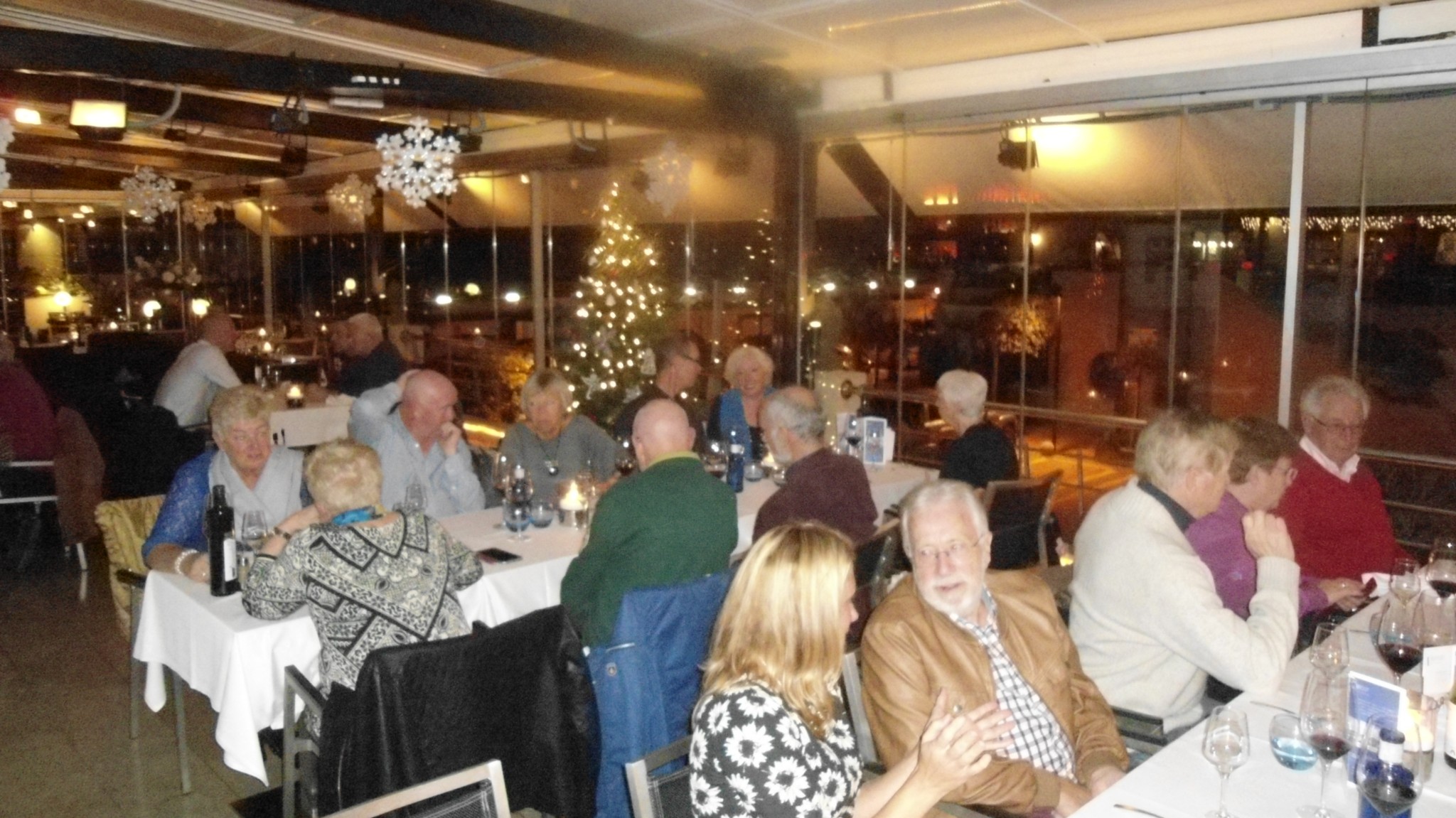
In a nutshell the idea was to present a series of wine tastings paired with top end tapas in restaurants along the Costa Blanca, northwards from Albir, to Denia, calling in at Calpe, Moraira and Javea en route. The final event was at the outstanding Restaurante Republic, Denia Marina.


Jelle, the Dutch owner of Republic, is a keen aficionado of wine, consequently the restaurant’s wine list is impressive. This, in fact, made my task even more difficult – there were a lot of wines from which to choose!


Plus, the Head Chef is very inventive, creating gourmet tapas that streTch the imagination whilst following the mantra of top quality. From the moment I set foot in the restaurant, to discuss the idea and possible pairings, I knew it was going to be a great success!


We started the evening with white wine from the Raventos Group. The name Raventos is steeped in history, for it was the ancestors of the current incumbent who were the founders of the amazing success story of Spanish Sparkling Wine, which we now know as Cava! They don’t just make cava.


Their still wine profile is also impressive. We enjoyed a Chardonnay blend which had a pale gold colour in the glass, with some floral notes on the nose and some weight on the palate, despite its elegance. It’s not an expensive wine, but you’d doubt that when tasting it. A mid-length finish with a touch of banana skin aroma and a refreshing acidic almost-ripe pineapple flavour. Good Start!


We next moved onto a rosado – but not any old rosado! Here’s that which I wrote recently about Can Rafols’ excellent Gran Caus Rosado:


It’s no idle claim to say that this is probably the best rosado in Spain! It’s the first time that a rosé wine has made the Top Ten [Costa News Top Ten 2015] which in itself is indicative of just how good is this 100% Merlot wine. Bucking the current trend, this wine is darkly coloured with the grape skins also having had time to impart their aromas and flavours.’

gran-caus-rosado

There’s elegance in this wine too, though it does have the power to complement the mushroom and seafood risotto, with which it was served. I often pair risotto with rosé wines, there’s a certain symbiosis going on where each helps the other. But look also at the Spanish who are eating their seafood paella or another rice dish of course – and which wine do you often see on their tables? Well, a rosado, claro – and in this case I don’t think the pairing can be bettered.


It was time to move onto the reds. There are some far-reaching ructions occurring in Rioja at the moment, about which you’ll be able to read here soon, but let’s not forget the fact that Rioja can and does make some very good wines. Often you have to pay, probably over the odds for such wines. But you can be lucky!

La Palea from Vino del Pasaente is a 100% Tempranillo Rioja which strikes the right note.

My colleague Tim Atkin MW has just written a sort of guide to Rioja, classifying the best producers and wines – which in itself is a compliment to the area. Plus there are a number of younger winemakers who are making Vinos d’Autor, within the legal boundaries but with much more soul than the mass produced ‘brand’ Rioja.

Tempranillo of course, is the noble variety of Spain, now the most grown in Spain and plantings in the rest of the world are also increasing. It likes its own company, but it makes friends easily, plus it’s happy with a little oak, and indeed quite a lot of oak – providing the fruit is good and from older vines whose yield is less, but whose grapes are richer.

La Palea has good fruit – this is its raison d’etre. Red and dark red fruits. A little time in oak, for depth and body rather than to add significantly to the taste. Some herby notes too, though limited, but we paired it with chicken and sage on a green polenta bed. Super match we thought!

El Pispa red is made with Garnacha, and proud of it! From old vines in DO Montsant from whence used to come the very best of the DO Tarragona wines, so much so that the burghers of the sub-zone Falset decided to apply for DO status themselves, which was granted only a few years ago – DO Montsant.

The wine has been carefully fermented in relatively small stainless steel tanks with a long cold maceration period in order to extract from the skins all that’s good in terms of colour and flavours as well as aromas. The variety Garnacha is not a naturally very dark skinned grape so this wine is not opaque.

This apparent lightness tells a lie though! It’s 14·5% and on the palate the wine has sufficient weight; plus the 300 litres American and French oak barrels in which it has been aged add volume to the wine as well as complexity and depth of flavour whilst the fruit is retained along with an element of elegance. There’s some granite mineral quality too.


Our final wine, was a beauty! Take a look at the colour of this dessert wine – it’s like a provencal rosé in that it’s pale pink. Bassus is made with two black grape varieties whose skins are left with the juice for only a short time. It comes from Bodegas Hispano Suizas out of DO Utiel-Requena, an area to which I often refer!

Wines from Hispano Suizas are not cheap – but they are value for money. They are always top quality, exemplary for the area.

Now to some readers I might have partly given the game away re the two varieties: Utiel-Requena loves the Bobal variety which is all dark cherries. Here it blends to great effect with one of the world’s best varieties, rarely grown to good effect here in Spain – but Hispano Suizas must have the secret re husbandry of Pinot Noir.

Delicious, luscious, sweet but with acidity too. It’s a rarity – if you find it, buy it!

PS Why not tune into my new radio programme, The Fine Wine & Gourmet Dine Programme on Total FM 91·8 and online www.totalfm.es ? Studio tastings of wines and restaurant food, interviews with chefs and winemakers, wine tasting tips and lots of fun! Fortnightly on Sundays, 7pm – 8pm. Next programme Sunday 21st February