THE GREEN EXTREME – NATURAL WINES!

Firstly – what are Natural Wines? Well, there’s no legal definition but it is accepted that those wines going under the banner of Natural Wines are wines that are made without chemicals and with as little human intervention as possible . . .

THE GREEN EXTREME
NATURAL WINES, MY FIRST ENCOUNTER OF THE THIRD KIND!

The Vinos Ambiz Selection

‘Are they wines, Spock?’

‘Yes, Jim, but not as we know them!’

I can assure that I’m not a closet Trekkie! However, if the above is taken as a starting point, like me, you may well start to develop an interest in Natural Wines.

Firstly – what are Natural Wines? Well, there’s no legal definition but it is accepted that those wines going under the banner of Natural Wines are wines that are made without chemicals and with as little human intervention as possible. The term is used to distinguish them from firstly Organic Wines, and secondly the even further away from mainstream wine making, Biodynamic Wines, because of a difference in what occurs in the bodega.

However, all Natural Wines are at least Organic, with many also being Biodynamic (regular readers may remember a past article or two re this type of wine-making). The difference, with regard to bodega practice is that Natural Wines are made without anything added, nor removed, from the must and then the wine, during wine-making. In short – it’s a whole new ball game.

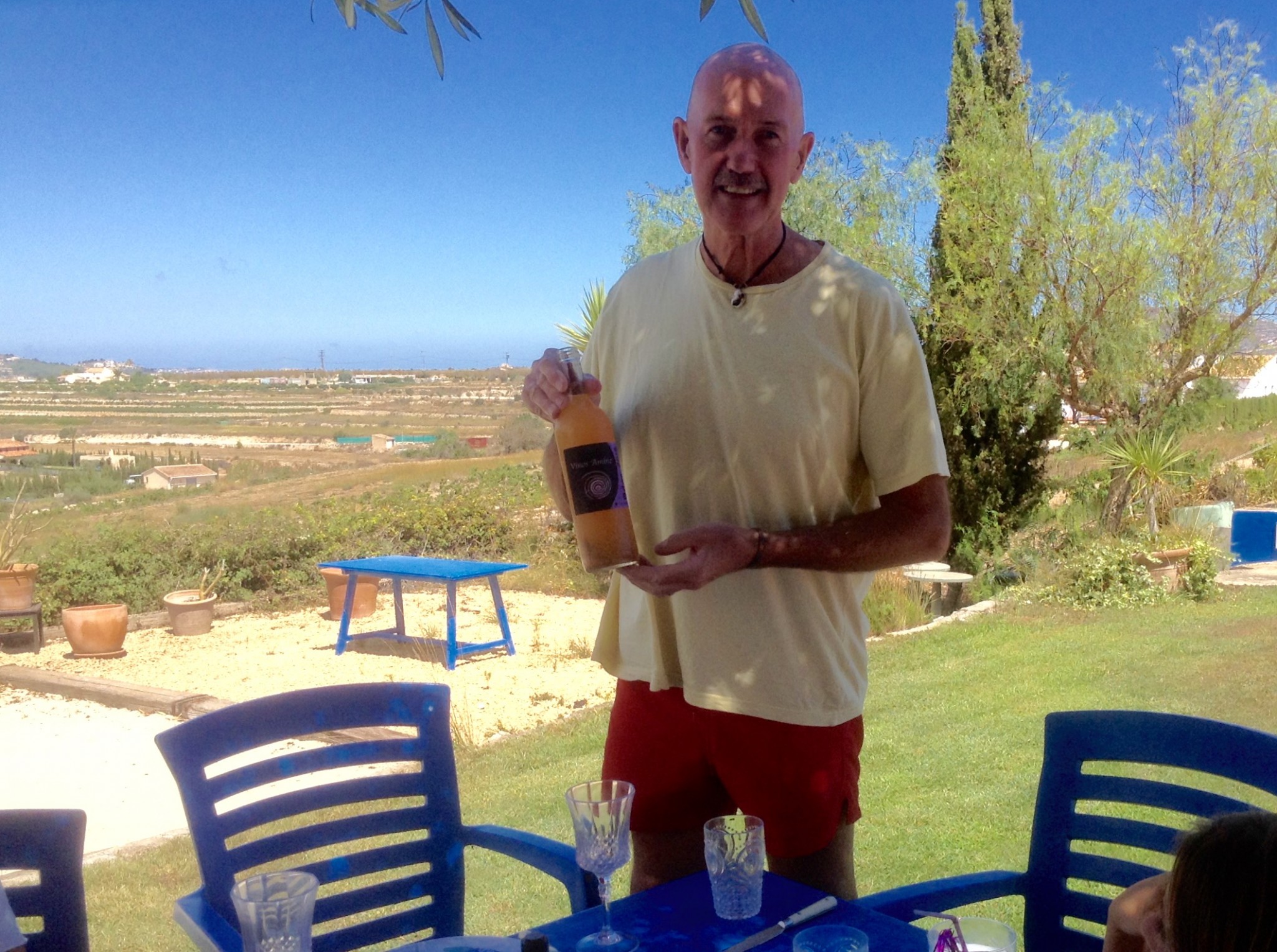
By a somewhat circuitous route I made contact with Fabius Maximus (yes, I know – it does sound like a Frankie Howard character, but it’s true!) of Vinos Ambiz (http://vinosambiz.blogspot.com)
Of Italian descent, this multi-lingual young winemaker is driven! His passion is, of course, his Natural Wines, which he makes, up in the hills above Madrid, in soils that look so nutrient absent, and yet are so healthy.

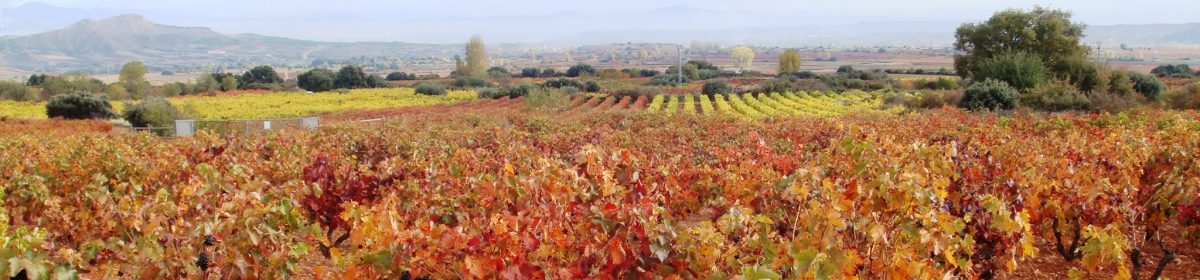
The vines in winter time (if not lying beneath a thick layer of snow!) look like rows of gnarled, lifeless stumps. But don’t be deceived – although in their dormant state, they are about to break into glorious leaf and eventually wonderful super-healthy bunches of indigenous and ‘foreign’ grapes.

bottles-plus-016

This is fundamental to Natural Wine making – Fabius’ vines do not suffer any pest invasion, no disease, and yet, mass producers of also-ran wines listen up here, there are no chemicals used at all, apart from a very occasional dusting of sulphur powder (a natural product, not manmade) to keep disease at bay. Good organic practice is employed in the vineyard, but it’s in the bodega where Natural Wines set themselves apart from others.
When (thinking of the brave-hearted amongst you) if (thinking of more conservative readers) you buy a bottle of Vinos Ambiz, the first thing that you’ll notice is that it is most likely to be cloudy! Don’t worry, remember the above – nothing added, and nothing removed! Clarification occurs naturally by gravity and the cold temperature of the bodega – on bottling some of the harmless sediment will also be bottled.

Next you’ll see a simple front label, but on the back, probably more information than you’ve ever seen on a wine label! You’ll read that the contents are fermentado grape juice – full stop! (Remember, nothing added). Then you’ll read of all the things it doesn’t contain: industrial yeast (only yeasts on the grapes themselves and those in the bodega are used in fermentation); colouring agents; conservatives, and more.

Then the brief (because that’s what it is, simple and short) method by which the wine was made – i.e. the grapes were harvested; gently pressed; the juice poured into fermentation vats (some stainless steel, some tinaja [amphorae]); gravity clarification. No further intervention.

Finally, a long list of things that weren’t done in the making of the wine such as: no sulphur added to the juice; no artificial heating/cooling of the must; no filtering of the wine; and lots more. It really is all quite revolutionary in terms of modern wine-making, and yet it is, of course, a throwback to how wine must first have been made!

Tasting and specific wine-making notes in Part Two next week!

colin@colinharknessonwine.com www.colinharknessonwine.com Twitter @colinonwine Facebook Colin Harkness Youtube Colin Harkness On Wine.

NB the next Fine Wine & Gourmet Dine Programme on Total FM 91.8 & www.totalfm.es will be at the end of October or the beginning of November, following my knee replacement operation in September. Hope you can tune-in then!
THE NATURAL BORN WINES OF AMBIZ

I’ll begin with what readers may consider the most outrageous of all the wines! We all know, and mostly love, Sauvignon Blanc – well, we have to think again in terms of our perception of this variety when you see a bottle of Vinos Ambiz ‘Orange’ Sauvignon!

THE NATURAL BORN WINES OF AMBIZ

PART TWO

fullsizerender

Last week’s Cork Talk introduced readers to the unusual concept of Natural Wines: what does it mean etc. Also, I spotlighted one Spanish producer whose wines I’d tasted, my first experience of Natural Wines. You can find the article archived here: www.costa-news.com click Features, Cork Talk.


This week I’m recording my tasting views on the wines of Vinos Ambiz, with a precautionary note. When tasting natural wines, I believe it best to think of them as another type of alcoholic drink, rather than as wine, in the modern day traditional sense. (It’s ironic in a way – the first ever wines must have been made in the Natural way, so it’s wholly wrong to think of this as a new phenomenon) Better to compare Natural Wines against other Natural Wines – you can’t compare wine, with beer for example.


I’ll begin with what readers may consider the most outrageous of all the wines! We all know, and mostly love, Sauvignon Blanc – well, we have to think again in terms of our perception of this variety when you see a bottle of Vinos Ambiz ‘Orange’ Sauvignon.


Nothing at all to do with oranges, this wine takes on the dark Seville   orange colour from its time, two years in total, two different vintages, in Tinaja – the ancient earthenware containers where half the must ferments (the other half is in stainless steel) and the resulting wine is then left to age. Finally the two are blended and bottled.

The Vinos Ambiz Selection

With aromas of dry cider (scrumpy, came to mind first) the wine looks and tastes nothing like we know Sauvignon to be (Jim!). It’s a little cloudy, as are all of the Ambiz wines, following their gravity-only clarification, but don’t let this put you off. Hold the wine on the palate for a time, close your eyes and feel it! There’s a certain earthiness to it and there’s a lasting finish as you swallow.


Airén, is not normally a grape variety for which I reach first. Mostly lacking in character, its principal attraction is often just its freshness. So, I had my doubts when I opened the Ambiz 2012 Airén – surely this would be tired, and probably undrinkable? Well, no, not a bit of it. There’s that ‘terroir’ earthiness again, with some wild mountain  herb notes too – and entirely different wine from the norm!


The Airén 2015 is a younger version, though again, with rather more personality than the usual Airé offerings. There’s a touch of pinecone on the nose and a little resin too. There’s fruit, though as well as whisper of bay leaf.


Malvar is a variety that’s new to me. The Ambiz Malvar 2015, if served blind, that’s bottle and blindfolded taster, he’d be forgiven for believing it to be a dry sherry, a good fino! However, hold the wine on the palate (this is a good plan with Natural Wines) and wait for the pure fruit to come through the clouds in the bottle! There’s some apple and a little citrus in there, and it’s a crisp finish.


Albillo is an indeginous Spanish variety that is making a comeback in the traditional wine-making world, perhaps led by results from those making Natural Wine with this grape. It’s quite full in the mouth and there’s a slight ‘homebrew’ nose to the Ambiz Albillo 2014, and I don’t mean that in a disparaging way.


The natural yeast (with Natural Wine it’s never cultivated yeasts designed in the lab to bring lout particular aromas and flavours, of course) makes its presence known as the cork is taken from the bottle. On the finish there’s a distant reference, as if it’s actually a spirit that you are drinking, and a food friendly slight bitterness.


I’ll return to Natural Wines in general, and certainly to those of Fabio Bartolomei (enestoslugares@gmail.com) (http://vinosambiz.blogspot.com).


colin@colinharknessonwine.com www.colinharknessonwine.com Twitter @colinonwine Facebook Colin Harkness Youtube Colin Harkness On Wine.


NB Colin’s Fine Wine & Gourmet Dine Programme on Total FM 91·8 & www.totalfm.es will restart at the end of October, following his recovery from an operation on his other dodgy knee!

THE HACIENDAS COMPANY

It’s really the aroma of the Lagunilla Reserva 2011 that captures ones attention, even as the cork is being pulled . . . It was a super start to my tasting of a selection of the wines made by the Haciendas Group . . . . .

concordia logo

THE HACIENDAS COMPANY


It’s really the aroma of the Lagunilla Reserva 2011 that captures ones attention, even as the cork is being pulled. It immediately speaks of the cellars where the wine has been aging before its release onto the market. If you’ve ever visited (with me perhaps, it’s one of the wine things I do!) the ‘crianza’ cellar, almost invariably below the bodega, you’ll know what I mean.

CONCORDIA lagunilla-reserva

There’s a captivating aroma, firstly of the oak, perhaps French, maybe American – or both, and then of rich red wine. Of course, in the cellar it’s the wood that takes the lead, as it is in this case, when the bottle is first opened. Then, the seasoned taster waits a while for the well made wine to develop in the glass as the primary aromas reverse, with the fruit of the wine coming to, and remaining at, the fore.


It was a super start to my tasting of a selection of the wines made by the Haciendas Group, which not only owns several bodegas but also hotels, villas and restaurants, as well as a farm! Having been seduced by their wines, I’m determined to check out their accommodation too!


Marqués de la Concordia MM Selección Especial is a white Cava Brut which has been  aged on its lees for 6  months longer than the minimum 9 months stipulated by the Consejo Regulador DO Cava. It’s made with the three original traditional varieties, Macabeo, Parellada and Xarel.lo, with the former making its presence felt in a crisp green apple freshness on the palate with a slight cooked apple aroma too.


The rosado version of the same fizz is a lovely rosé colour, inviting, and not just for the ladies. Made with 70% Monastrell and 30% Pinot Noir, it’s quite a classy wine, with a touch more residual sugar than the white, thus appealing to those who have a very slightly sweeter tooth.

concordia verdejo

I’m always keen to taste DO Rueda wines made with the indigenous Verdejo variety, with which many readers will be most familiar, as I’m certain many have tasted wines made here and with this variety. Hacienda Zorita Vega de la Reina Verdejo 2015 is a super, refreshing fruit delivery on the nose (gooseberry and under-ripe kiwi) which also has that typical slight vegetal note – look for some asparagus and a little fennel, almost hidden amongst the delightful fruit. An IWSC Sliver Medalist is was my equal favourite of the group tasting!


I’ve already alluded to the Lagunilla Reserva 2011 from their Rioja outpost. It’s made with Tempranillo and Garnacha and has had 24 months in barrel. It’s a lovely wine which has some dark cherry notes on the nose along with blackberry fruit on the palate. Underpinning the fruit is an extra layer of complexity and depth in the form of  some smokey vanilla notes and a little cinnamon. The finish is fruit orientated, and once swallowed the flavours all linger on the palate, inspiring a contemplative mood. The  bottle didn’t last long!


Like it’s younger brother the Laganilla Gran Reserva 2007 is also a Silver Medal Winner at the prestigious International Wine & Spirits Competition. Again it is made with the above varieties and it too has had significant oak aging, before bottling. The American oak adds a touch of vanilla to the mature dark red fruit with slight pine-resin presence too. There’s also a faint smokiness with a wisp of freshly lit matches.

Concordia lagunilla-granreserva

However, it’s the fruit and the elegance which impresses most. It’s full and has body, but it’s also a graceful wine – perfect for the dinner table this coming winter. I’d also check out younger vintages over time too.


So, the Haciendas Company is well worth investigating, remembering that the above is just a short selection of their wines. (www.the-haciendas.com).


Please note that the next Fine Wine & Gourmet Dine Programme on Total FM 91.8 and online at www.totalfm.es will be on Sunday 11th Sept. from 18:30 – 20:00 hrs. My studio guest – Gian, owner of I-Sushi Japanese Restaurant Chain!