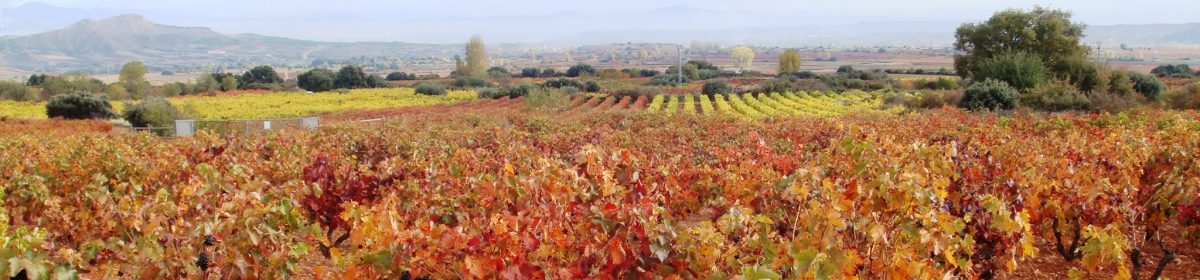
Grower Cavas from Bodegas Cuscó Berga

Well, the same applies here in Spain, not with Champagne of course, but with Cava. The larger cava producers certainly have their own vineyards, but the production is so vast, and demand so huge, that they have to buy in more grapes to make up the shortfall. Plus, of course, there are also Grower Cavas, whose wholly ‘hands-on and total control’ approach can often be to the consumer’s advantage . . .

GROWER CAVAS

cusco-brut-nature-reserva-eco

There’s quite a lot of talk in wine circles at the moment, about Grower Champagnes. These are Champagnes made usually by small (the current buzzword is ’boutique’) producers who own their own vineyards, in the officially protected area of Champagne, of course.


Usually such ‘growers’ have held the vineyards for generations and often have simply looked after the vines and their annual production of approved Champagne grapes, to be sold to the larger players. Perhaps the new incumbent has a more entrepreneurial bent, and decides to make his/her own Champagne. Or, maybe, the small family owned holding has in fact always preferred to work solely for themselves, albeit that the expense can be crippling, and of course it’s all done at the mercy of the weather. Though this last problem applies throughout the agricultural world!


Well, the same applies here in Spain, not with Champagne of course, but with Cava. The larger cava producers certainly have their own vineyards, but the production is so vast, and demand so huge, that they have to buy in more grapes to make up the shortfall. Plus, of course, there are also Grower Cavas, whose wholly ‘hands-on and total control’ approach can often be to the consumer’s advantage.
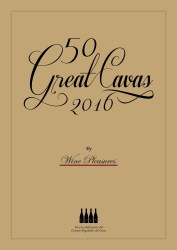
50gc-2016-cover

I first came across the Cavas of Cuscó Berga when reading through the impressive glossy ’50 Great Cavas 2016′ publication (well worth buying http://www.winepleasures.com/50-great-cavas/ ). Two Gold medals and a Silver, places all three Cuscó Berga cavas within the 50 Great Cavas of 2016 – now that’s a good starting point!

Plus, a visit to the Cuscó Berga website reveals that they also have a tradition of making still wines too – and guess what, there are medal winners there too! So, I was delighted to receive a selection of their cavas and their wines recently for me to taste and see just why they are attracting such attention.

The Silver Medal winning Cuscó Berga Brut Reserva Ecológic is an organic sparkler with a modernist label, no doubt designed to appeal to the young to convince us all that it’s good to take off the blinkers and try wines that are older than the young cavas that so many of us buy. Such wines, when handled with care will still have that essential freshness, but will also give greater depth of flavour too.

This cava is termed ‘Reserva’, however its 24+ months ‘en rima’ (time spent resting on its lees in the cellar) is far longer than the minimum 15 months required before suc h a cava can legally be called ‘Reserva’. This extra time adds body and complexity too.

Made with the three traditional Cava varieties Macabeo, Parellada and Xarel.lo (which has the lion’s share of the blend) which have been farmed organically with each variety being fermented separately before the base wine is blended together before bottling, the makers also boast that the yeast used to provoke the second fermentation in bottle has been certificated as being clear of any genetically modified substance. The tiny amount of sugar that is also added at the same time is guaranteed to be from natural white cane in organic fields too!

cusco-ampolla-premium-03-ok

This is a taught cava when it hits the palate, very fresh with acidity to keep it alive and stimulate the senses. Hold it on the palate and feel its weight! You’ll also taste a slight cider-esque flavour, which follows though from the faint apple you will have detected on the nose. The Xarel.lo adds the all important body, and the Parellada some finesse too. Match this cava with some fish, shellfish, salads and also some light chicken dishes.

Cuscó Berga Brut Nature Reserva made with grapes coming from the 2011 harvest is, as you see, labeled as a Reserva, however its 39 months ‘en rima’ qualify it for Gran Reserva status. This shows on the palate and also the after-taste, the length of time that one can still enjoy the wine even after you’ve swallowed it!

Fresh and clean again, after so long in the cellar, this is the driest style of sparkling wine, Brut Nature, often my favourite style. It is as refreshing as a joven, young, wine and yet it also has that greater depth. Green apples from the Macabeo again, but this time a lovely blanched almonds aroma as well, plus that tell-tale fizz aroma of yeasty patisserie notes as if you were passing the shop in the early hours of the morning. Superb with canapés, amuse bouche, starters, fish, shellfish, smoked salmon dishes and salads!

It was close, but my favourite cava was the Brut Gran Reserva made from grapes harvested way back in 2010 and having had the advantage of a very long 50 months en rima. That’s over four years!

cusco-cava_gran-reserva

So is it giving away its age at all, getting slightly past it? Not a bit of it! This wine is as fresh on the nose and the palate as far younger cavas, with super citrus notes and some sharp green apple. Hold it on the palate before swallowing and gradually its weight and depth with fill the mouth, giving some extra nutty flavours, with a granite minerality and added fresh green, and rounded yellow, melon in harmony too. Wow!  (www.cuscoberga.com).


P.S. Japanese Cuisine meets Spanish Wine with Colin at Restaurante I-Sushi, Javea, Saturday 19th Nov. Includes superb music from Claire Marie (www.clairemarie.es). All for just 25€!! Please e-mail colin@colinharknessonwine.com or call 629 388 159 to reserve!

There’s a pale pink rose fragrance when this wine is poured which also develops into pink marshmallow and bubblegum aromas and then very quickly into delightful strawberry fruit first, with raspberry and red currant close behind . . .

  GRUPO CODORNÍU RAVENTÓS


Students of Cava will know that the eponymous two names above are seriously big hitters in the world of Spain’s famous sparkling wines. For, approaching 140 years, these two names have been inextricably linked with Cava – the latter because it was in fact a same family Raventós that started the bubbles rolling towards the end of the 19th Century, and the latter, linked by marriage with the former, because it is one of the two best known Cava producers in the world!


You can imagine my delight therefore when I received recently the first of a number of samples from this large group, which is another example of how big is beautiful in the wine world of Spain. However, I’m not going to start today’s Cork Talking about fizz – it’s perhaps not so well known, that these great names and this impressive company also make still wines.


Viñas de Anna Flor de Rosa 2015 comes in a shapely, transparent bottle which allows the consumer to see this charming and beautiful Provencal Rosé coloured Spanish rosado in all its glory. Readers will have already noticed, without my prompting, a definite trend towards rosados of this very pale pink colour. Just look on the wine shops’ shelves and you’ll see far more than we used to see in years gone by.

anna-de-codorniu-flor-de-rosa

The Spanish wine fraternity is not slow to accommodate fashion and as rosé coloured wines have been to the fore internationally in recent years, Spanish producers have acted accordingly, though certainly without compromising quality. For me, this further illustrates that Spain has to be the world capital for rosé wine! An already extensive flavour, aroma and colour profile has been extended to accommodate more of these very pale offerings.


There’s a pale pink rose fragrance when this wine is poured which also develops into pink marshmallow and bubblegum aromas and then very quickly into delightful strawberry fruit first, with raspberry and red currant close behind. In seconds these primary, secondary and tertiary perfumes blend together producing such an aromatic whole that you just have to take a sip!


The varieties are Pinot Noir, which apart from the colour, adds a little red wine body and flavour, plus the Cataluña indigenous, Trepat, which adds fruit also, though slightly darker red fruit, like loganberry, as well as elegance to the wine on the palate.


Viñas de Anna Flor de Rosa is the first Codorníu still rosado wine – but I bet it won’t be the last! A super start.

cava-anna-de-codorniu-blanc-de-blancs-reserva-0-75l-foto

Blanc de Blanc sparkling wines are those which are made exclusively from white wine grapes – in the case of Champagne, where the phrase was first coined, this essentially means Chardonnay. However, here in Spain the Blanc de Blanc Cava maker has more varieties with which to play! Whilst 70% of Anna de Codorníu Blanc de Blanc is indeed Chardonnay, there is also 15% Parellada as well as roughly 7% each of Macabeo and Xarel.lo. Although proportionally small, these three stalwarts of the Cava industry nevertheless make a significant contribution to the finished article.


So too do to the 15 months ‘en rima’ (bottle aging on the lees) which the Cava has undergone before its release onto the market. This therefore makes the wine a ‘Reserva’, so we can expect greater body and depth of flavour as well as the raison d’etre of sparkling wine – its clean freshness. Reserva style wines are also better to pair with various dishes too.


At 11º/litre of residual sugar, it’s at the top end of the Brut sugar spectrum (12º is maximum) so this Cava is going to particularly please those who find some Brut cavas to be a little too austere. It’s full in the mouth with a passing pineapple fruit note coming, of course from the Chardonnay.

dulce-anna

An oft forgotten style of cava is the Dulce, or sweet, style. Well made sweet cava, like the Codorníu Dulce Anna, is not at all cloying. The same applies to dessert wines too. There is still acidity in this Anna which allows it to be served for those with a sweet tooth as perhaps an aperitif, but it really comes into its own when it’s paired, as it’s meant to be, with desserts. I enjoyed mine with Chocolate Cake – at midday too!


Contact Colin: colin@colinharknessonwine.com Facebook Colin Harkness Twitter @colinonwine Youtube Colin Harkness On Wine


Good news: the Fine Wine & Gourmet Dine Programme will return on Sunday 30th October, extended by popular demand from 18:00 – 20:00 hrs, Spanish Time, on Total FM 91.8 and online totalfm.es. Great wines, food, music and chat! Please join me and make your Sunday’s even better!

Partners in Wine

The perfect present for those who have an interest in wine, and how wonderful that each purchase of one of their pink coloured, easy to use, Swan corkscrews ensures a donation to Breast Cancer Research!

PARTNERS IN WINE


I’m delighted to have welcomed a number of prestigious new sponsors to my website during the last few months. Each has an obvious link to the vinous events, presentations, visits etc in which I’m always involved. Therefore, it’s very apt to say that we are ‘Partners in Wine’!


Bodegas Castaño, one of the leading lights of DO Yecla, is a dynamic, pro-active, multi-medal winning winery. There are many occasions, and indeed wines, that I could tell you about, with this particular ‘partner in wine’: the private tasting of wines made from their experimental vineyards; a tank sample of fermenting Chardonnay with Head winemaker, Mariano; filming in the vineyards for my TV series and having a break for an amazing ‘almuerzo’; and lots more. But space, restricts me.

castano-casa_cisca

Suffice to say that it is from Bodegas Castaño that I highly recommend a wine for Christmas (not long to go, you know!). Casa Cisca is the Castaño flagship wine. Made from 100% Old Vine Monastrell, this wine is stunning!


Restaurante Nox in Javea can be considered a Gourmet Paradise for Gastronomes like myself! Luxury is combined with elegance; professionalism with charm, and fun; the finest of cuisine with an enviable wine list. Readers will know that I’ve presented a number of wine pairing evenings at Nox. Of these there have been several outstanding wine pairings. For example the Finca del Fondo Rosado with Head Chef, Mark’s, amazing Cream of Seta with Chestnuts and Trufle Oil; and, simply for the sheer excellence of the wine, Bodegas Hispano Suizas’ Sauvignon Blanc!

A splendid evening at Restaurante Nox, on Javea's Arenal, pairing Gourmet Tapas with Fine Wine!
A splendid evening at Restaurante Nox, on Javea’s Arenal, pairing Gourmet Tapas with Fine Wine!

I’m not sure there could be a better ‘fit’ than a wine website with a wine accessories company, so I was delighted to partner Avina Wine Tools! Elegance, beauty and efficiency all combine perfectly in the design and artisan manufacture of the wine bottle openers and stoppers supplied by this socially aware and forward thinking company, whose further development ideas readers will be able to see by clicking the logo (as with all sponsors) on my website.

avina-swan-pink2

The perfect present for those who have an interest in wine, and how wonderful that each purchase of one of their pink coloured, easy to use, Swan corkscrews ensures a donation to Breast Cancer Research!


My next new sponsor, Lazenne, specialises in Wine Travel Accessories, which are really quite amazing! Those who attended a tasting of mine in Javea will remember my walking across the restaurant, as if in an airport or train station, easily pulling behind me, the perfect answer to transporting wine bottles!

lazenne

This wine luggage has been specially designed with airport authorities, including security, being in on the concept from the start. The result is that easily transportable luggage, even when full of heavy sparkling wine bottles, has been officially approved by all the world’s main airlines.

unnamed

There’s a, mostly incorrect, perception that wines from specialist wine shops, like Vinalia, Bodegas Leopoldo, will be more expensive than supermarket wines. Sometimes yes, but the difference is that such shops are passionate about their well chosen wines, across the price spectrum – and they look after them! Furthermore, they are aware of the supermarket price point and very often compete with it in order not to lose sales to the larger enterprises.

unnamed (1)

The huge array of wines (and spirits) at Vinalia, Bodegas Leopoldo, Ondara is certain to include wines of your choice – that’s if you are a wine consumer like myself as well as if you are a restaurant looking for distinctive, and different wines! I remember, for example, my first sight and taste of the brilliantly labeled Dehesa del Ñañdu, made with Garnacha, and having had 4 months in oak. On the nose there is an initial strawberry aroma. It’s rich and full with a marked intensity and well priced – plus it’s available only from Vinalia!


Finally, and rather nicely linked with Vinalia, Botas del Barro! Regular readers will be aware of the Nicola Thornton story. A degree toting, Spanish fluent Sheffield lass makes a major contribution to Export sales of a DO Toro winery; she’s headhunted by a larger, more quality conscious concern, travels the globe, several times, adding over 60 new markets to the Export portfolio; then decides to open her own wine business.

botas de barro capsule botas

Working with boutique wineries in several different areas of Spain, Nicola and her winemaker partner, Alvaro Martin, now have a very impressive portfolio of wines under the heading, Botas del Baro. On the 18th November, Nicola, Jose Antonio of Vinalia and I will be present a Botas del Barro tasting to launch their arrival in Ondara. Details soon!

botas de barro verdejo con capsule

Contact Colin: www.colinharknessonwine.com (where you’ll see details of the above) colin@colinharknessonwine.com  Twitter @colinonwine  Facebook Colin Harkness www.totalfm.es Youtube Colin Harkness On Wine


NB The next Fine Wine & Gourmet Dine Programme on Total FM 91.8 and www.totalfm.es is scheduled for Sunday October 30th, with an extra thirty minutes – by popular demand. 18:00 – 20:00 hrs Spanish Time

Chilled Whites for Summer into Autumn

Indian summer is a period of unseasonably warm, dry weather that sometimes occurs in autumn in the Northern Hemisphere.” Well, here in Spain, we know better – this isn’t ‘occasional’ at all!

SPANISH WHITE WINES FOR AN INDIAN SUMMER


According to Wikipedia, “Indian summer is a period of unseasonably warm, dry weather that sometimes occurs in autumn in the Northern Hemisphere.” Well, here in Spain, we know better – this isn’t ‘occasional’ at all!


I’m writing this at 1pm during the nascent September of 2016 – the temperature, shaded from a cloudless, sun dominated azure blue sky, is already 27ºC, and expected to rise. Oh yes, Mr. Wikipedia, we know all about Indian Summers!


So this is why I’m writing today about our desire to stick with chilled (cold, even) dry white wines for a little while longer. During the undeniably hot August we’ve just experienced (endured?), I presented on Total FM 91.8, four white wines as the perfect, crisp and refreshing antidote to high temperatures. A deluge of positive comments from listeners has inspired me to let readers know, in case you missed the programmes.


From Lidl, I was delighted to find an Albariño from DO Rías Baixas the stand-out DO of Spain’s Galicia, for just under 6€ – a real bargain! Albariño, of course, is perhaps the best appreciated of all the white wine varieties of Spain – well until Verdejo came to the fore a few years back, but don’t worry, I’ve got Verdejo covered here too!


Ceo Albariño 2015 is a perfect introduction to wines made from this aromatic grape variety, and indeed to those emanating from  Rías Baixas, the area generally considered to be Albariño’s natural home. On the nose you find a delightful blend of floral (jasmine and a slight mention of honeysuckle) and fruit (white peaches are dominant, with a little apricot in there too!). Fully fruited on the palate, very fresh and dry, of course.


On the night of the programme the comments I received from listeners, plus before and after the tasting, were just in favour of the second of the two wines tasted. Protos Verdejo 2015 comes from DO Rueda (where else?). You’ll find an abundance of those aromas associated with Sauvignon Blanc, with which Verdejo is sometimes confused (and that’s not a bad thing!) as well as an extra, slightly green vegetal dimension from this variety.

protos-verdejo

However, the overall sensation, of a really pleasing, slightly creamy fullness, whilst retaining the wonderful fresh acidity, is gained from the wine having spent a few months on its lees, before bottling and final release. The winner on the night, but both wines were really well appreciated.


So popular was the theme, I decided to extend it to the following programme, and, after all, this Summer White Wine theme could run and run, so good and varied are Spanish whites these days. Coto de Ibedo 2015 comes from DO Ribeira, a DO, until recently somewhat in the shadows of nearby DO Rías Baixas. It’s always been known as a wine area that is certain to have fruit driven wines, though in the past, sometimes a little short lived. They’ve upped the ante, re depth and fullness, whilst retaining their fruity raison d’etre.


Treixadura, Loureira and Godello are the varieties used in the fruit orientated blend, so no wonder it’s as fruity as it is! The former (don’t ask me to spell it again, Spell Check, obviously doesn’t drink!), is prevalent in Argentina, where is makes wonderful apricot and dark peach flavoured dry white wines. The second variety is also found in South America and provides some exotic fruit aromas too. Godello (far easier to spell!), readers will have read about before in Cork Talk, and has white stoned fruit on the nose tinged with a little vegetal fennel.


The combination is really lovely, and paired with dishes that are slightly spice and chilli orientated, it’s a definite winner.


Finally, I wanted to try a very Spanish variety, but, perhaps you might consider, a little perversely, given that we are after fresh acidity to cool us down in this Indian Summer, a white with a little oak aging too! Garnacha Blanca (the white sister of the famous red Garnacha) is perfect for this.


Miranda de Secastilla Garnacha Blanca, 2014 (don’t forget, the time in oak prolongs the life of Spanish white wines) from Bodegas Viñas del Vero, DO Somontano, has had three months on its lees (as with the Verdejo above) but has also clearly enjoyed its short time in French oak barricas. Lemon citrus freshness, with some white almond and vanilla notes, and a certain mouthfeel and and extra body, make this wine a winner with chicken and turkey dishes, as well as meaty fish, sourced or not!

NB The next Fine Wine & Gourmet Dine Programme on Total FM 91.8 and www.totalfm.es is scheduled for Sunday October 30th, with an extra thirty minutes – by popular demand. 18:00 – 20:00 hrs Spanish Time

Contact Colin: colin@colinharknessonwine.com ; www.colinharknessonwine.com ; Twitter @colinonwine ; Facebook Colin Harkness ; Youtube Colin Harkness On Wine