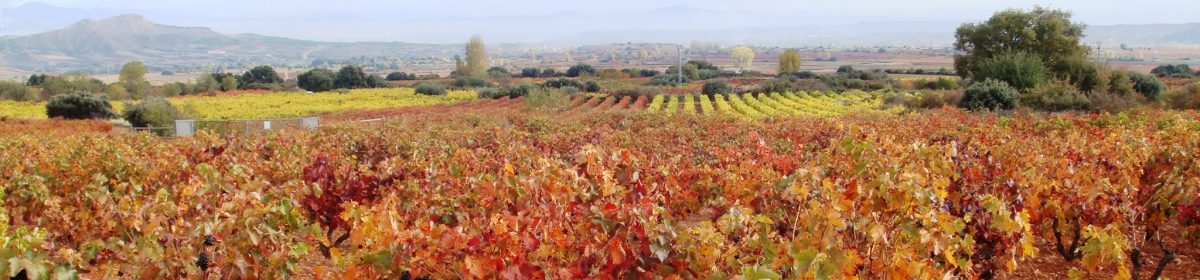
BOBAL VALENCIA’S INDIGENOUS GRAPE VARIETY

BOBAL – NOT LOST IN TRANSLATION!

THE GREAT BOBAL TASTE-OFF – PART ONE!


Are you sitting in comfortably? Then I’ll begin!


Now if you remember that, you must be of a certain age. I do, and I still love a good story. Hope the same applies to you, because here’s one coming up:


The Romans were in most places known to man over two thousand years ago, including Spain. The area we now call Valencia didn’t escape their attention. They came, saw, conquered – and stayed. Well why wouldn’t they? The verdant land, the rivers (there was some water in them in those days!), the natural harbour, and hey the beach as well – I’m sure bronzies were popular at their orgies too! (I’m using poetic license here to sex-up the story a bit, okay?).


Of course not all Romans were soldiers. The new lands their soldiers had expropriated were populated by all manner of regular Romans and their families who caught the next galleon-ferry. Among them were farmers, their seeds and of course their animals. One such species was called Bovis – Latin for Ox. Bou, the Valenciano word now for ‘bull’ has its roots in the Latin name.


Oxen had to be grazed and the area where the Roman Bovis grazed was called the Bovalar – figures doesn’t it? However, rain was also in short supply in those days so these pastures where the oxen grazed had to be huge in order to support the number of animals using it.


Then, guess what – the Roman Empire fell, society followed suit, population decreased, any remaining oxen were slaughtered by the people left, and vast swathes of land were left unattended. Nature took over some trees grew and, yes, so did some grapes!


Survivors went into the forests and found vitis vinifera, the common grape vine. They dug up the vines and replanted them in the areas which had previously been known as Bovalares. Over time this particular vitis vinifera developed into a variety, commonly known as Boval, which over time and with the Valenciano and Castellano ‘v/b’ confusion was corrupted into the word Bobal!


The Bobal grape is indigenous to the Valencia area – and now you know why! It’s the mainstay variety of DO Utiel-Requena and of DO Manchuela and is also used in Valencia as well as, to a lesser extent, in Alicante.


Now for an acknowledgement re the source of the above story, and the source of some of the best Bobal wine available – my philosopher/traveller/Photographer/winemaker friend Alvaro Faubel, one of the founding  Directors of Bodegas Dominio de la Vega!


Arte Mayor 111 from Bodegas Dominio de la Vega is the wine that inspired me to write this article and its sequel. If Bobal tastes this good, and it certainly does, the good readers of ARTE MAYOR BOBALCork Talk need to know about it! Thus a concept was born – a taste-off between wines made with Bobal coming from various bodegas in DO Utiel-Requena and DO Manchuela.


Only wines gaining 90+ points in Spain’s most comprehensive wine guide, Guía Peñin (available in English and really well-worth investing in, if you are at all interested in Spanish Wines). Also, only wines described as Bobal  would be included  (remember, though that the rule in Spain is that a wine that has, I think, 80%+ of one variety can call itself by that variety’s name, despite there perhaps being some other varieties in the blend).


At a very impressive 93 Peñin Points, Domino de la Vega’s unique wine certainly satisfies all the criteria. Unusually, this wine is made from three different vintages of Bobal, 2005, ’06 and ’07 – all the grapes were picked by hand, and at night, from the 80+ years old vines. The earlier vintages were kept in waiting until the final 2007 was fermented and, like the others, aged in French oak for an average of fourteen months.


The wine is sensational, in every way! On the nose there are mineral notes aiding and abetting black cherry, wild herbs and flowers, with some black pepper and smoky cinnamon spice mingling too. On the palate it has a weighty, rich presence and yet it is perfectly balanced and elegant. The black cherry is prominent amongst some notable dark, brambly fruit and there’s a final flourish of blackcurrant liqueur!


So, an excellent start for The Great Bobal Taste-Off – watch this space; and drink this wine!


PS Just a few places remaining for our Wine/Food pairing evening at , Javea’s super Monsoon Thai Restaurant. Don’t let people tell you that lager suits Thai cuisine – we’ve found some excellent Spanish wine matches for the five courses and I can’t wait! Please call me on 629 388 159 or e-mail me to reserve your places. Or call into Monsoon and book. It’s only 25€ for a super-tasty evening!


Contact Colin: colin@colinharknessonwine.com and www.colinharknessonwine.com  and, via Twitter, @colinonwine

Received after Granada/Jerez/Seville Short Break

Hi Colin,
First of all, many thanks for organising such an excellent trip. The hotels were first rate, as were the bodega visits and wine tastings, all due to your meticulous planning and attention to detail. Well done! A memorable holiday.
Regarding your proposed trip in October. We’d definitely be interested, provided it’s after 18 October. Careline Theatre is producing an evening of song and dance commemorating the outbreak of WW1 from 16 to 18 October which we’ll be involved with (no, we don’t remember the actual event!). We’ve already been to Salamanca, Segovia and Barcelona, and would be happy to go back to any of them. But we suppose our preferred choice would be Barcelona.
Keep us informed.
Hasta luego.
Robin & Helen

ALIMENTARIA 2014 BARCELONA

ALIMENTARIA 2014

SOME REFLECTIONS ON SPAIN’S LARGEST WINE/FOOD FAIR

I’m not sure how many times I’ve attended Barcelona’s biennial Alimentaria since I was first invited well over a decade ago. If you want to be close to the cutting edge of Spanish wine-making, tradition and innovation, this huge gastro trade fair is really obligatory.


I could blind you with the statistics included in a weighty tome that was the Press Dossier handed out to me as I was given the necessary identification ‘Prensa Costa News Group’, but suffice to say that there were hundreds of exhibitors and thousands upon thousands of visitors.


With such a large venue and so many stands and visitors the newcomer can become rather bewildered, as I was on my fist visit. To have a successful Alimentaria as a member of the press you have to have a plan, otherwise the sheer size of the show can overwhelm.


In past years my plan has been to spend the first day tasting sparkling wines, the next day, whites and rosados, next day the reds and finally any wine styles that I’d noted whilst doing the rounds but hadn’t had the time to visit. It’s worked quite well and I’ve always tasted many, many wines. Nevertheless when leaving the show on the final day I always have a worrying feeling that I might not have done it justice. Whilst there are a large number of wines that I’ve tasted there are invariably hundreds more that I haven’t. So much wine, so little time!


This year I adopted a different plan. I was looking not for the famous, not for the very expensive wine and not for the large bodegas with holdings in several different Denominaciónes de Origen (although I broke that rule more than once, as you’ll see in forthcoming Cork Talks).


Instead, I was looking for small producers (relatively) who make quality and top quality wine. Plus I attended as many ‘organised’ tastings as I could – I’m always keen to learn more about Spanish wine and when there are renowned experts presenting tastings it’s an excellent opportunity to do so.


Well the plan worked quite well, but I also received via Twitter and e-mail various invitations to visit certain stands that weren’t necessarily on my list. Hence a very tiring four days. However, I still found time to observe and note any trends, any changes from previous years.


The first thing I noticed this year was the profusion of wonderful looking wine labels. I commented on the welcome move away from gothic writing and bottles wrapped in wire several Alimentarias ago. The movement has gathered momentum to the point now where the arty and sometimes quirky labels have become a real draw, even to a seasoned old-timer like me! There’s an inescapable feeling that with such a finely decorated label the wine inside must be fine too. So, the marketing departments have really done part of their job excellently.


Also, as anticipated in Cork Talk a couple of weeks ago, the shapes and weights of the bottles themselves have changed so that it’s not just the label that attracts you, but the chunky bottle too! And, incidentally, the wines I tried with such bottles and labels lived up to expectations, always!


My fellow visitors’ demographic is changing too. I reported a few years ago about how many Japanese and Chinese buyers were present at Alimentaria, and this has continued apace. However this year I noticed a large increase in Russian buyers too. Those of us who live by the coasts here in Spain will not be surprised by this. Recent years have brought a considerable influx of Russian visitors and house buyers, who no doubt would like to be able to drink their favourite Spanish wines when back in Russia, where, as I understand it, they have to dwell for at least two months a year.


Spanish wine producers are keen to seduce these new buyers and I was often asked if I’d mind waiting a moment while my contact welcomed Russians to their stands and then proceeded to do a dual tasting, keeping me informed (and in wine!) as well as the Russians!


Alimentaria 2014 wasn’t all positive though. I noted, for example, that this year saw an increase in the number of bodegas who, rather than have a stand to themselves, had joined the larger stands of the DOs under whose auspices they make their wines. It’s not safety in numbers, it’s simple economics – these fairs, whilst being excellent selling opportunities, are very expensive.


Sharing the cost is an economy that many feel necessary during this ongoing financial crisis. A crisis, I would add, that would be far worse if it weren’t for the considerable contribution that the wine industry makes to the Spanish coffers!


There was one other rather irritating part of Alimentaria that really needs addressing. There were some excellent wines, informative talks and innovative wine/food pairings presentations on the Catalunya stand – but why oh why do they insist on speaking exclusively in Catalan?


I’m all in favour of the different cultures within this one country, and that includes the different languages and dialects, but it is so blinkered at a truly international wine fair such as Alimentaria to use Catalan exclusively, presuming that everyone understands. The foreign visitors cannot be expected to learn all the languages/dialects of Spain – please, Catalunya, conduct the tastings in Castellano, out of consideration for the multi-national buyers who come to Alimentaria, you’ll note sales will increase, I’m sure!


When I asked presenters to change to Castellano I was always accommodated with a smile, but others there, less voluble than me, but just as foreign would have had to listen to a presentation that they wouldn’t understand, had someone not intervened.


I have some places left for the excellent Thai Cuisine/Spanish Wine pairing evening at Javea’s Monsoon Thai Restaurant on Tuesday 20th May! Please call (629 388 159) or e-mail colin@colinharknessonwine.com to reserve.