Godello, for excellent white wine!

OH MY GODELLO!

I’m not really conversant with social media abbreviations. Perhaps I should be? I heard recently that some are now accepted as ‘words’ in Scrabble – the, apparently, classic, text abbreviation, ‘lol’, for example. Whatever that means! And, if they are now permitted in the Scrabble Lexicon, such a prestigious British board-game, maybe the next step is the Oxford Concise and therefore the English Language, proper?

I’m sure that readers will have seen many others via text/facebook messages, twitter etc (I don’t actually know the others, so I wrote, etc, to make you think I do!), received from daughters, granddaughters, perhaps just around the corner, and of course from the UK, as well as other further flung places as they travel.

(A note here – it seems to me, as can be gleaned from the above, that it is mostly the fairer sex who use these abbreviations. Would you agree? I don’t think I’m being sexist, it just seems to be more of a girly thing?).

Well there’s another particularly prevalent abbreviation of which I’m sure you’ll be aware – OMG! However, I wonder how many of you know that this actually translates to the above – Oh My Godello!

Ok, I’m perhaps stretching a point here, but you know, the wonderful white wine grape variety of North Western Spain really should be common parlance!

Now that summer is well and truly upon us our go-to drink is often white wine. Many of us think of looking first for cooling, refreshing whites, rather than reds. Indeed, we often change our diet accordingly, eating more salads, fish and seafood – food that is usually considered best to be paired with lovely dry white Spanish wine. It’s certainly true of me.

Now, the white wine scene in Spain really has changed beyond recognition, and for the far better too. In the past Spain was considered a red wine country, with white wines playing merely a bit part, if that. And my experience twenty and more years ago told me that this was largely deserved. The reds were often excellent (and still are) whereas the whites were, mostly, fruitless and so acidic that one had to be so careful not to spill any lest it burned a hole through the table!

However, during those lean years, and today as well, the white wines that stood out as being exemplary were those made from the Albariño grape – of which you have no doubt heard. I’m sure most readers will have tasted Albariño based wines from Galica, and specifically those from DO Rías Baixas. In a word, splendid.

However, not all that delights from the area that the late wine aficionado, John Radford, called Green Spain, is made with Albariño. In nearby DO Valdeorras you’ll find a more than worthy contender, Godello. Remember the name and seek it out!

Valdeorras

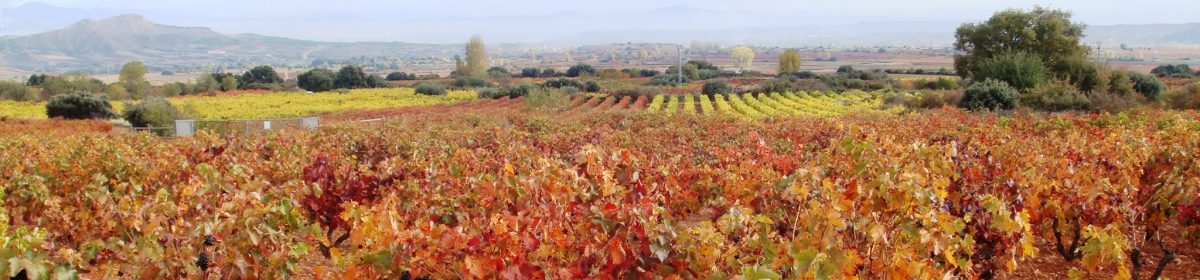
Much of DO Valdeorras’ vineyards are planted at altitude in soil that is strewn with slate and it’s this poor quality earth, lacking in nutrients, that brings about a certain desirable mineral quality to the wines that are made here. The vines have to dig deep into the mountainside searching for food and water and, as Cork Talk readers know, it’s this struggle for survival which results in the best grapes.

It’s an added element to the wonderfully fruit driven, dry, rich white wines that are only now starting to receive the recognition that they too should have been enjoying for decades! Whilst international commentators are, quite rightly, blowing Godello’s trumpet, don’t forget that you heard it here first folks, several years ago!

I recently returned to an old favourite wine of mine made in DO Valdeoras –  Bodegas Valdesil’s Godello Sobre Lías. If looking (and I urge you do) for an exemplary wine made with 100% Godello – this is it. You’ll find, on opening a certain shyness, a momentary slight reticence to reveal its true self. However by the time the glass is poured you’ll be aware of a lovely floral fragrance, with the faintest of hints of fennel, all of which blends perfectly with the white stoned fruit that you’ll smell when you swirl the glass and sniff the pale gold coloured wine.

valdesil bottle

As you sip the wine you’ll also notice that slatey minerality before it hits the palate where all that the aromas have promised is delivered in flavour with a rounding delicate creaminess too. Excellent and not expensive!

Or you might like to turn to Adega (bodega, but in the Gallego language) Coroa’s wine eponymously called A Coroa, again made with 100% Godello, though this time displaying a faint lime green as well as the straw colour. You’ll find some delightful jasmine and magnolia white flower aromas tempered with a fascinating whiff of new mown grass, which, just for a moment, took me back to my tennis days!

A COROA botella

White peaches blend with pears and the fresh acidic lick of citrus fruit, ripe lime, to match the colour. On the palate it’s clean and correct, fresh and fruity and there’s a little more fennel to come as you swallow and savour.

The 30 years old vineyard that provided the grapes for Joaquín Rebolledo’s Godello leaves its mark on the finished wine. It’s rich on the palate, full for a white wine and finishes with a flourish. There’s fennel again on the nose, a little less so on the palate, though this vegetal note is the backdrop to a wonderful slightly under-ripe apricot and juicy fresh peach fruit filled mouthful. It’s an award winner and has a very impressive 92 points in the Peñin Guide.

Godello is also happy with a touch of oak and a visit to the Valdesil website (shown below) will give you some examples, all of which I’ve tasted over the years and I highly recommend.

OMG – to finish I have a tip for you!

Following the dramatic International Wine and Spirits Competition success of one particular Sparkling Albariño last year (it was the only Spanish sparkling wine to win the ultimate award, Gold Outstanding, beating all Cavas as well), plus the fact that other DO Rías Baixas Albariño sparklers are of a very high standard, I’m predicting that you’ll soon be able to choose from several Godello Sparkling wines too!

I’ve tasted three (one of which, from Bodegas Godelia, is actually from another Galician wine area, DO Bierzo) and they really are good – with lots of potential to improve when demand encourages more bodegas to take the plunge!

(www.valdesil.com) (www.acoroa.com) (www.joaquinrebolledo.com)

Contact Colin: colin@colinharknessonwine.com & via www.colinharknessonwine.com where you can also subscribe to his Newsletter to receive updates about his wine tastings, wine pairing dinners with classical music, bodega visits and wine orientated Short Breaks. Plus you can follow Colin on Twitter @colinonwine

BUBBLE TROUBLE?!

BUBBLE TROUBLE?

PANIC BUYING AS PROSECCO DROUGHT PREDICTED IN UK!

Readers may already have read in UK national newspapers about an impending shortage of the Italian sparkling wine, Prosecco. Last year Prosecco sales in the UK increased by a whopping 75% and in fact superseded those of Champagne, making it Britain’s most popular sparkling wine!

However, as the harvest last year (which will be responsible for this year’s Prosecco) was so poor, often with yields 50% less than in the previous years, it is feared that there simply will not be enough to go round. Once the story broke, initially in the newspapers and then, virally, via social media, a wave of panic buying took place with shopping trolleys laden with Prosecco bottles first, food second, if at all!

If you’re already aware of this you might think I’m a little slow to make a comment – oh, he’s not as ‘breaking news’ as he was before his operation, you know! Well, those of us involved professionally in the wine trade have been aware of the possibility of such a shortage for a good number of months now. My failure to pass comment thus far, has been because I’ve spent some time trying to get over my total incredulity:

  1. Why on earth has Prosecco become so popular in the UK?
  1. Who cares if there’s a shortage?

The wine writing fraternity in the UK reported the story quoting various producers’, négociants’, importers’ and retailers’ plans to try and satisfy their customers, whom they expect will want to buy at least as much Prosecco as they did last year. And that was one billion pounds worth! I kid you not – 1 Billion quid!

However my colleagues were also keen to point out that there are alternatives – and they all mentioned Cava. Now, perhaps I’m a touch biased, but I wouldn’t place Cava in the ‘alternative to Prosecco’ category! Strewth! I would always buy Cava, and for that matter most other Spanish Sparkling Wines, well before Prosecco. For me, Prosecco is an alternative to Spanish Fizz, though, in fact, personally, I’d do without the bubbles if the Italian alternative was the only choice!

My apologies to our Italian friends, although it may appear so, I’m not a complete Prosecco-ist. The vast, vast majority of Prosecco sold in the UK is at the economic, entry level. This, of course, is why its sales have rocketed – it sparkles and is much cheaper than Champagne, cheaper too, than Cava.

Next time your are in the UK, take a surreptitious look at the retailer’s Prosecco bottle labels – if it says DOC, it’s at this cheaper end of the price/quality scale. If it’s DOCG, then it’s better quality and may be worth buying – if the Cava has run out, that is!

VARIAS COOL WITH FLOWERS

Now, I’m going to join my UK wine writing colleagues and talk about an alternative to Prosecco, but not just generally, I’d like to tell you about a specific Cava that I tasted recently in Ciudad Real, when I was at Fenavin, the Spanish National Wine Fair.

For me, the Prosecco’s I’ve tasted, and I’ve tasted a fair few, are all on the slightly sweet side (some, far too much so). It would seem to me therefore that the current craze in the UK is for sparklers that do have an element of the off-dry, to slightly sweet, about them. So, if there’s a Cava of this style, which, being Cava and not Prosecco, isn’t as shallow in flavour and lightweight in mouth-feel, it’s bound to go down well in the UK (in every sense of the phrase!). Indeed, I’m aware that many readers also have this preference so you’ll be interested too.

VARIAS FLORS i VIOLES LARGE BOTTLE

Flors i Violes Cava tastes as if it’s at the slightly higher end of the Brut scale regarding its residual sugar. Brut equals Dry, but you can have a Brut that has 4 grams of residual sugar per litre, as well as one that has the maximum 12 grams. Flors i Violes has 10.

In fact the other Brut Cavas made by this excellent bodega are on the driest side, veering towards the minimum. This is a new Cava, and new is exactly correct – the launch date was the week of Fenavin, early May, so I was delighted to be one of the first to taste it.

Cava Varias, the producer, has its ear to the ground and is well aware of the demand for this style of fizz. Flors i Violes targets primarily the young (the marketing that accompanied the launch is, well, cool!) but it’s not a trivial product, it enfranchises all those who like their fizz, perhaps in a Prosecco style, and some!

VARIAS FLUTE ON FINGER

On the first hit it’s light on the palate, pure tongue-tickling fun! But hold it there and you’ll feel that it’s had more than the minimum 9 months en rima (in bottle with its lees) – in fact it’s had a year, giving the wine more body. You might detect the slight presence of apple, faintly cider-esque, coming from the Macabeo. The mid-length depth of flavour after swallowing comes for the Xarel.lo variety and when you reach again for the glass the perfume is from the Parellada, which also gives an elegance to such a fun Cava!

VARIAS SCOOTER

It’s a celebratory drink, for sure, but try it as an aperitif and/or after dinner. Plus, if you are looking for a style of cuisine with which to pair this brand new Cava, then try Chinese food, and maybe Indonesian and Thai.

There’ll be more soon about the Cavas and still wines from Cava Varias (www.cavavarias.com)

Contact Colin: colin@colinharknessonwine.com and through his website www.colinharknessonwine.com where you can also subscribe to his newsletters which give information about the bodega tours, wine tastings, wine/food parings and Short Breaks he organises. You can also follow Colin on Twitter @colinonwine .

BODEGAS LUZÓN DO Jumilla

JUMILLA copas1-07-mvl

BODEGAS LUZÓN

DO JUMILLA

This is the second article I’ve written recently about bodegas in DO Jumilla – and I’ll be writing another soon.

So, does this mean I’m biased towards this sun-scorched wine-making zone of southern Spain?

Well, on the one hand, no. I’m not biased to Jumilla, at the expense of other wine-making areas of the Iberian Peninsular. However, on the other hand, yes I am biased. As biased as I am to any area of wine production that consistently turns out really, really good wines!

One of the wineries at the core of this consistent quality is Bodegas Luzón, several of whose very impressive portfolio of wines I’ve recently had the great pleasure of tasting. That’s pleasure with a capital P! Although I’ll be going into some detail about each of the wines I’ve tried, a general, ‘fits all’ comment would be that their wines are fruit orientated, rich, silk-smooth and hugely enjoyable. Now that’s a good start in anyone’s language!

The bodega is part of a group, as indeed are several bodegas these days, but it seems that their masters are content with encouraging them to carry on doing what they’ve been doing so well. If it aint bust, don’t fix it!

Firstly, the design team have done an excellent job. The bottles all look the part – they speak of good quality wine before you’ve even pulled a cork. And the labelling is cutting edge – from, ‘it does what it says on the bottle’, through idiosyncrasy, to classy art!

Secondly, the commercial team has the pricing right too. I’ve tasted Luzón wines from entry level to flagship and they’ve all been very fairly priced (indeed, but don’t tell them, a couple of their top wines would, I’m sure, command a heftier price were they produced in one of the more famous DOs!).

And the wine-making team? Well, there’s nothing wrong there either!

It’s not often that I write Cork Talk with a glass of one of the wines under review, close to hand – but I’m making an exception today. It’s a lovely, hot day – lunchtime on my shaded terrace and a well chilled Luzón white is just what the Doctor ordered (I’m not long out of hospital as I write – though it is a slight exaggeration of the truth   to say that it was the Doctor who ordered – it was more the Physio!).

Luzón Blanco 2014 is made with Macabeo and Airén – yes, that variety again, one to which I’ve referred a few times recently, and one which, when treated correctly, can give a lie to the grape previously known as characterless! I like Macabeo, in all its forms – it usually has a green apple tinge, often in terms of the colour of the wine, but also in its aroma and taste profile and it blends very nicely here with Airén.

To add depth of flavour and some added personality the wine has been partially fermented in new French oak with its lees to accompany it for nearly a couple of months. I do believe I’ll pour myself another! 6€.

Alma de Luzón, the Soul of Luzón, is the flagship wine and understandably so, as it speaks of the soil in which its elderly Cabernet Sauvignon, Monastrell and Syrah vines have been growing, as well as the bodega’s philosophy. The grapes were harvested by hand in small baskets and transported with care to the bodega where they were chilled before maceration and separate fermentation.

luzon alma

The resulting wines were placed in New French and American oak, but it was only the best barrels which were chosen to make this limited edition wine. In total the wine has benefited from some 22 months in barrica, but whilst this has added some flavour of course, it’s the richness, you might even say, opulence, of the fruit that you taste, and indeed, feel, on the palate.

On the nose there’s some sweet cedar and vanilla with a little coconut and coffee, though it’s the dark blackberry, blackcurrant and picota cherries that you’ll first encounter, a fruit compote that will remain with you from first hit, through the mid-palate and onto the long finish. It’s rich, yes, and at 15% abv, you may think, before tasting, that it’s a bit of a bruiser – but no, this wine is so elegant too!

At 40€ it is, for most of us anyway, a special occasion wine (think Christmas this year and/or the next two years – the wine I tasted was 2009 and drinking perfectly, yet with time on its side too), but real value for money!

Which brings me onto the idiosyncratically labelled, hugely pleasurable Portú – a wine that retails for just over 20€, so still on the expensive side, I agree, but which really should be priced at least in the 30€+ range!

Luzón portu

A modern label to go perfectly with a wine made in the modern style, whose roots are also in the past. It’s been made with Monastrell and Cab Sauv grapes whose vines grow at 600 metres above sea level, allowing for cooler temperatures at night, which bring essential fresh acidity to such a full bodied wine.

It’s easy drinking, worryingly so, and yet there is concentration and complexity there too. A structured wine, but non-conformist, with layers of enjoyment. You’ll find some worn leather sofa and coconut on the nose, with understated vanilla, but again with super dark, brambly fruits to the fore, with a noted black plum aroma and flavour. Long lasting and impossible not to admire!

I’d also place Altos de Luzón in the same category re its undervalued price-tag – at about 20€, it really is a steal – perhaps one for you to enjoy for that special occasion, without having to pay twice as much!

Into the fray (though there’s nothing inharmonious about this wine) they’ve pitched Tempranillo, now Spain’s most grown grape, and of course practically synonymous with Spanish wine in general. Adding a slightly lighter soft red fruit Tempranillo nuance to the dark blueberry, plum and blackberry of the Monastrell and Cabernet, it’s rich and powerful, though again, elegant, as well.

Luzon altos 2010

We enjoyed this wine immensely with a pork dish, and I’m sure that it would suit other meats, darker still, perfectly well too. On the nose there is also a slight herbaceous note, with bay leaf and thyme being slightly more powerful than the trace of rosemary that you’ll also find, if you look deeply enough, along with a more pronounced, for me at least, earthy minerality.

Finally, as space is running out – a quick nod towards Luzón Crianza as well as the much more moderately priced Luzón Roble, which I found locally for the bargain price of under 5€! Both wines are most enjoyable!

Contact Colin; colin@colinharknessonwine.com and via www.colinharknessonwine.com where you’ll be able to see his forthcoming wine events and where you can also subscribe to his newsletters. Plus you can follow Colin on Twitter @colinonwine for all the latest Spanish wine news!

Celler Vermunver DO Montsant

VERMUNVER logo_principal

GIVE UP THE DAY JOB!

CELLER VERMUNVER, DO MONTSANT

When, thankfully, sitting down with the charming Aïda Vernet (this was but a few days before my recent knee replacement), I was as amazed as I was humbled to hear that all the members of the close-knit family who are involved with Celler Vermunver’s also have ‘day jobs’!

Amazed because the quality of their wine is such that one would think they’d been  crafting quality wines for generations; and humbled, to see that they had taken the gamble of following a dream! To me, this is as admirable as the wine that they produce. They are a new, 21st Century, business and they’ve entered a very competitive field, so their passion isn’t yet providing them with a full-time living. However, watch this space!

Whilst not making their own wine, commercially, before, the family, like many in Spain, have made wine for their own use. For this, they needed to keep back some of the grapes that preceding generations had traditionally sold to others for their wines. Viticulture, they know very well, and whilst not on a commercial basis, they also have a history of wine-making.

Enter Roger Vernet Muntané, brother of Aïda, who had the vision to see that there was potential to continue growing for others but also to start a bodega making their own wines. To his family’s generational, traditional domestic wine making knowledge and commercial grape growing experience and success, Roger added a degree in oenology (winemaking).

For a start, their vineyards are right next door to the hallowed ground of Priorat, from whence comes one of Spain’s three most expensive wines. Indeed, DO Montsant, as their area is now known, used to be called the Falset sub-zone, where all the best DO Tarragona wine was made. After considerable pressure the authorities did concede that the consistent excellence of wines from Falsett was such that they should be granted DO status independently.

So, Roger and the family knew that the quality of the basic ingredient, the grape, was as good as is necessary to make fine wine. Consider also that the majority of the vines  used for their production are between 70 – 80 years old, and you may wonder why it took them so long to get cracking!

In 2004 Celler Vermunver launched its first wines. The limited production sold out and they knew that they were onto something. How the  business is financed, is not my affair of course, but it seems that they are, sensibly, taking it ‘poco a poco’  (little by little) until such time as their success enables them to concentrate solely on wine making and promoting their wines.

I tasted all of their small portfolio and am confident in recommending them to readers. I’m not alone in this as the company have already garnered medals and top Peñin Guide and Parker points.

First into my eager tasting glass was their Garnacha, Cariñena and Merlot Joven 2013 Vinum Domi (Latin, meaning Home Wine, so a real connection with their traditional past). You’ll find bags of fruit with this wine as well as a touch of liquorice on the finish. (7€)

VERMUNVER vinum_domi_330px

Next I tasted Petit Gènesi (small beginning) – this time it’s 20 yrs old Syrah that joins the old guys, giving a touch of peppery, added juiciness. The wine has had 6 months in French and American oak, giving it a little more authority than the youthful previous wine. However, none of the fruit is lost to wood – the oak provides some structure and some depth of flavour, giving also a longer finish. (9€)

VERMUNVER petit_genesi

I loved the labels of the two mono-varietal wines. Both proudly display the picture of the leaf that each distinct vine produces. I tasted the magnificently fruit orientated 100% Gènesi Cariñena 2012 (95 Peñin Points!) which has enjoyed (and I mean that!) 12 months in French and Hungarian oak (which is the French oak species , grown in Hungary). This wine, along with the other mono-varietal, is made using wild yeast as found on the vines in their own vineyards.

VERMUNVER carinyena_peque

The 2012 Gènesi Garnacha is made in exactly the same way, but with Spain’s second  most planted variety which has been grown so successfully in this part of Cataluña for centuries. Again, the by-word here is fruit, but with elegance, depth and structured complexity . Both of these single variety wines do what was intended – they delight the drinker, both when eating and when simply contemplating life, as well as being excellent expressions of what each variety is about.

VERMUNVER garnatxa_peque

At 20€ per bottle they’re not cheap – but of course quality never is! Outstanding wines!

Finally, I tried Gènesi Seleccio 2008, 60% Cariñena and 40 % Garnacha – a signature wine of the bodega and a homage to the soils in which the varieties have been growing for 80 years, planted by Aïda and Roger’s Grandfathers!

VERMUNVER genesi

Adorned with several medals and top level marks in the guides the wine is drinking perfectly now, and at 15€ it’s a very good buy! However I don’t think it has long left. Readers may therefore want to wait until the following vintage is available (which may be now? www.genesi.cat ).

Contact Colin: colin@colinharknessonwine.com ; and via his unique wine orientated website www.colinharknessonwine.com where you can subscribe to his newsletters and learn of his Wine Tastings, Bodega Visits, Short Break Wine Tours; Blogs etc; and via Twitter @colinonwine