Bodegas Marqués de Murrieta

BODEGAS MARQUÉS DE MURRIETA

LA RIOJA’S FOUNDING WINERY


Although still a family affair, Bodegas Marqués de Murrieta has passed from the founding aristocratic Murrieta’s to the equally impressive Cebrian-Sagarriga family from Galicia. However, the strict ‘quality above all’ philosophy that has been the bodega’s guiding light since its inception lives on with the new owners.


To put it in Max Boyce’s parlance, “ I know, because I was there!” And I wasn’t alone.

The group attentively listening to our Guide, Miriam

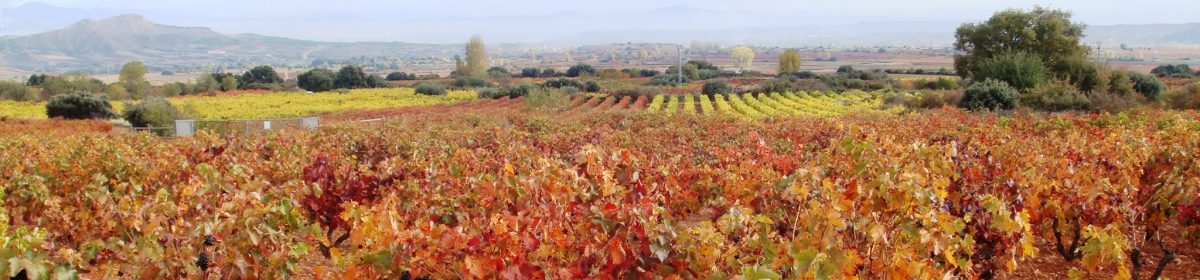
We’ve just returned from a wonderful five day tour of La Rioja, taking in three different bodegas as well as the beauty of these hallowed lands, bathed in Autumn  sunshine, showing the multifarious seasonal colours to absolute perfection. A group of 23 of us enjoyed immensely the fantastic Rioja Wine/Tapas concept, the stunning scenery, the exceptional hotel and of course the bodega tours.


First up was Bodegas Marqués de Murrietta whose restored castle-like, baronial building is totally in keeping with the origins of the bodega. Everything about the bodega speaks of prestige. Our excellent, passionate guide, Miriam, and all other staff wore crested uniforms. There is a hushed air of sophistication throughout the building and grounds. Staff are happy, respectfully deferential and there is an almost tangible  feeling of a common goal – simply to be representative of the very best that La Rioja can offer!


The bodega was founded by Luciano Murrieta, originally from Peru, whose  distinguished military career in his native country followed by a similarly successful business career in Spain, led him to be created a Marqués. His travels in France, particularly in the Bordeaux area, inspired his love of French style wines and, as he was an important landowner in the Logroño area of Spain, he set about making wines to compare with those over the Pyrenees.


By pure coincidence a dramatic twist of fate occurred in the vineyards of France, which would to be a major help to Murrieta’s wine business as well as that of the second oldest bodega in La Rioja, Marqués de Riscal, and all who followed in their footsteps. Philoxera, a deadly pest arrived in the vineyards of France virtually decimating the country’s vines.


Whilst most French wine makers hastily grafted their indigenous varieties onto American rootstock (the only answer to the Philoxera problem), others moved south, to Spain, where Philoxera hadn’t (yet!) struck. The French had a thirst for wine but home-based producers were not yet able to satisfy that demand. Rioja producers, headed by Marqués de Murrieta, were already making wine in the French style so and huge export market was theirs for the taking.

Of course, we are talking red wine here. Rioja, and indeed Spain in general, has always been known a red wine producer and although it is definitely true to say that the top white wines of Spain now compete with some of the world’s best, Spain still makes far more red wine than white.


So it was a slight shock to see a display of white wines as we entered the well appointed shop on arrival – the more so when, at first, when we saw that half of them were from the north west of Spain, Galicia, where Albariño is queen. The connection  became clear as Miriam  told us a little of the family history.


The lengthy tour led us initially to the original winery, now beautifully transformed into a large reception area with antique furniture, photos of the current owners with the King of Spain, and a Grand Piano to boot! The next level down was really an almost living history lesson tracing back to the roots of the Marqués’ vision and his subsequent success, and philanthropy too.


The business end of the operation followed – the presses, the oak vats and the cellars all at a lower level ensuring constant temperatures which allows them to produce only the best wines. To give an example, their ‘entry level’ wine, in other words their first and most economically priced wine, is actually a Reserva, and a very special one at that, boasting far longer than the minimum time in oak and bottle before release – in fact a cool 5 years before this Reserva is on the market!


The wonderful, huge modern oak table in the tasting room was as perfect as it was atmospheric. Each place setting had our individual names inscribed along with crystal clear glasses, an impressive folder of information about the bodega and the wines we were about to taste, as well as a small embossed menu of the gourmet tapas with which the wines were to be paired.

Huge, and hugely impressive - the tasting table at Bodegas Marqués de Murrieta!
Huge, and hugely impressive – the tasting table at Bodegas Marqués de Murrieta!

We started with the Barrantes Albariño, made on the family’s estates in D.O. Rías Baixas, brilliant in the glass, with a golden hue and faint lime-green flashes. On the nose the typical floral notes, characteristic of Albariño – white flowers, jasmine and magnolia with maybe a slight honeysuckle finish. You’ll note the white peach flavour on the palate immediately – hold the wine there whilst the mouth warms it giving of further fruit flavour, including a touch of apple. Lovely!


That ‘entry level’ wine was next! Tempranillo, Garnacha, Graciano and Mazuelo (which was fermented exclusively in French oak) all combine harmoniously to become the Ambassador of the winery, as Miriam put it. There’s a natural complexity to the wine, brought about by the blend, and this is further enhanced by time in oak, which complements the fruit, rather than hiding it. Whilst fruit is to the fore you’ll also have a feeling of spirits, perhaps Kir in the background. Super!

LA RIOJA 2015 021

Just as the Marqués de Murrieta can, correctly, be described as the founder of modern Rioja (that’s modern, in terms of making Rioja wine in the style of the French greats and not in the style which was essentially the legacy of the Romans!), then Dalmau can be described as the definitive modern, modern style of Rioja! It’s an exceptionally good, deeply flavoured and many textured wine which has had just two years in oak and one in bottle made with Tempranillo and Graciano grapes from a single vineyard whose vines can count 86 growing seasons, as well as Cabernet Sauvignon of similar age! Superb, and incidentally the best match I have yet found for the extremely strong blue cheese, Cabrales!


Finally (well, almost) Miriam brought out an extra wine, as we had been so intent and enthusiastic about the tour and the tasting! Capellanía is a white wine made from 90 years old Viura vines in a single plot which has always enjoyed very good sunshine. As vine as old as this produces few grapes but those that are produced are very rich. The wine has been aged for 21 months in new French barrels as is an icon of the traditional white Rioja style. Excellent!

LA RIOJA 2015 020

Finally, I couldn’t resist tasting a tiny amount of the flagship wine of the house – Castillo Yguay. A thimble-full costs just over 6€, but it is the personification of Rioja elegance – would that I could afford a bottle!


www.marquesdemurrieta.com


PS There are just be a few places left for the super Wine/Tapas tasting at Denia’s excellent Republic Restaurant on Thurs. 10th December! This is going to be sensational! Please call me on 629 388 159 or e-mail colin@colinharknessonwine.com to reserve, asap!

Bodegas Blasco, The Full Story

JOSÉ LUIS BLASCO – TEULADA’S NEW WINE SHOP

The wines tasted!
The wines tasted!

Many readers living in the Teulada/Moraira area will know of the wholesale beer and wine business, José Luis Blasco. They’ve been successfully supplying the catering trade for many years – it’s almost certain that if you’ve eaten out in the area, you’ve enjoyed their beers and wines.


There will also be several of you who have, cheekily, like me, been to the warehouse and asked if you could buy the odd bottle of wine, which perhaps you’d enjoyed in one of their clients’ establishments. José was always happy to oblige.


A few months ago he started to think that maybe there was a call for a more visible, retail arm to the business. Simple, knock through his warehouse at the back of the Teulada Industrial Industrial Estate and come out into another warehouse sized building, this time on the front, easily seen by all those entering Teulada from the N332.


Unfortunately, though invited, I couldn’t go along to the inauguration as I was recovering from my knee op, but when I did visit and sampled some wines I was asked to present a tasting after the Summer. I jumped at the chance with alacrity. Although I was well aware that José already has a good selection of wines, it was clear to me that he had upped the ante in terms of quantity, variety and quality. Choosing just five wines for the tasting was going to prove difficult.

So we chose six!


I often like to start a tasting with a Cava and as José and I had agreed that we would also like to showcase some local wines in this tasting, so we chose a Cava from Valencia. As Cork Talk readers will know, Cava is an unusual DO in that it is not restricted to just one geographical area – it can be made in a part of Valencia too.


Nodus Brut is such a Cava. Not content with the minimum 9 months ‘en rima’ the Nodus wine maker left his Cava in contact with the lees, the dead yeast after the 2nd fermentation, for 22 months, qualifying it for Reserva status. The Macabeo and Chardonnay in the blend add apple fruit acidity and a touch of peach flavoured body and depth. Super start.


I apologised to fellow tasters, not for the choice of the white wine that followed, but for the fact that I haven’t ever written about the wines of DO Monterrei! Located in the deep south of Galicia, where Spain is divided from Portugal by the Rio Minho. This mention now, is the first of more, I assure you – if Minius 2014 is anything to go by! What an inspired choice by José! If you ever want an introduction to the Godello grape variety – which has been praised several times in this column – then this is it!


It has such a fruit filled delivery with the usual white flower fragrance plus a touch of fennel on the nose too! Drink this wine for aperitifs and with salads and fish. Seriously, you need to buy this wine now!


As Spain has such a wealth of rosé wines, we couldn’t let pass the opportunity to show one at least. There’s an excellent choice at Blasco’s, all the different variations on a pink theme, so many grape varieties, but not a lot of difference in price – they are all, like the whole Blasco selection, very good value for money.


We decided on Pireneos 2014 (remember, 99% of Spanish rosé wine should be drunk young) whose label has the photo of a beautiful horse. At first the wine was a little shy to reveal itself, a red rose bud about to break into flower, but initially timid, demure!


The onion skin colour of this wine would have been called ‘classical’ in years gone by, and on the palate it appears to be a rosado that would prefer to the a red! There is a certain meatiness and for a rosado quite a mouthfeel. I really enjoyed this wine with Jamón Serrano and some semi and curado cheese, though I’m sure it will become a go-to rosado for Paellas and other rice dishes.


Our first red, Monteabellón, was from Ribera del Duero, and typically it was big in fruit. For me, a little unbalanced as yet, its semi-crianza five months in oak have yet to mellow some tannic notes, though with food, it’s drinking nicely. Buy it now and sit on it for six months to a year and then it will show its best.


It was an unfair comparison, but I wanted tasters to experience a Ribera del Duero and taste it against a Rioja. Pacto was chosen, a crianza Rioja, whose extra time in oak and in bottle made it an easy winner. There is an elegance to this wine. It doesn’t have a huge fruit delivery on the first hit, but hold it in the mouth and you should find those strawberry notes common to Tempranillo based wines from la Rioja.


It’s had 16 months in oak (the minimum for a Crianza from Rioja is 12 months) and there are pleasant smoky vanilla notes to complement the fruit. It’s light enough to be enjoyed simply, with friends, but there is also sufficient weight and richness for it to accompany meat dishes, though I’d avoid gamy foods.


Our final red was another acknowledgement of the wines of DO Alicante, another ‘local’ wine therefore. Again I must thank José for introducing this wine to me! It’s made with a favourite variety of mine, Monastrell, plus a little Cabernet to add extra ageing capability as well as colour and a slight blackcurrant flavour to go with the baked dark plum of the Monastrell.


It’s juicy, with a good acidic lift and a touch of tannin, to ensure long life.

Some dark chocolate blending with the blackcurrant (typical Mon and Cab) creating a slight dark chocolate liqueur sensation. The French 500 litre barrels in which the Monastrell has been aged for 16 months adds depth and complexity.

I’ll be coming back to this wine and more from the same stable, and indeed, I’ll be going back to José Luis Blasco’s Wine Shop!

Plus – there’s a super wine tasting/gourmet tapas evening coming soon at D enia’s excellent Republic Restaurant, on Thursday 10th December. It’s the final Telitec Tasting Tour venue and promises to be one of the best! Please contact me for the remaining few seats!

colin@colinharknessonwine.com or please call 629 388 159 to reserve for the above!

Telitec/Blu Tasting Tour No. 2

RESTAURANTE TIMON HAS THE BOTTLE!

THE TELITEC/BLU PROPERTY TASTING TOUR HITS CALPE!

It’s a worry. I’m wondering if I may be turning into a bottle fetishist!


Whilst the DO Rías Baixas, Bodegas Palacio de Fefiñanes, Albariño wine inside the bottle is a real treat (showcasing classic white flower aromas and white peach flavours), I have to admit that I also chose this wine because it’s in a magnum!


A magnum bottle of wine holds 1·5 litres – two bottle’s worth, but it’s not the quantity that impresses, it’s the actual bottle! Size isn’t everything, I know, but on occasion, it helps!


I’d say this Albariño was the leading wine out of the five we tasted recently at the jointly sponsored Blu Property Group/Telitec Tasting Tour in Restaurante Timon, Calpe. Both companies have clients along the Costa Blanca, as well as inland, and we thought a Tasting Tour, incorporating the most populated towns would, like the wine and tapas, go down rather well!


We started the event, as we nearly always do, with a Cava. We were there for a celebration, a night out with beautiful views of the Mediterranean, which ebbs and flows almost to the restaurant door. What better celebratory drink is there here in Spain? However Aria, from Bodegas Segura Viudas, is not simply a refreshing glass of  bubbles.


That said, the Brut Nature (the driest possible style of sparkling wine) is certainly fresh with a pleasing acidic lift,  but there’s quality fruit there too, with a little depth to round off the experience. Made with all three of the classic Cava grapes: Macabeo, Parellada and the oddly spelt Xarel.lo it also has the benefit of having spent 15 months ‘en rima’ (resting on its lees, the dead yeast deposit which gently settles in the neck of the bottle as it is stored, practically upside-down).


Six months more than the DO Cava permitted minimum of 9 months ‘en rima’ adds weight, body and depth to those celebratory bubbles. Served with a smoked salmon & dill tapa  – well you can’t go wrong!


Of course, many readers will know that Albariño, from Spain’s north western outpost, Galicia, is very often served with shellfish, though this wine has the body to accompany other dishes too. We followed the traditional route and served it from the magnums (did I mention the magnums?) with a prawn tapa, with which is made a perfect marriage.


A pale golden colour in the glass, the wine immediately starts to give off wonderful fruit-laced floral wafts of aroma – causing, I noticed, some tasters to stop their  conversations for a while, searcing for the source of the lovely perfume that had arrived on the tables! You may not find white peaches, or the lighter coloured fresh apricots that can be found here in Spain, but it doesn’t matter – it’s glorious fruit, and you don’t need to define it!


Now if we are taking fragrance – the next wine, a rosado from the famous and highly praised Bodegas Arzuaga, DO Ribera del Duero, really stood out, aroma wise! Ribera del Duero is rightly lauded for its super red wines and well, as rosé wines are made from black red wine grapes, it’s stands to reason that there should also be some very good rosados made there too!


Arzuaga’s Rosae is made from 100% Tempranillo coming from quite young vineyards that are over 900 metres above sea level. Serve it chilled, but not really cold and you’ll find that some charming rose petal aromas float upwards from the glass. It has a delicate mouthfeel and yet as it warms on the palate you’ll feel it to be quite rounded and full flavoured for a rosado wine. The very pleasant surprise package of the night!


Our first red wine weighed in at 15% abv – feeling full in the mouth with some obvious weight. Tres Picos 2013 is from Bodegas Borsao, D.O. Campo De Borja and is made with Garnacha, Spain’s 2nd most planted red wine variety. It’s a bold wine with a deep black cherry colour and some of that fruit flavour on the palate too.


Look also for some black plums and blackberry – there’s plenty of dark fruit in there for sure. Just 5 months ageing in oak has also added some depth and a little complexity. I’d like to taste this wine in a year’s time, when I think it will be softer on the palate, but retaining its fruit for sure.


My magnum fetish was satisfied once again with the final wine! Zuazo Gaston Crianza 2010 is a D.O.Ca Rioja wine was also served from large 1·5 litre bottles. It’s a Rioja wine that comes within most people’s budgets and whilst there is a certain elegance there, it paled a little in comparison with fuller and richer style of the Tres Picos.


Another successful night on the Tasting Tour and several of those present will also be at the next – which is at the Swiss Hotel Moraira, Thursday 12th November starting, as do they all, at 7pm. There are some places left – please contact me to reserve! Please also note that The Teltitec Blu Property Tasting Tour will be at Nox in Javea, Weds 25th November; and finally at Republic, Denia, 10th December!


Contact Colin: colin@colinharknessonwine.com and through his website www.colinharknessonwine.com and you can follow Colin on Twitter, @colinonwine

Telitec/Blu Tasting Tour

THE TELITEC TASTING TOUR

A VINOUS TOUR OF SPAIN!


Recently the first in a five part series of wine and tapas tastings, sponsored by Telitec Communications in association with Blu Property Group, was held at Vintage Restaurant, Albir.


Vintage Restaurant’s Chef/Patron Dani Bowler is well known to those who watch UK TV here in Spain as he was one of the finalists on the Masterchef show, narrowly missing actually winning the series.

Telitec’s dynamic Business & Promotions Manager, Gemma Broad, and I met Dani a few weeks ago to explain the concept and to choose the wines – we were quite happy to leave the choice of gourmet tapas to such an expert!


Telitec has an extensive client base stretching along the Costa Blanca and inland and we wondered what interest there would be in holding a series of fine wine and gourmet tapas pairing evenings in elegant restaurants at highly populated centres on the coast. The response was good – bookings for Vintage ensured that we just about filled the venue and reservations for the other restaurants involved* continue to arrive in my inbox!


There was also a good presence of staff from Blu Property Group, who are keen to be associated with such an event, and many of their large portfolio of services were covered by their representatives who, like Gemma, were happy to chat with fellow tasters.


Wines are chosen from the restaurants’ wine lists – we don’t just look at house wines, of course! Indeed at Vintage, I was delighted to be able to twist Dani’s arm into allowing us to use the finest on his list, Santa Rosa 2011 from Bodegas Enrique Mendoza, which had the added advantage of being a local wine with the bodega being just a grape’s throw away from the restaurant!


There is, quite rightly, a lot of talk (which translates into huge sales) about the white wines coming out of D.O. Rueda these days. Modern technology, significant sustained investment and old fashioned hard work have seen their indigenous grape variety, Verdejo, morph into wonderfully fruit driven, fresh, aromatic and flavour-full dry white wines. I’d say it’s almost certain that all readers have at least tried one, and there will be many for whom it is the go-to wine of the summer!


Often, commentators such as myself will point out that some of the taste and aroma profile characteristics of Verdejo are similar to those found in Sauvignon Blanc. It’s true, and we can all be forgiven for confusing one with the other when tasting blind. So, it seemed to some that perhaps the soils and climate of Rueda, would also suit Sauvignon vines. Bingo – two super dry whites from the same region.


Oro, a Sauvignon from D.O. Rueda, was out first wine of the evening and its pairing with Dani’s Duo of Salmon, was a marriage made in heaven. The fresh acidity of the wine cut though the richness of the baked and smoked salmon duo providing a perfect match. An excellent start!


Those in Galicia, particularly wine types in D.O. Rías Baixas, would consider Verdejo to be the new kid on the white wine block – here in Spain’s green (because of the highest rainfall on the Iberian peninsular!) north west the variety of choice is the well established noble grape, Albariño. I’m sure, again, that readers have quaffed and enjoyed several white wines made from this variety and coming from D.O. Rias Baixas.


Martin Codax was a famed poet of centuries ago from this area of Spain, but now his name lives on (I suspect more for the wines than for his verse?!) in that it is the name chosen by one of the leading wineries in D.O. Rías Baixas. The Martin Codax Albiriño is simply named, but it’s not a simple wine!


With a golden hue in the glass the white flower aromas, typical of the variety, rise to the nose promising a lovely drink! On the palate there are white peach notes with just the suggestion of some exotic mango in the mix too. It has the necessary fresh acidic lift but it’s more rounded, with a deeper flavour and longer finish that the Sauvignon above. Albariño’s great cuisine partner is seafood, fish of course, but particularly shellfish.


Dani’s tempura battered langostine, as usual so perfectly presented, was again a perfect fit. A number of tasters took mobile phone photos of this wine’s label with a view to sourcing it for their own supply!


Callejo wine has a really attractive label of a young girl dressed in the fashion of time gone by holding a bunch of flowers, perhaps on her way the local fiesta! Whilst it is true to say that D.O. Ribera del Duero shares the honour of being host to Spain’s equal most expensive wine (priced at about 1,000€ per bottle!) I’m delighted to say that this does not mean that other producers price their wine accordingly!


I’m often told by people that they are buying more Ribera del Duero wine now than ever before. The Callejo red wine is an example of just why this is so. It delivers a super fruit entry, mid-palate and finish – simple as that. Tempranillo (though here the variety can also be called Tinto Fino or Tinto del Pais) will always give you juicy fruit and when this is linked with a little oak ageing (only a few months in this case) the result is a lovely, easy to drink mouthful!


Santa Rosa, D.O. Alicante, from Bodegas Enrique Mendoza, Alfaz del Pi can perhaps be considered the iconic red wine of the Denominación de Origen! When first submitted in international competitions a few decades ago it made headlines and caused the wine writers of the day to re-think regarding wines from this hot and humid area of Spain. They hadn’t realised that Alicante is not just about the coast.


The vineyards in Villena, Alicante(!), are between 600 – 750 metres above sea level and at night can therefore offer vines some peace and rest from the fierce temperature of the daytime. The sunshine hours ensure that the Cabernet Sauvignon (the major shareholder in Santa Rosa) ripens perfectly (unlike, often, in areas considered it’s natural home – Bordeaux, for example) making the finished article almost instantly accessible, with no need to wait for any harshness to mellow down.


It’s a wine that is there to savour and as we drank it there was a reflective hush that enveloped us, until someone said, “Wow, I love this wine!”!


The final wine was Jane Ventura Reserva Rosado Cava a wine that has had extra time ‘en rima’ giving extra body, enough in this case to match a super small delicious homemade (of course!) cake creation!


* Next in the series: 12th November, Swiss Hotel, Moraira; 25th November Nox, Javea; 10th December Republic, Denia. Seats available at all venues – please contact me on 629 388 159 or please e-mail colin@colinharknessonwine.com