Regrets re end of my radio Programme – from one of its Sponsors, who wants more!


Siento lo de tu programa, qué pena. Espero que encuentres pronto otra emisora y podamos hacer el programa y la entrevista en ella. Ya me irás contando y cuenta con nosotros!


Gracias y saludos,

Diego Martínez

Familia Martínez Bujanda

Tel.- (+34) 941450876

Mov.- (+34)609393961

www.familiamartinezbujanda.com

President Romanian Wine Tourism Board on hearing of Total FM Closure

Dear Colin,

I’ve just heard the news and I am deeply sorry about this. I just wanted to know that your wine programe was a great show…it was a really good way to stay in touch with all what’s happening in the Spanish wine world.
Anyway,  I am positive things will work out eventually and your show will be truly appreciated by mass-media.
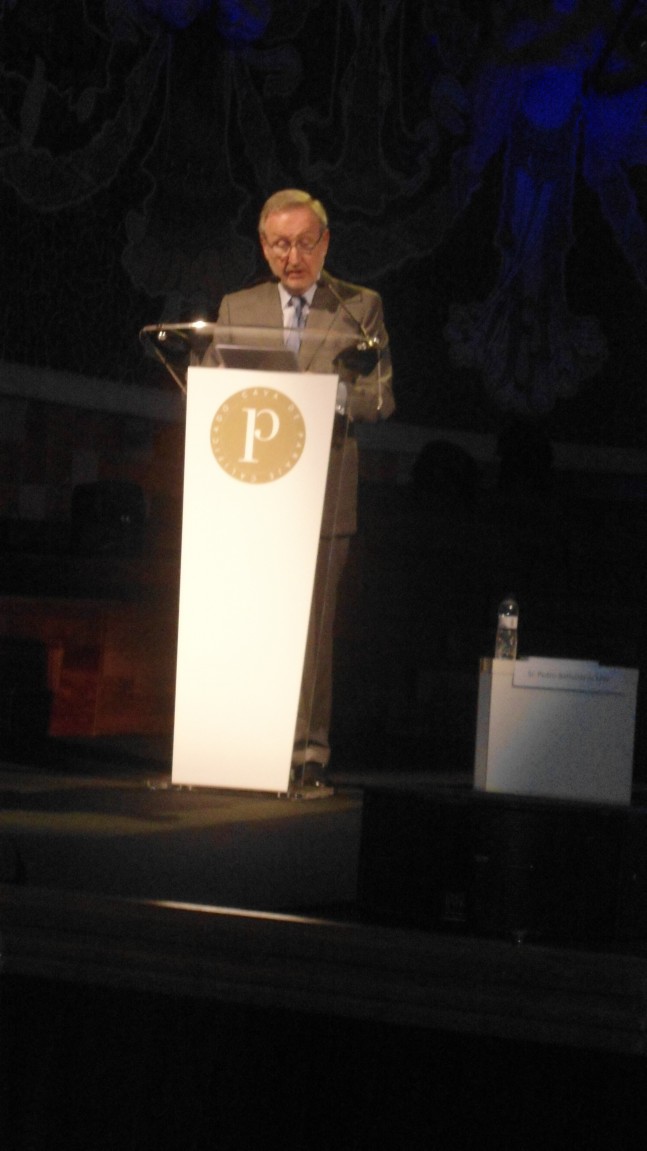
With fellow International Wine Judge, Chris (background) and International Wine Contest Bucharest official, Silviu Serban, in Romania 2017!
Me and the others from  Romania are eager to hearing you on air telling us some wine news soon…
All the best,
Alexandra Galbeaza
 (Your international audience România)

BOXING CLEVER


Remember Watneys Part Sevens? The bitter inside was, to be fair, drinkable – that’s if there was ever any left after ‘opening’ the can! The rigmarole one had to go through to extract it, in the absence of that special little opening gadget! Remember the foray into the host’s dad’s garage looking for a suitable tool, whilst praying he wouldn’t come back unexpectedly and find his daughter had ‘invited a few friends around’?


Well, there’s many a smart suit that’s been soaked by the geyser that shot out when hammer was applied to nail! And remember how it found its way up your sleeve as you tried to put your thumb over the opening to stem the flow!


Move on a decade and whilst some (including me) had graduated to the smaller cans, equipped with an opening pull, others (including me – well, we were partying!) were developing a taste for wine brought to the party – in a box! Bag in Box wine had been invented!


The wine inside was drinkable – but only just, and certainly only for the great unknowing (including me, but not for long!). This was nothing at all that resembled quality. In order to shift an excess of wine from the European wine lake of the time, producers had thought of the idea of larger quantities, ideal for parties (for those with fewer taste buds than normal), being vacuum packed in collapsible foil/plastic containers hidden in cardboard boxes.


For me it’s rather like the tetra-pack ‘wines’, along with the large plastic bottles sold in supermarkets today – whose wines are exceedingly poor quality, harsh, thin and nasty. Their only ‘endearing’ feature (for some, at least) is the alcohol they contain.


Fast forward a further few decades, a couple of years after my arrival in Spain and I was surprised to hear from co-owner Matthew, that a wholesale wine business (which was later to add a retail arm which morphed into one of the best wine merchants on the Costa Blanca, La Casa Del Vino, Javea http://www.casadelvino.biz/) was doing a roaring trade selling BIB wines to various Scandinavian countries. To my mind, Scandinavians are cultured and discerning people – so what did they know, that I didn’t?


Clearly, whilst the technology re the actual containers had improved, so too had the quality of the wine. It’s now time to kick out our preconceptions born of yesteryear experiences – Bag in Box wines rock!


I hope I’m not leaving readers dizzy here, but let’s again fast forward, in fact to just a few weeks ago. Our great friends, Mick & Ros, had cut out, of no lesser publication than ‘The Times’, do you mind, an article, not just about the resurgence of BIB wines, but about the quite dramatic improvement in the quality of such wines. I read, with a growing thirst.


Then, as is often the case (usually following a trade tasting!), another article came to my attention – this time from an equally impressive source, probably the world’s best wine magazine, Decanter. And finally, when talking about the phenomenon on my radio show a couple of weeks ago I received lots of incoming, in favour of BIB, including from my friend and co-IWSC panellist, Paul Young (http://imbibros.co.uk/) .


A little research revealed that Sainsbury’s BIB sales increased by just under 9% last year and, almost incredibly, Amazon sales in the UK rose by a staggering 212% this summer when compared to 2016! Waitrose has also reported a spike in sales. The reasons given for this across the trade increase were: convenience, increasing environmental awareness, longevity and, for me, crucially, the improving quality of the wine – dubbed the ‘premiumisation’ of the wines used!


‘From pantry to picnic & party’ is the alliteratively pleasing promotional phrase extolling the virtues of BIB wines, but this might also have been said of the predecessors of the current crop. The difference nowadays is of course the quality of the wine. The ‘romance’ of wine will, I think, ensure that the finest of wines will always be in bottles, but it’s certain that quality BIB wines are here to stay, and will continue to develop and improve.


One of the BIB wines quoted and praised is produced by my old friends at Bodegas La Pruísima, DOP Yecla. ‘Old Hands’ is an organic red wine made from their beloved Monastrell vines. I’ve tasted the wine already and I’m impressed – and I know I’ll continue to be so for the, perhaps two weeks that it will stay in my fridge!


Plum fruit, and lots of it, with some dried mountain herbs on the nose, the wine is juicy and, during this continued (at the time of writing!) hot spell it’s a pleasure to drink slightly chilled. It’s available across the UK in Lea and Sandeman Wine Merchants (I can send you the full list – just e-mail me), plus you can buy the boxes (as well as the same wine in bottle) from www.bodegaslapurisima.com .


Unsurprisingly their DO Yecla neighbours and friends at Bodegas Castaño also sell a lovely BIB wine – in fact made with Monastrell too. I tasted this some weeks ago, posting on Facebook that it was fresh and fruity after more than two weeks! It’s a rich damson fruit driven wine, rounded on the palate with a lovely finish – also, like the above, far too easy to drink!


Bodegas Castaño http://www.bodegascastano.com/en are selling their BIB wine mostly in Sweden as well as being available in mainland Spain and of course, you can buy it from Raquel in the Tienda (shop) via the above website!


Contact Colin – colin@colinharknessonwine.com ; Facebook Colin Harkness ; Twitter @colinonwine
Castellroig’s Cava de Paraje Calificada

Sunshine gold in colour this excellent Brut Nature is made with Xarel.lo vines which have seen 40 summers planted on their Terroja Estate in soils that were first formed 20 million years ago!

CLOSURE AND A NEW ERA FOR CAVA

Yes, a touch oxymoronic, I agree, but sit back, cava glass (no more than two thirds full) in hand and please read on – it’s all good news for lovers of Cava, like myself.


In the couple of years preceding 2014 I had written the occasional article trying to explain to readers why it was that there had been some abandoning of ship by a number of cava producers who were worried about its standing in the world of Sparkling Wine. I suppose the bad news (there’s a word more often used than this phrase!) hit the fan when the current incumbent of one of the most famous Cava houses also decided to cut and run. The Raventos family, in the late 19th Century, had in fact been the founders of cava making in Spain – but would now no longer be involved!


What was it all about? Well, like the current crisis in Cataluña, it’s complicated.


It all came about because of a concern amongst producers of quality Cava that the original good name of the DO and its produce had been besmirched by the huge supply of cheap Cavas that really aren’t worthy of the name! These cheap-end, tasteless, anorexic Cavas offer the same inviting ‘explosion’ as the pressure inside the bottle pops the cork, but it was an open and shut case of breach of promise! And still is today.


Whilst being perfectly honest with neither axe grinding nor hidden agenda in mind I wrote a few related articles which must have come to the notice of the burghers of DO Cava. Hence the expenses paid invitation to interview the president about their plans to combat the negative criticism being made by other commentators as well as myself.


Careful not to be seduced by the sumptuous lunch in the gloriously grand, 11th Century, private dining area of Bodegas Segura Viudas, accompanied by really top level cavas, a different style for each different course, I listened to Señor Bonet’s, impelling explanation of plans for the Empire’s Strike Back.

With DO Cava Officials, including Señor Bonet, President of Consejo Regulador, DO Cava.

I agreed that all DOs suffered similar criticism – there will always be those who strive to make the best wine possible under the auspices of whichever DO in which they find themselves. And, sadly, there will also be those who are simply in it for the money. They’ll obey all the rules (probably!) to ensure that they carry the DO’s motif on their labels, but there’ll be little concern about the quality of the product.


So, whilst that couldn’t really be circumvented, there were other ideas afoot. Firstly, there was going to be a promotional drive to push what was going to be called ‘Premium Cava’. This certainly included those cavas which qualified for Reserva and Gran Reserva status, but also a number of ‘Joven’, young cavas (as opposed to Reserva and Gran Reserva style which have been aged for long periods) which were displaying classic characteristics of fine cava, though younger in style.


In tandem with this promotion, and certainly the most innovative and creative of the ideas was the eventual introduction of a totally new concept, a new designation within DO Cava, the top of the quality pyramid, Cava de Paraje Calificada! Qualifying would be tough!

Señor Per Bonet, President, Consejo Regulador, DO Cava, officially celebrating the Governmental approval of the new concept and designation Cava de Paraje Calificada

Firstly, of course, all the grapes will have to have come from a single vineyard, or indeed a single plot within a vineyard. This will mean that the resulting Cava will be representative of that terroir. This answers very nicely a criticism that has always been leveled at Cava. Now there will be a definite sense of place.


Also, the vines have to be a minimum of 10 years old, though most will be many years older, ensuring better quality and richer the grapes. Yields will be strictly controlled. Also these superior grapes must all have been picked by hand and must undergo strict analysis in the bodega.


As part of the quality control there will be a panel tasting of both the base wine and, following the second fermentation, a tasting of the Cava straight after disgorgement, with only those which tick both boxes being passed! Disgorgement, by the way, will only be allowed after a minimum of 36 months, that’s three years, ‘en rima’ – which will of course ensure depth and complexity in the finished article. And many will in fact have far longer ‘en rima’.


Three years later I really am delighted to say that the first 12 cavas to be elevated to this new category are now available, and it was a real privilege for me to be able to taste one, sent by producers Castellroig – their stunning Sabaté i Coca Reserva Familiar!


Sunshine gold in colour this excellent Brut Nature is made with Xarel.lo vines which have seen 40 summers planted on their Terroja Estate in soils that were first formed 20 million years ago! 30% of the base wine was fermented in French Oak and then aged for 3 – 4 months before being blended. The second fermentation occurred in the same bottle (of course) and the wine has been left ‘en rima’ for a minimum of 60 months!


I love the fennel and mountain herbs (thyme and laurel, more than rosemary) and the slight toasty notes with blanched almonds, a little hazelnut nuance and some distant pear and apple fruit. It’s rich and full, yet personifies elegance with a long and joyous finish.


So, although this superb Sabaté i Coca Cava de Paraje Calificada represents closure, re the long process which I’ve been following for over three years, it is also representative of a new era for Cava! Enjoy!