Articles

Bodegas Castell d’Encus

THE EXTRAORDINARY WINES OF

BODEGAS CASTELL D’ENCUS


I first heard about Bodegas Castell D’Encus, DO Costers del Segre, via a Tweet from Pancho Campo. Señor Campo was Spain’s first ever Master of Wine and his comment that this young bodega (founded 2001) made ‘the best Pinot Noir in Spain’ was the starting point of a fascinating and extremely tasty metaphoric journey into the Catalan Pyrenees.


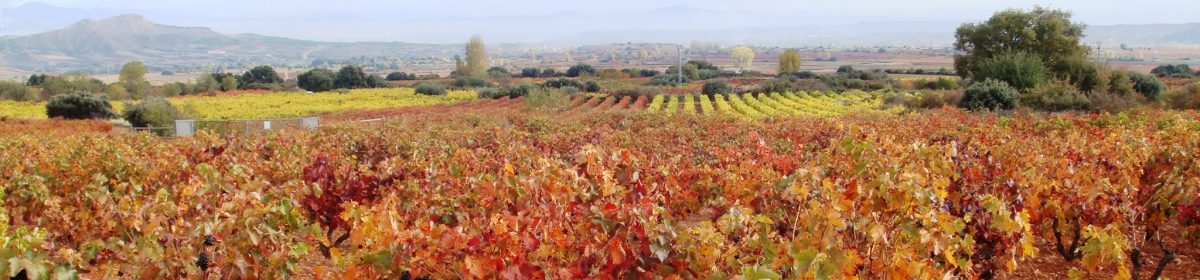
Never was a truer wine word spoken than those uttered by critics like myself when the Castell D’Encus wines are described as having a certain mineral quality. This wholly beneficial attribute comes of course from the soils that adorn the huge granite boulders in this remote place. The vines grow in precipitous vineyards hanging onto the side of the mountains which, when scaled, bring the intrepid climber into France. But that’s not all!

 ENCUS STONE VAT

A percentage of each of the whole range of wines made by this bodega (www.castelldencus.com) is fermented in 12th Century stone vats hewn by Monks, who knows how, into the hills and valleys of the mountains! This wine is then blended with the rest of the wine which has been fermented in more contemporary vessels made of oak or stainless steel. The result is perfectly balanced wines that have subtlety, elegance, power and depth of flavour in equal measures. (One of their wines, Quest [see below], is in fact wholly fermented in stone!).
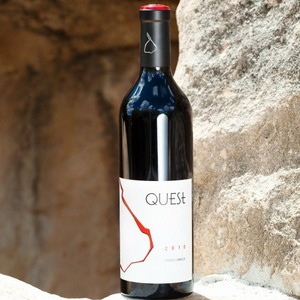
 ENCUS quest

The enterprise was started by Raul Bobet who, conscious of the impact of Climate Change, was looking to make wines that would be less impacted by the increasing temperatures and sunshine hours; and by possible decreasing rainfall. Altitude is a major player here, of which regular Cork Talk readers are of course fully aware! At 850m – 1,000m altitude the Castell D’Encus vineyards enjoy a dramatic drop in temperature overnight, giving the vines respite from the searing temperatures of the day.


However, there’s more! In 2004 Joaquim Molins Gil joined the project which really is a work in progress where the whole winemaking process is constantly being examined for ways to make it better, given changing weather patterns. Planting density, canopy management, cover crop, pruning and differing harvesting times are all being considered with various different plots experiencing various different methods.


Perhaps it’s the bodega’s close proximity to France that is a part of the choice of varieties used to make these fine wines, but it’s clear from the resulting wines that the soils and the climate are perfect for the mainly ‘French varieties’ that are used at Bodegas Castell D’Encus.


There are only 23 hectares of the property which are planted to vine – the rest of the 95 hectares of land owned by the bodega are left as forest. The vines are not sprayed with chemicals, the vineyards are farmed organically. The aim is to enhance the environment, not to detract from it. Wildlife is left untouched and the natural beauty of the area is unchanged.


So what of the wines?


I’m not at all surprised that Sara Jane Evans MW included Ekam 2013 in her recent Decanter Magazine article about top white wines from Spain (imagine that – such an article wouldn’t have been written 20 years ago, there were none!). Made with Riesling and a touch of Albariño, the wine is superb!


I don’t know about you, but I’ve not tasted a quality Riesling from Spain. I believe it’s Jancis Robinson’s (oh, no I’m turning into a dreadful name-dropper!) favourite white wine variety and it’s not just me who loves Albariño. Jilly Goulden (he’s done it again!) and many others do as well.


But it’s Alsace that is Riesling’s natural home and of course, Albariño is from Spain’s wet North West. Yet, grown here in high density vineyards where the foothills of the Pyrenees start to climb into mountains proper it’s as if they’ve been here as long as the stone vats in which they are partially fermented! Crisp lime peel acidity with some floral and granite mineral notes.

 ENCUS ekam

Taleia 2013 is made with Sauvignon Blanc and Semillon, both considered French varieties, but with this wine, for me, it’s the typical rich and full Australian Semillon that comes to the fore, no doubt from it’s partial fermentation in oak barrels, to meld perfectly with the directed gooseberry acidity of the Sauvignon. The judicial use of oak allied to the 9 months aging in cellar add a depth of flavour to the wine and a greater complexity. Lovely!


Acusp 2012 is the Pinot Noir so admired by Pancho Campo (I’m a hopeless case!) – he’s not alone! Unfortunately one doesn’t have much of a chance to taste good, and above, Pinot Noir in Spain. In Burgundy, it’s wonderful – rich but always with great elegance. It needs a cold climate really. But, with the average 1,000 metres altitude and the high density planting of Bodegas Castell D’Encus’ Pinot vineyard the properties required by this demanding variety can be emulated.

 ENCUS acusp

It has a lovely silk negligee feel to the wine with ripe, but not over-ripe, strawberries on the palate slowly overcoming the earthy forest leaves aroma. It’s juicy in the mouth and the fruit makes a presence throughout, but there are layers of flavour and a depth of pleasure. The personification of elegance, this wine has everything.


Thalarn 2012 is made exclusively from Syrah grapes and is one of those Spanish Syrah wines that so often outshine their French counterparts. The guaranteed sunshine hours of Spain ensure that Syrah here ripens perfectly (there are some Spanish Syrah wines that have been made from over-ripe grapes that should have been harvested earlier) add this fact to the altitude of the vineyards and you have the best of both worlds!


There’s dark cherry fruit straight away, with a spicy black pepper note to pep up the palate. You’ll find the minerality of course, again with a little undergrowth on the nose, as well as the tiny flowers of mountain herbs. The picota cherry flavours are maintained throughout and the finish is long and lovely!


The final wine I tasted was another excellent example. Quest is made with Cabernet Sauvignon, Cabernet Franc, Petit Verdot and Merlot. The 2012 is still young, vibrant in its blackcurrant, blackberry and dark plum fruit, a delight on the palate with no slightly unripe harshness as can be the case with some wines from the two Cabernets’ home, Bordeaux.


You’ll find some vanilla and a touch of cloves on the nose which is wholly integrated with the succulent fruit when the wine hits the palate. It’s a lovely juicy wine but with a backbone of mature tannin, acidity and mineral notes that will ensure that it ages for probably five years and maybe more.

So good they showed it twice!

But that’s if you can resist it when you see it in your cellar/wine store, as will be the case with all the wines from Bodegas castell D’Ancus, none of which is given less that 90 points in the Peñin Guide, with the highest pointer earning a whopping 96, making it one of the best wines in Spain! Outstanding!


Contact Colin: colin@colinharknessonwine.com and through his unique wine services website www.colinharknessonwine.com and via Twitter @colinonwine

Bodegas Segura Viudas

BODEGAS SEGURA VIUDAS

EXEMPLARY CAVAS AND STILL WINES!


BODEGAS SEGURA VIUDAS
EXEMPLARY CAVAS AND STILL WINES!

I was so impressed by my recent visit to Cataluña, Land of Cava, that I’m taking some time to come back down to Earth! Cava rocks and those made by Bodegas Segura Viudas (www.seguraviudas.es/en), part of the huge Freixenet business, are wonderfully flavoursome, elegant Cavas! They also make super still wines, so it’s a one-stop shop really!

Bodegas Segura Viudas, a far better backdrop than the foreground!

But that’s not all – they also have an excellent Wine Tourism Programme and it was their Public Relations Director, Jordi Guilera, who escorted us around the property, taking the same route that he will with tourists who come to tour and taste!


Quality control is at the forefront of everybody’s mind at Bodegas Segura Viudas. For example, the screening system used on all grapes that come into the bodega to be pressed, whether they are from their own vineyards or those of the growers they have used for generations, is indicative of just how much care is taken by Segura Viudas to ensure that the consumer gets the best Cava that it’s possible to obtain!


The grapes are harvested in small plastic crates, which have been cleaned and sterilised immediately after last year’s harvest and again just before this year’s. No grapes are split so there’s no uncontrolled fermentation. A special mechanical arm reaches into random crates, extracts some grapes and presses them into juice, which then goes immediately into a small lab where more machines await.


The results of the analysis are then posted on the grower’s special card (like a credit card) as well as onto a tablet, supplied to the bodega by the Consejo Regulador, which then relays the information to the DO offices. A coded sticker is placed on one of the crates on the tractor that identifies the lot and all the results. The tractor moves swiftly on to various cold storage areas – the whole process takes less than ten minutes, so no grapes are left in the sunshine.


Our next visit was the lab proper! A large room full of samples, test tubes, demijohns  and all the scientific paraphernalia that is needed to ensure quality.


The Head Winemaker was in attendance and the Laboratory Head and he took me to a small room where the wild natural yeasts gathered from the skins on the grapes were being cultivated. Stringent testing has occurred over the years to identify which are the best of the natural yeasts to work with, and it’s these that are cultivated from test tube size and ultimately to tanks that hold 100,000 litres. Yes, it’s production on a huge scale, but each small stage is perfected before moving on. Very impressive.

 DO CAVA SEPT 2014 033

Bodegas Segura Viuda uses mostly the traditional Cava grapes: Parellada, Xarel-lo and Macabeo for white wines; and Garnacha and Trepat for rosados. This year will be the first that they will also make a rather special Cava, one that embraces the traditional Cava grape varieties, but also includes small proportions of Chardonnay and Pinot Noir – and I can’t wait to taste it!


In order to make the best Cava possible they only use the first 66% of the pressing which ensures the best must (juice) with their top Cavas only using about the first 40%, which is la crème de la crème!


The original cement fermentation tanks are now used for storing base wine and can hold a maximum of five million litres. Nowadays it’s stainless steel fermentation vessels, with a total capacity of 19 million litres, that get on with the job in hand. Once the base wine is ready it is bottled with the appropriate licor de tiraje (the yeast and sugar mixture that starts the second fermentation in bottle) according to the style of Cava to be made.


Then the bottles are transported underground to the cellars where a maximum of 20 million bottles lie, waiting for their time to impress. And do they impress!


The President of DO Cava, the General Secretary and their Cava Manager and I sat down to taste an array of the Cavas as well as two of Segura Viudas’ top still wines – and all of this over a sumptuous lunch (which again can be arranged for touring groups).


Bodegas Segura Vuidas Reserva Brut has had sixteen months en rima (in contact with its lees whilst in bottle in the depths of the old cellars). It’s made with Macabeo and Xarel.lo which are planted at about 250 metres above sea level and are usually the first varieties to be harvested, plus Parellada which is happier at a higher altitude.


The wine, as with all tasted, is delightfully elegant and yet it has the fresh vibrancy of youth still. Refreshing and perfect for celebrations but this wine also delivers more. There are typical bready, panaderia notes as well as focussed green apple acidity (from the Macabeo) and an endearing white flower fragrance (probably from the Parellada). It has body (coming largely from the Xarel.lo) and depth of flavour enough to accompany the Manchego cheese, Jamón Serrano and the Anchovy toasts served as amuse bouche!


Served alongside this white Cava was one of the best, fairly priced, Rosado Brut Cavas I’ve tasted. It’s made with the indigenous variety Trepat with the addition of Garnacha and Pinot Noir in varying proportions according to each year’s harvest – a good sign if ever there was one. I think the Pinot in this blend gave an ever so slight strawberry flavour to the wine – super!


Our delightful starters were served with the fine Brut Vintage Gran Reserva 2008! It’s a wonderful fresh wine with body and deep flavours as well as sheer elegance on the palate. Paired with baby broad beans cooked in a cava reduction as well as with seafood ravioli, truffle and shrimp bisque, it was a perfect match. It has the necessary acidity to retain freshness after six years in the cellar and also to cut through the relative richness of the starters. Excellent!


I’m prepared to bet that the first wine you think of to accompany Veal Tenderloin with mushrooms would not be a Cava! Well think again (and watch this space for information about a super tasting coming up, pairing Cavas with each course throughout dinner!) Another Gran Reserva, Torre Galimany 2010 was served with this perfectly cooked main course! Sensational wine and an excellent match.


Fuller in style than the previous fizz it still has elegance in abundance as well as an acidic lift to retain its freshness. There’s a light earthiness to the wine that contributes to the body and makes a good match with the mushrooms. Plus, of course there is the typical yeasty character derived from the second fermentation along with an understated floral element.


Our final course was served with one of the classic Segura Vuidas wines, Brut Reserva Heredad Gran Reserva 2009 – the one with the distinctive metal base and ‘label’, giving a slight Gothic look to the bottle! A wonderful wine – there’s a slight herbiness on the nose with patisserie notes a touch of citrus and a real depth of flavour, with a persistent finish. Again the Segura Viudas characteristic elegance in perfect harmony with rich fullness. Outstanding.


Fellow diner, Maria Eugenia Puig, Consejo Regulador Secretary General, suggested we also tasted one of her favourite dessert Cavas, in fact made by parent company Bodegas Freixenet. Cuvée de Prestige Malvasia 2001 Especial per Postre is a fantastic dessert wine, only a slight sweetness but body and depth and I am assured the perfect accompaniment to chocolate!


Contact Colin: colin@colinharknessonwine.com and www.colinharknessonwine.com plus Twitter @colinonwine

DO Cava – The Empire Strikes Back!

CAVA – THE EMPIRE STRIKES BACK!

THE CONSEJO REGULADOR DO CAVA AWAITS GOVERNMENTAL APPROVAL OF A NEW DESIGNATION

Denominación de Origen Cava has endured some brutal bashing over the last couple of years. Concerns about quality were foremost of the critical comments made about this, one of the previously most respected DOs in Spain. Some high profile producers threatened to leave the DO and then did so, making a correspondingly big noise on the way.


The press, including your correspondent, got hold of the story (they could hardly not do so, as the Cava Refuseniks made sure that we were kept informed) and suddenly, from nowhere, Cava was a DO under siege. Other Spanish producers of Sparkling Wines rubbed their hands with glee as their sales increased whilst those of Cava stagnated and then started to fall. Like the country itself, DO Cava was embroiled in La Crisis, but on a second front.


Well, it’s high time to be more even-handed when discussing DO Cava, as indeed was Señor Pere Bonet, President of the Consejo Regulador DO Cava, when I met him recently, having been invited to Cataluña to interview him, and to see for myself, how the Cava Empire is striking back!

 DO CAVA SEPT 2014 067

President Consejo Regulador DO Cava, Señor Pere Bonetand Geneal Secretary Señora Maria Eugenia Puig Amat

Having worked in Champagne as well as with Freixenet, the world’s largest producer of Sparkling Wine, Señor Bonet is an expert in the field. Ally this knowledge and experience to his training and expertise in the world of Marketing and it’s clear that his recent appointment was inspired. Apart from his skills and experience, Señor Bonet is also a gentleman and I’m not surprised that he has been charged with steering the right course through the choppy seas of, often unfair, criticism.


He too, is even-handed. He is aware that the image of Cava has been damaged, by the criticism of once fellow producers who have now abandoned ship; but he also knows that there is more, cheap Cava sold, than quality. It’s the under two Euro Cava that is constantly being highlighted, but this Cava, whilst obeying all the rules, is not at all representative of DO Cava, Per Se. It’s time to redress the balance.


When asked about the lack of quality at the basic, entry level of Cava and its impact on consumers’ perception of the drink, Sr. Bonet said that it was surely the same for any DO. I agree.


Take, for example, DO Rueda – since their phenomenal rise to power (one in three bottles of wine sold in Spain is from this DO!) they haven’t looked back, but they need to!


Again, at the basic entry level there is plenty of dross being sold, quite legally correctly as DO Rueda, and at the same price level above, below two Euros. Do people make a big deal of it? No! Do producers of the best Rueda wines threaten to leave the DO because of the influx of those who want to jump on the bandwagon? No! Does the Press set up another witch-hunt? No!


As I’ve always said – up to a point, you get what you pay for, here in Spain. A wine or Cava that sells for 1·49€ is always going to deliver exactly that sort of value! Practically none! So let’s leave DO Cava alone. Live and let live – those who want to make their cavas at this base level can do so; those who want to buy them can also do so, but please, don’t be confused, these are nothing like Cava is meant to be.


However, Sr. Bonet, who is only in his second year as President, and his colleagues on the Consejo Regulador DO Cava are not content with highlighting just this. He is listening to criticism and he and his colleagues have come up with an effective riposte and it’s being done, correctly, diplomatically, tactfully and subtly too. “Our intention is to ‘re-dignify’ the name Cava”, said Pere Bonet, as he explained what’s afoot.


Firstly I was extremely impressed with the quality control that has been instituted recently. It’s all high tech with growers having cards (like credit cards) which are swiped with all the details of varieties, location, sugar content etc of the grapes they have brought to the reception areas; and bodegas have state-of-the-art tablets, both of which record and send automatically all the information to the Consejo Regulador. I saw the whole process – it’s fascinating and all designed to make DO Cava’s quality control transparent.


Also when I was at Bodegas Segura Viudas (watch this space for a report on my fantastic visit) I witnessed one of the DO Cava Consejo Regulador’s ‘secret shoppers’ collating all this information whilst inspecting the whole process. Good to know that there’s still a place for humans with a humble pen and paper, too! Such ‘agents’ are sent to bodegas on surprise (within health and safety boundaries) visits, again with a view to making sure that all is correct.


Secondly, and this is the absolute latest, an application has been made to the Spanish Government to change the regulations of the DO Cava! It’s the Ministry of Agriculture that has the say in all Denominación de Origen matters in Spain – it is they who do, or don’t, grant DO status, in this case to Cava, but also to wine, cheese etc. So in order to make any changes to that which has been previously approved by the Ministry (and therefore the Government) an extra application has to me made.


The Consejo Regulador DO Cava has applied to add a further designation to the DO. If approved (the answer is expected before the end of this year) and it’s looking hopeful, it will surely make a difference to how the press and consumers will view Cava. Once approval has been achieved (thinking positively) the general ideas already mooted will be discussed in earnest and a list of rules and regulations will be drawn up and then, probably in 2015, put into operation.


The new designation will be Cava de Paraje Calificado, which means that it is Cava that has been made in a specific place. It may be, for example, from one particular vineyard within all the rest owned/run by a bodega; or it may be several vineyards within the land used by the bodega; and indeed it may be all their vineyards. It will all depend on satisfying the rules – if these bodegas/vineyards qualify, they will be given permission to use the new designation. And, obviously, Cavas made under this new designation will be top quality!


But what are the rules? I hear you demanding! Well, whilst there are suggestions being bandied about, there cannot be any definitive answer to this as they do not yet have permission from the Ministry to go ahead. However, I can tell you just a few of the matters being debated.


The age of the vines growing in the vineyards in question will probably be a factor. So too will be the maximum kilos produced per hectare. Also the length of time the sparkling wine spends ‘en rima’, resting in bottle with its yeast after the second fermentation.


But that’s all that can be revealed at this moment in time! However, I now have a direct source from whom I’ll receive updates as time passes and you can be sure that it will be Cork Talk readers whom I tell first!


Contact Colin: colin@colinharknessonwine.com and though his unique website www.colinharknessonwine.com and also via Twitter @colinonwine

GOLD OUTSTANDING!

THE IWSC’S TOP AWARD GOES TO SIX SPANISH WINES!

(PART TWO)

This week’s Cork Talk is the concluding half of a short two part series featuring the best Spanish wines entered in the International Wine and Spirits Competition 2014.

This year the Spanish Panel of the IWSC awarded six of these medals of honour! It was fascinating for me to hear that three of these truly excellent wines were in fact Sherries; two were Riojas; and one was a sparkling wine – not Cava, though, a wine about which I have written in this column. A sparkling wine from DO Rías Baixas, and the subject of last week’s article!

So Spain’s old guard stands firm, but a new kid on the block makes its mark too, and maybe opens doors for other enterprising young winemakers to challenge tradition and in so doing up the ante in terms of the quality of Spanish wines. How lucky we are to live here at such a dynamic wine-time!

Cork Talk, this week is about the remaining five of these demonstrably six excellent wines.

As mentioned last week, DO La Rioja has been going through a period of significant change. Traditional wines have had to move over to allow more modern styles some shelf space. These newer, Vino d’Autor, wines shouldn’t be seen as usurpers, there’s room enough for both types. And it’s we consumers who are benefiting – the challenge of the contemporary wines has caused a shake-up in any bodegas that were sitting on their laurels.

El Meson Rioja Gran Reserva 2004 from Bodegas El Coto, part of the Grupo Baron de Ley empire, is copybook Rioja Gran Reserva. Combining presence with subtlety, power with sensuality, the taster is seduced from the moment the cork is pulled. There’s a note of sweet light red fruit with a raison undercurrent as well as a hint of darker bramble fruit too.

FAMILY MOON + Gold Outstanding IWSC 2014 128

It’s a fully rounded, delightful wine that should be served deferentially at dinner when there is time to savour the flavour and discuss the complexity. Still alive, with and matured tannins and the necessary acidity, it is slowly ageing, but oh so gracefully!

Also from Rioja’s hallowed Gran Reserva range comes Bodegas Ramon Bilbao’s Gran Reserva 2006 – but it’s a wholly different animal! To qualify for Gran Reserva status a wine has to have undergone a minimum of two years in oak and a further three in bottle before it can be legally released onto the market. In reality though, this time in the quiet dark of the bodega’s cellars is often longer than the prescribed minimum.

It is of course the responsibility of the Head Winemaker to decide when the wine should be brought into the light, taking into account the vintage from whence the wine came and, of course, its development over time. It’s clear to me that this slightly younger wine than the above is now at its height in terms of sheer pleasure, and indeed it has some years left to develop further and give perhaps even more.

In the glass it’s brick red giving a clue as to its age. On the nose you’ll find tantalising earthy soft red fruit aromas – sniff out loganberry and raspberry with perhaps some not quite ripe strawberry acidity to keep the wine fresh! You’ll also find some herbs, understated rosemary, slightly more prominent thyme underpinned with enveloping bay leaf and some smoky oak.

But it’s on the palate where the wine really excels (as if the above wasn’t quite enough!) it’s delicate and yet full with lasting fruit flavours kept alive by a refreshing acidic lick and a long, long finish. Wow, I loved this wine!

Sherry. What does it mean to you? (Watch this space in the weeks to come and you’ll be able to learn a little more about sherry and some interesting and very tasty developments in Spain’s oldest wine making region.). Well, if it means your Grandmother’s Christmas tipple – please, think again. Jerez, the correct name, has also been, and continues to go, through a period of change. Jerez is being sexed up – and I’m all in favour!

It’s not surprising, therefore, to see that the remaining three IWSC Gold Outstanding medals were all given to the fortified wines of Jerez!

Manzanilla is a style of Sherry that I particularly enjoy. Almost water coloured it’s as fresh as sea-spray and it has that slightly salty flavour too. As such it makes just about the best aperitif there is! Sip it with pan-fried, lightly salted almonds, Manchego curado and finely sliced jamon Serrano – delicious.

Bodegas Williams and Humbert make Marks and Spencer’s Manzanilla and it’s this wine that, having won Silver at the IWSC last year, has stepped up to the top rung of the quality ladder.

Now, according to what one reads and hears on the news, M&S aren’t doing anything like as well as they were when, for example, I left the UK nearly twenty years ago. However, this isn’t the case with the drinks arm of their business.

Year on year M&S’ wine selections and indeed their ‘own brand’ wines are given medals and plaudits. This Manzanilla is one of the reasons why! It’s complex and intense whilst retaining a youthful exuberance. Restaurants must love it as it brings an almost immediate desire to eat something! Use it thus, as suggested, with aperitifs but also think about drinking this sherry with fish dishes as well. Salty with a touch of spice – spend just 6·99 pounds(!) and buy it when you next go to the UK!

Amontillado is often thought of as a slightly sweet sherry – it’s been made that way for the British market for years, allegedly to satisfy the British sweet tooth! However, in its natural state this full, orange/brown coloured sherry is dry, and much the better for it.  Again we’ll go to the cellars of Williams and Humbert for our next winner. That’s two Gold Outstandings from the same stable – I’ll bet there’s been some toasting going on there since the results were announced!

Williams and Humbert’s Colección 12 Yrs Old is a deeply flavoured, full bodied sherry that is pure pleasure to sip on its own. Mature, complex and intense it still manages to be elegant in its power. It’s tangy with a nuttiness that makes you long for almonds and walnuts, strong cheeses, a selection of cold meats and even with seafood too.

Finally the last IWSC Gold Outstanding medal was awarded to a venerable sherry, one that has seen off a minimum of thirty harvests and yet is as bright as they come. It’s a different style, a Palo Cortado – a rare wine that magically changed course when it was developing as a Fino or an Amontillado (sometime early 80s!!), taking on a deep tan and developing a very slightly medium sweet nuance, though sweet, it’s not, nor medium!

There are some dried fruits on the nose of Harvey’s Very Old Palo Cortado, mature raisons soaked in brandy too. It’s nutty, pecan nuts with hazelnuts and a ripe fullness, with an intense depth and subtle layers of flavours as you descend ever more deeply into its welcome. I enjoyed it with mixed nuts and raisons, a digestive too, but also with good quality jamón a both hard and creamy strong sheeses– it’s adaptable, and it’s also perfectly happy to be savoured on its own!

As it’s Harvey’s it’s also available in the UK, though it comes from a limited production – so snap it up, as soon as you see it!

Contact Colin: colin@colinharknessonwine.com and though his wine services website, www.colinharknessonwine.com as well as via Twitter @colinonwine