Articles

Glasses for Sparkling Wine

YOU CAN’T HEAR THE ORCHESTRA FOR THE FLUTE!

 FLUTES FLUTES

Before I met the lovely Claire, I was to music what a JCB is to subtlety. I blame my piano teacher all those years ago when she punished my innocent error my knocking me off the piano stool on my first (and last!) lesson! However, in reality, I know that the fault is all mine – I have no musicality.


I still don’t, but now I’m married to a classical soprano (www.dolcedivas.com) I am learning, albeit slowly. That said, I have always been aware, admittedly in a nebulous sort of way, that there is a certain symbiosis between beautiful music and fine wine. The two are synonymous – a fine wine is like a symphony.


Indeed Claire and I have worked together on pairing wine, not, this time, with food, but with types of music. For example, a young purple coloured, fruit orientated red wine might go perfectly well with a light, vivacious and melodic piece of music. The perfect match for a bodega wishing to launch its new joven wine!


So it’s this, albeit limited, experience which I feel qualifies me to write the above title, though, as you might have already ascertained, this article is in fact nothing to do with music! I refer, instead, not to the magical wind instrument (which, incidentally, Claire also plays, angelically), but to the glass that you are probably reaching for right now to relieve the pain of such a long-winded (pun intended) opening to this week’s Cork Talk!


Yes, a flute glass for Cava, Champagne and any other Sparkling wine you might have, set aside for emergencies. They are beautiful aren’t they? Tall and elegant (like myself – well, perhaps not) and in various different designs, they complement the dinner table and perch so easily in the hand as one sips the celebratory bubbles. Perfect.


Well, actually no, not perfect at all, apparently! There is something of a raging debate going on in the Sparkling Wine world at the moment with the ‘abolitionists’ making headway, leaving the ‘old modernists’ (if that’s not a contradiction in terms!) in their wake.


Firstly, let me explain, the jargon. The ‘abolitionists’ are those who want to do away with the aforementioned flute for drinking sparkling wine. This powerful pressure group is championed by Mr. Maximillan J. Riedel, present incumbent of the famous glassware designers and manufacturers, Riedel, one of whose many mantras is that during his lifetime he wants to see the total eradication of the Sparkling Wine flute.


Now, as the designer of alternative Sparkling Wine glasses, you may think he has a hidden agenda! However, he is not alone. Telegraph writer, Victoria Moore (whose recent article was the impetus for this week’s Cork Talk), Federico Lleonart, ‘global wine ambassador’ for Pernod Ricard, Angus McNab, ex-Sommelier, Beth Willard, wine buyer, Anna Wallner, Cava book Author; Victor de la Serna, Wine-maker and Writer – oh and myself, too, are all steadfastly on the abolitionist side.


The ‘old modernsits’ takes some explaining. I’m saying ‘old’ because these were the protagonists whose pressure moved us all on from the ‘coupes’ of yesteryear, the George Best Champagne Fountain, or Babycham glasses; and ‘modernists’ because in those days, this was modern!

 FLUTES CHAMPAGNE FOUNTAIN

The Champion for this group?  Well, an unnamed Champagne producer (in Victoria Moore’s article) who was the only one who offered her Champagne in a flute. Perhaps I’m being unfair to this group, I’m sure there are others who will continue to blow their trumpet (never mind the metaphors, let’s mix the instruments!), but in a wholly unscientific straw poll, there were no flute supporters!


But why? Well, it is true that the flute shows-off perfectly the stream of bubbles that are the nature of Sparkling Wine. A continuous stream of fine bubbles travels from the bottom of the glass to the top, enticingly capturing the eye and seducing us all. But, that’s basically all you get! Whilst the fizz is an integral part of Sparkling Wine, there’s a lot more to it than just that.


It’s like saying that a red wine is a nice colour. Yes, the colour of wine is a part of its appreciation – but what about its aromas and flavours, and more? Flutes are just not wide enough for you to put your nose in and really appreciate the aromas, often delicate, that arise from the wine. Unfortunately, a flute concentrates carbon dioxide at the top of the glass, masking the fragrance of the wine.


(Coupes, incidentally, and apologies to the memory of one of the UK’s best ever footballers, are also wrong, for the opposite reason – they are so wide that the aromas diffuse and disappear far too quickly).


So what is the answer? Well, it’s actually very fortunate from an economic point of view. The easy answer is a simple white wine glass – and the likelihood is that you already have plenty of these. Plus, let’s face it, flutes are a nuisance in the dishwasher too! Whereas who has a ‘man’s best friend’ that doesn’t cater for wine glasses?


However, there is still the aesthetic element that has to be placated. The main reason, I believe, that flutes are at the moment the preferred glass for many of us is because, when seen, they immediately make a statement – Celebration! The sight of a tray of flutes full to the brim of golden and/or rosé Sparkling Wine with bubbles exploding to the top is in itself part of the fizz folklore. This aesthetic appreciation is, for some, more important than the aroma and the flavour of the contents!

 FLUTES HYBRID 2

Well, don’t worry – you can still consign the flutes to the kitchen cupboard to be used on occasion for a posh dessert or a between-courses Champagne Sorbet, and yet enjoy the celebration of Sparkling Wine as well as its aromas. The answer is the ‘bowed flute’, a hybrid which combines the wider and sexy curves of a wine glass with the visual celebratory impact of a flute!


Not sure what’s best for you and your pals? Well, you can easily put the theory to the test. Invite some friends around for a glass or two of Cava. Buy a mid-priced or a posh Cava, but not one of the cheap ones. Hidden from sight, pour the same Cava into your white wine glasses and your flutes and offer one of each to your friends, asking them to decide which is the better Cava. Try it yourself too.


According to the theory, and my belief as well, it will be the Cava in the wine glass that wins the day – although it’s likely that some will criticise the wine glass, even before tasting, because of the aesthetics, and this may colour their ultimate view. But, never mind, you’ll have a great night!

The Riedel answer to the Sparkling Wine Glass conundrum - a beautiful Hybrid!
The Riedel answer to the Sparkling Wine Glass conundrum – a beautiful Hybrid!


PS Did you know that most of the wine related events I organise are sold out before being advertised? This is because I inform those on my e-mail list first about wine tastings, wine/food pairing evenings, bodega visits etc so that, because of their loyalty, they have the first option. You may be missing out!


This is simply solved though – just contact me and I’ll add you to the list immediately!


Contact Colin: colin@colinharknessonwine.com ; through his website www.colinharknessonwine.com where, amongst lots more, you’ll be able to read client comments following his wine related events; and via Twitter @colinonwine

VINOS IBERIAN Part Two

Vinos Iberian, La Compaña de Viñedos Iberian, as readers of last week’s common, is making lovely wines in various parts of Spain . .

TOP WINES FROM COMPAÑA DE VIÑEDOS IBERIAN

AND THAT’S NO BULL!

The iconic symbol above is known to all visitors to, and residents of, Spain. I think it’s a great story. The Osborne family, famous firstly for the Brandy de Jerez as well as their Sherry erected them in the ’50s. Huge and bold they stood on hilltops all over Spain, proudly advertising the company.

 BULL OSBORNE

Decades later the law changed and they were told to remove them, but they successfully challenged the ruling in court on the basis that they had become part of the landscape of Spain, a national symbol and in the words of the court they have “ . . asethetic or cultural significance . .”! Was there ever a better advertising coup?


Well maybe Cork Talk will match it?! The Osborne family’s venture into the wine business is clearly a great success too. Vinos Iberian, La Compaña de Viñedos Iberian, as readers of last week’s common, is making lovely wines in various parts of Spain and I’ve tasted several examples. This week it’s the turn of DOs: Bierzo, Toro, Ribera del Duero.


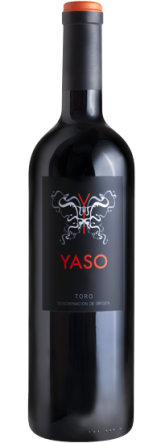
Yaso is from DO Toro, one of the waking giants of Spanish wine-making. I say ‘waking’ rather than ‘sleeping’, which is the more common phrase, because this beauty has already been kissed and is slowly arising! There are excellent traditional bodegas in DO Toro that have been making fine wines for ages, but the ‘kiss’ has come from some of the more famous names in Spanish viniculture, who have been buying land within the DO, and thus attracting the media and upping the ante re wine quality.


Yaso, named after the Greek Goddess of Healing, is made with Tinto de Toro (aka Tempranillo) from 40 yrs old vineyards. The soil is sandy, short of natural nutrients and therefore excellent for vines as they have to work hard for their supper – harsh, I know, but the grapes produced, and therefore, ultimately, the wines, will be the better for it.

IBERIAN Yaso-161x443

Fresh black cherries mix with cherry jam aromas and flavours. There are violets on the, black pepper spice and minerality – but it’s the fruit that predominates, lovely juicy and with a mid-length finish.


DO Bierzo is another area that is attracting more and more attention these days and the ace up the sleeve is the indigenous Mencía grape variety. It’s like . . ., well no other variety and I often drink it, enjoying its originality.


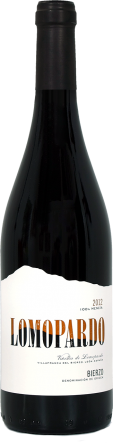
Lomopardo is 100% Mencía and has been aged in one year old French oak barricas. The typical cherry notes on the nose along with some pencil lead (sounds odd I know, but seek and ye shall find) and mushroomy forest undergrowth. On the palate the cherries come through, a mixture of picota and ripe red cherry which stays with you after you swallow. There’s a little spice and minerality which is noticed both on first hit and on the finish. Super wine!

IBERIAN lomopardo0kk-113x443

Ribera del Duero wines figure strongly on the Vinos Iberian list. Jaros is a blend of Tinto Fino (aka Tempranillo), Cabernet Sauvignon and just 3% Merlot. Its been matured for 15 months in new French oak, which has obviously mutually taming – the wood on the Cabernet and the blend on the wood! There’s no harshness here, no green tannin astringency; and there’s no overpowering oak. It’s a balanced wine in harmony and a real pleasure to drink.


There is depth of flavour, that’s brambly fruit with a hint of blackcurrant and a hint of menthol and on the nose you’ll find fruit to the fore with a background of minerality and subtle tobacco and coconut whiffs. Serious wine and very enjoyable.


Chafandín is from the same stable, Bodegas Viñas del Jaro. It’s an excellent concentrated wine with intense flavour and aroma. Made with 100% Tinto Fino from grapes from 40+ years old vines, the wine has its malolactic fermentation in 300 litre French oak barrels in which it then stays for between 15 – 20 months, depending on the year and according to the head winemaker’s wishes. Its slightly liquorice flavoured dark blackberry and plum fruit lasts for an age after swallowing and ends in a note of elegance.

IBERIAN chafandinoksinf

Sed de Caná is of a limited production and has tio be considered a flagship of the bodega above. When we first sipped this wine all conversation stopped so that we could linger undisturbed in its elegance, depth of flavour, super aroma and yet marked subtlety, whilst admiring its complexity as we gently navigated its various layers.

IBERIAN Sed-de-cana-161x443

After 6 months in French oak all the barrels are tasted, a few are deemed to be of the correct standard and taste/aroma profile to be elevated to the Sed de Caná level. Violet aromas, deeply flavoured dark red fruits with integrated oak a whiff of damp earth, a sniff of minerality, some nebulous mountain herbs and a touch of cinnamon spice and coconut on the lengthy finish. Wow!


Sembro, also from Ribera del Duero, has a beautiful bird on the label – a theme that follows with some of the VdlT wines to follow in next week’s article. It makes the wine stand out on the shelf, which is a help, of course, but will consumers go bird spotting again, after tasting the contents?


Answer – yes! Sembro is all about expressing, in the most vivacious way, the local Tinto Fino variety. Many people these days are telling me that they are buying more and more Ribera del Duero wines as they all seem to have in common a super fruit element that makes them instantly accessible and gloriously enjoyable.


Sembro is such a wine, though it’s not at all here today gone tomorrow, it’s not at all inconsequential, perhaps down to the six months it has had in French oak. But it’s the fruit that makes this wine sing. Lovely damsons on the nose, joined on the palate by stewed plum notes and maybe, to lighten the colour profile, just a flick of red cherry and red current. It has a lick of acidity making it fresh for simply enjoying on its own with a little depth from the wood.


The final part of the Vinos Iberian saga soon!


NB Many of the tasty, entertaining and informative wine related events that I organise are fully subscribed before being advertised because I notify first those who are on my e-mail list. If you are not on the list then you could be missing out! If you would like to hear about the various tastings/wine dinners/bodega visits etc please contact me and I’ll be delighted to add you to this list!


Contact Colin: colin@colinharknessonwine.com and via Twitter @colinonwine and please visit www.colinharknessonwine.com click on Client Comments and read what people think!

VINOS IBERIAN

VINOS IBERIAN


The geographical breadth and depth of wines made under the auspices of Vinos Iberian (Compaña de Viñedos Iberian) is astounding. Factor this into the variety of different indigenous and international grapes used, as well as the quality and sheer drink-ability of the resulting wines, and it’s easy to see why this growing company is so well appreciated!


This group makes wines in seven different specific areas of production, six Denominaciónes de Origen and one Vino de la Tierra. From West to East DOs: Rías Baixas, Bierzo, Toro, Rueda, Ribera del Duero, La Rioja, Priorat and Penedés; and further south in: VdlT Castilla, and DO Jerez! It’s a remarkable portfolio of bodegas and wines and, as you might guess, I was delighted to receive a sample from each area, with the exception (so far?) of Jerez!

 IBERIAN Albariño-96x443

You’ll have heard of the wine dynasty that is the Osborne family – probably from their synonymous association with the wonderful sherries of Jerez. Well there’s plenty more than just Sherry, in this particular locker!


The Osborne family have always been interested in the fine wines of Spain as well as in Sherry. The company now owns all the bodegas in this huge area, which goes under the umbrella name of Compaña de Viñedos Iberian SL and, following my tasting all of the sample I received, it’s further proof that big can be beautiful!


The company focuses on small wineries and those tied to specific estates. The nature of the soil, the altitude and the micro-climate of the individual vineyards that make up the group is of paramount importance so that the wines made reflect the grapes used as well as the ‘terroir’ from whence they came. Vinos Iberian wines are representative of place as well as grape varieties. It’s a winning philosophy.


Because of the numbers of wines tasted this will be a two-part article. Today I’ll be telling you about the Vinos Iberian wines from: DO Rías Baixas, DO Rueda and DOCa La Rioja.

 IBERIAN CRIANZA laPinaleta-161x443

As you know, Spain was once considered a country for fine red wine – but mostly, red wine alone. Whilst it’s true that Spain has always been respected for its red wines it’s just as true, nowadays, to say that its whites are now amongst the best available to white wine aficionados. Regular Cork Talk readers will be well aware of the huge strides forward that white wine production has taken here in Spain during the last fifteen years.


Of course, during the time when it was solely the reds that were lauded there were also the whites of DO Rías Baixas that attracted attention, certainly within the home market, but also on the international circuit. Albariño, the mainstay of DO Rías Baixas, probably remains the queen of Spanish white wine varieties. However it’s now a very close-run thing. For example one in every three bottles of wine sold in Spain now is a Verdejo from DO Rueda.


The Compaña de Viñedos Iberian would have been foolish to leave these areas out of their portfolio.


Rol de Larosa, DO Rías Baixas, from Bodegas Mar de Arbolada, is made with 100% Albariño grapes which come from old vines (40 – 80 yrs) and have enjoyed the added benefit of a little time in oak. The typical white flower fragrance (in this case I think a waft of Magnolia with the faintest trace of honeysuckle) is at first dominant but this mellows slightly for the entrance of some white peach and slightly under-ripe pineapple fruit aromas.


The fortnightly stirring of the lees leaves a creamy tactile sensation on the palate when the above aromas also manifest themselves in something of a taste sensation. The time in oak has depth of flavour, a little complexity and certainly contributes to the mid to long length finish. Super start!


Although generally you’d taste an oaked wine after an unoaked one, I took the gamble and tasted the unoaked Viña Oropendola Verdejo from DO Rueda after the above. It was a calculated gamble that paid off.


The oldest vines used for this wine exceed 100 yrs of age! There had to be sufficient richness to follow the slight oaking of the above wine. Plus, this wine had also enjoyed the battonage treatment, the stirring of the lees. I really liked this wine. It has the typical vegetal, grassy, fennel and gooseberry fruit aromas and flavour (I’m guessing, and hoping, indigenous yeasts?) but with an added slight cancerous minerality from their planting in stony vineyards not too far from the banks of the River Duero, whose mists shade the grapes a little from the early morning sunshine. We’re on a roll here!


My first Vinos Iberian red was from Rioja – in fact it was part of a brace from Bodegas Viñedos Camino de la Piedra. Piedra (stone) gives a nod towards the nature of these two Rioja wines – there’s an element of stony minerality in the wines derived from the gravely soils in which the vines are planted.


La Pinaleta has a lovely crested bird on the label. It’s a joven, young, wine which is all about the fruit, with a slight minerality to add a touch of mystery and complexity and a greater depth on the finish. It’s mostly made with Tempranillo, now officially the 3rd most planted variety on the planet, with some support from Garnacha, I believe the second most planted variety in Spain, and Mazuelo.


It’s a time honoured and proven winning formula for wines from Spain’s most famous area of production. You’ll find some light red fruits, strawberry and redcurrant, if you look behind the dark blackberry which is dominant. It’s fruity, smooth and tasty!


La Pinaleta Crianza 2011, has a less distinctive, to the point of making it invisible to the consumer searching for a wine he/she hasn’t tried before. But this is a shame (and easily rectified) as the wine is sufficiently distinguished to warrant better sales than perhaps are the case?

 IBERIAN pinaletajoven

Its thirteen months in French oak, new and one year old, has given the same blend of grapes as makes up their young wine and extra depth, complexity, and somewhat surprisingly, given that it is two years older, an extra vitality. This is a wine that shouts aloud, Rioja and proud. (I should sell that phrase!). The fruit has mellowed along with the integrated oak, there is a touch of mushroom undergrowth this time, it’s earthy and brambly. But the fruit remains and will do for a couple maybe three more years.


Part Two next week!


Contact Colin: colin@colinharknessonwine.com and via Twitter @colinonwine; and please visit his website for wine tastings, bodega visits, wine pairings etc www.colinharknessonwine.com

EN RAMA SHERRY FROM BODEGAS LUSTAU

Exemplary En Rama by Bodegas Lustau

There’s something seductively sensual about Sherry!

Perhaps, if one is thinking of a figgy, rich Pedro Ximénez, or a medium, aged Palo Cortado, or even a mahogany coloured, but naturally dry Oloroso the above wouldn’t be that much of a revelation. Many of us have partaken of such beauties, and indeed we’ve certainly been seduced!

However when referring, as I am now, to a bone dry noticeably salty Manzanilla from Puerto de San Lucar; or a deceptively water coloured Fino which can show a very aperitif-friendly slight austerity, you might raise an eyebrow to accompany the slightly raised little finger of your hand as you sip your sherry! Well, please read on and see why I’m making such a bold claim!

In very recent years, there is a ‘new’ style of Sherry that has hit the market, running, and continues to do so with many chic UK wine bars and forward thinking restaurants ordering cases, confident that it won’t go out of style. And for me, for sure, En Rama Sherry is here for the long haul.

I think it’s a fairly odds-on bet to say that the En Rama style Sherry has come about in an effort to bring back some dynamics to the Sherry market. There’s nothing wrong with that though. It’s certainly not an admission that what has been there since before Shakespeare’s time has some sort of innate fault. The several and varied styles of Sherry have been appreciated by the cognoscenti for centuries. However, in such hard economic times the cognoscenti market is not enough!

The wineintelligence.com business recently released a report which put in a nutshell the ongoing problem facing the Sherry industry when they summarised their findings after a large poll, where respondents were asked to say the first word or phrase that came into their heads when the word SHERRY was heard, here’s what transpired:

Picture5
Indeed, prior to my recent monthly guest spot on UK Radio, channelradio.co.uk I asked listeners the same question (I don’t see it as plagiarism, Your Honour, more flattery really!) and was inundated with the same and similar responses.

It’s not the cognoscenti, but consumers in general who have misconceptions about Sherry. It’s time to move on and this ‘new’ style of Sherry is making inroads in breaking down reticence. This alone should earn it the plaudits of the Sherry industry, but when you actually taste En Rama Sherry, well, it speaks for itself!

I like Sherry, always have. There was no alcohol in my house when I was young and practically none in that of my Grandparents, so the concept of the sweet sherry brought out at Christmas by Granny and the same bottle again the following year, never made an impression on me. But it did on others, as you can see above. Yes, there was sweet Sherry that was treated like this and it’s understandable that it made an indelible mark many folks’ psyche. But really, we need to start afresh, and Bodegas Lustau’s (www.lustau.es) En Rama range is an excellent place to start!

I was sent three charming 50cl bottles from Bodegas Lustau, whose premises in Jerez, Andalucia, I’ve visited several times. Each sherry, one from each of the three towns in what’s known as ‘The Sherry Triangle’, Jerez, Sanlúcar de Barrameda and  El Puerto Santa Maria was spectacular!

First though, what is the En Rama style. Well, roughly translated the phrase means, ‘raw’. But don’t let that make you think it will take tour tonsils with it as you swallow! There’s nothing rough about En Rama Sherry. It simply means that this sherry has been deftly removed from underneath it’s protective layer of ‘flor’ (a none too attractive film of yeast that forms atop the base wine as it begins its metamorphosis into sherry whilst stored in the old oak barrels).

Unlike the Sherries that are destined to become regular Finos and Manzanillas (which I also love, by the way) these wines are not clarified or filtered to the same degree. En Rama sherry comes, more or less, straight from the cask! Bottles of Fino and Manzanilla as above, are filtered and clarified quite heavily because of the consumer’s apparent desire for pale and clear wines, as well as the producers’ for stable wines that have a long shelf-life.

Because En Rama sherry is filtered to a much lesser degree it has a slightly different colour to the regular wines, and more importantly, the depth of flavour (which diminishes though filtration and clarification) remains. When you drink En Rama Sherry you know you’ve had a drink!

I tasted first the En Rama Fino de Jerez. It is made from just one cask of Fino which has been set aside from the others which will go on to make regular (and also very good) Lustau Fino. It’s pleasingly dry with body and a long finish, for me there’s a  passing note of green olive along with some bitter citrus. Hold it in your mouth before swallowing and let it show you what it’d got! Super.

En Rama Manzanilla de Sanlúcar de Barrameda was next up – and again it was everything I’d hoped it would be. Slightly straw coloured there’s a yeasty patisserie note on the nose (like, and yet curiously unlike the autolysis aromas from a bottle of sparkling wine). I tasted it alone (as I always first do) but then with some seafood, including smoked cod and salmon. The overt saltiness of the sherry makes it the perfect match.

It was impossibly close, but if I had to say a favourite, it would be the En Rama Fino  De El Puerto de Santa María. I’m looking forlornly now at the empty bottle! Very pale gold in colour, the aromas that escape when pouring are seductive. You’ll find a touch of saltiness here too, bone dry, rounded, with balanced, almost measured, acidity and such depth, complexity and length. Drink it with pan-fried slightly salted almonds, Jamón Serrano, Semi and Curado hard Manchego cheeses, and of coure, just by itself! Excellent, and can’t wait to taste some more!

A wonderful range of sherries from Bodegas Lustau!