Articles

Wine Pairing – With a Difference!

WINE PAIRING WITH A DIFFERENCE

FINE WINE WITH CLASSICAL MUSIC AND DINNER TOO!

Dolce Divas!
Dolce Divas!

Pairing wine with food is not a new concept. When wine was first ‘discovered’ I’m certain that it would have also been enjoyed with food. Centuries ago, depending on where you were drinking it, the water was often a touch on the dodgy side.

Remember the recent Cork Talk re Columbus’ voyage where the wines of Toro were a far safer bet than the water during that historical maiden trip to the Americas! Alcohol burns off the bacteria blighters so it’s certain that wine would have been drunk with food, if only, then, to wash down the food!

We’ve come a long way since then. Matching gourmet food with fine wine has been elevated to the level of an art form and there are those, including myself, who present wine/food pairings professionally. Not a bad job, huh?

Well, there’s now a new wine pairing concept in Spain and I’m proud to say that it’s my far better half, the lovely Claire, who coined the idea and recently put it into practise with great success.

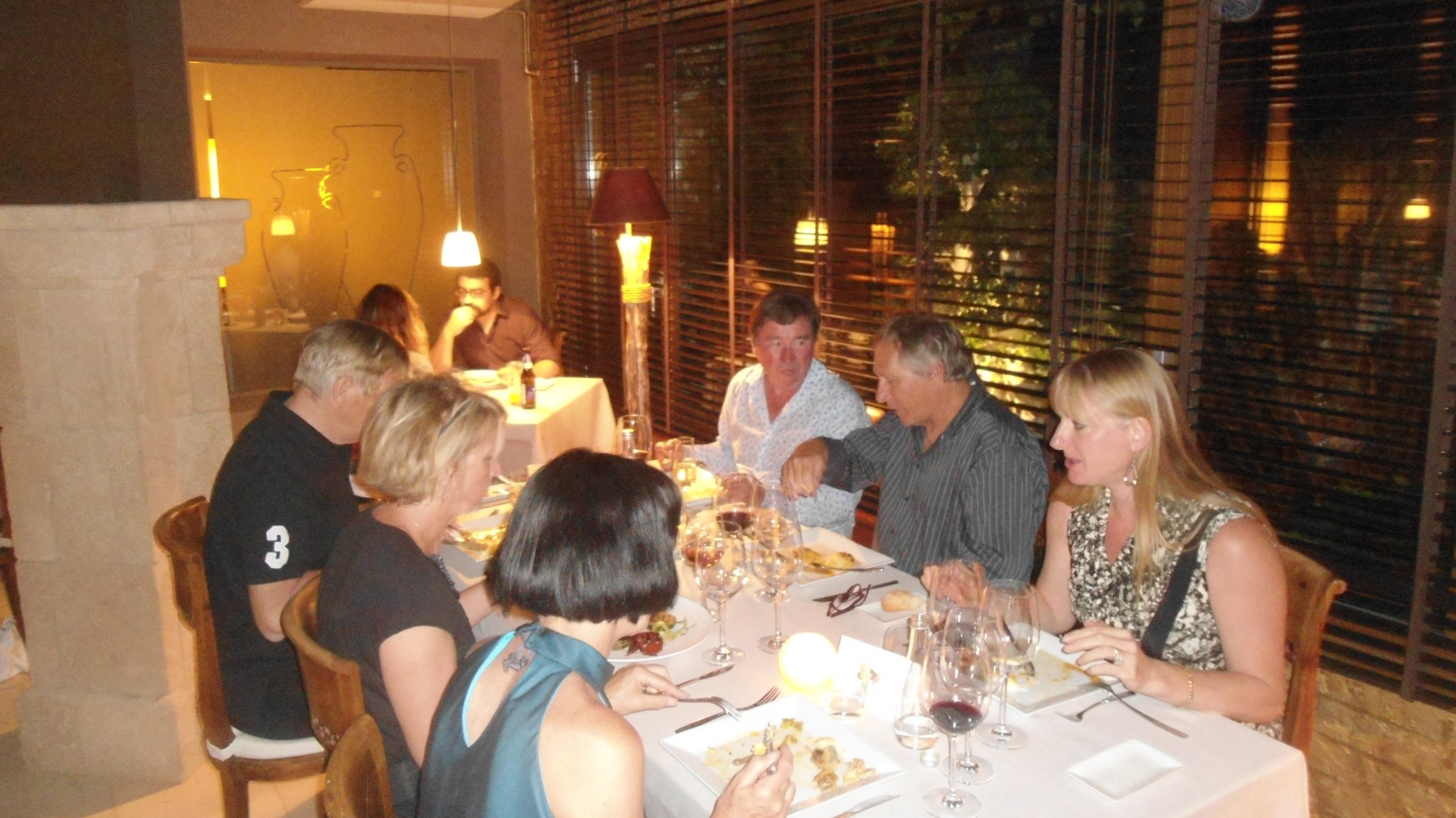
With the essential support of Daniel Castaño of Bodegas Castaño, DO Yecla, whose wines graced the event; as well as the assistance of the owners of Moraira’s Swiss Hotel, whose Head Chef designed a super four-course dinner, we put together a beautiful evening, in every sense of the word.

Dolce Divas (www.dolcedivas.net), for whom Claire is the Soprano soloist and flautist (and Kirsty Glen, the pianist and vocalist) performed throughout the evening a magical mixture of Classical Music as well as songs from the shows and some contemporary music too. However, extra to this, the five wines, each served and paired with a separate dish, were also paired with, and in a way, introduced by, specially selected music.

Claire explains: “ Some of the characteristics that can be found in wines can also be found in music. A young vibrant, purple tinged wine can be matched for charm and dynamics by a piece of vivacious music. Similarly, a full-bodied and rich aria would pair perfectly with a deeply flavoured, opulent red. And, of course, it doesn’t just apply to red wines.

Well, the proof of the pudding is in the eating and in this case, the drinking and listening there of!

The first wine was Castaño Macabeo/Chardonnay dry white. This was paired with the Chef’s aperitivos. Daniel, who was in attendance with his charming wife and children, told us a little about the winery and this specific wine. Claire also described the wine and picked out certain of its attributes which she’d also found in a certain piece of music – yes, you might have guessed it, the Flower Duet by Delibes!

I always have some of this wine in my fridge – it’s excellent value! A portion of the Chardonnay has been fermented and aged for a short while in oak, adding depth pf flavour and a touch of creaminess. The rest of the Chardonnay adds a white flower aroma to the final product whilst the green apple flavours and feel give us the fresh acidity! Super!

Castaño Rosado is made with Monastrell, the signature grape variety of the bodega. It’s so pretty in the glass, but it’s not what might be termed insubstantial. It has some attitude too, enough for if to accompany the langostinos in their challenging sauce adorned with fresh salad leaves.

SWISS CASTAÑO MAY 2015 007

For this intro Dolce Divas chose Les Filles de Cadix, also by Delibes. Claire explained: “This delightfully pretty rosado wine is delicately perfumed and, initially coy, though developing in the glass to become quite sexy and even cheeky! We thought Les Filles de Cadix, with its lively, cheeky mood and colliatura style would match such a wine really well.”

Our first red wine was a new one to me – which is a surprise in itself! Over the years I’ve tasted all of the Bodegas Castaño wines, several vintages of each too, but Santa has only just been added to the impressive portfolio and towards the top end too, probably in second place in the Castaño wine hierarchy!

It’s made with Monastrell, no surprise there, though plenty of delight, as all the red wines at Bodegas Castaño enjoy the company of this, as Daniel says, one of the three main varieties in Spain. It’s blended, perfectly harmoniously with the also indigenous Garnacha Tintorera, sometimes known as Alicante Bouschet (and more locally as Giró).
SWISS CASTAÑO MAY 2015 005

Although only recently bottled, you can taste the potential, as well as enjoying it right now. The specially selected grapes come from vines that are 45+ years old and after fermentation there are 10 months of ageing in a mixture of French and American oak. On the pallet the wine is soft, almost velvety, and yet there is constrained power as well as elegance.

“A new wine, needs a ‘new’ song,” said Claire in her introduction, “although, Santa Lucía, a Neapolitan song composed by Teodoro Cottrau, and made even more famous in the film Captain Corelli’s Mandolin, is far from new – it’s just a new one to add to our portfolio!”

“Like the wine, the piece is elegant, subtle and structured with an element of complexity. The music is wistful with a sense of yearning, and when you’ve tasted this wine you’ll be yearning for more!”

Casa Cisca is Bodegas Castaño’s flagship wine. It’s named after Daniel’s Abuela, Grandmother, who coincidentally shares her name with his wife. If this wine were made in, for example, La Rioja or Ribera del Duero, it would command at least twice the 35€ for which it is sold! It is one of the best examples of Monastrell that can be found – perhaps the best!

SWISS CASTAÑO MAY 2015 006

Rich, deep, full, and voluptuous it’s also elementally elegant and graceful with complexity and warmth. It’s a sensational wine, in every sense of the word – drink it with dinner, with cheese, and then afterwards by the log fire in winter, and with the dieing embers of the BBQ in Summer.

Paired with Nella Fantasia, originally an instrumental piece by Ennio Morricone called Gabriel’s Oboe, it was made famous by being the music central to the film The Mission. It’s also graceful and rich.

Our final wine was, until it became famous, something of an oddity! I’m a great believer in dessert wines and often lament the fact that too few restaurants have them on their lists. Mostly, such wines are white – of course. However, Bodegas Castaño’s Dulce is made with, you guessed it, Monastrell.

Late harvested, the grapes are shrivelled, raison-like, with little juice as most of the water content has evaporated. But the ‘must’ (juice) that’s left is so rich and sweet it makes wonderful red dessert wine, that also has the crucial element of acidity – essential in all dessert wines. Try it also with blue, and other strong, cheeses!

“Rich, sweet, rounded, long, warm and contemplative this wine needs to be shared with someone you love,” waxed, Claire, lyrically, “so we’ve chosen the Il Divo love song, ‘Si tu me amas’!”

My guess is that you’ll hear more of this wine/music pairing concept – it was a truly exceptional evening!

Contact Colin: colin@colinharknessonwine.com & via his unique wine website www.colinharknessonwine.com (where you can subscribe, gratis, of course, to his regular news letter); plus like 800 others you can also follow Colin on Twitter @colinonwine.

Bodegas Hacienda del Carche

HACIENDA DEL CARCHE

WINE BY DESIGN

FROM DO JUMILLA

When I opened the case of wines from Hacienda del Carche it was the labels that immediately caught my attention. A quick result from the Marketing Department and the perfect ‘in’ for those exhibiting their wines all over the world.

Fact – labels sell wines! Fact – in the UK something like 70% of all wines sold are bought by women. Fact – the fairer sex are attracted by, well, attractive labels. Ergo if your label is well designed, if it stands out, if it’s pretty, the wine will sell. The wines will be selected from the shelves of the wine merchants and the supermarkets and the tills will ring with a happy ‘ker-ching’ – and that rhymes!

However, at the wine fairs of the world, whilst it’s still true that the label will attract even the wiliest, most cynical buyers, it’s what follows that will determine a sale. The wine in the bottle has to be at least as attractive as the label. Indeed, it’s this result that will also decide whether the ladies referred to above will buy a second bottle next time they are out shopping!

Well, Hacienda del Carche is also successful here, and it doesn’t surprise me!

I first met the elegant, charming and super-professional Natalia, Hacienda del Carche’s Export Director and winemaker, several years ago when she was in fact working for another bodega in DO Jumilla. I was as impressed with Natalia as I was with the wines we tasted on that scorching day – and when you consider that the flagship wine of the tasting retailed at about 150€ a bottle, you can understand just how impressive I mean!

Natalia didn’t need her passport to move from that bodega to take up a similar post in the new one – but she has certainly needed it since her arrival. Hacienda del Carche is an example (there are many in Spain) of how well a business can adapt to harsh, conditions – rather like the native Monastrell grape variety of DO Jumilla!

We all know how the recession in Spain affected business. Lots of companies went to the wall. However the wine sector didn’t suffer as badly as other industries, largely because they were proactive, rather than the opposite – reactive. Sadly, it is true to say that some of the family owned businesses were forced to sell out to larger concerns, usually, I pleased to say, retaining a certain autocracy.

However, others kept their head nicely above water by increasing their efforts in the global market, and indeed some, like Hacienda del Carche, started mid-recession! You have to speculate to accumulate, being the operative mantra. Export departments were given a larger slice of the budget – if sales are going to dry up on the domestic market let’s see what we can do internationally. And this meant renewed effort in developing further, established markets, often in Europe, as well as speculating in the more global arena.

HACIENDA tausblanco

Taus Blanco is a blend of the internationally famous and oh so popular Sauvignon Blanc and Spain’s own Macabeo. It’s a mix that works. Typical Sauvignon Blanc gooseberry, grassy, fennel aromas mingle with the green apple acidity of the Macabeo. The result is a super-clean, fresh dry white with enticing aromas and a fruit filled flavour.

HACIENDA tausrosado

Taus Rosado is a lovely colour – adding extra value to the label design! It’s made with the indigenous variety Monastrell whose dark plum notes come through to join some cherry flavour and raspberry aromas from the Syrah with which it is blended.

It’s pretty in the glass, but don’t be deceived, this is no frivolous rosé – it has presence on the palate and a mid-length flavour-filled finish. I tasted it (and then drank the rest!) with Paella, with which it really works well. I can see it being super too with Salmon and Trout, particularly but with any fish and shellfish dish.

HACIENDA-tavsjoven

Taus Joven has three varieties in the blend. Monastrell, as you would expect, and hope, is joined by Syrah again, as well as Garnacha Tintorera. Now, regular readers will remember that this is one of the very few black grape varieties in the world whose flesh has a pink tinge to it.

Almost all other black grapes are actually the same colour in the middle of the flesh as a green variety. So, expect a darkly coloured wine whenever Garnacha Tintorera (not to be confused with Garnacha) is included!

Bodegas in Spain have, and are, making an effort to re-enfranchise younger over eighteen aged drinkers who are currently preferring beers and spirits to the national drink, wine. This is a red that will help change mindsets. It’s full on fruit without a trace of harshness. The grapes for this wine were clearly harvested at the optimum time, when fully ripe. The advantage here is that the wine is rich, and well if it’s alcohol that youngsters are after, the 14% will also attract them.

There is a slight touch of black pepper spice coming from the Syrah along with dark cherries and Monastrell makes its usual black plum contribution. The Garnacha Tintorera gives the colour of course but there’s also a earthy connection with the vineyard. It will appeal to jovenes, younger drinkers, but don’t worry, it’s a proper wine. I really like it!

HACIENDA tausseleccion

The Joven has an older brother – Taus Selección. Here the Garnacha Tintorera is replaced by the very international variety, cabernet Sauvignon. The 2013 vintage has also enjoyed 6 months in oak, making it a ‘roble’ or semi-crianza style wine and adding, of course some extra depth. A touch of earthy minerality, with blackberry fruit and a full, but elegant finish. It’s super drinking right now, with or without food, and it will last for another 2 years for sure.

HACIENDA cepasviejas

Hacienda del Carche 2010 Cepas Viejas (old vines) is a flagship wine. It has been aged in French oak for 12 months. As with all their wines there is plenty of fruit here, but there’s an added dimension of complexity and depth. It’s a wine to be savoured – drunk with meaty foods, strong cheeses and great friends! You’ve heard of the ‘slow food’ movement – I nominate this wine for the ‘slow wine’ movement!

HACIENDA infiltrado

Infiltrado is a Vino d’Autor, a wine conjured up out of the winemaker’s soul. It hasn’t been filtered (hence the name) so there may be a deposit though this should be kept in the cleverly designed bottle when poured correctly. It is the manifestation of a fruit driven wine. It’s full, rich and frankly, far too easy to drink!

HACIENDA DULCE

Finally, talking about wine bottles, the design of the ice-wine Monastrell dessert wine bottle is a work of art. It takes over 3 kilos of grapes which are late harvested and then frozen to make this wine. It’s remarkable in colour and long-lasting flavour a wine for desserts, yeas, but also for cheese. Sweet, but with that essential acidic lift to keep it fresh as well as unctuous!

And there’s more! My usual Christmas article recommending various Wine Accessories and Wine Related Products will include the following! Watch this space!

HACIENDA -mermeladablanca


HACIENDA mermeladadevino-MON

Contact Colin: colin@colinharknessonwine.com and through www.colinharknessonwine.com (here you can also subscribe to his newsletters and much more – gratis, of course!) as well as Twitter @colinonwine

Bodegas Dominio Buenavista

THERE’S GOLD IN THEM THAR HILLS!

BODEGAS DOMINIO BUENAVISTA

Veleta, Dominio Buenavista - Wines wiuth Altitude!
Veleta, Dominio Buenavista – Wines wiuth Altitude!

Bodegas Dominio Buenavista wines are exemplary, providing full flavour, power and yet elegance and subtlety and I’m quite sure that in the USA where there are burgeoning sales their wines are being lauded as much and perhaps more than they are here in their native Spain.”

Thus began my article about this Granada based winery just over two years ago. In the interim 2 years plus I’ve been fascinated to see how their wines have been garnering awards, medals and plaudits ever since, so I thought it time for a re-visit!

It’s true that added age and the specific conditions of the vintage make a contribution to the wines of Spain, mostly beneficial, but in the case of each year’s growing and harvesting weather, this can also be to the detriment of the resulting wine, wherever they are made. Generally, vintage differences such as these are of lesser significance  the further south you go in the northern hemisphere. Notwithstanding climate change, the weather is usually better!

Also it’s true that the wines I tasted just over two years ago will have been made from grapes from ‘younger’ vines than those which I’ve tasted recently – but this extra longevity will be about negligible in the wider scheme of things. Ten years difference in age – well this would be significant, but not just a couple.

And yet, for me, there has been a subtle and impressive change in the wines coming out of Bodegas Dominio Buenavista. I’ve found all the wines a little richer recently than when I first tasted them, and I was impressed then!

So another look at the wines of www.dominiobuenavista.com) – beginning with the ‘gold from them thar hills!’.

My remit for the glossy (well, it’s actually a rather sophisticated matt-glossy) UK based, though Internationally available magazine, ‘Glass of Bubbly’ (www.glassofbubbly.com) is to write about the sparkling wines of Spain which, though made by the same method, are not Cavas. There is a wealth of such wines in Spain that, until my articles have remained largely undiscovered.

You've seen the Hills - here's the Gold!
You’ve seen the Hills – here’s the Gold!

Two are from Dominio Buenavista and the ‘gold’ to which I refer is the first out of the hat and, incidentally, found on video here  https://youtu.be/4X20DoRR_bY .

Valeta Sparkling wine is made from the indigenous, aromatic grape variety Vijiriega (fortunately usually referred to as ‘Viji’!) with a 20% contribution from Chardonnay. The grapes are grown at a high altitude where there is plenty of ripening sunshine as well as beneficial dramatic drops in night time temperature. This temperature change makes a major contribution to the aromatic profile of the resulting wine as well as to the raison d’etre of sparkling wine – it’s clean freshness!

There’s a delightful floral aromatic aspect (pink rose petals) to the stable-mate  rosado Veleta, made from Tempranillo and Garnacha. On the nose you’ll also find typical rosé notes of raspberry and strawberry along with the usual panaderia notes, common to sparkling wines.

In the mouth, although the wine is subtle and delicate, it has a certain presence too. The overall result is that you have here a sparkling wine that can be enjoyed like so many as a celebratory fresh mouthful, but also with food. Try with wine with paella, for example – made a long way from Valencia, home of paella, and yet perfectly fitting the dish! Both sparklers are priced at 7€.

vijiriega2011-w150 buenavista

I love Dominio Buenavista’s ‘Viji’, white wine – it’s so different from anything else in Spain. Indeed I made a video about it on Youtube. Pale in colour but it’s certainly not timid in terms of its nose and flavour. It leads with a refreshing citric acidity, but there’s more to this wine too. You’ll soon smell white flowers and a touch of white peach, the latter of which follows through onto the palate, where you’ll also enjoy and oblique reference to passion fruit. 6·50€.

The still rosado also has a pronounced perfume (told you the altitude makes a difference!) – rose petal again, but also soft red berries. When held in the mouth for a few moments the wines demonstrates that it has some body too, making it a lovely wine for simply drinking and enjoying as well providing a foil for salmon, trout and gammon, as well as salads. 6€.

Valeta Cabernet Sauvignon Roble 2013 DO Vino de Calidad de Granada has had 3 months in oak. You can almost feel the mountainside in this wine – the Mediterranean winds, the Alpujarra earth in which Cabernet vines grow and a the hillside herbs and undergrowth! There’s juicy, bold blackcurrant fruit which delights the palate and it’s all underpinned with a very subtle complexity and depth, helped by the subtle presence of the oak. 7€.

Veleta Cabernet Sauvignon 2009 also has a little Merlot in the blend. It’s a wine that is attracting international recognition – with medals won at home in Spain as well as in the States. As you would expect, given the Cabernet Sauvignon, there is an endearing blackcurrant flavour to the wine, as well as a Merlot inspired mintiness. There are herbs again with minerality and an even great depth, following its 12 months in Amercian and French oak, which also give rise to a certain pleasing complexity.

I haven’t tried this wine with game –  but I’d like to!

I believe the Gold Medal winning Noladós 2010 is about to come into its own very soon. At present it’s a little austere, a little restrained in its pleasure-giving fruit, perhaps just coming to the end of a dormant period? But taste it, and hold it on your palate and it will reveal something of the juicy fruit that will soon be prevalent.

BUENAVISTA nolados

Made with the other Cabernet (Franc) as well as Cab Sauv and Tempranillo it’s quite a big wine longing for dark meats: steaks and casseroles.

Finally, if looking for a fruit driven red wine made from Spain’s most commonly grown red wine variety, Tempranillo, that is drinking perfectly right now – then check out Veleta’s Tempranillo 2009. Everything about this wine is perfectly in balance – and like the whole range of Buenavista wines, it delivers!

Contact Colin: colin@colinharknessonwine.com ; and through www.colinharknessonwine.com; and via Twitter @colinonwine.

Plus – for info about wine events, bodega visits, short breaks and wine tours why not join my e-mail list? Just e-mail me – simple as that!

Bodegas Enrique Mendoza

BODEGAS ENRIQUE MENDOZA

DO ALICANTE

Alfaz del Pi is, what, just two kilometres inland from the Mediterranean and about the same distance north of Benidorm? Suffice to say that it’s location is very convenient for everybody living from Alicante to Denia and beyond. I say this because this is where you’ll find the founding father of DO Alicante wine and, honestly, Bodegas Enrique Mendoza is well worth a visit! (www.bodegasmendoza.com)

I discovered to my horror recently that it’s several years since I wrote about this leading DO Alicante bodega. It’s a disgrace – and that’s what I said on a recent Youtube video I’ve recorded as part of my series on Spanish wines etc (www.youtube.com search Colin Harkness On Wine). Here’s me living but 25 minutes away, writing about wines from all over Spain, but maybe neglecting those that are made on my doorstep!

Well I called Pepe Mendoza, son of the founding Enrique to apologies and ask if he’d be interested in an article about the winery and the wines. A few days later a selection of wines from the formidable portfolio arrived on that very same doorstep. And what a delight!

Pepe’s father was largely responsible for putting DO Alicante on the wine making map of Spain and his family have taken on the role now, expanding the name of Bodegas Enrique Mendoza not only throughout Spain, but in the export market as well. Mendoza wines were the first and other bodegas following in their footsteps have been able to benefit from the success of the winery that first introduced DO Alicante and it’s quality to an appreciative global market.

Over the years I’ve probably tasted all of the wines on their portfolio, though not all the vintages of course. So, to receive a case of wines to taste, most of which I know, but whose vintages I hadn’t yet tasted, was a delight. You’ll be delighted as well!

Using a combination of indigenous varieties as well as international grapes there is a fine choice of mono-varietal wines as well as blends. When oak is used, it’s used judiciously and according to the style of the wines post fermentation. Some may require a longer time in oak to get the best out of the grapes, some less time.

Enrique Mendoza Petit Verdot 2012 has enjoyed 15 months in oak – 10 in American and then 5 in French oak. The grapes for this wine, as with all the other reds, and indeed most of the Mendoza wines, do not come from vineyards so close to the sea. Imagine the temperature in the vineyards during July and August – it’s boiling here. So too at night, when although the temperature does drop, it’s still hot throughout the dark hours.

Regular readers will know of course that this is a recipe for dull, flabby wines with too much alcohol. This is why the Mendoza vines are mostly grown way inland where there is considerable altitude which cools the night temperatures sufficiently for the grapes to develop their essential acidity.

The wine has not been highly filtered or clarified so as not to lose any of its soul. This can result in a slight deposit forming in the bottle over time – but don’t worry about that. Pour carefully, just in case, and you’ll be rewarded. You’ll find a deeply coloured red wine with a slight vegetal nose beneath some glorious damson fruit. It’s fruit led and driven with a lovely fruit filled finish. The oak has given the wine extra weight and complexity and there is a mid-length finish.

Monastrell is a favoured variety in this part of Spain. Here it teams up with Merlot, and the 2011 vintage has been placed in French and American oak again, but this time for just 12 months. On the nose there are rich black plums with a slight floral note too and just a touch of minerality. This wine is drinking perfectly now and has perhaps another year left at its best.

One wouldn’t normally think of Cabernet Sauvignon as a hot climate variety. Although it’s an international traveller, Cabernet’s natural home might be considered to be Bordeaux where the weather is of course markedly different to that in Alicante. And yet if looked after in the vineyards and harvested relatively early this dark black grape can really show off it’s ripeness under the Mediterranean sun!

Enrique Mendoza Cabernet Sauvignon/Monastrell, like the above, is a sort of French/Spanish blend – but grown at altitude under many hours of Spanish sunshine. It’s perfectly ripe – making it juicy with lots of blackcurrant, bramble and plum fruit. It’s also had 12 months in French and American oak making the wine a little fuller on the palate with a depth of flavour and the odd whiff of vanilla and coconut.

And talking of Cabernet – Santa Rosa 2011 is a really super wine. The flagship of the winery, this elegant Cabernet (70%) Merlot and Shiraz mix is a wine that, although the grapes are French in origin, would make lots of French wineries quite envious!

MENDOZA enmsr09_det_1

The Cabernet has obviously been picked at the optimum time – the grapes were fully ripened but retained their crucial acidity. Lots of blackcurrant aroma and flavour. There’s a fleeting minty aroma about the with some stony minerality and a touch of forest-floor undergrowth too. Then add some rich dark cherry from the Shiraz with a touch of spice and you really have a cracking wine!

Now – I did, did I not, say that this wine is the flagship wine of the bodega? Well, Bodegas Enrique has a challenger for this title now.

I first tasted Las Quebrades Monastrell 2010 some time ago at our great friend John’s house. He’d spoken with Pepe a few days before at the bodega building in Alfaz and had received a bottle with a hand written label, drawn straight out of the barrel! I was impressed then with the wine as it was, but more so with its undeniable potential.

The finished product is now available in a heavy Burgundy style bottle and it’s lovely! It’s a single estate wine made 100% from 70 years old Monastrell vines. It’s had 15 months exclusively in French oak, which adds to the wines overall elegance. On first hit on the palate, you’d be forgiven for initially thinking it perhaps a little insubstantial – wait a few seconds and this super, soft wine will take over your senses.

I’ve just tasted it – perhaps five minutes ago and I can still ‘feel’ it, still enjoy its fruit and slight dark chocolate, plum finish. I still have the aroma – plums and black cherries with a slightly more pronounced mineral note and some sweet liquorice as it finally fades! Super wine!

And these, of course, are only some of the wines made by the Family Mendoza!

Contact Colin: colin@colinharknessonwine.com and through his unique wine services website www.colinharknessonwine.com as well as via Twitter @colinonwine.

Also for wine videos www.youtube.com search Colin Harkness On Wine.