First Published Costa News Group, October 2012

BODEGA PUERTO

JAVEA PORT’S NEW WINE MERCHANTS HOSTS WINE TASTING

 It has to be a courageous couple to open a new business on Spain’s recession-hit Costas, but Mari and Juan, of the new Javea Port wine merchants, Bodega Puerto, are exactly that!

 Juan and Mari were unperturbed by daily gloomy economic forecasts including such baffling lofty phrases as: “ Moody’s Downgrade Spanish Bonds to Junk Status”; and “Fitch Ratings for Spain free-fall to CCC Grade”, and worse (for heaven’s sake, what does it all mean?!). Plus the instantly understandable and down-to-Earth (unlike the above) sad sight of so many ghostly business premises now empty would put off most entrepreneurs. In such a climate is it wise to start a new enterprise?

 Well an early-term report suggests that Bodegas Puerto is definitely bucking the trend and I, along with a full-house of wine tasters, went along to find out about an oasis of success in what we are led to believe is a desert of recession.

 Having opened in early June, owners Juan and Mari have been pleased with the passing trade that has slowly developed over the months. Many stopped passing and became regular customers, but now the Summer tourist consumers are being replaced by Autumn tourists and this business will again change as Winter comes along.

 In anticipation of this change and natural reduction in numbers visiting the shop, Juan and Mari asked me if I’d like to present a tasting of some of their wines as a promotional exercise. Having visited the premises and having been impressed with the variety of well chosen wines, plus gastro delicatessen-like nibbles also on offer, I accepted with alacrity.

 And, when advised of the tasting, so did the maximum forty inquisitive people, within 48 hours of notification! It seems that Juan’s pre-opening research was correct in suggesting that there is a demand for a quality wine shop in Javea Port!

 We tasted five wines, with nibbles, which were served by charming family members all delighted to help and to meet potential new clients. I made no apology for starting proceedings with Bodegas Dominio de la Vega’s Cava Brut. A consistently good sparkling wine which belies its humble price bringing faint green apple flavours to the typical Cava patisserie, bready nose.

 But that’s not the only reason why I often choose Cava from this highly-rated Utiel-Requena based bodega. With Domino de la Vega Cavas you know exactly what you are getting  – just look at the back label. Here, unlike most Cavas (and Champagnes and other sparklers), you’ll see the month of disgorgement clearly printed.

 This records the month when the sediment (dead yeast cells) that caused the secondary fermentation (which is how the bubbles arrived!) is ejected from the bottle. The Cava was then immediately ready to drink and indeed will be for the next nine to twelve months. After this time (roughly, it’s not a precise science) the wine will slowly start to fade. Of course without the date on the label how do consumers know if the sparkling wine is likely to still be in good condition? Answer – we don’t!

 I applaud Bodegas Dominio de la Vega for taking this stance, their voice in the wilderness should be joined by a huge choir of all makers of sparkling wine singing the same song!

 All the next wines were made under the auspices of the famous Rioja bodega, Ramon Bilbao – which I’m sure many readers will have seen and probably tasted too. However their first wine of the evening wouldn’t perhaps have been recognised immediately as a Ramon Bilbao wine – it’s white, and it comes from DO Rueda!

 I wonder if Monte Blanco, produced by Bodegas Ramon Bilbao in DO Rueda is the result of a decision some years ago by the bodega owners to produce a white wine but out of the Rioja area and therefore not having to use the Viura grape variety? (please see Cork Talk past articles White Rioja Parts One and Two).

 No matter, the point is that this Verdejo wine has lovely, inviting bright lime green tones with hints of pure gold. The flavour is classic crisp Verdejo – asparagus, mountain herbs, long thin Italian green peppers, gooseberry and under-ripe kiwi. It’s super stuff and under 6€!

 You’d be hard-pressed to recognise also that Lucero del Alba, from Rioja’s arch enemy Ribera del Duero, is also made by Ramon Bilbao – there’s no mention of it on the label. But Bodegas Cruz De Alba is part of the group and here responsible for a Roble wine, that is a wine with some oak and bottle ageing but deliberately not enough for it to be called a Crianza.

 Juicy fruit with a noticeable acidity on first opening mellows quickly to be a fruit-led wine but with some depth provided by the American oak. After ten minutes or so just enjoy the caramel and dark fruit aromas wafting out of the glass!

 Ramon Bilbao Crianza 2009 is made from 100% Tempranillo and has had more time in oak and bottle to produce a classic Rioja style Crianza. There’s a nice balance between dark red fruit, some lighter loganberry and herby notes, particularly bay leaf, with the vanilla of the oak. Easy and delightful drinking, and with food.

 Their Reserva 2006 is a dinner table wine and if you open this wine in the UK or anywhere else in the world, you’ll instantly be transported (beam me up Scotty!) to Spain. It speaks of Spanish wine and of course specifically of La Rioja. Tempranillo is joined by the highly perfumed Graciano and the meaty, darkly coloured Mazuelo (aka Cariñena) varieties – a typical Rioja triumvirate. Bay leaves and a very distant thyme and mineral note with roasted coffee beans, coconut and dark blackberry fruit help to make this a flavoursome and deep, complex wine.

 Needless to say – they’re all available at Bodega Puerto!

 colin@colinharknessonwine.com and www.colinharknessonwine.com – are you interested in learning more about wine appreciation, individual and small group courses available!
First Published Costa News Group October 2012

BLANC MONASTRELL

BLANC DE NOIR FROM BODEGAS ANTONIO ARRÁEZ

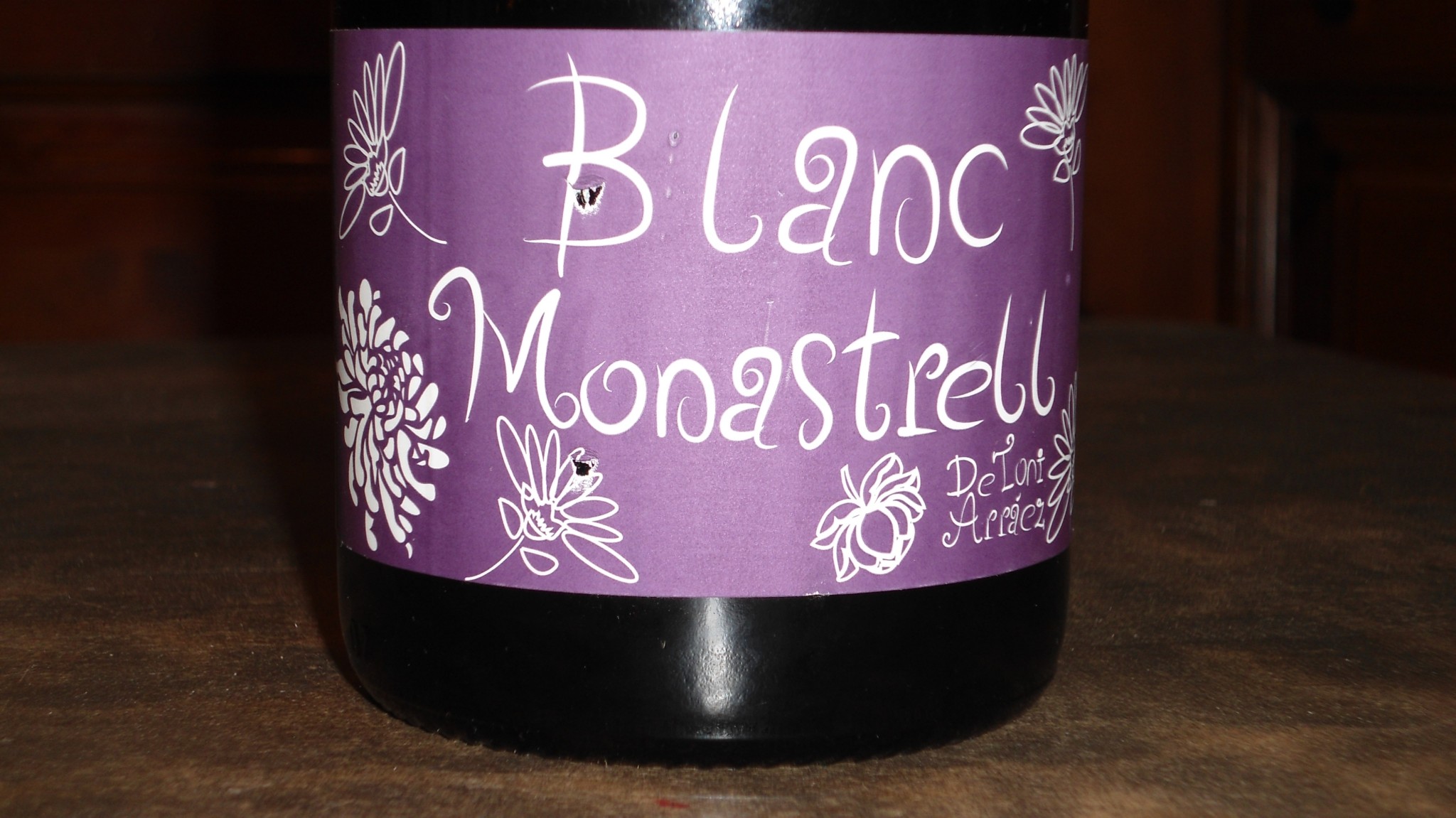
Monastrell Blanc from Bodegas Antonio Arráez

Perhaps you’ve heard me at one of my wine tastings explaining to those who don’t know, how rosado wine is made? It’s not, as many will know, made by mixing a bottle of red wine with a bottle of white wine. Although there are still rosados made by using black grape must (juice) mixed with white grape must, the white dumbing down, in terms of colour, the dark red, and of course adding freshness, acidity and aroma to the finished, rosé coloured brew.

However the vast majority of rosé wines are made by using black skinned grapes. Yes, the same varieties that make the full bodied, richly coloured red wines that we love: Cabernet Sauvignon, Tempranillo, Merlot et al. But how can this be?

Well, the next time you buy some grapes, black and green, just for a second take the time to cut one of each type in half and study the centre of the grape. You’ll find that the flesh of the grape at its centre and going outwards towards the skin, is in fact the same colour for black and green grapes.

The juice of both types of grape would be the same if it weren’t for the skins which are pressed in order to release the juice. The black grapes also release some of their colour and when the grape is further pressed and then the must is left in contact with the skins the colour of the juice changes to a much darker red as more colour leaks from the skins. The results is the black grape must which will next be fermented ending up with a red wine.

However if the colour leaking process is interrupted part way through – the colour of the must will be less than red, more of a pinky colour, really – rosé. Hence, while a red wine is red by virtue of the time its must spends in contact with the black skins, a rosado wine is rosé coloured because it spends less time with those skins.

Ergo it must be possible to make a white wine from black grapes by keeping the juice and the skins separate. It can’t be totally white as the pressing, albeit very gentle, is bound to release a little of the colour contained in the skin, but in order to limit this colouring as much as possible the must is whisked away from skins in double quick time!

What’s left is a juice, and ultimately a wine that has the palest of pink hues, or sometimes a little similar to onion skin colour, in fact just like the Monastrell Blanc.the wine to be described in a moment, from Bodegas Antonio Arráez.

But why do it, one may ask? We already have: white wine, rosado, red, as well as many different styles within those colours. Do we need another type of wine?

Well, for sure, such wines have a novelty value – there aren’t many produced (Blanc Monastrell is a limited production of just 2,400 bottles) and their rarity is of interest to those keen on tasting different wines. This wine will be a sell-out, if it hasn’t already. However, given the chance next year to buy the same wine – will people do so again, having tasted the first, initially just to try it, to see what it’s like?

Blanc de Noir wines (white from black) are made to satisfy a demand, albeit small at the moment (but definitely increasing) for wines that combine the freshness of a crisp white wine with the rich, depth of flavour of a red. They also satisfy a winemaker’s desire to make something different, something special.

I think it goes without saying (but that’s never stopped me before!) that such wines will always have enjoyed the winemaker’s loving attention – it’s unusual, something of a vino d’autor, and will thus be his or her ‘baby’ causing her/him to pay perhaps even more attention to it than others from the same stable.


White Wine Made From Black Grapes - Blanc de Noir!

I’m certain that those of us who have tasted Bodegas Antonio Arráez’s Monastrell Blanc 2011, will return to it next year, and so on!


The colour, pink-hued pale onion skin, is unusual but pleasant in the glass and when pouring one is treated to a burst of floral, red rose aroma with at first unidentified fruit, including citrus, lingering in the air and seemingly clinging to the sides of the glass.


Raise that glass and on the palate and the treat expands with both dark and light red fruit (blackberry, Victoria plum, loganberry) notes as well as some grapefruit abounding but with a gentle herby aroma allied to the faintest whiff of cranberry too!


It has a mid-length, dry finish which leaves the palate with a richness but freshness too. Super wine – let’s have more!

Contact Colin: colin@colinharknessonwine.com and through his unique wine services website – want to know how to obtain more from your wine, how to choose wines in a restaurant; visit a bodega; hold a wine tasting for your friends; match wines and food; etc – then visit www.colinharknessonwine.com

First published Costa News Group, Sept. 2012

BODEGAS ANTONIO ARRÁEZ DO VALENCIA

GRUPO TERRES DELS ALFORÍNS

I’m returning this week to some of the wines produced by the individual and autonomous bodegas within the Terres dels Alforíns Association, referred to in Cork Talk several times in late June and July.

To qualify for membership of this elite group of bodegas one has to demonstrate a passion for fine wine making, where a concern for the environment – the soils and ecosystems of this beautiful part of DO Valencia, is as important as the wine itself.

(A buzz-word (bandwagon?) in the wine world at the moment is ‘sustainability’. Producers the world over are signing up for the eco-friendly concept of ensuring that the soils and general environment of vineyards must be protected from abuse so that the industry can continue for future generations without fear of harming the vines’ (and our) natural habitat – the earth/Earth!

A noble ideal and, where this belief is genuine, I wholly applaud it, of course. However that nasty cynic in me cannot help but question some of those fully-paid up members of the ‘sustainability society’ as to their real motives. Are some paying only lip-service to the notion, with the ulterior motive being simply commercial? Are some signatures solely sales-driven?)

Well I have no such worries about the members of the Terres dels Alforíns Association! I’ve been there and met several of the founding members, invariably a younger, more savvy generation, taking over the reins from their fathers, combining family and local/regional knowledge with: University degrees in oenology; modern technology; often wine-making experience in different countries; and an encouragingly open and enquiring mind.

It seems, from my experience with the wines of Bodegas Antonio Arráez, that it also helps to be a little bit crazy! ‘You don’t have to be mad to work here, but it helps!’

You know - it's not a Bad Life!

Witness if you will (and you should, the wines are super and the label’s fun!) Bodegas Antonio Arráez’s Mala Vida (Bad Life, in English!). The foil and particularly the label invite extra inspection with apparently random black silhouette images of: a cat, musical notes, a stiletto, the @ sign, balloons and in contrast an elegant tall red wine glass, plus a black bottle with a white heart label and a red drop of wine escaping!

Turn to the back label and in Spanish it says simply “Everyone should believe in something, I believe I’m going to carry on drinking, sorry!” with no more information at all! I love it – though I wonder if it might put off some, perhaps more conservatively minded consumers, who would consider it just a gimmick which couldn’t possibly be related to quality wine. More’s the pity my small c friends, wine can be funky and good!

This is! It’s made with an eclectic blend of Cabernet Sauvignon, Monastrell, Garnacha Tintorera and Syrah with a touch of oak to deepen the flavour and extend the length of the wine. There’s spicy ripe fruit on the palate with back-up of integrated light to medium done toasty aromas blending perfectly with the dark fruit.

I’m impressed too with their Lagares 2009 Cabernet Sauvignon which has had a full thirteen months in American and French oak plus time in the bodega’s cellars before it’s release. It’s one of those modern wines that defies the red tape of titles such as Crianza and Reserva – it’s neither one nor the other having been made according to the winemakers requirements and not those of the statute book!

Cabernet Sauvignon is a grape variety whose wines are notoriously harsh in youth when grown in northerly climes, though those with the patience (and the correct storage facilities!) are rewarded, years later with some stunning wines of depth and complexity. However when grown in the full-on sunshine of the Valencia region one needn’t worry about the grapes fully ripening, rather, the challenge is to ensure that the wines don’t become too flabby and alcohol-loaded.

Here the reward of fine wine can be realised far earlier than, for example in Bordeaux. These days of climate change mean that the winemaker in southerly climes must spend more time in the vineyard (quality wines are made in the vineyard not in the winery) ensuring that the vines don’t over-crop and that canopy management protects the grapes from too much exposure et cetera.

It’s clear that those at Bodega Antonio Arráez are more than capable of doing just that! I disagree with the points given this wine in the Guía Peñin, 83 points isn’t bad, but the wine is far better in my opinion. Perfectly approachable now but with life in it too this wine is deeply flavoured with sweet tannin, bags of blackcurrant fruit, some vineyard stone-derived minerality and a good length too. It’s an oxymoron of a wine  – serious and fun!

I’m going to leave the final wine from this forward thinking, modern bodega whose roots in fact go back over a hundred years until next week – it’s made from Monastrell, but you aint seen (better still, tasted) anything like it!

NB Thursday 4th October – I’m presenting a Wine Tasting with Aperitivos in Javea Port’s super new wine merchants, Bodega Puerto. Starting at 7:30 pm we will be tasting a cava, a white wine and three styles of red wines – all quality and very tasty. Aperitifs will also be be served. Plus there will be super offers on wines etc and it’s only 9€ per person. Please call me asap (629 388 159) to reserve, as spaces are limited – or reserve by visiting Bodega Puerto, Javea.

colin@colinharknessonwine.com Please visit www.colinharknessonwine.com to see how I can help you enjoy wine even more!

First published in Costa News Group – September 2012

IF IN DOUBT LOOK FOR THE IWSC LOGO!

THE INTERNATIONAL WINES AND SPIRITS COMPETITION

– A SURE SIGN OF A QUALITY WINE

Medals that mean something!

Last week’s article dealt with the impartiality (or not?!) of wine magazines, finishing with a similar point regarding the same, with respect to Wine Competitions. PlanteAVino, the excellent and prestigious Spanish Wine Magazine was praised for its uncompromising attitude to honesty and transparency when reviewing sample wines that have been sent by producers. (Still available at www.costa-news.com click Cork Talk).

This week I’d like to sing the praises of one of the best respected international wine competitions for the same reasons. It’s a competition with which I’m involved and I’ve therefore seen it from within as well as from the wine consumer’s position. You may suspect a little bias, but honestly, I’m telling it like it is!  

Having been elevated to the Judges Panel of the prestigious International Wines and Spirits Competition earlier this year I was naturally delighted to be called upon to judge Spanish and Portuguese wines at the IWSC Headquarters near Guildford in April.

An extremely unprepossessing, long and low pre-fab building at the side of an airfield used by anything from Chinook Helicopters, micro-lites, RAF freight transport aircraft and Lear Jets doesn’t look like the nerve-centre of such a world renowned wine competition. Perhaps the more so when one learns that the often tongue-in-cheek Top Gear TV Programme with Jeremy Clarkson et al uses the airfield for its motor vehicle testing!

And yet once through the portals into the tranquil various lounges, offices and of course, tasting rooms, an ambience of almost academic professionalism envelopes visitor and official alike. I’ve never been to Oxbridge but I imagine the professors’ lounges to have a similar feel to them!

This feeling becomes even more pronounced when my fellow judges arrive – the eminent academics, authors and luminaries of the wine world, including several Masters of Wine and comprised of several different nationalities.

On edge as the new kid on the block, my nerves disappeared when the first raft of  ISO (International Standards Organisation) glasses, filled to a third of their capacity, were brought in and judging started in earnest. Tasting is done in silence and marks out of 100 are awarded by each of the individual judges who have been given no details of the wines that are being tasted.

Thus wines are tasted blind and marked solely on their merits with no preconceived ideas brought into  play. The average is calculated (I breathed a silent sigh of relief when most of my scores equated rather well with the group average!) and it’s only then that any discussion might take place – but still in ignorance of the wine details, which in fact are only learned months later when the results are published!

It’s the only wine competition which includes a chemical analysis of each wine, done by the chemist experts in another building. Plus, of interest to Costa News readers in particular. The competition was the brainchild of my friend, colleague and one time business partner Anton Massel, whose photo hangs in the lounge at HQ!

I have complete faith in the legitimacy of the IWSC’s awards – in the words of Welsh Rugby loving and celebrated Welsh comedian, Max Boyce, ‘I know, I was there!’

Plus I also know from a consumer’s viewpoint! I’ve just returned from a super three week holiday (with some wine work thrown in, claro!), spent mostly in Northern Portugal. Stunning locations in the beautiful lake district of the country surrounded by mountains, contrasting with the no less wonderful Atlantic coast – it’s a lovely country!

And it has a history of wine making that goes back thousands of years – don’t just think Port, though! Yes it’s a glorious drink that we certainly enjoyed whilst there, and still are doing so (including, and here’s a tip, White Port, chilled, or with tonic and ice!). But think also white, rosé and red still wines which have been increasing in popularity and indeed improving in quality over the last twenty years, to the point now where there is a huge choice of flavour and aroma packed wines.

And it’s that choice, if one isn’t familiar with wine names and producers that can be thoroughly bewildering when standing opposite the well stocked shelves of wine merchants and supermarkets – just how do you choose?

Well one answer is to look for the logos of the IWSC! Medal winning wineries are entitled to place a copy of the appropriate medal along with other IWSC promotional material if they wish. Of course many do so – what better accolade than to have won a medal in such a significant competition?

In a large supermarket one such wine stood out a red made with the varieties Touriga Nacional abd Castelao (super indigenous Portuguese varieties), and proudly sporting not only the IWSC Silver Medal but also with the Best in Class Bar. Cabeça de Toro Reserva 2008, DOC Dotejo thoroughly deserves the plaudits and at about 6€ it’s excellent value for money too!

So I recommend that when indecision strikes look out for the IWSC logos – I’m sure you won’t go wrong!

A Sign of Quality Wine

colin@colinharknessonwine.com ; www.colinharknessonwine.com