VINOS IBERIAN

VINOS IBERIAN


The geographical breadth and depth of wines made under the auspices of Vinos Iberian (Compaña de Viñedos Iberian) is astounding. Factor this into the variety of different indigenous and international grapes used, as well as the quality and sheer drink-ability of the resulting wines, and it’s easy to see why this growing company is so well appreciated!


This group makes wines in seven different specific areas of production, six Denominaciónes de Origen and one Vino de la Tierra. From West to East DOs: Rías Baixas, Bierzo, Toro, Rueda, Ribera del Duero, La Rioja, Priorat and Penedés; and further south in: VdlT Castilla, and DO Jerez! It’s a remarkable portfolio of bodegas and wines and, as you might guess, I was delighted to receive a sample from each area, with the exception (so far?) of Jerez!

 IBERIAN Albariño-96x443

You’ll have heard of the wine dynasty that is the Osborne family – probably from their synonymous association with the wonderful sherries of Jerez. Well there’s plenty more than just Sherry, in this particular locker!


The Osborne family have always been interested in the fine wines of Spain as well as in Sherry. The company now owns all the bodegas in this huge area, which goes under the umbrella name of Compaña de Viñedos Iberian SL and, following my tasting all of the sample I received, it’s further proof that big can be beautiful!


The company focuses on small wineries and those tied to specific estates. The nature of the soil, the altitude and the micro-climate of the individual vineyards that make up the group is of paramount importance so that the wines made reflect the grapes used as well as the ‘terroir’ from whence they came. Vinos Iberian wines are representative of place as well as grape varieties. It’s a winning philosophy.


Because of the numbers of wines tasted this will be a two-part article. Today I’ll be telling you about the Vinos Iberian wines from: DO Rías Baixas, DO Rueda and DOCa La Rioja.

 IBERIAN CRIANZA laPinaleta-161x443

As you know, Spain was once considered a country for fine red wine – but mostly, red wine alone. Whilst it’s true that Spain has always been respected for its red wines it’s just as true, nowadays, to say that its whites are now amongst the best available to white wine aficionados. Regular Cork Talk readers will be well aware of the huge strides forward that white wine production has taken here in Spain during the last fifteen years.


Of course, during the time when it was solely the reds that were lauded there were also the whites of DO Rías Baixas that attracted attention, certainly within the home market, but also on the international circuit. Albariño, the mainstay of DO Rías Baixas, probably remains the queen of Spanish white wine varieties. However it’s now a very close-run thing. For example one in every three bottles of wine sold in Spain now is a Verdejo from DO Rueda.


The Compaña de Viñedos Iberian would have been foolish to leave these areas out of their portfolio.


Rol de Larosa, DO Rías Baixas, from Bodegas Mar de Arbolada, is made with 100% Albariño grapes which come from old vines (40 – 80 yrs) and have enjoyed the added benefit of a little time in oak. The typical white flower fragrance (in this case I think a waft of Magnolia with the faintest trace of honeysuckle) is at first dominant but this mellows slightly for the entrance of some white peach and slightly under-ripe pineapple fruit aromas.


The fortnightly stirring of the lees leaves a creamy tactile sensation on the palate when the above aromas also manifest themselves in something of a taste sensation. The time in oak has depth of flavour, a little complexity and certainly contributes to the mid to long length finish. Super start!


Although generally you’d taste an oaked wine after an unoaked one, I took the gamble and tasted the unoaked Viña Oropendola Verdejo from DO Rueda after the above. It was a calculated gamble that paid off.


The oldest vines used for this wine exceed 100 yrs of age! There had to be sufficient richness to follow the slight oaking of the above wine. Plus, this wine had also enjoyed the battonage treatment, the stirring of the lees. I really liked this wine. It has the typical vegetal, grassy, fennel and gooseberry fruit aromas and flavour (I’m guessing, and hoping, indigenous yeasts?) but with an added slight cancerous minerality from their planting in stony vineyards not too far from the banks of the River Duero, whose mists shade the grapes a little from the early morning sunshine. We’re on a roll here!


My first Vinos Iberian red was from Rioja – in fact it was part of a brace from Bodegas Viñedos Camino de la Piedra. Piedra (stone) gives a nod towards the nature of these two Rioja wines – there’s an element of stony minerality in the wines derived from the gravely soils in which the vines are planted.


La Pinaleta has a lovely crested bird on the label. It’s a joven, young, wine which is all about the fruit, with a slight minerality to add a touch of mystery and complexity and a greater depth on the finish. It’s mostly made with Tempranillo, now officially the 3rd most planted variety on the planet, with some support from Garnacha, I believe the second most planted variety in Spain, and Mazuelo.


It’s a time honoured and proven winning formula for wines from Spain’s most famous area of production. You’ll find some light red fruits, strawberry and redcurrant, if you look behind the dark blackberry which is dominant. It’s fruity, smooth and tasty!


La Pinaleta Crianza 2011, has a less distinctive, to the point of making it invisible to the consumer searching for a wine he/she hasn’t tried before. But this is a shame (and easily rectified) as the wine is sufficiently distinguished to warrant better sales than perhaps are the case?

 IBERIAN pinaletajoven

Its thirteen months in French oak, new and one year old, has given the same blend of grapes as makes up their young wine and extra depth, complexity, and somewhat surprisingly, given that it is two years older, an extra vitality. This is a wine that shouts aloud, Rioja and proud. (I should sell that phrase!). The fruit has mellowed along with the integrated oak, there is a touch of mushroom undergrowth this time, it’s earthy and brambly. But the fruit remains and will do for a couple maybe three more years.


Part Two next week!


Contact Colin: colin@colinharknessonwine.com and via Twitter @colinonwine; and please visit his website for wine tastings, bodega visits, wine pairings etc www.colinharknessonwine.com

EN RAMA SHERRY FROM BODEGAS LUSTAU

Exemplary En Rama by Bodegas Lustau

There’s something seductively sensual about Sherry!

Perhaps, if one is thinking of a figgy, rich Pedro Ximénez, or a medium, aged Palo Cortado, or even a mahogany coloured, but naturally dry Oloroso the above wouldn’t be that much of a revelation. Many of us have partaken of such beauties, and indeed we’ve certainly been seduced!

However when referring, as I am now, to a bone dry noticeably salty Manzanilla from Puerto de San Lucar; or a deceptively water coloured Fino which can show a very aperitif-friendly slight austerity, you might raise an eyebrow to accompany the slightly raised little finger of your hand as you sip your sherry! Well, please read on and see why I’m making such a bold claim!

In very recent years, there is a ‘new’ style of Sherry that has hit the market, running, and continues to do so with many chic UK wine bars and forward thinking restaurants ordering cases, confident that it won’t go out of style. And for me, for sure, En Rama Sherry is here for the long haul.

I think it’s a fairly odds-on bet to say that the En Rama style Sherry has come about in an effort to bring back some dynamics to the Sherry market. There’s nothing wrong with that though. It’s certainly not an admission that what has been there since before Shakespeare’s time has some sort of innate fault. The several and varied styles of Sherry have been appreciated by the cognoscenti for centuries. However, in such hard economic times the cognoscenti market is not enough!

The wineintelligence.com business recently released a report which put in a nutshell the ongoing problem facing the Sherry industry when they summarised their findings after a large poll, where respondents were asked to say the first word or phrase that came into their heads when the word SHERRY was heard, here’s what transpired:

Picture5
Indeed, prior to my recent monthly guest spot on UK Radio, channelradio.co.uk I asked listeners the same question (I don’t see it as plagiarism, Your Honour, more flattery really!) and was inundated with the same and similar responses.

It’s not the cognoscenti, but consumers in general who have misconceptions about Sherry. It’s time to move on and this ‘new’ style of Sherry is making inroads in breaking down reticence. This alone should earn it the plaudits of the Sherry industry, but when you actually taste En Rama Sherry, well, it speaks for itself!

I like Sherry, always have. There was no alcohol in my house when I was young and practically none in that of my Grandparents, so the concept of the sweet sherry brought out at Christmas by Granny and the same bottle again the following year, never made an impression on me. But it did on others, as you can see above. Yes, there was sweet Sherry that was treated like this and it’s understandable that it made an indelible mark many folks’ psyche. But really, we need to start afresh, and Bodegas Lustau’s (www.lustau.es) En Rama range is an excellent place to start!

I was sent three charming 50cl bottles from Bodegas Lustau, whose premises in Jerez, Andalucia, I’ve visited several times. Each sherry, one from each of the three towns in what’s known as ‘The Sherry Triangle’, Jerez, Sanlúcar de Barrameda and  El Puerto Santa Maria was spectacular!

First though, what is the En Rama style. Well, roughly translated the phrase means, ‘raw’. But don’t let that make you think it will take tour tonsils with it as you swallow! There’s nothing rough about En Rama Sherry. It simply means that this sherry has been deftly removed from underneath it’s protective layer of ‘flor’ (a none too attractive film of yeast that forms atop the base wine as it begins its metamorphosis into sherry whilst stored in the old oak barrels).

Unlike the Sherries that are destined to become regular Finos and Manzanillas (which I also love, by the way) these wines are not clarified or filtered to the same degree. En Rama sherry comes, more or less, straight from the cask! Bottles of Fino and Manzanilla as above, are filtered and clarified quite heavily because of the consumer’s apparent desire for pale and clear wines, as well as the producers’ for stable wines that have a long shelf-life.

Because En Rama sherry is filtered to a much lesser degree it has a slightly different colour to the regular wines, and more importantly, the depth of flavour (which diminishes though filtration and clarification) remains. When you drink En Rama Sherry you know you’ve had a drink!

I tasted first the En Rama Fino de Jerez. It is made from just one cask of Fino which has been set aside from the others which will go on to make regular (and also very good) Lustau Fino. It’s pleasingly dry with body and a long finish, for me there’s a  passing note of green olive along with some bitter citrus. Hold it in your mouth before swallowing and let it show you what it’d got! Super.

En Rama Manzanilla de Sanlúcar de Barrameda was next up – and again it was everything I’d hoped it would be. Slightly straw coloured there’s a yeasty patisserie note on the nose (like, and yet curiously unlike the autolysis aromas from a bottle of sparkling wine). I tasted it alone (as I always first do) but then with some seafood, including smoked cod and salmon. The overt saltiness of the sherry makes it the perfect match.

It was impossibly close, but if I had to say a favourite, it would be the En Rama Fino  De El Puerto de Santa María. I’m looking forlornly now at the empty bottle! Very pale gold in colour, the aromas that escape when pouring are seductive. You’ll find a touch of saltiness here too, bone dry, rounded, with balanced, almost measured, acidity and such depth, complexity and length. Drink it with pan-fried slightly salted almonds, Jamón Serrano, Semi and Curado hard Manchego cheeses, and of coure, just by itself! Excellent, and can’t wait to taste some more!

A wonderful range of sherries from Bodegas Lustau!

Bodegas Castell d’Encus

THE EXTRAORDINARY WINES OF

BODEGAS CASTELL D’ENCUS


I first heard about Bodegas Castell D’Encus, DO Costers del Segre, via a Tweet from Pancho Campo. Señor Campo was Spain’s first ever Master of Wine and his comment that this young bodega (founded 2001) made ‘the best Pinot Noir in Spain’ was the starting point of a fascinating and extremely tasty metaphoric journey into the Catalan Pyrenees.


Never was a truer wine word spoken than those uttered by critics like myself when the Castell D’Encus wines are described as having a certain mineral quality. This wholly beneficial attribute comes of course from the soils that adorn the huge granite boulders in this remote place. The vines grow in precipitous vineyards hanging onto the side of the mountains which, when scaled, bring the intrepid climber into France. But that’s not all!

 ENCUS STONE VAT

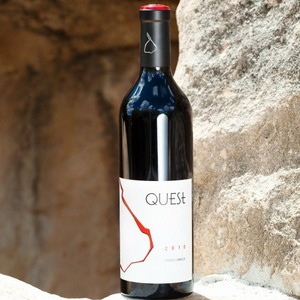
A percentage of each of the whole range of wines made by this bodega (www.castelldencus.com) is fermented in 12th Century stone vats hewn by Monks, who knows how, into the hills and valleys of the mountains! This wine is then blended with the rest of the wine which has been fermented in more contemporary vessels made of oak or stainless steel. The result is perfectly balanced wines that have subtlety, elegance, power and depth of flavour in equal measures. (One of their wines, Quest [see below], is in fact wholly fermented in stone!).

 ENCUS quest

The enterprise was started by Raul Bobet who, conscious of the impact of Climate Change, was looking to make wines that would be less impacted by the increasing temperatures and sunshine hours; and by possible decreasing rainfall. Altitude is a major player here, of which regular Cork Talk readers are of course fully aware! At 850m – 1,000m altitude the Castell D’Encus vineyards enjoy a dramatic drop in temperature overnight, giving the vines respite from the searing temperatures of the day.


However, there’s more! In 2004 Joaquim Molins Gil joined the project which really is a work in progress where the whole winemaking process is constantly being examined for ways to make it better, given changing weather patterns. Planting density, canopy management, cover crop, pruning and differing harvesting times are all being considered with various different plots experiencing various different methods.


Perhaps it’s the bodega’s close proximity to France that is a part of the choice of varieties used to make these fine wines, but it’s clear from the resulting wines that the soils and the climate are perfect for the mainly ‘French varieties’ that are used at Bodegas Castell D’Encus.


There are only 23 hectares of the property which are planted to vine – the rest of the 95 hectares of land owned by the bodega are left as forest. The vines are not sprayed with chemicals, the vineyards are farmed organically. The aim is to enhance the environment, not to detract from it. Wildlife is left untouched and the natural beauty of the area is unchanged.


So what of the wines?


I’m not at all surprised that Sara Jane Evans MW included Ekam 2013 in her recent Decanter Magazine article about top white wines from Spain (imagine that – such an article wouldn’t have been written 20 years ago, there were none!). Made with Riesling and a touch of Albariño, the wine is superb!


I don’t know about you, but I’ve not tasted a quality Riesling from Spain. I believe it’s Jancis Robinson’s (oh, no I’m turning into a dreadful name-dropper!) favourite white wine variety and it’s not just me who loves Albariño. Jilly Goulden (he’s done it again!) and many others do as well.


But it’s Alsace that is Riesling’s natural home and of course, Albariño is from Spain’s wet North West. Yet, grown here in high density vineyards where the foothills of the Pyrenees start to climb into mountains proper it’s as if they’ve been here as long as the stone vats in which they are partially fermented! Crisp lime peel acidity with some floral and granite mineral notes.

 ENCUS ekam

Taleia 2013 is made with Sauvignon Blanc and Semillon, both considered French varieties, but with this wine, for me, it’s the typical rich and full Australian Semillon that comes to the fore, no doubt from it’s partial fermentation in oak barrels, to meld perfectly with the directed gooseberry acidity of the Sauvignon. The judicial use of oak allied to the 9 months aging in cellar add a depth of flavour to the wine and a greater complexity. Lovely!


Acusp 2012 is the Pinot Noir so admired by Pancho Campo (I’m a hopeless case!) – he’s not alone! Unfortunately one doesn’t have much of a chance to taste good, and above, Pinot Noir in Spain. In Burgundy, it’s wonderful – rich but always with great elegance. It needs a cold climate really. But, with the average 1,000 metres altitude and the high density planting of Bodegas Castell D’Encus’ Pinot vineyard the properties required by this demanding variety can be emulated.

 ENCUS acusp

It has a lovely silk negligee feel to the wine with ripe, but not over-ripe, strawberries on the palate slowly overcoming the earthy forest leaves aroma. It’s juicy in the mouth and the fruit makes a presence throughout, but there are layers of flavour and a depth of pleasure. The personification of elegance, this wine has everything.


Thalarn 2012 is made exclusively from Syrah grapes and is one of those Spanish Syrah wines that so often outshine their French counterparts. The guaranteed sunshine hours of Spain ensure that Syrah here ripens perfectly (there are some Spanish Syrah wines that have been made from over-ripe grapes that should have been harvested earlier) add this fact to the altitude of the vineyards and you have the best of both worlds!


There’s dark cherry fruit straight away, with a spicy black pepper note to pep up the palate. You’ll find the minerality of course, again with a little undergrowth on the nose, as well as the tiny flowers of mountain herbs. The picota cherry flavours are maintained throughout and the finish is long and lovely!


The final wine I tasted was another excellent example. Quest is made with Cabernet Sauvignon, Cabernet Franc, Petit Verdot and Merlot. The 2012 is still young, vibrant in its blackcurrant, blackberry and dark plum fruit, a delight on the palate with no slightly unripe harshness as can be the case with some wines from the two Cabernets’ home, Bordeaux.


You’ll find some vanilla and a touch of cloves on the nose which is wholly integrated with the succulent fruit when the wine hits the palate. It’s a lovely juicy wine but with a backbone of mature tannin, acidity and mineral notes that will ensure that it ages for probably five years and maybe more.

So good they showed it twice!

But that’s if you can resist it when you see it in your cellar/wine store, as will be the case with all the wines from Bodegas castell D’Ancus, none of which is given less that 90 points in the Peñin Guide, with the highest pointer earning a whopping 96, making it one of the best wines in Spain! Outstanding!


Contact Colin: colin@colinharknessonwine.com and through his unique wine services website www.colinharknessonwine.com and via Twitter @colinonwine

Bodegas Segura Viudas

BODEGAS SEGURA VIUDAS

EXEMPLARY CAVAS AND STILL WINES!


BODEGAS SEGURA VIUDAS
EXEMPLARY CAVAS AND STILL WINES!

I was so impressed by my recent visit to Cataluña, Land of Cava, that I’m taking some time to come back down to Earth! Cava rocks and those made by Bodegas Segura Viudas (www.seguraviudas.es/en), part of the huge Freixenet business, are wonderfully flavoursome, elegant Cavas! They also make super still wines, so it’s a one-stop shop really!

Bodegas Segura Viudas, a far better backdrop than the foreground!

But that’s not all – they also have an excellent Wine Tourism Programme and it was their Public Relations Director, Jordi Guilera, who escorted us around the property, taking the same route that he will with tourists who come to tour and taste!


Quality control is at the forefront of everybody’s mind at Bodegas Segura Viudas. For example, the screening system used on all grapes that come into the bodega to be pressed, whether they are from their own vineyards or those of the growers they have used for generations, is indicative of just how much care is taken by Segura Viudas to ensure that the consumer gets the best Cava that it’s possible to obtain!


The grapes are harvested in small plastic crates, which have been cleaned and sterilised immediately after last year’s harvest and again just before this year’s. No grapes are split so there’s no uncontrolled fermentation. A special mechanical arm reaches into random crates, extracts some grapes and presses them into juice, which then goes immediately into a small lab where more machines await.


The results of the analysis are then posted on the grower’s special card (like a credit card) as well as onto a tablet, supplied to the bodega by the Consejo Regulador, which then relays the information to the DO offices. A coded sticker is placed on one of the crates on the tractor that identifies the lot and all the results. The tractor moves swiftly on to various cold storage areas – the whole process takes less than ten minutes, so no grapes are left in the sunshine.


Our next visit was the lab proper! A large room full of samples, test tubes, demijohns  and all the scientific paraphernalia that is needed to ensure quality.


The Head Winemaker was in attendance and the Laboratory Head and he took me to a small room where the wild natural yeasts gathered from the skins on the grapes were being cultivated. Stringent testing has occurred over the years to identify which are the best of the natural yeasts to work with, and it’s these that are cultivated from test tube size and ultimately to tanks that hold 100,000 litres. Yes, it’s production on a huge scale, but each small stage is perfected before moving on. Very impressive.

 DO CAVA SEPT 2014 033

Bodegas Segura Viuda uses mostly the traditional Cava grapes: Parellada, Xarel-lo and Macabeo for white wines; and Garnacha and Trepat for rosados. This year will be the first that they will also make a rather special Cava, one that embraces the traditional Cava grape varieties, but also includes small proportions of Chardonnay and Pinot Noir – and I can’t wait to taste it!


In order to make the best Cava possible they only use the first 66% of the pressing which ensures the best must (juice) with their top Cavas only using about the first 40%, which is la crème de la crème!


The original cement fermentation tanks are now used for storing base wine and can hold a maximum of five million litres. Nowadays it’s stainless steel fermentation vessels, with a total capacity of 19 million litres, that get on with the job in hand. Once the base wine is ready it is bottled with the appropriate licor de tiraje (the yeast and sugar mixture that starts the second fermentation in bottle) according to the style of Cava to be made.


Then the bottles are transported underground to the cellars where a maximum of 20 million bottles lie, waiting for their time to impress. And do they impress!


The President of DO Cava, the General Secretary and their Cava Manager and I sat down to taste an array of the Cavas as well as two of Segura Viudas’ top still wines – and all of this over a sumptuous lunch (which again can be arranged for touring groups).


Bodegas Segura Vuidas Reserva Brut has had sixteen months en rima (in contact with its lees whilst in bottle in the depths of the old cellars). It’s made with Macabeo and Xarel.lo which are planted at about 250 metres above sea level and are usually the first varieties to be harvested, plus Parellada which is happier at a higher altitude.


The wine, as with all tasted, is delightfully elegant and yet it has the fresh vibrancy of youth still. Refreshing and perfect for celebrations but this wine also delivers more. There are typical bready, panaderia notes as well as focussed green apple acidity (from the Macabeo) and an endearing white flower fragrance (probably from the Parellada). It has body (coming largely from the Xarel.lo) and depth of flavour enough to accompany the Manchego cheese, Jamón Serrano and the Anchovy toasts served as amuse bouche!


Served alongside this white Cava was one of the best, fairly priced, Rosado Brut Cavas I’ve tasted. It’s made with the indigenous variety Trepat with the addition of Garnacha and Pinot Noir in varying proportions according to each year’s harvest – a good sign if ever there was one. I think the Pinot in this blend gave an ever so slight strawberry flavour to the wine – super!


Our delightful starters were served with the fine Brut Vintage Gran Reserva 2008! It’s a wonderful fresh wine with body and deep flavours as well as sheer elegance on the palate. Paired with baby broad beans cooked in a cava reduction as well as with seafood ravioli, truffle and shrimp bisque, it was a perfect match. It has the necessary acidity to retain freshness after six years in the cellar and also to cut through the relative richness of the starters. Excellent!


I’m prepared to bet that the first wine you think of to accompany Veal Tenderloin with mushrooms would not be a Cava! Well think again (and watch this space for information about a super tasting coming up, pairing Cavas with each course throughout dinner!) Another Gran Reserva, Torre Galimany 2010 was served with this perfectly cooked main course! Sensational wine and an excellent match.


Fuller in style than the previous fizz it still has elegance in abundance as well as an acidic lift to retain its freshness. There’s a light earthiness to the wine that contributes to the body and makes a good match with the mushrooms. Plus, of course there is the typical yeasty character derived from the second fermentation along with an understated floral element.


Our final course was served with one of the classic Segura Vuidas wines, Brut Reserva Heredad Gran Reserva 2009 – the one with the distinctive metal base and ‘label’, giving a slight Gothic look to the bottle! A wonderful wine – there’s a slight herbiness on the nose with patisserie notes a touch of citrus and a real depth of flavour, with a persistent finish. Again the Segura Viudas characteristic elegance in perfect harmony with rich fullness. Outstanding.


Fellow diner, Maria Eugenia Puig, Consejo Regulador Secretary General, suggested we also tasted one of her favourite dessert Cavas, in fact made by parent company Bodegas Freixenet. Cuvée de Prestige Malvasia 2001 Especial per Postre is a fantastic dessert wine, only a slight sweetness but body and depth and I am assured the perfect accompaniment to chocolate!


Contact Colin: colin@colinharknessonwine.com and www.colinharknessonwine.com plus Twitter @colinonwine