DO CANGAS

DENOMINACIÓN DE ORIGEN CANGAS

One of the best things about the recent Barcelona Wine Week (BWW) that I attended recently, was the opportunity to visit the stands of many of the less famous wine producing areas of Spain. Often quite small, in comparison to the more well known Denominaciónes de Origen (DOs), and generally with a rather more limited production, their wines aren’t easily found. A shame – because they can often be home to some hidden gems!

I’ve been to many of the large/huge wine fairs here in Spain, and in time gone by, in the UK as well. You have to have a plan. It’s definitely best, in my view, to have an idea as to what you’d like to see – and taste. If not, the sheer scale of these events can be just too overawing! Part of my plan for the two half days and one full day in an unseasonably warm and sunny Barcelona was to taste wines that I hadn’t tasted before, from areas of which I had no experience, using grape varieties which were new to me.

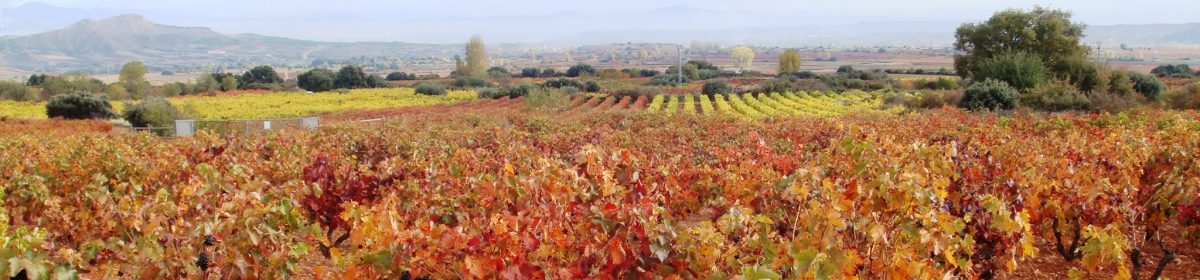
DO Cangas ticked all those boxes, as well as some of the taste and aroma boxes that I was hoping to open! Although this beautiful part of Asturias has a long history of wine making for domestic use, the main drink from the surrounding area is, of course, Sidra – Cider, and wonderful stuff it is too.

However, certain forward thinkers realised that there was also a market for quality wines, made on a small, but commercial scale. DO Cangas was formerly inaugurated as recently as 2014 (though it had been working since 2000) has only 50 hectares of land under vine and just eight bodegas! It’s the smallest DO I’ve come across, but my experience suggests it packs a pleasant punch above its weight!

Permitted varieties for white wines are Albarín, Albillo and Moscatel – so nothing new there (provided you are a regular Cork Talk readers!). The reds though, well that’s a different matter – ever heard of Verdejo Negro, Albarin Negro and Carrasquín? Me neither, but these varieties, along with the better known Mencía, are the approved red wine grapes. I couldn’t wait to get started!

There were only two white wines represented on the day I visited. The first, from Bodegas Vitheras is made from all three of the above and was a hit for me! There was a clear apple skin aroma, not the perhaps overly acidic Granny Smith, but something a little softer. Really enticing and it followed through slightly onto the palate too. Medium to short finish, a really pleasant aperitif drink, that I’d definitely buy again.

Cien Montañas, from Bodegas Vidas was made with 100% Albarín, dabbling with a little oak resting on its lees. There was a slight nose of sulphur initially, though some exotic fruit – peach, arrived in the nick of time, along with a blanched almond quality too. I preferred the fist wine, and it started me wondering about oak in Cangas. Is it needed?

The 3rd wine, Valdemonje, was a Carrasquín 2016 monovarietal, indigenous to Cangas, that has had 12 months in French oak and made by Bodegas Monstasterio de Corias. Pale in colour, like a Garnacha or Pinot Noir, and pleasant – but I couldn’t help wondering what it would have tasted like without the oak,

The next red wine, from the same bodega is called Finca Loa Frailes Robles and has had 5 months in French oak. It’s a 2018 and the colour was still quite purple, attractive. Some acidity, dark forest fruit and a little black chocolate on the finish, with tannin a little too pushy.

The next wine wasn’t oaked and it was here that I thought again about the need, or not, to have oak aging in Cangas. Aroma de Ibias is made with Carrasquín, Albarín Negro and Verdejo Negro (I know that you are wondering – but I’m told it’s no relation!), by Señorio de Idias. It’s 14%, quite dark in the glass, which gave a clue as to this wines richness. Blackcurrant chocolate liqueur, invitingly fruity.

Bodegas Chicote makes Penderuyos, which means very steep in the local dialect, and refers to the vertiginous slopes of the vineyard! It’s made with the three above, but with the addition of Mencía. Again there’s no oak and it, too, is on the high alcohol side at 14.5 abv. It’s also rich and dark coloured. I really liked its dark chocolate, damson and blackcurrant fruit and its presence on the palate.

So – is oak not really required in Cangas? Well, I can’t say, as the next wine, Selección Especial, my final Cangas – for now – was from the same bodega, using the same varieties, but it’s had 14 months on French oak, and did I enjoy it! In truth the oak was perhaps a little overstated, but the rich fruit can handle it well. It’s a big wine, meaty itself, so a good partner to game, casseroles, steaks, venison et al.

I’ll definitely re-visit DO Cangas wines!

NB next Valley FM www.valleyfm.es programme is on Tuesday 3rd March – celebrating St. Patrick’s Day and Las Fallas, and will include an interview with British winemaker, Andrew Halliwell!

colin@colinharknessonwine.com Twitter @colinonwine Facebook Colin Harkness  www.colinharknessonwine.com

DO JUMILLA @ BWW

DENOMINACIÓN DE ORIGEN JUMILLA

Whenever the year 1966 is mentioned, it always makes me think of one thing – The Football World Cup. England won it, if you didn’t know, and on home soil too. I was a young lad, annoying the family by noisily rotating my wooden football rattle (does anybody remember those?), whilst wearing my England scarf (it was June) and my World Cup Willy cap (who on earth came up with that name?!).

However, over on the Continent(!), to be specific in Spain, there was another event occurring –  Denominación de Origen Jumilla was founded. And henceforth I’m sure I’ll now remember the two in tandem! I love the wines from Jumilla!

When recently in Barcelona for the Barcelona Wine Week (BWW), a huge wine fair referred to in Cork Talk over the last two columns, the first organised tasting I went to was a presentation of the wines of DO Jumilla, by a member of the ruling council, the Consejo Regulador. It seemed that I wasn’t alone in my appreciation of wines made in this South Eastern region of Spain, inland from the Costas, as the designated Tasting Pavilion was full to bursting. I was pleased I’d arrived early!

There are 45 bodegas making wine in DO Jumilla, using 1,900 grape growers in the vineyards surrounding the eponymous town, whose name has its origins in the Arabic word meaning ‘strong wine’! Vineyards are between 400m – 800m above sea level and about 90% of them are certified as Organic. During the last 25 years or so, there has been a very successful move away from making just ‘strong wine’, with bodegas concentrating on quality bottled wines rather than the bulk wine for which Jumilla had largely been known.

There was a power-point presentation running simultaneously with the actual tasting, where we were told of the soils, temperatures, climate etc of the area (notwithstanding certain differences nowadays, attributed to Climate Change). I found it all fascinating, adding an extra dimension to the wines we had in our glass – perfectly poured by professionals, incidentally!

The first we tried was a Rosado – at 10:30 in the morning it was good to have a light, quite delicate start to a day’s tasting! Made with Monastrell, this wine was a lovely shade of pink, which actually matched my pullover perfectly! Rose petals on the nose, with a little pomegranate fruit, mixing with raspberry. Light, not particularly distinguished, but perfectly pleasant, and so fitting with the weather outside at the time, which was really Spring-like. Señorio de Fuenteálmo – inexpensive, easy drinking rosé!

The next wine, a red, reds being the style of wine for which Jumilla is most famous, came from a bodega I’ve know for many years now, though this one I hadn’t tasted before. The grey labelled, Luzón Monastrell Colección, is a 2018 young wine with no oak ageing. The lovely damson/plum fruit with which we associate this variety really comes to the fore. It’s a lovely juicy, giving, red wine, exemplary for unoaked wines of the area, with soft tannin and fresh acidity. Good on its own and with food too – try it with BBQ!

I remember that last year Bodegas Alceño won several medals in the DO Jumilla internal wine competition so I was keen to taste their Aleño 12. I enjoyed the wine, I think it would have been very good with meat dishes and cheese too. However, as drink alone wine, I thought it a little too tannic.

It was the 2016 vintage, made with Monastrell (clearly the darling variety of the DO!) and it’s had 12 months (hence its name) in oak, French and American, but the fruit was beginning to fade, and, in truth I wondered why they hadn’t brought with them perhaps the 2017 version. I’m certain that the grapes will have been ripened perfectly in 2016 – there is intense heat and many hours of sunshine during the growing season in Jumilla, but I wonder if the wine might have come from vines allowed to crop too much? Let’s say it’s a food wine!

The final wine we tasted was one of a style that in fact I first tasted from DO Jumilla, though not from this wine’s bodega. The style to which I refer is actually quite prevalent down here in SE Spain – and I love it! Red dessert wines, made with Monastrell, whilst quite common here, are a rarity elsewhere.

Such wines are harvested late. When their buddies have long gone, the grapes for dessert reds are left on the vine for a while longer. The climate is such that sunshine is more or less guaranteed so the grapes have plenty of sunshine, which over time mans that the water content of the flesh inside begins to evaporate. When eventually harvested there is far less juice, but it is far, far richer and sweeter.

These wines are usually found in half bottles as they are necessarily from a limited production. They can be a tad on the expensive side, but they are so often worth it! Silvano Garcia Dulce Monastrell has lovely, plumy, blackberry and blackcurrant flavours and aromas and a long finish. It will be lovely with chocolate desserts as well as, for example dark fruit pavolvas, but try this also with cheese, mature and blue too!

N.B. My programme www.valleyfm.es on Tuesday 3rd March, 5pm – 6pm Spanish Time, covers what to drink on St. Patrick’s Day as well as Las Fallas, plus there’s a fascinating interview with Oxford Uni educated, Andrew Halliwell, who changed from engineering to winemaking and, though much travelled, is currently making sublime wines here in Spain! Plus, I’ll be raising a glass to toast World Book Day – it’s all happening in March!

Twitter @colinonwine  Facebook Colin Harkness

www.colinharknessonwine.com Youtube Colin Harkness On Wine

colin@colinharknessonwine.com Instagram colinharkness53

GRAMONA!

GRAMONA’S LONG AGED SPARKLING WINES

One of the great things about Spanish wines is that there is almost always an interesting story – behind a particular wine, or portfolio of wines, the winemaker or the bodega itself. Sometimes, the story is about all of the above, and on many occasions the story starts in the past.

So, it was a multifaceted pleasure to visit the Gramona Sparkling Wine stand at the very recent, in fact, inaugural Barcelona Wine Week. Gramona is now part of the Corpinnat organisation but, having been founded in the 1850s, it has a long standing tradition of making fizz, mostly under the auspices of DO Cava.

I was lucky to visit at a time when family member, Leonard Gramona, was available to chat – an honour, and particularly interesting too, as he told me the story behind Gramona’s reputation for making top quality, long aged Sparkling Wine. And, although nothing like old enough to have been around then, it’s clear that the story has passed from one generation to the next!

1936 was, of course, a dreadful year for Spain. The Civil War was an awful time in so many ways and was then followed, of course, by the privations of the World War Two. A truly catastrophic period in history and a human tragedy, of course.

It was also an extremely worrying time for business generally, including the wine business. With no way of knowing what was going to happen, given the  number of players in the Spanish Civil War, but fearing the worst, the Gramona wine family took the courageous step of deciding to hide most of their production of Cava, from all of the factions which were likely to steal/destroy it. Readers perhaps know that a similar story took place, a few years later in the famous wine producing areas of France when Nazi Germany invaded.

It must have been an extremely stressful time for those who took this step – invaders don’t take kindly to being made a fool of, so who knows what punishments would have been  handed out if the Gramonas’ deception had been discovered! Fortunately for them (and nowadays, for us too!) it wasn’t and when they felt it safe to return to the hidden cellars they discovered that the fizz that had aged, untouched for at least four years, was of an outstanding quality! A concept was born!

Considering the above, it’s no surprise to learn that Gramona’s entry level sparkling wine, their best seller, has been aged for a grand 56 months (ok, I’ll do the maths for you – that’s over four and half years, biding its time in the now free to access cellars!). Made with Xarel.lo, Macabeo, Chardonnay and a tiny amount of Parellada, Gramona Brut Imperial retains that essential freshness that we all expect from fizz, but also has extra body and complexity, with more than just the beginnings of mature aroma and flavour profiles. An excellent start to the whole portfolio!

There’s another historical reference to the next wine I tasted, though it’s only the name that is taken from Roman times! III Lustros is a wine that has been aged for seven years – so long I can hardly work out the number of months, which is how fizz aging is usually noted! (Lustros means a period of five in Latin, and means that within this range there may be wines yet to come that have aged for 15 years!).

III Lustros is made with Xarel.lo and Macabeo, but is a Brut Nature, in fact the style of Spanish fizz that I like most. Again, it’s fresh, this time with a little more acidity, making it such a perfect match for canapés, seafood and check out oysters too!

This superb sparkling wine is made using not just organic farming, but also biodynamic principles – which, of course, take into consideration the sustainability of the soil, and the welfare of the creatures that live in it, for future generations. The bubbles are the finest, the elegance on the palate, in some ways defies its weight, though its presence in the mouth means it will be happy to be paired with light meats as well as fish, and shellfish, plus, it’s as long as you like on the finish. Superb!

Celler Batlle 2010 Brut, though at the lowest end of the residual sugar spectrum, has had more than 8 years resting on its lees, gaining maturity, complexity and different flavours and aromas. It’s at a venerable age and yet still speaks of its youth in its delightful freshness – a common trait with all Gramona wines, and a crucial element of all quality fizz.

You’ll find herbs on the nose, some mineral notes too along with ripe orchard fruits and a blanched nutty note, with some sprightly citrus whispers as well. It’s a taste and aroma sensation, allowing the taster to drift away on a magic carpet of pure pleasure. Yes, it will pair brilliantly with fish, shellfish, oysters again and whiter meats – chicken and turkey (if you feel like splashing out next Christmas . . . !), as well as pork, all with and without sauces.

But this stunning sparkling wine is just wonderful to drink on its own, with your best friends and family.

NB this article first appears in the morning of 14th February (you know where I’m going here!), there is time to nip out to a fine wine shop now, buy one of the Gramona range, chill it down during the day – and start your romantic Valentine’s night in real style! Twitter @colinonwine  Facebook Colin Harkness www.colinharknessonwine.comcolin@colinharknessonwine.com

Spare a thought for Spanish wine producers, post Brexit!

POST-BREXIT WINE WOES?

I’m writing this on the 1st February, 2020 (with apologies to Raquel, Features Editor of the Costa News Group – I’m submitting the article a little later than I should be!) – the day that the UK cut loose from the European Community, to sail a different, as yet uncertain course. Good luck to her, and all who sail in her!

Ok, colours to the mast time – I’m firmly pro-Remain, and continue to be so, now that all seems lost to many of us, believing, and hoping, that one day, perhaps in my lifetime, the UK will re-join the EU. However, I have friends who argue from the opposite side of the great Brexit divide. We disagree, but that doesn’t alter our friendships. ‘Discuss’ is a better word than ‘argue’!

So, in the spirit (that’s a better word – I need a strong drink!) of impartiality, I’d like readers this week to please put aside differences in ideology and consider the current difficulties of European winemakers, in general, and, of course, specifically those of Spain.

My tasting a Rioja Gran Reserva (Prado Enea, Bodegas Muga, if you are interested!) for the first time (there have been several subsequent occasions – it’s a wonderful wine!) many years ago wasn’t the main reason, but it certainly was a contributing factor to my eventual relocation to Spain. My thoughts were – if the Spanish make wine this good, I need to be closer! So, clearly I have a certain affinity with the Spanish wine sector – and of course, after 23 years of residence here, many friends in the business. Frankly, my heart bleeds for them!

I’ll come back to leaving the EU in a few paragraphs – you see there are other actual (rather than possible, re Europe, as we don’t really know yet what it’s going to be like) severe trading difficulties to consider as well. I was listening to the radio yesterday (31st Jan – that momentous day!) when I was delighted to hear my friend and wine colleague Pancho Campo being interviewed. Well, I say, ‘colleague’, but that certainly doesn’t mean I put myself at the same level, wine wise, as Pancho!

A Master of Wine (one of only about 340 MWs in the world at the time), Pancho Campo resigned from the Institute of Masters of Wine, to go on to many other different prestigious activities, one of which put him on friendly terms with the Obamas! Pancho is certainly well connected! And that includes with the wine world generally, as well as that of Spain, where he also lives, though travelling a lot.

Pancho was talking of a Spanish winemaker friend of his, who, after years of paper chasing and resulting sweat and tears, had finally broken into the notoriously difficult USA market to sell his wine. A container was loaded, full to the brim with his wines and ready to ship Stateside – until, at the last moment, the order was cancelled! The reason – President Trump’s 25% extra tariff on wine and foodstuff from Europe! A serious setback, perhaps disaster, to the friend in question – and of course, he isn’t the only one.

The USA is an extremely important market for Spanish wine, in fact ever since Miguel Torres packed lots of sample bottles and went knocking on doors decades ago, before any trade existed between the two countries! Those currently established in the market, will be very worried. Those hoping to enter, will probably have to give up! Even though Spanish wines offer amazing value for money, 25% just isn’t possible to absorb!

Another still developing, though already well established market, is that of Asia, specifically China! And of course we all know about the dreadful virus that is basically closing China to any further visits from prospective Spanish wine traders, and reciprocal visits to Spanish wine fairs, as well as restricting further growth in such an important sector.

Then, Brexit happens! But what does it all mean?

Well, as alluded to above, nobody really knows. There are a number of possible scenarios (oops, sorry, is that a European word?!), some of which were articulated by my wine friend, Andrew Halliwell. Prior to today, trade between Spain and the UK has been straightforward, easy. The general consensus seems to be that whatever happens, the change won’t make it any easier!

So that’s a possible/probable worry for Spanish (and all European producers), as it is likely that there will be more paperwork and more queues – the likelihood therefore is that smaller producers won’t make the necessary extra effort, as they have limited resources, certainly in terms of time! Plus, the cost of importing Spanish wines may increase. So, there is likely to be less choice of Spanish wines on UK shelves.

There are also possible problems re the exchange rate – a weakened pound will make Spanish wines more expensive, and the uncertainty is likely to weaken the pound, at least for a certain time. Of course, against that it may mean that wines from other non-European countries become more prevalent on the shelves as their produce might be more economically attractive. So an opportunity for the British to experience more easily, and less expensively, wines from different parts of the world. But, once established/further established, indeed, ingrained, in the British consumer buying psyche, as time goes on, it will be difficult to find future demand for Spanish wines in the UK.

There may also be a boost in sales of British wines in the UK – well that’s good for this nascent industry, but it will be to the cost of our European, and of course, Spanish friends. Yep, difficult times right now for the Spanish wine industry – please spare them a thought!   

colin@colinharknessonwine.com Facebook Colin Harkness

Twitter @colinonwine   www.colinharknessonwine.com YouTube Colin Harkness On Wine