I’ve been involved in this industry since before it was ever recognised officially as such, and indeed, since even the name Enoturismo had been coined! Thus I have a natural interest in its development, the more so, as I continue to work within the sector.

WINE TOURISM IN SPAIN


I’m delighted to read that in 2016 Wine Tourism in Spain, Enoturismo, registered an increase of 21% on the previous year. in terms of visitors, as well as an almost 11% rise in revenue.


I’ve been involved in this industry since before it was ever recognised officially as such, and indeed, since even the name Enoturismo had been coined! Thus I have a natural interest in its development, the more so, as I continue to work within the sector.


When the bad, sad old days of the recession started (known here, rather appropriately,  as ´La Crisis’) the wine industry, in common with most other sectors suffered diminished sales, and expectations too. I say ‘most’ because in such times there are industries that do the opposite – rather than contract, they expand.


An example is the DIY trade – folk who find that their income no longer supports a budget for home improvements exectuted by the professionals, often turn to ‘doing it themselves’. (I include even myself here, a guy who is totally inept at all things DIY)


Another sector that benefits in times of ‘crisis’ is the BBQ industry – sales of BBQ equipment increase as those who like to dine out, start to feel the pinch. Related here, of course, are the butchers, whose domestic sales rise while their ‘trade’ sales decline, perhaps therefore, whilst not registering increased revenue, they at least maintain their levels. Which, in hard times, is also a result.


The wine industry, like most sectors, began to suffer. The first things abandoned in such times are the luxuries – sadly, wine is considered to be one that can be done without. Bottle sales decrease, but the winery still needs to harvest its crop and make the resulting wine. It still has to replace its barrels and it still needs to retain staff, service equipment and so on.


So Plan A – ‘make wine and sell it’, had to be revised. Plan B came about, often in two phases. How many readers noticed, as did I, that, gradually, there were more bodegas selling Extra Virgin Olive Oil as well as their wines? Well, it’s a natural progression in a way – many bodegas are founded on old fincas which originally made wine from the vineyards and oil from the olive trees, for the family.


Wine production became the best bet for commercial revenue, so efforts and resources were directed towards the vines, relegating the olives to the lesser role of simply providing oil for the family.


A marketing opportunity arises for the cash-strapped wineries – let’s try and supplement declining wine sales by selling ‘Prestige Finca Olive Oil’. Let’s also use the wild Rosemary et al to add to the olive oil and diversify still further. Phase One.


Phase Two, was really only for those who had the wherewithal – the bodegas who could afford it, realised the way forward re wine sales was to expand horizons. Whilst many countries in Europe, and further afield, were also suffering from recession, other countries were enjoying an improving economy, with some actually booming!


These were the countries into whose markets Spanish wine producers had to make inroads. Emmisaries were despatched and over time clients were gained and sales achieved. No doubt these lucky bodegas were also selling their prestige olive oil there too!


Clearly though, a Plan C was needed for those who weren’t able to evolve as above, and indeed for those above too. Wine Tourism had found a raison d’etre! But not yet, the name!


The development was gradual. Most bodegas initially dipped a toe into the water. With some, it was just the little toe, manifesting itself as simply a sign in the grass verge at the entrance to the winery advising ‘Visitors Welcome’. Some went for the big toe option, though nevertheless still hardly dynamic, perhaps advising travel firms that they were open for group visits, with maybe the occasional advert in the local or regional papers.


However, those producers who could see the potential, went for full body immersion! Firstly, the above, but also with a changed job description, perhaps for the ‘commercial’, the sales rep, who was spending too much time in those days kicking his heels instead of selling his wines. He (usually, there has been a dramatic sex change [in a manner of speaking!] during the intervening years, with the fairer sex far out-numbering men these days!) would now also be I/C visitors.


From an often, uninspiring, and always humble start, during the intervening years there have been amazing, occasionally incredible, developments in this, now integral, part of the majority of wine businesses in Spain. Part Two of this article will be published soon, entertaining readers with some of the risible experiences that I suffered when visiting bodegas in the early embryonic past, right through to the present day, giving you some very positive ideas as to how you can take advantage!


NB There may be a few places left for the already almost full (at time of writing) Musical Dinner with Wine Paring and Claire-Marie (www.clairemarie.es) at Restaurante Casa Cantó, Benissa, Friday 12th May. Please call me on 629 388 159.


Next Fine Wine & Gourmet Dine Programme on Total FM 91.8 & www.totalfm.es is on Sunday 21st May 18:00 – 20:00 hrs when, talking of Wine Tourism, my guests will be Kathrine and Harald, of Bodegas & Boutique Hotel, Casa Boquera, Yecla.

Bodegas Jorge Piernas – The Wines!

Vineyards have their own personality – odd though that sounds. So do vines – even stranger?

BODEGAS JORGE PIERNAS

PART TWO

If you missed Part One (Wines With Legs) you might like to read it here www.colinharknessonwine.com click Articles – it’s an interesting story!


Vineyards have their own personality – odd though that sounds. So do vines – even stranger? Let me explain: you may have seen the Oz Clarke/James May wine series of a few years back. Although I often found the director’s stage-managing of the programmes rather irritating (they dumbed-down James May trying to make him into an uncultured guy, when he clearly isn’t!) I did enjoy them, learning from them too.


Well, James ‘learned to his astonishment’ (yeah, right!) that there can be remarkable differences between two adjacent vineyards separated only by a hardly used road. Same vines, same age, same production methods etc, but producing very different wines. Each vineyard has its own personality.

The same can apply to vines. Exhibit A is the WHITE Tempranillo variety found growing happily in the same vineyard as all of its fellow red Tempranillo vines at the end of the 20th Century. Over decades it had mutated from red to white! Cuttings were taken, once it had been declared a wholly distinct variety from its red cousin, others were sought and now there are whole vineyards planted with Tempranillo White Grapes! (Watch this space for my take on wines made with this ‘new’ variety).


Also in Rioja, some years ago I was taken to a famous bodega where I learned the story behind one particular wine, in fact the flagship wine of an already acknowledged producer of excellent red Rioja wines. Some years previously the Head Winemaker, when doing the rounds of the vineyards, stopping and tasting the grapes from various vines, as part of the process by which the optimum harvest time is decided, found one vine whose grapes had a totally different taste profile to all those surrounding it.


He searched through all of the plots and discovered that there were others whose flavour was the same – wholly out of synch with their near neighbours. There were enough such distinctly different vines to make a special wine – an icon was born (at about 150€ per bottle, incidentally!).


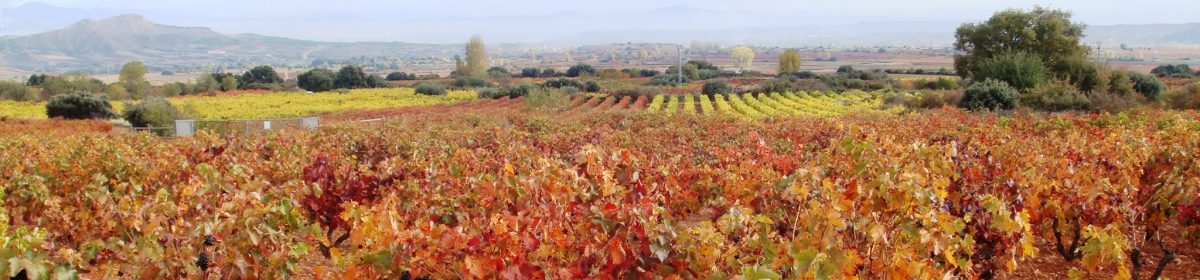
I was amazed to learn from Antonio that a similar scenario is being played out in the vineyards of Bodegas Jorge Piernas! I asked Antonio why it was that certain vines (still leafless at that time) had a marker by them. Well, you know the answer now! There may be enough to make a special wine now, but there certainly will be in the future – the adjacent field has been bought and the offspring of the identified vines will be planted there. Again, watch this space – I have to try this wine, when it eventually becomes available!

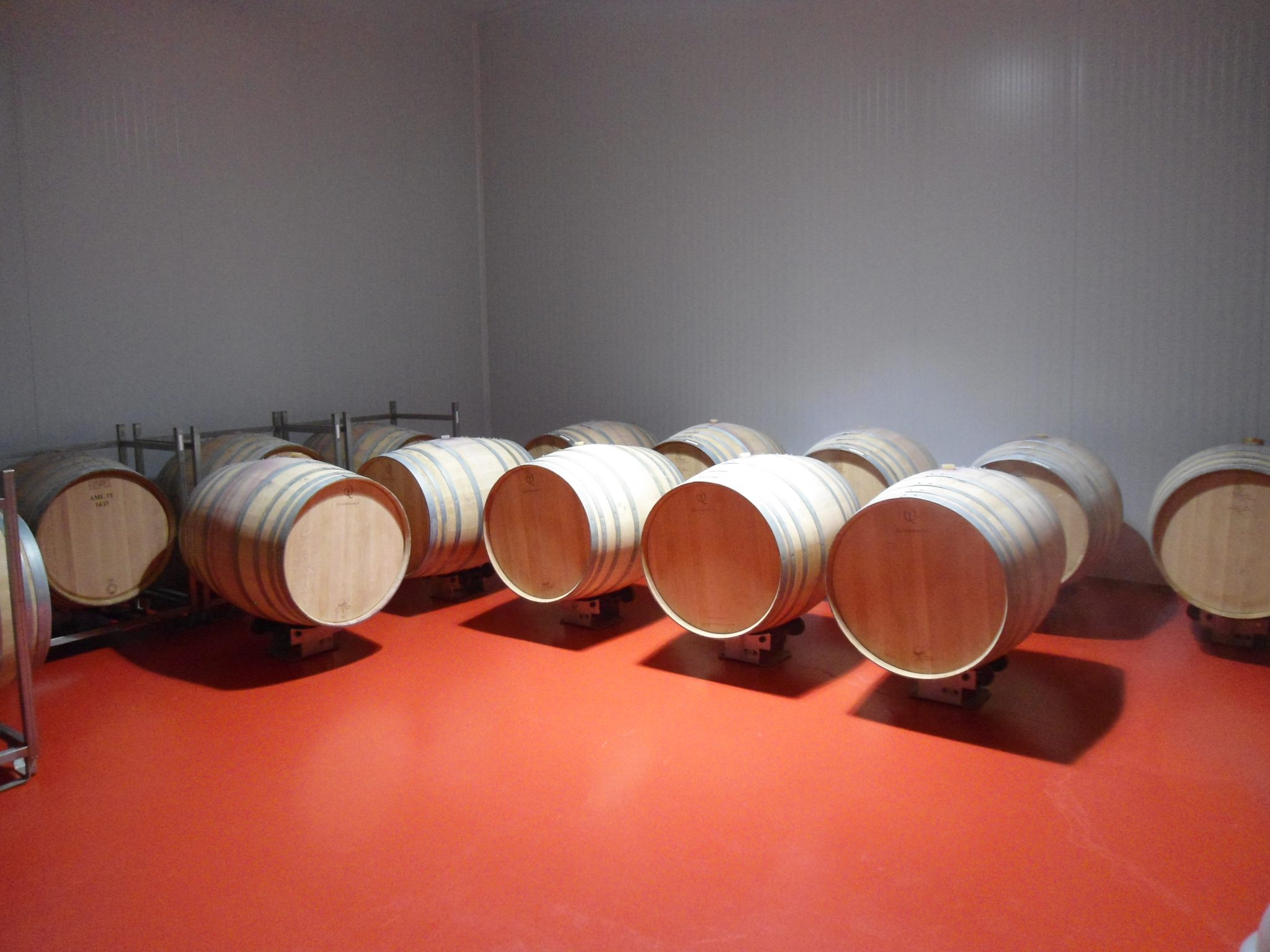
Fast forward from the cold vineyards to the bodega, where the wine is made – but when you visit, don’t expect a rustic old finca, modernised for purpose. Bodegas Jorge Piernas is housed in one of the very modern warehouses on an industrial estate in nearby Mula! Romantic it ain’t! But it certainly serves its purpose, for it is here where I tasted their wines, and this in several different stages of development.

First up was a 2016 vintage Syrah tank sample, taken as I watched from a steel fermentation vessel, now being used to store the wine under perfect conditions, ready for its next stage in a short time. On the nose blackberries, initially, very fruity and soon joined by black cherries on the palate. A lovely wine to drink now –  but, no, it’s not for sale, yet.


It will have its time in French Oak 500 litre barrels and then blended with Monastrell, which will have gone to a similar process. The mix will be 70% Monastrell and the rest Syrah. In the soils and climate of Bullas it’s a winning blend – when I was there recently I tasted several wines made with these two varieties, and like them all.


Next I tasted the aforementioned Monastrell, the 2016, which had been placed in the barrel, from which my sample was drawn, just three months before. Extremely fruity, again, with a little complexity following even a short time in barrica. I’m told that it will be in oak for a maximum of only 5 months. Dark cherries again and a touch spicy with a little minerality.


I next tried another barrel sample – the same harvest of Monastrell, but in a different French oak – and there are other different oaks too! This is because Jorge is trying to get the balance perfect for what he wants. Don’t be concerned about talk about the wood, whichever the balance decided upon, the wood will only ever be there to add some body and complexity. It will never be allowed to mask the pure fruit, which is the mark of this bodega.

This wine was different – it goes to show how oak barrels can be different. I’d say that wine aged in this oak would need a little more time to mellow and reach their optimum drinking time. Compared to the first barrel sample it was a little more tannic and a touch greener, not quite there yet. My guess therefore is that there will be a blend between not just the Monastrell and the Syrah, but also the Monastrells that are aged in  the different barrels!


Finally, after several barrel samples, like the above, the flagship wine, Juan Piernas, in the Burgundy style bottle, priced at the moment at about 25€ (the first wine, the 2015 vintage, tasted after the above, and called Sinesquema, retails at about 15€). The 100% Monastrell grapes which came from the highest plot (800 metres) were fermented in steel then placed in French oak barrels, Jorge believes French oak is the best for Monastrell!


This wine is outstanding. It celebrates the perfect harmony of elegance and power. Lots of dark plums, some juicy damsons with black cherry in there too. An element of spice and a little earthiness. A wine labeled solely as ‘Red Wine From Spain’, can’t be this excellent – can it? (www.jorgepiernas.com)


NB There’s a multi-medalled wine from DO Yecla up for grabs on the Fine Wine & Gourmet Dine Programme on Sunday 21st May! 20 years in the Spanish Wine Scene and I’ve not known a new wine to be entered for its first three competitions ever and win a medal in each! That’s 2 Golds and a Silver! Bodegas Casa Boquera Joven Monastrell will be tasted live on-air and there’ll be another bottle given away to the first listener to answer a simple question during the programme. Just text (00 34) 629 388 159. Show starts 18:00 – 20:00 hrs www.totalfm.es and Total FM 91.8

Bodegas Jorge Piernes

Nowadays in Spain the new generation of winemakers, well those with the wherewithal at least, often leave the country of their birth to work various internships in order to gather more experience and to learn new/different techniques . . .

WINES WITH LEGS

FROM BODEGAS JORGE PIERNAS

It’s largely an obsolete term nowadays, but there was a time when wines were sometimes referred to as having ‘good legs’. If holding a glass of wine at an angle you’ll note it ‘lining’ the glass when you return it to the vertical. After a while it will start to drip at various places, these are called, rather romantically, the tears, or sometimes the legs.


They relate solely to the alcohol content of the wine are not an indicator of quality. However, firstly, I couldn’t resist the title above – many readers will know that the Spanish word for legs, is ‘piernas’; and, in this case, the wines of Jorge Piernas, do have ‘good legs’ – and they are of exceptional quality!


When I visited Bodegas Jorge Piernas in the sleepy, but now awakening Bullas area, the man himself was in South Africa! Nowadays in Spain the new generation of winemakers, well those with the wherewithal at least, often leave the country of their birth to work various internships in order to gather more experience and to learn new/different techniques.

As I’ve said before in Cork Talk, this is an amalgamation of knowledge and experience – they learn firstly from the generation(s) that preceded them; then it’s off to University/Wine College to study the science etc and receive their degrees/diplomas; then they get their hands dirty whilst performing back-breaking pruning etc in the vineyards; then they are party to the making of the wine, wherever they may be, under the direction of the head winemaker – in whatever language! Fascinating, and rewarding for them – and ultimately for us, the consumers!


When young Spaniards follow this route into Europe, it’s hard for those left at the bodega – the strong and committed youngsters can’t pull their weight, if they’re not there.  In fact they’re doing that, for somebody else! So, as the various facets of the wine season are wholly different in the Southern Hemisphere, if a young buck can find a placement down south, it really is the best of both worlds/hemispheres!


Jorge Piernas has done both! To name but a few Jorge has worked vintages in: New Zealand, Argentina, and South Africa in the south; USA in the north, as well as different European countries, including Spain’s La Rioja where I believe he helped make the legendary wines of Bodegas Artardi – who have now left the DOCa Rioja! And, here, there may be a link!


Whilst the wines from Jorge Piernas (currently there are just two in the portfolio, but what wines!) come from 40+ yrs old vines near Bullas, and are crafted about 20k away in Mula, they have eschewed the idea of bringing their bodega under the auspices of DOP Bullas, to the apparent chagrin, I think, of the Consejo Regulador. Thus their wines are labeled simply as ‘Red Wine Produced in Spain! But don’t let that be a concern, their top wine is priced, economically in my view, given its quality, at about 25€. We aint talking also-ran Vino de la Mesa here!

Ten, and more, years ago, in Spain, such move might have been considered tantamount to being suicidal. To have made a wine considered to be at the quality level of a Denominación de Origen and to be able to place the name of that DO on your label, was a real sign of success.


It still is – mostly! But there are other wines, as Cork Talk readers know, that are made independent of the protection and also the constraints of the local DO that are equally good, and sometimes, often(?), better. Wines labeled VdlT (Vino de la Tierra) for example have oft been championed in this column. Also, I know of one wine which was labeled Vino de la Mesa, yet was the flagship wine of the bodega, selling at 35€/bottle.


Also, more and more often we are hearing the term ‘Vino d’Autor’ – in other words a wine that the head winemaker wants to make, according to his requirements, full stop! If the result ticks the various DO boxes, all well and good; if not, well that’s good too. For example, as written here a few months ago, we are seeing fewer producers putting ‘Crianza’ and ‘Reserva’ on their wines these days – they may fulfill the necessary requirements but the winemaker would prefer to be aligned with more modern ideology.

‘Parcelario’ wines is a fairly new term, but gaining in use. In fact, it’s more likely, given that English is the language of wine commerce, that the translation would be used, ‘Single Estate’ wines. And this, my friends leads me, you’ll be glad to know, to the Parcelario Vino d’Autor wines of Jorge Piernas!


Jorge was away as you know, but his father Antonio, stepped into the breach – well firstly the vineyard and then the bodega facility!  Like father, like son – both are clearly passionate about their, well, passion! I enjoyed talking wine for the whole time but I had to be careful to remain impartial later when tasting, so contagious was Antonio’s fervor!


It was a privilege to be given the premium tasting, and fascinating too! However, space restrictions don’t allow me to give full justice to such a tasting, despite their nominally being only two wines produced here! You’ll read why, next week! Don’t miss it, these wines are outstanding!     (www.jorgepiernas.com)


Contact colin: colin@colinharknessonwine.com  www.colinharknessonwine.com  Twitter @colinonwine  Facebook Colin Harkness


The next Fine Wine & Gourmet Dine Programme on Total FM 91.8, sponsored by Bodegas & Boutique Hotel, Casa Boquera (www.casaboquera.es), will be on Sunday 21st May from 18:00 – 20:00 hrs. My studio guests are founders, Katherine and Harald, and I will be chatting about this young bodega, it’s two Gold Medals for their first wine(!), the luxury hotel and their plans for the future!

BODEGAS ENRIQUE MENDOZA

Despite the critics of the time (the generation before mine, I hastily point out) pronouncing that good quality wine was not possible in the Alicante region, Enrique and sons set about proving them well-wrong!

ALL THE BEST STORIES START WITH A PLOT

BODEGAS ENRIQUE MENDOZA

Our intrepid and thirsty group arrives at Bodegas Enrique Mendoza!

It is far better to travel to a winery for a tour, and crucially, a tasting, with somebody else driving! The more so, when the winery is as generous in terms of numbers of wines to be tasted and the amounts poured! Therefore, and please take note if you are in the area, I’ll be doing this again!


It was really the ‘appearance’ of Pepe, award winning winemaker, and eldest son of the founder, Enrique Mendoza, on my radio programme (www.totalfm.es alternate Sundays 18:00 – 20:00 hrs, next show April 23rd) recently that was the catalyst of my advertising a visit to Bodegas Enrique Mendoza. Pepe was such an animated and passionate guest who clearly enjoyed his two hours of broadcasting fame, that his enthusiasm was really quite contagious.

When our mixed nationality group of intrepid travelers (well, not that intrepid, it was only down the road!) arrived we were met, in perfect English, by tour guide, Marta, who during the course of the visit was elevated, in my book, to be one of the best in the business – and in twenty years, I’ve worked with many.


Marta explained that, following local farming tradition, Enrique Mendoza decided to give a ‘plot’ (all the best stories . . . , are you following?!) of land to his first born, Pepe in fact. Having always been interested in grapes and the family wine, Pepe elected to plant vines. Soon, the family had 2,000 litres of wine to keep them going. And, when second son also planted vines, well, there was more than enough to give to friends also.

And, yes, you’ve guessed it, when the 3rd son also planted vines, the 10,000 litres of wine now being produced, forced the family to contemplate a journey into the unknown – commercial wine-making! They’ve never looked back and little did they know that, very altruistically, they were also paving the way for others in the Alicante DOP to follow. Despite the critics of the time (the generation before mine, I hastily point out) pronouncing that good quality wine was not possible in the Alicante region, Enrique and sons set about proving them well-wrong!


The principle vineyards for the Mendoza wines are located up in the hills inland from Villena, in fact quite close to the start of the DOP Yecla. In part support of those nay-saying critics of another generation, I can understand why it is that they believed that fine wine cannot be made in Alicante. They clearly hadn’t visited inland.


Sure, making certainly top quality red wine near to the coast would be practically impossible. However, inland there is a wholly different climate, helped, of course, by the difference in altitude. The Mendoza vineyards around Villena are at about 700+ metres above sea level (which, incidentally, is measured for the whole of Spain from a post placed inside the Ayuntamiento of Alicante).

In these plots Mendoza Bros. have planted their red wine grape varieties as well as Chardonnay. Nevertheless there are vineyards that surround the bodega in Alfaz. The vines growing here are Moscatel, used for making the luscious dessert white wines, which, though sweet, of course, still have a crisp acidity coursing through them, making them ideal for pairing with semi and curado cheeses, as well as for desserts.


These vineyards are also an ideal place to show visitors some of the strategies and technology that help make Mendoza wines the medal winners that they are. The vines are sprayed with a sulphor and cinnamon mixture which keeps fungus, and spiders, at bay! The now oft used ‘sexual confusion’ bands that are placed on a branch every few vines, were largely pioneered here, and are very effective at controlling a certain moth that is deadly to grapes.

Here too is a weather station which records the rainfall, temperatures and humidity – all very relevant re the comfort of the vines. Plus, and here’s where modern technology step into the fray, there are sensors inserted into the soil which detect if the vines are suffering any unnecessary stress through lack of water. Expensive, yes; effective – well just taste the wines!


Speaking of which – I’d arranged with Marta to taste 6 different wines, the penultimate of which was to be one of their three flagship wines, and a personal favourite of mine, Estrecho – made with 100% Monastrell.


All went to plan, initially! We tasted the 2016 barrel fermented Chardonnay, which I thought lovely – a chilled white with good fruit and an extra dimension because of the 3 or so months in oak, to start proceedings. Then, as expected we tasted Enrique Mendoza Petit Verdot 2013 which has had a quite long 15 months in oak barricas, though you’d never suspect this, as the wood adds complexity, and a little flavour and aroma, but does not at all mask the fruit, which was clearly picked at the optimum time.

It was then that we went slightly off-piste – and I’m not complaining, as you’ll see! It was an honour for us all to meet the bodega’s founder, Señor Enrique Mendoza himself, who came amongst us – bearing bottles of the legendary Santa Rosa 2012 (needless to say one of the other flagship wines!)


I was astonished as there is in fact none of this wine left to sell – these bottles had come directly from Pepe Mendoza’s own private cellar, Pepe having asked his father to do this as he was expecting to be delayed and not able to join us! Most, generous indeed – but there’s more!


In fact a short  time later Pepe also arrived and joined his father, clutching the third of the three top, top Mendoza wines – Quebradas 2011, which is also sold out! Our cup ranneth over, that’s figuratively speaking – you don’t spill wines of this quality!

Colin’s next Fine Wine & Gourmet Dine Programme on www.totalfm.es is Sunday 7th May, 18:00 – 20:00 hrs. I’ll be chatting with my guest Diego, from Bodegas Finca Antigua, DO La Mancha, as well as tasting some of their wines – plus there’s a Magnum of Finca Antigua to be won!