PAGO LOS BALANCINES

PAGO LOS BALANCINES WINES COME TO JAVEA!


I first tasted the portfolio of Pago Los Balancines wines when attending Fenavin, Spain’s largest and best wine fair (in my view, and that of other commentators, it has surpassed Alimentaria, where I used to be a regular). I’m glad I went and I went away thinking, ‘must look out for these wines again’.


So, when I stopped for a cooling glass of white wine at La Trastienda, Javea Pueblo’s excellent wine bar recently, I jumped at the chance to showcase the Balancines wines, paired with my friend Juan’s super-tasty dishes at a public tasting.


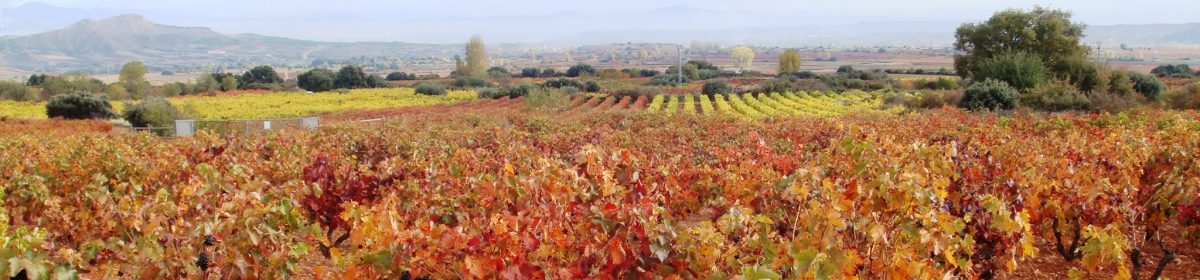
Set at altitude in the not so famous DO Ribera del Guadiana in the Extremadura region of western Spain, which borders Portugal, Pago Los Balancines produces wine which, from entry level to flagship offer very good quality and good value too.


We started our tasting with their Blanco Sobre Lías 2016. What might have been considered something of an unholy alliance in the France of yesteryear, is here, today in Spain, nothing of the sort. Chardonnay (of Burgundy, of course) and Sauvignon Blanc (of Bordeaux – sacre bleu!) blend together very nicely. The acidity of the Sauvignon gives refreshing juiciness to the body and slightly exotic fruit of the Chardonnay. Served with a Moroccan influenced couscous salad, it worked nicely!


The next wine, Huno Blanco, is made from the former of the above, Chardonnay. The 2015 vintage has had a few months in oak and partnered a carpaccio of cod. There’s a slight nutty edge to the fruit, hazelnut to me, complimenting the pine nuts served with the fish. The fresh young pineapple, and the zest coming from its peel, as in the wine above, has morphed into a very ripe let’s-eat-it-now pineapple, and it has that vanilla and coconut flakes aroma from the French oak.


ALUNADO 2014, another white, might be a bit of Marmite wine – you’ll love it, or hey, well, not like it so much! There aren’t many of the natural Sauvignon characteristics coming out of this wine. No sharp gooseberry, no cats pee aromas, no asparagus and no slightly under-ripe kiwi. Why? Well this wine has been fermented and aged with its lees for 13 mnths in French oak, and the oak does predominate. I wouldn’t drink it exclusively, but I’d certainly drink it with full flavoured fish, shell fish, like the sweet langostinos here, chicken for sure, some Asian SE Asian dishes, and well, I think it would be great with Turkey, too!


The fourth wine, Huno Blend, a red wine, is made with five varieties, the principal one of which is Garnacha Tintorera, and the also Spanish Graciano and Tempranillo, with very useful back up from Cab Sauv and Syrah. Enjoyed with pork, it is, like all blended wines should be (though some aren’t) the sum of its parts, harmonious, with no one variety standing out, and of course some extra character and complexity joining the party from the French oak in which it has rested for 12 months.

Haragán, is made with 50% Garnacha Tintorera and 50% Tinta Roriz. Now, if you look at the list of permitted varieties for this DO, Ribera del Guadiana, you won’t find Tinta Roriz! However, you will find Tempranillo – yes, Tinta Roriz (commonly seen labels in nearby Portugal) is another of the aliases of Spain’s most famous grape variety.

Wild dark berry fruits from old vines harvested at night by hand. Juicy, but not immature and vivacious; elegant, but powerful too – 15%, with15 months in French oak. There’s some black pepper mixed in with the brambly fruit and some undergrowth, some mushroom compost, but always the fruit to the fore. Long finish – great with grilled meats, also big enough for casseroles and game.

ADVANTAGES OF HALF BOTTLES

MINE’S A NOT SO SWIFT HALF, PLEASE


Recent dreadful events here on the Costa Blanca have reminded us once again about the possible consequences of drinking and driving. There is no doubt, alcohol impairs one’s ability to drive. So, when we go out to dinner, we make sure that the designated driver stays below the legal limit. I’m sure we all do.


When it’s my turn – it’s tough, I admit it, because I like wine, claro! But, it could be a little more pleasant, if only the one glass of wine I allow myself over the length of a restaurant dinner, is a good one! Now, bearing in mind that it is almost always just the one house wine that is served by the glass, how often do you think I drive home happy and satisfied! Yep, very rarely!


I’ve banged on about the paucity of decent house wines in restaurants several times, so this isn’t going to be a case of ‘same old, same old’ – I promise! However, this week’s article could be construed as another restaurant moan – though I would rather it was considered as it actually is, a piece of constructive advice, a suggestion to please all.


If restaurants here in Spain were to include a good selection of half bottles in their wine lists, I’m certain they’d sell well, and keep their clients happier!


Now, a half bottle, even if consumed over the course of a restaurant meal, may put you over the limit, even if drinking lots of water too – so, if driving, we probably shouldn’t drink all of it, but you can certainly take what’s left with you when you leave for the car! And of course, in this way you would avoid having to drink just a poor house wine, and  you wouldn’t have to pay for a whole bottle. This, of course is another reason why half bottles should be on restaurant wine lists.


There are others too – perhaps, the lady wants a bottle of red, the man, white? Compromise is required, so one has a less than perfect experience. Well, why not order a half bottle of each? Great – if there are any! Or another scenario – perhaps, for example, the lady is pregnant and doesn’t want any alcohol, but the man does? A whole bottle is too much  . . . .


I’ve been in the restaurant trade, so I know that it’s not easy having half bottles on the list. There aren’t too many producers that bottle in halves, so this restricts choice. Also, as half bottles age more quickly than full bottles, there has to be a good turnover, or some wines may be wasted. This applies more so to rosados and to many whites as well. Plus, restaurants are probably right in thinking that there isn’t a huge demand for half bottles (until now?!).


However, all of these ‘problems’ (or just excuses?) are easily managed, the half bottles can be promoted, and restaurants worth their salt should be doing just exactly this!

50 GREAT CAVAS!

50 GREAT CAVAS


Essentially, the eponymous ’50 Great Cavas’ publication does what is says on the can, to put it in modern advertising parlance – it gives readers the whole low-down on those Cavas that can be called ‘Great’. So, readers can imagine my delight when I was asked if I would be able to join the judging panel for the 2018 version of this now 7 years old annual Cava Competition. I accepted with alacrity, of course.


Throughout the seven years of its existence the ’50 Great Cavas’ competition has continued with fortitude, refusing to become embroiled in the, at times heated, discussion about where Cava should be headed. It has striven to maintain clarity amidst the clouds of confusion and criticism in which Cava has been shrouded during recent years.


Why? Well, because, whilst some of the criticism regarding quality control (or the lack of) has been correct and fair, there has never been any doubt about there being lots of outstanding quality Cava. Therefore the ’50 Great Cavas’ publication has become something of a reference point for those who seek top quality Cava – the name gives it away!


On one bend in the beautiful Villafranca del Penedès to La Llacuna road there are gates that lead to the house, the lodge (where I stayed), and the tasting rooms of 50 Great Cavas’ founder Anthony Swift (www.winepleasures.com), a Cornish-man, resettled in Cataluña, who loves Cava and decided to help raise its profile. I’d been before, helping to judge another sister competition, ’50 Great Sparkling Wines of the World’,  also one of Anthony’s bright ideas, which gives us another clue as to his favourite tipple!


Also present the night before the event and arriving by car like myself, though from La Rioja, was Jenny Siddall, founder of the very impressive wine tourism company, Taste Rioja (www.tasterioja.com). Jenny is soon, no doubt, to be holder of the Wines and Spirits Education Trust (WSET) Diploma, which is just one step away from achieving the much coveted Master of Wine (MW) title. It was clear that I was going to be in highly qualified and experienced company when judging was to begin the following morning.


After breakfast our two remaining judging colleagues arrived – Juan Manuel Gonzalvo and Albert López Gálvez (both of www.uvinum.es). It was clear to me from our early discussions that the former, Juan Manuel, would be our point of reference should we have any questions about Cava during the judging. Juan Manuel’s knowledge of all things Cava is phenomenal – and no wonder, he makes Cava, and is regularly employed as a consultant by various different producers! It was comforting to have him on the team and I learned a lot from him during the course of the day.


Albert is Co-founder of Uvinum.com – the outstanding on-line wine merchants, which in 2016 won the International Wine Challenge (IWC) ‘On-Line Retailer of the Year Award’. A finely developed palate and technological expertise are the tools of his trade and I found his comments also invaluable!


As Cork Talk readers know, there are several different styles of Cava as well as categories. Anthony had been at pains to categorize the many different entries so that each was being judges like for like. For white Cavas there were three different categories, termed for this competition only as: Reserva, meaning Cavas that have had 9 – 29 months of aging on lees before release onto the market; Gran Reserva, meaning Cavas that have had 30 – 60 months on lees; and Larga Crianza, those cavas that have had 60+ months aging on lees.


Cavas were also bracketed as Brut Nature or Brut – so, for example, the first Cavas we tasted were Brut Nature Reserva (BNR) meaning the driest style of Cava which has had between 9 months [the minimum amount of time on lees for a Cava to be called cava] and 29 months [which actually exceeds by 14 months, the minimum amount of time required for a DO Cava to be termed Reserva].


At 09:30 hours we began; and at 18:30 hrs we finished! True, we’d had a few breaks, one of an hour for lunch, but nevertheless that’s a hard slog – event though we all love Cava!


I’m not sure how many Cavas we tasted in the course of the day, though clearly, in order to find the 50(!) best, one has to taste a lot more! Plus, sworn to secrecy, I can’t reveal which have made it into the publication, let alone which have won Gold and which have won Silver! But, I can tell readers that the standard was outstanding!


In case you were wondering? Of all the styles and ages on lees my particular favourites came from the BNGR (Brut Nature Gran Reserva – 30-60 months on lees). For me, these wines embody all that is truly great about Cava. They retain the sparkling wine raison d’etre, the essential clean, refreshing vibrancy, the crucial joie de vivre; whilst assimilating also a wonderful depth of flavour, a fullness, so much extra character and complexity. Such wines can be enjoyed at wedding toasts and the like, as well as being thrilling partners throughout each course of a fine dinner!


Those who consider Cava to simply be a wannabe Champagne, need to think again. Those who will go for Prosecco before Cava, well, please don’t – there is a Universe of difference! And those who, like myself, have always believed in the quality of Cava, will be reassured – Cava Rocks, and you can find the best in ’50 Great Cavas 2018′, when it becomes available. Watch this space!


Contact Colin: colin@colinharknessonwine.com  Twitter @colinonwine  Facebook Colin Harkness  www.colinharknessonwine.com and don’t forget The Fine Wine & Gourmet Dine Programme www.totalfm.es

THE END OF THE LINE FOR DENOMINACIÓNES DE ORIGEN?

D.O. DEMISE IN SPAIN?


In January 2016 a group of 150 of the leading winemakers, writers and retailers of Spain met, following a smaller and earlier inaugural meeting convened by Telmo Rodriguez, of Bodegas Remelluri fame (along with several others), a wine-maker who has achieved almost god-like status in Spain where he is responsible for some of the finest wines on the Iberian Peninsular.


The assembled group gathered in order to write and sign the ‘Manifesto in Defence of Spanish Terroir.’ This document pulled no punches, with an opening line that stated, ‘    . . . . . the Spanish appellation system has been oblivious to soil differentiation and quality levels and that entrenched systems such as Rioja’s Consejo Regulador organising its wines by length of barrel and bottle ageing rather than geographic location was no longer working for many producers.’


They shared a common goal – in order to affect positive change and place Spanish wines in a position where they can rub shoulders with the best wines on the world, there has to be an overhaul of the Spanish Agriculture Ministry backed system of classifying wines. The system we know as firstly the Denominaciónes de Origen (the DOs) and then the Vinos de la Tierra (VdlT) and so on.


Typically, the DOs and, of course, the Ministry, have been slow (some would argue sloth-like) in even listening to the debate, let alone doing anything about placating the growing body if discontent. Blind eyes and deaf ears turned, seem to have been de rigeur!


I’m sure that several of the winemakers at the meeting referred to above had spent a lot of time damaging their wine-making hands’ knuckles knocking on the close doors of the Consejos Regulador (regulating councils) of many DOs asking for something to be done. Nil progress resulted, as we know from last week’s article, in one of the most famous Rioja producers opting to abandon the DOCa and make wine classified now as simply Vino de La Mesa, of just Spanish Wine. A wine incidentally that still sells for around 400€ per bottle!


Regular, long time readers will know of Pepe Raventos pulling out of DO Cava, for the same reasons. In fact about a dozen cava wineries did similarly and are now making sparkling wine referred to as Clàssic Penedés, sparklers made in exactly the same was as they were when their bodegas were part of the Cava family.


However, it would appear to the objective observer – that’s me, by the way – that there are several who have done the same, and yet not so drastically. In 2003 the Spanish Government agreed that bodegas which, satisfied new rules, would be able to apply for, and ultimately attain the new (at the time) Vino de Pago status. A status given to a winery on the grounds of unique micro-climate features and proven evidence of consistent high quality of many years. A loop hole for dissatisfied bodega owners?


Seventeen bodegas throughout Spain have successfully applied for this status – in La Mancha, in Utiel Requena, Toledo, Zaragoza, Cuenca, Cuidad Real and many other zones. Interestingly, some sit on the fence – making wines labeled under their new status, but also continuing to make wines under the auspices of their DOs. Friendly relations are maintained, and if the new idea goes all wrong, then no bridges have been burnt!


It would be wrong to suggest that there are justifiably unhappy bodegas in all the DOs of Spain. Readers will know that I spend quite a lot of time in DO Yecla for example, where the Consejo Regulador has to be one of the most dynamic in Spain. And there are others which perhaps didn’t need to respond to grievances aired publicly elsewhere, as in fact they were doing a good job anyway.


However the #DiaMovimientoVinoDO movement, referred to last week and indeed, ongoing, as I understand other such days are planned, is a response to the wake-up calls to which some, under-achieving DOs, have been subjected over recent years. As we know there has been dissatisfaction in some quarters which has resulted in defections from DOs and it’s only natural that the DOs should feel a need to band together to defend and indeed, celebrate, wines made under DO status.


Having the #DiaMovimientoVinoDO  has been useful I’m sure, and I applaud it – as long as the grievances that bodegas have aired are being addressed by the DOs concerned!

I often state that, in my view, Spain is a really happening place in wine terms. I still believe this, but it’s clear that in some areas they do need to be more dynamic, proactive and forward thinking, otherwise the DO system as we know it, may fall by the wayside and become part of the history of Spanish Wine production, confined just to the pages of history books – or, of course, the digital, on-line versions of such!

Wine making is an evolutionary process, let’s hope its organization is too!


My thanks to Jane Anson and to Decanter Magazine whose articles I researched before writing the above; also, of course, to Tim Atkin MW and Sarah Jane Evans MW who are always generous with their time when I ask for their advice and comments.