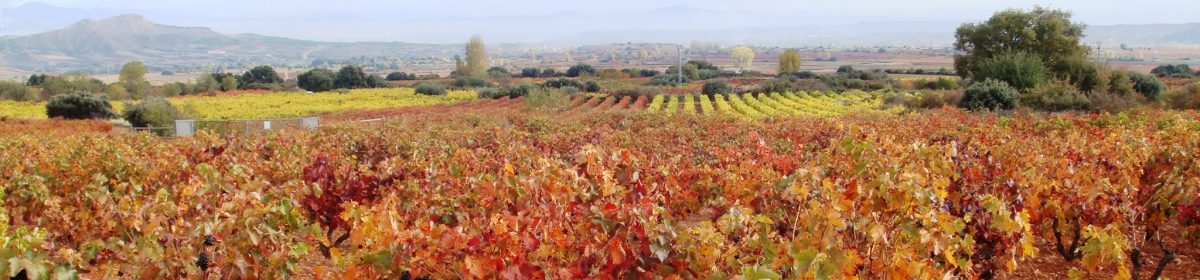
In what seems to be a proposed colonial style move, the reverse of the separatist intentions of the Government of Cataluña, DO Valencia has laid claims to the vineyards of DO Alicante and of DO Utiel Requena! . . . . . . . . Essentially, DO Valencia insists that it is not they who wish to change things. Since 1995 and 2001 respectively the vineyard areas of DOs Utiel-Requena and Alicante have officially been part of DO Valencia.

LAND GRAB!

I’m writing this on the final day of the debate in the Cataluñian Parliament which will determine if the autonomous regional government goes ahead and declares independence from Spain. This is also the day that the Spanish Senate meets to discuss a plan by the Madrid government to take away some of that autonomy, thereby quashing any such move.

Unlike me, now writing this article, you are reading it several days later, therefore, with the knowledge of what transpired. Taking no side, I can only hope that a peaceful solution is found.

This hope for calm also applies to those involved in today’s article. It’s not of such a serious nature, but nevertheless there are those becomin g a little hot under the collar!

And, yes, you may be wondering if you are reading ‘Cork Talk’, the Costa News’ dedicated wine column, considering such a politically charged opening. Well, it seems that politics have also entered the realm (no pun intended!) of Spanish wine.

In what seems to be a proposed colonial style move, the reverse of the separatist intentions of the Government of Cataluña, DO Valencia has laid claims to the vineyards of DO Alicante and of DO Utiel Requena! At first glance, I find it as ridiculous as it is outrageous.

In order for a wine producing area to gain recognition as a Denominación de Origen it has to satisfy many requirements and then present its case to the Spanish Government’s Ministry of Agriculture for a decision. It’s the same for all other food products – there are DOs for Cheese, Oils, Hams, Sausages etc.

Regarding wine, one of the requirements is that there must be proof that the wines of the area in question are distinct from others in the same zone, with different soils, climates and more. In 1957 wine makers, independently and coincidentally, in Valencia, Utiel-Requena and Alicante convinced the Government that they should all be granted DO status. Therefore, in that year three different entities were created: DO Valencia; DO Utiel-Requena; and DO Alicante.

That’s sixty years of coexistence and as far as I’m aware, having lived here for twenty – that’s three score years of harmony! Each DO has, of course, promoted itself, but this has never, to my knowledge, been to the deliberate detriment of the others. I’ve never heard any ‘bad-mouthing’ and don’t expect to either. Wine-makers the world over are aware of the many difficulties they each have to surmount in order to perfect their craft – the weather, of course, and also, tragically recently, the dreadful fires, for example!

So why has DO Valencia seemingly put a pair of secateurs in the works?

For clarification and to canvas opinion I contacted representatives of DO Utiel-Requena and also of DO Alicante, whose beliefs, of course, must be considered to be subjective. For an independent assessment I also had some excellent feedback from one of the two new Spanish Masters of Wine, Fernando Mora MW, who was kind enough to give his valuable time.


Clearly, in the interest of balance, I needed to seek the views (also, subjective) of those in DO Valencia – you’ll remember my comment above, ‘at first glance’!

DO Alicante confirmed that they are fighting vigorously, through the courts and the Government, against what they consider to be a potential violation of their independence. They also said that they had had some good news, but were hoping for more, of course. In August they received notification from the Agriculture Conselleria advising that the new ‘articles’ for DO Valencia did not include any reference to the production area of DO Alicante.

A spokesperson from DO Utiel-Requena said that they too are fighting this intrusion adding that in his view DO Valencia are trying to take over their lands in order to satisfy the demand for DO Valencia wines, a demand that cannot be met by their current vineyards. A remark which again made me think of the concept of colonialism!

TWO SIDES TO A STORY!

Señor Fernando Mora MW (http://bodegasfrontonio.com/en/the-team/) was most helpful when I asked him his opinion about the apparent attempt by DO Valencia to list the vineyards of DOs Alicante and Utiel-Requena as theirs. He also explains that, if this were to go ahead, it would be similar to the generic AOC Bordeaux, a large area where wines can be labelled ‘Bordeaux’ but are considered lesser wines than those from the famous areas within, such as AOC Pomerol et al.

He goes on to say that in this case DO Valencia would also be like DO Catalunya, which is a large area that takes in all of the current DOs

(Penedés, Tarragona, Montsant, Cava etc), which continue to work independently, as well as some smaller municipalities that make wine as well.

Señor Mora MW ends by noting that for every bottle of wine that has a DO name on the label, the DO receives 1€!

So, over to DO Valencia!

Apparently, it was in fact DO Utiel-Requena in 1995 and DO Alicante in 2001 who asked if their vineyards could be listed under DO Valencia. This, I am told, is because, at that time, they were not able to fullfil the requirement that in order to be a DO, 50% of production has to be ‘commercialised’. I am also told that this is still the case today. The figures I have been quoted, if accurate, do confirm this.

DO Valencia advised that these other two DOs within the geographical area of Valencia in 2011 petitioned the courts against something that they had earlier sought, and been given (in 1995 & 2001 respectively), and denounced DO Valencia at the same time! The courts decided in favour of DO Valencia.

Recently the two DOs Alicante and Utiel-Requena, working in tandem, have appealed to the Tribunal. We are all awaiting the outcome – the case continues!

Confused? So am I, and I’m left wondering if it is really Much Ado About Nothing!

Essentially, DO Valencia insists that it is not they who wish to change things. Since 1995 and 2001 respectively the vineyard areas of DOs Utiel-Requena and Alicante have officially been part of DO Valencia.

Also as mentioned last week, it is not unusual for a larger geographical area to have an overall DO, but include within it, other smaller DOs. There is ‘previous’:

Bordeaux is mentioned above, but also there is generic Burgundy wine, as well as the famous smaller AOCs within. DO Vinho do Porto and DO Vinho do Douro share exactly the same geographical area in Portugal. In Spain, DO Uclés shares its whole territory with DO La Mancha. The similar situation in Cataluña was mentioned last week and, much nearer to home, Requena, the village, is included in DO Utiel-Requena as well as in DO Cava and DO Valencia!

Well, for me, the importance is that each area of production is allowed to keep its own wine identity, no matter what it is actually called. I’ve written admiringly many times about wines from all three DOs, for example:

The wonderful whites only of Clos Cor Vi, and the super reds and whites, with the occasional rosado thrown in, of all 12 or 13 bodegas within the Terres dels Alforins group – to name but a few, all DO Valencia!

The outstanding wines of my friend Felix at Bodegas Vera de Estenas; also those making all the headlines at the moment from Bodegas Hispano Suizas; and the Dominio de la Vega portfolio – again, but a few, this time from DO Utiel-Requena!

And who can forget any of the wines made by Pepe Mendoza at the winery his father Enrique started; also, at 95 Peñin points El Sequé (soon to be the subject of Cork Talk!); plus Bodegas Casa Sicilia, Sierra Norte, Nodus et al – from DO Alicante.

My advice to the three DOs in this present conflict is that they read my archived article ‘DO’s Demise In Spain’ – and then please stop bickering and get on with what you all do so very well!

PS We have a few seats left for our 2017’s final Musical Dinner with Paired Wines, Saturday 25th November at Moraira’s Bella Dama Restaurant, Club Nautico. Four courses each paired with a different, fine wine, plus the beautiful music of Claire-Marie (www.clairemarie.es) – all for just 40€! Please e-mail colin@colinharknessonwine.com or call me on 629 388 159 to reserve your places!

An Old Cork Talk, for reference re New Bobal Article NOV 2017

BOBAL – NOT LOST IN TRANSLATION!

THE GREAT BOBAL TASTE-OFF – PART ONE!


Are you sitting in comfortably? Then I’ll begin!


Now if you remember that, you must be of a certain age. I do, and I still love a good story. Hope the same applies to you, because here’s one coming up:


The Romans were in most places known to man over two thousand years ago, including Spain. The area we now call Valencia didn’t escape their attention. They came, saw, conquered – and stayed. Well why wouldn’t they? The verdant land, the rivers (there was some water in them in those days!), the natural harbour, and hey the beach as well – I’m sure bronzies were popular at their orgies too! (I’m using poetic license here to sex-up the story a bit, okay?).


Of course not all Romans were soldiers. The new lands their soldiers had expropriated were populated by all manner of regular Romans and their families who caught the next galleon-ferry. Among them were farmers, their seeds and of course their animals. One such species was called Bovis – Latin for Ox. Bou, the Valenciano word now for ‘bull’ has its roots in the Latin name.


Oxen had to be grazed and the area where the Roman Bovis grazed was called the Bovalar – figures doesn’t it? However, rain was also in short supply in those days so these pastures where the oxen grazed had to be huge in order to support the number of animals using it.


Then, guess what – the Roman Empire fell, society followed suit, population decreased, any remaining oxen were slaughtered by the people left, and vast swathes of land were left unattended. Nature took over some trees grew and, yes, so did some grapes!


Survivors went into the forests and found vitis vinifera, the common grape vine. They dug up the vines and replanted them in the areas which had previously been known as Bovalares. Over time this particular vitis vinifera developed into a variety, commonly known as Boval, which over time and with the Valenciano and Castellano ‘v/b’ confusion was corrupted into the word Bobal!


The Bobal grape is indigenous to the Valencia area – and now you know why! It’s the mainstay variety of DO Utiel-Requena and of DO Manchuela and is also used in Valencia as well as, to a lesser extent, in Alicante.


Now for an acknowledgement re the source of the above story, and the source of some of the best Bobal wine available – my philosopher/traveller/Photographer/winemaker friend Alvaro Faubel, one of the founding  Directors of Bodegas Dominio de la Vega!


Arte Mayor 111 from Bodegas Dominio de la Vega is the wine that inspired me to write this article and its sequel. If Bobal tastes this good, and it certainly does, the good readers of Cork Talk need to know about it! Thus a concept was born – a taste-off between wines made with Bobal coming from various bodegas in DO Utiel-Requena and DO Manchuela.


Only wines gaining 90+ points in Spain’s most comprehensive wine guide, Guía Peñin (available in English and really well-worth investing in, if you are at all interested in Spanish Wines). Also, only wines described as Bobal  would be included  (remember, though that the rule in Spain is that a wine that has, I think, 80%+ of one variety can call itself by that variety’s name, despite there perhaps being some other varieties in the blend).


At a very impressive 93 Peñin Points, Domino de la Vega’s unique wine certainly satisfies all the criteria. Unusually, this wine is made from three different vintages of Bobal, 2005, ’06 and ’07 – all the grapes were picked by hand, and at night, from the 80+ years old vines. The earlier vintages were kept in waiting until the final 2007 was fermented and, like the others, aged in French oak for an average of fourteen months.


The wine is sensational, in every way! On the nose there are mineral notes aiding and abetting black cherry, wild herbs and flowers, with some black pepper and smoky cinnamon spice mingling too. On the palate it has a weighty, rich presence and yet it is perfectly balanced and elegant. The black cherry is prominent amongst some notable dark, brambly fruit and there’s a final flourish of blackcurrant liqueur!


So, an excellent start for The Great Bobal Taste-Off – watch this space; and drink this wine!

BOXING CLEVER


Remember Watneys Part Sevens? The bitter inside was, to be fair, drinkable – that’s if there was ever any left after ‘opening’ the can! The rigmarole one had to go through to extract it, in the absence of that special little opening gadget! Remember the foray into the host’s dad’s garage looking for a suitable tool, whilst praying he wouldn’t come back unexpectedly and find his daughter had ‘invited a few friends around’?


Well, there’s many a smart suit that’s been soaked by the geyser that shot out when hammer was applied to nail! And remember how it found its way up your sleeve as you tried to put your thumb over the opening to stem the flow!


Move on a decade and whilst some (including me) had graduated to the smaller cans, equipped with an opening pull, others (including me – well, we were partying!) were developing a taste for wine brought to the party – in a box! Bag in Box wine had been invented!


The wine inside was drinkable – but only just, and certainly only for the great unknowing (including me, but not for long!). This was nothing at all that resembled quality. In order to shift an excess of wine from the European wine lake of the time, producers had thought of the idea of larger quantities, ideal for parties (for those with fewer taste buds than normal), being vacuum packed in collapsible foil/plastic containers hidden in cardboard boxes.


For me it’s rather like the tetra-pack ‘wines’, along with the large plastic bottles sold in supermarkets today – whose wines are exceedingly poor quality, harsh, thin and nasty. Their only ‘endearing’ feature (for some, at least) is the alcohol they contain.


Fast forward a further few decades, a couple of years after my arrival in Spain and I was surprised to hear from co-owner Matthew, that a wholesale wine business (which was later to add a retail arm which morphed into one of the best wine merchants on the Costa Blanca, La Casa Del Vino, Javea http://www.casadelvino.biz/) was doing a roaring trade selling BIB wines to various Scandinavian countries. To my mind, Scandinavians are cultured and discerning people – so what did they know, that I didn’t?


Clearly, whilst the technology re the actual containers had improved, so too had the quality of the wine. It’s now time to kick out our preconceptions born of yesteryear experiences – Bag in Box wines rock!


I hope I’m not leaving readers dizzy here, but let’s again fast forward, in fact to just a few weeks ago. Our great friends, Mick & Ros, had cut out, of no lesser publication than ‘The Times’, do you mind, an article, not just about the resurgence of BIB wines, but about the quite dramatic improvement in the quality of such wines. I read, with a growing thirst.


Then, as is often the case (usually following a trade tasting!), another article came to my attention – this time from an equally impressive source, probably the world’s best wine magazine, Decanter. And finally, when talking about the phenomenon on my radio show a couple of weeks ago I received lots of incoming, in favour of BIB, including from my friend and co-IWSC panellist, Paul Young (http://imbibros.co.uk/) .


A little research revealed that Sainsbury’s BIB sales increased by just under 9% last year and, almost incredibly, Amazon sales in the UK rose by a staggering 212% this summer when compared to 2016! Waitrose has also reported a spike in sales. The reasons given for this across the trade increase were: convenience, increasing environmental awareness, longevity and, for me, crucially, the improving quality of the wine – dubbed the ‘premiumisation’ of the wines used!


‘From pantry to picnic & party’ is the alliteratively pleasing promotional phrase extolling the virtues of BIB wines, but this might also have been said of the predecessors of the current crop. The difference nowadays is of course the quality of the wine. The ‘romance’ of wine will, I think, ensure that the finest of wines will always be in bottles, but it’s certain that quality BIB wines are here to stay, and will continue to develop and improve.


One of the BIB wines quoted and praised is produced by my old friends at Bodegas La Pruísima, DOP Yecla. ‘Old Hands’ is an organic red wine made from their beloved Monastrell vines. I’ve tasted the wine already and I’m impressed – and I know I’ll continue to be so for the, perhaps two weeks that it will stay in my fridge!


Plum fruit, and lots of it, with some dried mountain herbs on the nose, the wine is juicy and, during this continued (at the time of writing!) hot spell it’s a pleasure to drink slightly chilled. It’s available across the UK in Lea and Sandeman Wine Merchants (I can send you the full list – just e-mail me), plus you can buy the boxes (as well as the same wine in bottle) from www.bodegaslapurisima.com .


Unsurprisingly their DO Yecla neighbours and friends at Bodegas Castaño also sell a lovely BIB wine – in fact made with Monastrell too. I tasted this some weeks ago, posting on Facebook that it was fresh and fruity after more than two weeks! It’s a rich damson fruit driven wine, rounded on the palate with a lovely finish – also, like the above, far too easy to drink!


Bodegas Castaño http://www.bodegascastano.com/en are selling their BIB wine mostly in Sweden as well as being available in mainland Spain and of course, you can buy it from Raquel in the Tienda (shop) via the above website!


Contact Colin – colin@colinharknessonwine.com ; Facebook Colin Harkness ; Twitter @colinonwine

Castellroig’s Cava de Paraje Calificada

Sunshine gold in colour this excellent Brut Nature is made with Xarel.lo vines which have seen 40 summers planted on their Terroja Estate in soils that were first formed 20 million years ago!

CLOSURE AND A NEW ERA FOR CAVA

Yes, a touch oxymoronic, I agree, but sit back, cava glass (no more than two thirds full) in hand and please read on – it’s all good news for lovers of Cava, like myself.


In the couple of years preceding 2014 I had written the occasional article trying to explain to readers why it was that there had been some abandoning of ship by a number of cava producers who were worried about its standing in the world of Sparkling Wine. I suppose the bad news (there’s a word more often used than this phrase!) hit the fan when the current incumbent of one of the most famous Cava houses also decided to cut and run. The Raventos family, in the late 19th Century, had in fact been the founders of cava making in Spain – but would now no longer be involved!


What was it all about? Well, like the current crisis in Cataluña, it’s complicated.


It all came about because of a concern amongst producers of quality Cava that the original good name of the DO and its produce had been besmirched by the huge supply of cheap Cavas that really aren’t worthy of the name! These cheap-end, tasteless, anorexic Cavas offer the same inviting ‘explosion’ as the pressure inside the bottle pops the cork, but it was an open and shut case of breach of promise! And still is today.


Whilst being perfectly honest with neither axe grinding nor hidden agenda in mind I wrote a few related articles which must have come to the notice of the burghers of DO Cava. Hence the expenses paid invitation to interview the president about their plans to combat the negative criticism being made by other commentators as well as myself.


Careful not to be seduced by the sumptuous lunch in the gloriously grand, 11th Century, private dining area of Bodegas Segura Viudas, accompanied by really top level cavas, a different style for each different course, I listened to Señor Bonet’s, impelling explanation of plans for the Empire’s Strike Back.

With DO Cava Officials, including Señor Bonet, President of Consejo Regulador, DO Cava.

I agreed that all DOs suffered similar criticism – there will always be those who strive to make the best wine possible under the auspices of whichever DO in which they find themselves. And, sadly, there will also be those who are simply in it for the money. They’ll obey all the rules (probably!) to ensure that they carry the DO’s motif on their labels, but there’ll be little concern about the quality of the product.


So, whilst that couldn’t really be circumvented, there were other ideas afoot. Firstly, there was going to be a promotional drive to push what was going to be called ‘Premium Cava’. This certainly included those cavas which qualified for Reserva and Gran Reserva status, but also a number of ‘Joven’, young cavas (as opposed to Reserva and Gran Reserva style which have been aged for long periods) which were displaying classic characteristics of fine cava, though younger in style.


In tandem with this promotion, and certainly the most innovative and creative of the ideas was the eventual introduction of a totally new concept, a new designation within DO Cava, the top of the quality pyramid, Cava de Paraje Calificada! Qualifying would be tough!

Señor Per Bonet, President, Consejo Regulador, DO Cava, officially celebrating the Governmental approval of the new concept and designation Cava de Paraje Calificada

Firstly, of course, all the grapes will have to have come from a single vineyard, or indeed a single plot within a vineyard. This will mean that the resulting Cava will be representative of that terroir. This answers very nicely a criticism that has always been leveled at Cava. Now there will be a definite sense of place.


Also, the vines have to be a minimum of 10 years old, though most will be many years older, ensuring better quality and richer the grapes. Yields will be strictly controlled. Also these superior grapes must all have been picked by hand and must undergo strict analysis in the bodega.


As part of the quality control there will be a panel tasting of both the base wine and, following the second fermentation, a tasting of the Cava straight after disgorgement, with only those which tick both boxes being passed! Disgorgement, by the way, will only be allowed after a minimum of 36 months, that’s three years, ‘en rima’ – which will of course ensure depth and complexity in the finished article. And many will in fact have far longer ‘en rima’.


Three years later I really am delighted to say that the first 12 cavas to be elevated to this new category are now available, and it was a real privilege for me to be able to taste one, sent by producers Castellroig – their stunning Sabaté i Coca Reserva Familiar!


Sunshine gold in colour this excellent Brut Nature is made with Xarel.lo vines which have seen 40 summers planted on their Terroja Estate in soils that were first formed 20 million years ago! 30% of the base wine was fermented in French Oak and then aged for 3 – 4 months before being blended. The second fermentation occurred in the same bottle (of course) and the wine has been left ‘en rima’ for a minimum of 60 months!


I love the fennel and mountain herbs (thyme and laurel, more than rosemary) and the slight toasty notes with blanched almonds, a little hazelnut nuance and some distant pear and apple fruit. It’s rich and full, yet personifies elegance with a long and joyous finish.


So, although this superb Sabaté i Coca Cava de Paraje Calificada represents closure, re the long process which I’ve been following for over three years, it is also representative of a new era for Cava! Enjoy!