DO Yecla Annual Wine Competition 2018

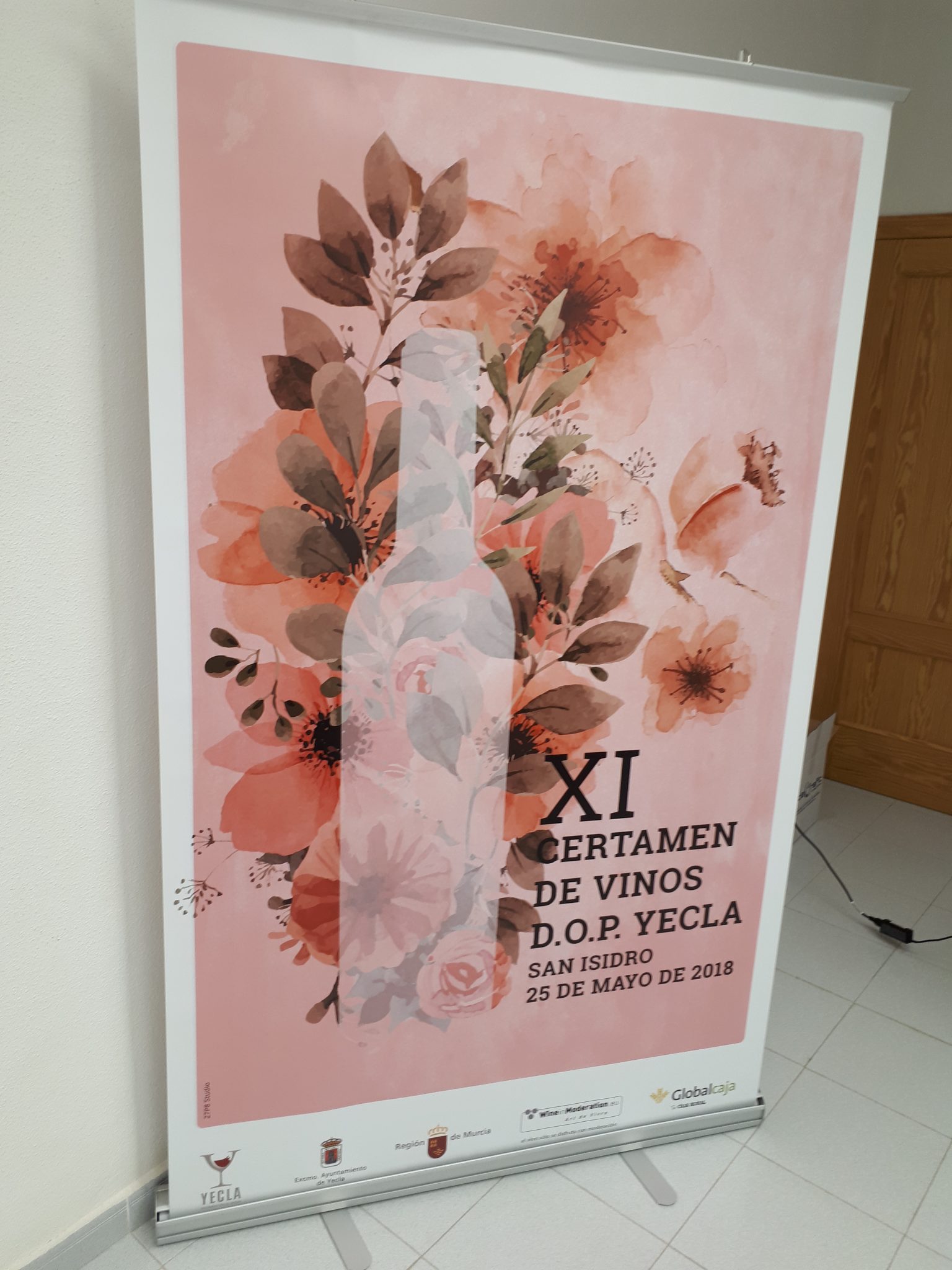
XI CERTAMEN VINOS DE D.O.P. YECLA 2018
I was delighted to be invited, once again, to join the judging panel of the annual wines of DO Yecla competition, in fact my sixth invitation. For four of these competitions, including this year’s, I have been the only foreigner on the panel, which I take as a real compliment, for this is not just a parochial contest, akin to the village vegetable show, as was. The results of this competition reverberate around both of the world’s hemispheres, covering all of the continents.

An amazing 95% of Yecla’s wines are exported, to I don’t know how many different countries, and it’s clear that in these established markets, as well as those in their infancy, there is bound to be keen interest in the medal winners of 2018. However, it’s not all positive – for some inexplicable reason, a mere 5% of production is sold in Spain!
It’s not a problem for the bodegas, most of whom sell out of wine, on their foreign markets – it’s just that it’s a tad lamentable that Spaniards out of the area, just don’t appreciate the beauty of the products that my fellow judges and I enjoyed recently. Plus, of course, this means that ex-pats living in different parts of Spain do not have the chance to try them, as distributors don’t take up the option. Yecla wines rock – and if/when they become known in the rest of Spain, sales will inevitably soar – reaching the level of some of the more famous areas of wine production!

The Judging Director, Señor Adrián Martínez Cutillas, had decided that there were too many wines (approaching 80) entered this year for them all to be tasted by all 12 judges. Two panels were needed, one panel tasting all the white wines and rosados, whilst the other panel (mine, it so happened) tasted all the young reds. After the break, both panels tasted all the red wines which had been oak aged and placed in different categories: for example ‘Tinto Joven Madera 2017 & 2016’, Young Red With Some Oak Aging 2017 & 2016, and so on. Finally, we all tasted there three delightful, delicious Red Dessert wines!

The venerable, older wines were poured from decanters!

The Consejo Regulador offices are to be found on a modern industrial estate, outside of the bucolic, atmospheric town centre. It’s not pretty, but it’s perfectly practical. There is easy access, plenty of parking and, particularly wine tasting/judging-wise, it’s custom made and fit for purpose.
The tasting rooms are a few metres below ground level, naturally cooler therefore, but also supplied with the necessary wine chillers which keep the various styles of wine, all wrapped in aluminum foil to ensure that prying eyes (not that there ever are any!) do not learn of a certain wine’s provenance. It is, of course, a blind tasting, so that no favouritism can be shown.

When judging at the International Wine & Spirits Competition, as I do, we are given similar information to the above, i.e. category-wise, as well as general information about predominant grape varieties – e.g. Rioja Crianza, Tempranillo dominated etc. This isn’t to help the judges, it’s because we are also expected in that competition to consider typicity.

At the Certamen Vinos de DOP Yecla this information is not available. Therefore, whilst it’s very likely that the red wines we are tasting, for example, will have at least some Monastrell in them, it’s not certain, and there may well/probably will be others in the blend. For me it adds a little excitement – can I identify the varieties used?

The judging panel!

Judging starts at 10:00 hrs and continues – well, until it’s finished. This year we were in there, admittedly with a snack break, until 13:50 hrs – a long session. We then retired to lunch, where a some of the wine-makers, bodega owners and Consejo Regulador members joined us. If you are ever in Yecla – go for lunch at Bodegas Barahonda! It really is exceptional!

Eventually all, workers, owners, growers, their families etc, as well as the giltterati of the the Yecla Wine World, dressed to impress, of course, descend on a restaurant for the annual dinner, and the presentation of the prizes, as yet kept under lock and key! It really is quite atmospheric and, whilst all are friendly in this area of production, there is nevertheless an air of competition – it goes with the name, I guess!

On my table, for example, two ladies, owners of a winery making strictly vegan wines, were noticeably disappointed that their two Gold Medals of last year, were not repeated this time. Whereas, a lady and gent (my friends Catherine and Harald of Bodegas Boquera), who did not medal last year (in this competition) were delighted to learn that they had been awarded a Silver! And so it went on.
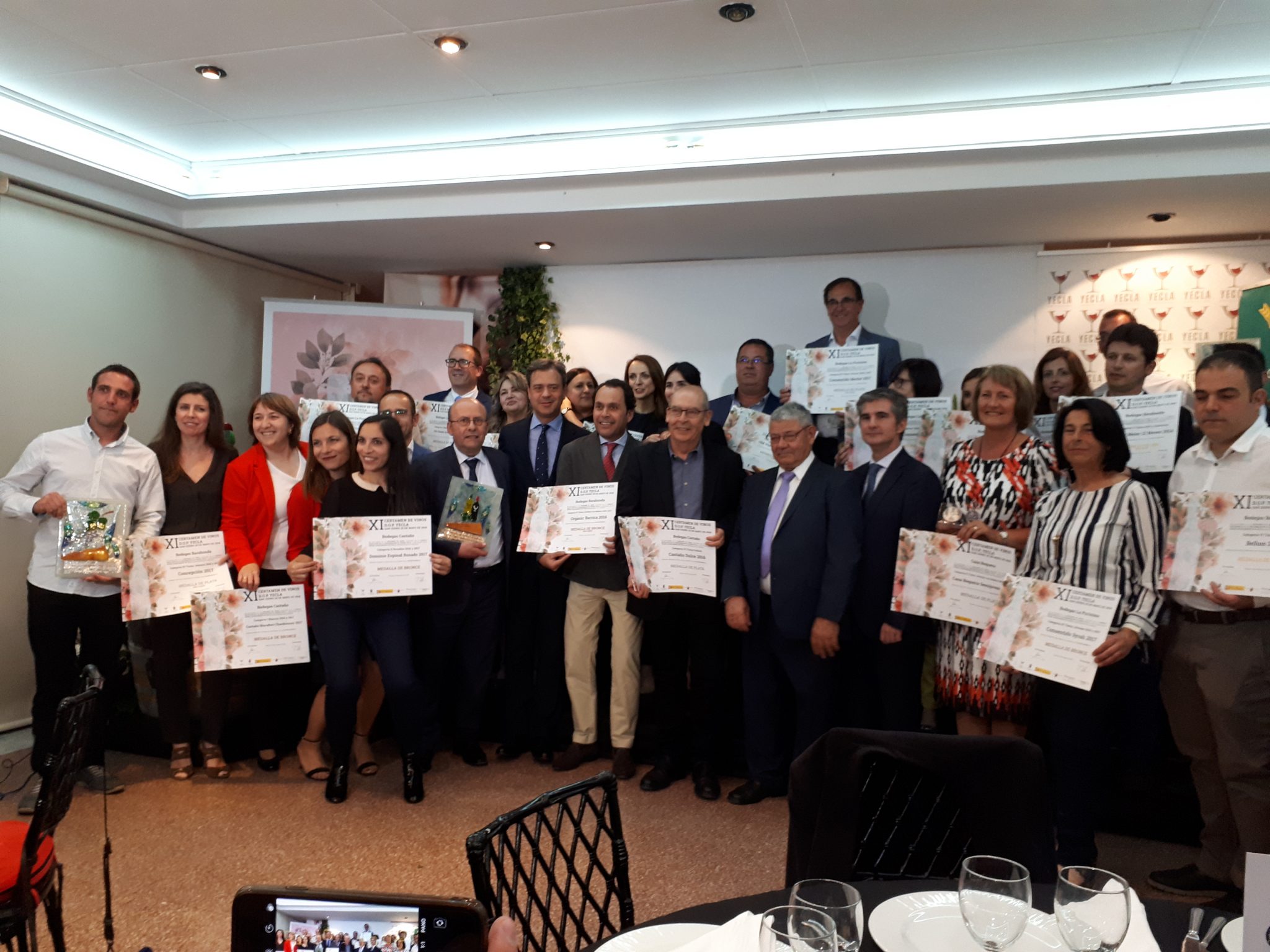
Medal & Prize Winners!

Space does not allow me to give details of all medals, but a special mention must be recorded for Bodegas Barahonda, whose representatives were called to the podium more frequently than any of the other bodegas. Enhorabuena (congratulations) to them as well as all who entered as I really believe that this year was one of the best, in terms of the overall standard. Plus, a huge thanks and congratulations to DOP Yecla, for my invitation and for their perfect, professional organisation! Hasta la proxima – espero!

BREAKING WINE NEWS: Thurs. 21st June at the exciting La La Land Piano Bar and Restaurant, Denia, a super Wine Pairing Dinner, 32:50€. Exceptional value for money! To reserve: colin@colinharknessonwine.com or please call 629 388 159. Places limited!

DO Ribera del Duero Also Makes White Wine!

RIBERA DEL DUERO – NOT JUST ABOUT REDS

For a number of years at the various tastings I present I have casually asked those in attendance if they were buying more Rioja wines than Ribera del Duero, or vice versa. Up until, perhaps the last two years, this was almost invariably answered in favour of DO Ribera del Duero.

I was talking, of course, of red wine.

Both DOs have a history of making top class red wines, though it must be admitted that Rioja’s is a far longer history, having been accepted as a Denominación de Origen approximately 6o years before the fledgling DO Ribera del Duero started flapping its wings!

Neither DO has been particularly recognised as an area for great white wines. However, if the white I am about to describe, made by Bodegas Valduero in Ribera del Duero is anything to go by, you can expect many more people to take note of the whites of this excellent red wine DO!

The opposition, too, are starting to have some greater success with their whites, this being in good part due to their allowing, during the last few years, different white wine grape varieties to be used. DO Ribera del Duero’s imminent success will be because of a resurgence of interest in the only white wine variety that is approved by the Consejo Regulador – Albillo. There isn’t much of it around, generally, to be honest – indeed Valduero claims theirs to be the only Albillo made at the moment. However, it is in the ascendancy and certainly well worth seeking out.

The Albillo grapes are harvested from Valduero’s 10 hectare vineyard and taken quickly to the bodega where the gently pressed juice is fermented at a low temperature, to ensure the aromatics of the resulting wine – and I can tell you, it works! There’s a rich and ripe tropical fruit note on the nose as well as some blanched almond nuttiness. It’s rich on the palate too, full, with presence with a super grapefruit acidity which keeps the wine fresh.

It can be served to very good effect with salads and meaty fish and in fact we enjoyed it with roast chicken breast filled with cheese!

Let’s not forget, though, that Ribera del Duero is still famous for its red wines, so it would have been dreadfully ruse of me not to accept the two excellent reds from Bodegas Valduero!

The bodega was established in 1984, at about the same time as the DO was being approved and granted by the Spanish Ministry of Agriculture. Indeed, Bodegas Valduero is one of the founding members of the DO.

The head wine-maker is Yolanda García Viadero, daughter of the founder, and a Señora on a mission! Determined to, not only uphold, the tradition fine wine making in Ribera del Duero, this lady wants to develop it further. Señora García is one of an increasing number of women winemakers in Spain who are achieving truly excellent results.

I was sent two of their Élite range, two wines, both made with Tinto Fino, that perhaps demonstrate the philosophy of the bodega. Yolanda is convinced that this variety, one of the other names for Tempranillo, needs time in oak and also in bottle in order to fully capture its excellence. Consequently they make only Crianza through to Gran Reserva red wines.

Valduero Una Cepa, is made from 50 years old vines that have been hand harvested. Even at 50 years old the vines are vigorous enough to produce plenty of bunches – most of which are snipped as the green harvest ensures fewer, but richer grapes. And when I say ‘fewer’ I really mean it – each vine is left with only enough grapes to make one bottle of wine!

Once fermented, the wine is placed in oak barrels where it rests in a very old cellar near the town, whose tunnels and cellar area have been amplified by the family, boasting 50 metres below the land at its deepest! Before release the wine is bottled, remaining in deep storage for a further 12 months.

If you don’t love this wine, you don’t like Spanish wine! Structured, intense and complex the wine has layers of mature red and black fruit with seductive vanilla notes and a touch of leather too! Splendid wine!

Valduero 6 Años, a Gold Medal winner is a wine for those who just love an oaky red! The vines here are 40 years old, and their younger fruit than the above needs a little taming for it to be able to demo the elegance that is required for this wine. Four different oaks are used to age the wine for 36 months. Then, a further 3 years (hence the name!) is spent in bottle before realease.

It’s a wonderful mouthful oak oaky wine, with, for me a little more of the darker fruit notes than red – damsons and black cherries, with the occasional appearance of some loganberry and very ripe blueberry. There’s a caramel note on the nose and some more leather too. (www.bodegasvalduero.com)

PS Next wine paired dinner in Javea, Thurs. 14th June. Please contact me for details!

colin@colinharknessonwine.com ; Facebook Colin Harkness ; Twitter @colinonwine

The Wines of Pepe Mendoza Casa Agrícola.

WINES WITHOUT MAKE-UP!

When Pepe Mendoza was handed the mantle by his father, Enrique, founder of Bodegas Enrique Mendoza, he certainly didn’t sit on his laurels! Named Valencian Young Wine-maker of the year in 2004, he went on to better that, and some, by being crowned Wine-maker of the year for Spain, the following year!

His remit, set by himself, was to take the bodega from its already exalted position in Valencia, and in Spain generally, to the next level. Those of us who have tasted his triumvirate of flagship wines: Santa Rosa, Estrecho and Quebradas, will be able to testify that Pepe has certainly achieved this particular goal.

However, this tireless, talented, deeply passionate, and fun guy, is not simply satisfied with the fact that his wines sell out every year and that he has brought extra fame (and some fortune as well), not only to the bodega, but also to DO Alicante and indeed to the whole of the Spanish Wine Fraternity. He has just launched his new, small, portfolio of wines that go under the title of: Pepe Mendoza Casa Agrícola. (https://www.facebook.com/pepemendozacasaagricola/)

At the time of writing, there are just two of these wines available, a third is about to be launched soon. Luckily I’ve tasted the three – and in situ as well!


There’s a small corner of Bodegas Enrique Mendoza (located just in the countryside outside Alfaz del Pí) which is set aside for Pepe’s new wines. You’ll see small, stainless steel, temperature controlled fermentation tanks, a selection of barrels, and, as if stepping back a few thousand years, earthenware amphorae, the type that are occasionally rescued from ancient Phoenician galleons, resting at the bottom of the Med!

It’s truly fascinating – and so are the wines produced there.

It was quite an honour to be taken up some steps to Pepe’s inner sanctum! Whilst Pepe prepared the three wines for us to taste we could look down upon a group of Spaniards being taken around the bodega (the second group of the morning!), all marveling at the fact that yes, top class wine can be made in Alicante!

First up was the Pepe Mendoza Casa Agrícola white – a blend of Moscatel, Macabeo and Airén. I didn’t have any doubts that Maestro Pepe would be able to extract from Airén, a ‘regular’, also-ran variety, rarely known for its quality, something really special. The other two grapes are hardly world leaders when it comes to aromatic, deeply flavoured varieties either – so I was curious as to how this wine would fair.

On the nose there was a distinct apricot fragrance, reminding me of some of the great French Viognier based white wines – this guy’s a magician! It’s the wild, indigenous yeast that is found on the grape skins when harvested that provokes fermentation for this wine. Following fermentation the wine is left on its less for a period of time with occasional stirring, to bring forth a little creaminess in the finished product.

Joining the apricot are jasmine flower aromas and once on the palate the wine is fresh and elegant, but with some power too. You’ll note ‘umami’, savoury notes, in this dry white wine, making it a perfect partner for ‘meaty’ and sauced fish and shellfish, and, though I’ve yet to try the combo, it should go well with cooked tomatoes and mushroom dishes!

I like Pepe’s description, ‘Wine without make-up’, wine redolent of its landscape, with as little human intervention as possible. And the second wine we tasted (as yet not on the market, as it hasn’t quite finished its development) was a real eye-opener! A natural wine, made in the amphorae, or tinajas, above and, after a twelve day maceration with its skins, this 100% Moscatel based dry wine comes out as an ‘Orange Wine’!

Compared with other Orange Wines, Pureza is more of a light amber in colour – this is deliberate, I’m sure. The Spanish wine consumer perhaps isn’t quite ready for the look of ‘Orange Wines’ – though there is growing interest in the concept.

I’ve written before about ‘Orange Wines’ (please scroll a little down the Articles Page on www.colinharknessonwine.com), so I won’t go into chapter and verse, here. Essentially ‘Orange’, sometimes termed ‘Amber’ wines, are made with white wine varieties, but treated similarly to red wines in that they spend time with their skins, in this case, 12 days (though it can be months), when normally the grape juice for a white wine spends virtually no time with it’s skins.

There’s a nutty aroma and flavour to Pureza, perhaps hazelnuts, with a little tangerine skin, or perhaps bitter orange marmalade in the fragrant mix. On the palate there is presence, a freshness, as well as being full and weighty. I loved it! I’d like to pair it with seafood paella, as well as with lighter meat dishes as it has the body to blend perfectly with such flavours.

Casa Agrícola’s red wine is made, again with wild yeasts , using Monastrell and Syrah (a very effective blend in my experience) as well as Alicante Bouchét (aka Garnacha Tintorera, that almost unique variety whose flesh is also coloured). It’s a limited production wine – so I’d get hold of some of it now! Like all of the small range, the wine has power, but this is perfectly allied with elegance. This is a graceful red that will give you primary fruit aromas and flavours of dark and light cherries some plum notes and a certain Autumn earthiness, with mountain herbs of rosemary, thyme and bay leaves.

Contact Colin: colin@colinharknessonwine.com (send an email and join his list for details of wine events) Facebook Colin Harkness Twitter @colinonwine www.colinharknessonwine.com

Showcasing the wines of Viñedos Balmoral

SPANISH WINES WITH A FRENCH SPIN

I’m not too bothered if the Champagne Police are about – they surely can’t complain at my writing, and saying, that the winemaker who crafted the Sparkling Wines (and the still ones) for the Spanish bodega, Viñedos Balmoral, learned his trade in Champagne. Because it’s true!

Hervé Jestin has made fine Champagne in several large Champagne Houses in Champagne, obviously – as that’s the only place where you can make Champagne (he’s said it again!). Amongst those on his CV, Möet et Chandon – of whom you may have heard?!

Hervé was convinced that fine Sparkling Wine could be made in Spain, providing he could find a site where the micro-climate wasn’t too dissimilar from that of the old country. He, and Viñedos Balmoral (http://vinedosbalmoral.com/en/) were looking to plant Chardonnay and Pinot Noir, the prime movers of Champagne, as well as using other varieties, for a Spanish spin! The answer was securing land in an area where the grapes were sure to ripen, but where the temperatures were not too severe to render their sparkling wines and still wines, flabby, lacking that essential fresh acidy, so crucial, particularly to Sparklers!

1,000 metres above sea level should do it! And that’s where you’ll find Hervé and his colleagues working in the Albacete region, where the normal temperature during the growing season hovers at around 40ºC (phew!), but on Balmoral land drop to 30ºC. Plus, as Cork Talk readers will know by now, at this altitude the night-time temperatures take a dramatic tumble, perhaps by 15ºC, which certainly contributes to that freshness that we seek.

The gap is deliberate – please read on to see the wine that should be there!

I recently tasted five Balmoral wines, with a full-house of eager tasters and diners at Restaurante La Parrilla de Javea, Javea Old Town – like Chef-Patron, Pepe’s food, they all went down very well!

We started with some fizz – well why wouldn’t you?

This wine is made by the Traditional Method (of course, given its maker!). 100% Chardonnay, the 2nd fermentation takes place in the bottle, but 3% of the still base wine has had some oak barrel aging before blending with the rest – and it makes a difference.

Following fermentation, the wine sits on its lees, the sediment left after the yeast has finished making the second fermentation, and rests there for 24 months! That’s two years – why? Well, essentially this resting ‘en rima’ adds depth and complexity, mature flavours and added mouthfeel.

If this were a cava – it’s not, it’s a Spanish Sparkling Wine – it would qualify as a Reserva, whose minimum time ‘en rima’ is 15 mnths, but, in fact, its 24 months nearly qualifies it as a Gran Reserva, were it cava, whose minimum time en rima is 30 months.

The same applies to the Viñedos Balmoral’s Rosé (note the French, ‘rosé’, not ‘rosado’ – you know why!), which has also had 24 months en rima. However, the varieties are different of course. Given the provenance of the wine-maker and the fact that Hervé has not only brought with him Champagne’s Chardonnay variety, but also black grape variety, Pinot Noir, you may expect his rosé to be made with the latter, as it so often, and effectively is back home!

Well, here he elected to make his Spanish rosé with Tempranillo and Shiraz – which is perhaps a unique blend for rosé fizz. Does it work? Well, yes, for me it was my favorite wine of the tasting. Made at Brut Extra level re its very low grams of sugar per litre, the wine is satisfyingly dry, without the biting acidity of some of the zero dosage sparklers.

Our next wine was a monovarietal, Chardonnay, still wine – lovely fresh acidity, with none of the tropical fruit that can be found in ‘New World’ Chardonnay, and an absence of oak too! Here we have the fruit – a little lemon acidity with perhaps some under-ripe pear, and a lick of apple, plus, owing to its time spent on its lees (as with the sparklers above, but in tank before being bottled) a pleasing slight creaminess. Try it with creamy cheeses!

There were two reds to finish – I chose to taste first, the Tempranillo. Paired with the lomo de cerdo, pork dish, I think it worked nicely. Maravides Mediterranean Wine has been aged in a combination of French Oak (you know why!) Vats of 8,000 litres capacity, and also American barrels of 300 litres and 225 litres.

Whilst the wine isn’t a blend, its making has been – the large vats ensure that the fruit is always going to be to the fore. The American oak adds a little depth, and some slight leather and coffee aromas – but when you think back about this wine, it will be the blackberry and mature strawberry fruit you’ll remember, with, if you want to search, a faint note of loganberry too.

This missing wine! A lovely Shiraz, pictured with Santiago, representing Viñedos Balmoral.

Our final wine was also a monovarietal – Shiraz this time, and a real joy! Made in the same way as the above, it gives totally different aromas and flavours. You can find some bay leaf and other mountain herbs on the nose as you open this, year older wine, which act as the support act to the main event – the lovely blueberry, damson and picotta cherry fruit.

NB the next such Wine Pairing event at La Parrilla, Javea, will be a dinner – Thursday 14th June, starting at 8pm; let’s start the weekend early! You can reserve by emailing colin@colinharknessonwine.com 629 388 159. Don’t be slow though we are already half-full!