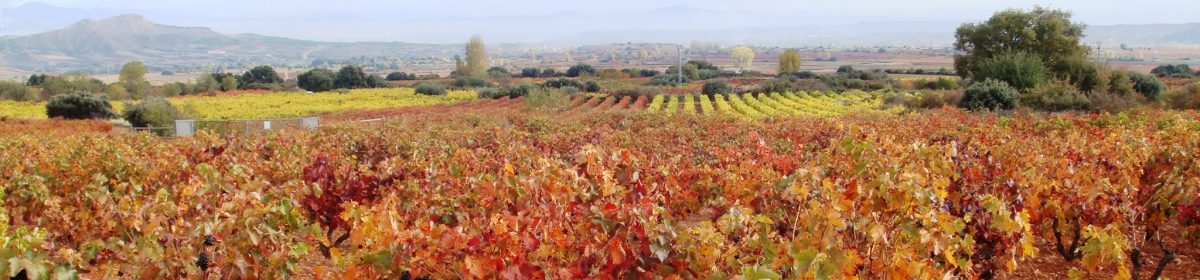
Getting ready for the new vintage!

THE PRUNING PYRES OF JALÓN


My first experience of the phenomenon this season was in fact during the dying embers (pun intended!) of December. A thin blanket of frost had been left on the vineyards quite early one morning. On my car windscreen too, evoking less than happy memories of trying to get to work during winters in the UK. Hands and head frozen, because I didn’t have that little plastic tool, and I’d had been forced to put my head out of the window to affect some sort of visibility! Come on, be fair, we all did it!


Presumably following to the letter the traditional advice (had the folklore ever been written down) that last year’s vine growth should be pruned after the first frost, to ready the vines for the new season of growth, a lone  vineyard worker (owner?) must have been up at dawn. An almost mystical plume of smoke had ascended above his vineyard and started to gradually disperse, Harry Potter spell-like, slightly above the land in the windless sky. Quite poetic, don’t you think?


I went to investigate the source of the smoke, and of course, found a small, controlled fire on which he was placing more and more of his Moscatel prunings. I wondered if he knew, or cared, given the difference between Jalón wines and those of Bordeaux, that some of the grand chateaux collect their prunings, bundle them together and sell them to (naïve and wealthy!) would-be BBQers hoping to add a touch of fine Bordeaux wine to their grilling meats!


I left him to it and went on my way.


Now, in January, others are following suit. If not left on the rows between the vines waiting for their cremation, the prunings of Moscatel, Giró, Garnacha et al are all making their contribution to this bucolic countryside vista. It’s a beguiling sight to behold, the more so in these worrying, political, times, when some lunatic could press that button and we’d all go up in a funereal pyre!


But let’s not go down that road – I’m being positive here! Similar to the Native Americans’ way of communicating, these misty, smokey columns are telling us that Mother Nature (with a little help from her friends) is preparing for another season of growth. The sap that was left to descend into the roots of the vines, from when they’d been denuded until now, will soon be on the rise, bringing with it, new growth.

And so it will be all over the wine producing areas of the Northern Hemisphere as vineyard workers in those countries north of Spain slowly start to copy their southern colleagues. For wine consumers like ourselves it’s an exciting time of renewal and of anticipation. Will the 2018 vintage be the same, better, worse as/than last year? Are we starting a process here that will result in some exquisite wines in the future after they’ve perhaps matured in oak and then bottle? (Told you I was being positive!).


I wonder for example if the multi-medalling first wine of the new winery, Casa Boquera, in Yecla will be able to ‘follow that’, as the saying goes? Their first red wine, made with organic old vine Monastrell and Syrah did very well, as you may remember from a previous Cork Talk. However, it wasn’t all bottled to be sold as joven, young, wine. They, rather cleverly, kept some back, in oak barrels, and in October I tasted their Casa Boquera Tinto Roble, 2016. (www.casaboquera.com)
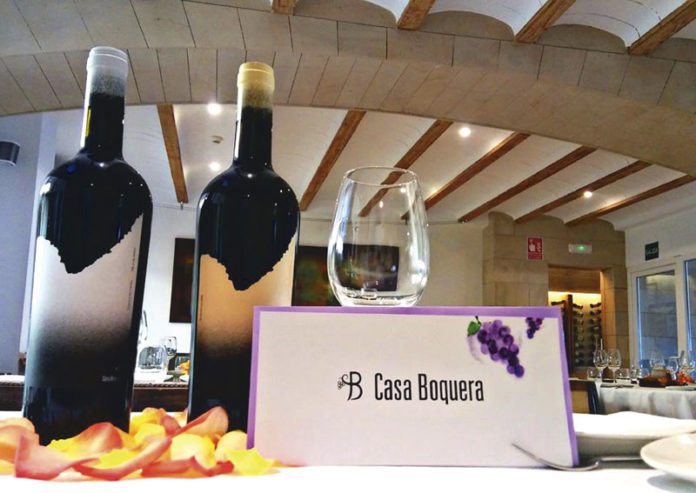
Firstly, the blend, Monastrell teaming up with Syrah, is a good one, and becoming increasingly prevalent in South East Spain. Fully ripened Syrah, as it invariably is in such a climate, adds a slightly spicy, peppery element to back up the dominant fruit of the variety. When coupled with the plum/damson aroma and flavour of Monastrell it’s certainly a winning combination.


So, the Casa Boquera Roble starts on the front foot. Then, of course, there is the addition of the French oak influence, six months adding depth, complexity and a greater longevity. There’s also an added, endearing aroma of coffee beans being smoked in the distance, along with a very faint dark chocolate flavour on the finish.


When I tasted the wine, which I certainly enjoyed, my notes indicated a wine that wasn’t quite the finished article – the necessary parts were all there, the fruit in abundance, but I felt it needed a little more time to become fully balanced. I estimated six months to, maybe, a year.


Seems I was wrong, it needed far less time! I’ve just heard that in December, so just a couple of months after my tasting, the wine was awarded a valued Silver Medal at the Mundus Vini Biofach competition in Germany! Plus, this wine will last too!


colin@colinharknessonwine.com  Twitter @colinonwine  Facebook Colin Harkness  Youtube  Colin Harkness On Wine

Article from 2016 – relevant to current article 02/02/2018

VINS DEL COMTAT

BODEGA DE LA MONTAÑA ALICANTÍNA


I wonder if my fellow tasters noticed an apparent light-headed dizziness about me when I first set eyes on the new bottle of wine that was about to be launched onto the market by David Carbonell of Bodegas Vins del Comtat?


Along with others in the professional wine world of Alicante and beyond, I’d been invited to the very professional tasting rooms of Denominación de Origen Alicante in the city itself. The tasting ‘Sala’, along with the administrative offices of the Consejo Regulador (ruling council) sit atop a showroom below that looks like, and indeed occasionally acts as, a wine merchants – though in this particular wine shop there is more than a slight bias towards Alicante wines!


Although the tasting was above the shop, it wasn’t the altitude that had made me a little dizzy, and as I hadn’t yet tasted the wine, nor any other, it couldn’t have been the alcohol either! It was the label!


I wonder if any readers have ever walked (with care?) the tiled pavement that leads from the beach next to Alicante’s impressive Marina, just as it approaches the nearest tall hotel, Melia, I think? If so, I’m sure you too will have noticed the optical illusion tile design that makes you question whether your feet will meet a solid surface.


I wonder if it is designed to steady those who have just left their yachts after a long time on the waves. Most altruistic, if so, but what about landlubbers like myself who have often bashed their heads against jewellers’ windows thinking that the security grill behind was the first solid you’d meet!


And the relevance, you may ask? Well the label on Vins del Comtat Monastrell has the same sort of design, you can almost touch the blue, black and white cubes, apparently stacked Giant’s Causeway style! Well why not, labels sell wine – though any second purchase of the same wine is, of course, dependant on the quality of the wine inside!


Vins del Comtat have no need to worry there, though – this wine really does represent excellent value for money (about 7€), as well as being a perfect introduction to the locally loved grape variety Monastrell, which, as witnessed at the recent Monastrell Conference, also hosted by DOP Alicante, is appreciated world-wide (scroll down https://www.colinharknessonwine.com/articles/page/2/).


After hundreds of years (a thousand, or more?) Monastrell is perfectly adapted to the climate of SE Spain. It can bear the oven-like temperatures of the growing season, as well as the, at best inadequate, rainfall, (which is now worryingly reaching a drastic point!). Plus, when grown at a respectable altitude where there is some night-time relief as temperatures drop, it can produce fruit filled wine of distinction.


Vins del Comtat 2014 100% Monastrell delivers this juicy, plum flavoured fruit in abundance. The wine has also enjoyed, and I used the word deliberately, three months in oak – not the traditional 225 litre oak barricas, but larger, 500 litre French oak barrels whose influence is softer and more subtle. The oak gives depth of flavour and a little complexity, rather than greatly influencing the taste, which is the winemaker’s laudable intention.


I highly recommend this wine – if looking for a BBQ wine now that the season is about to start, this will be perfect!


However, Vins del Comtat is not all about red wine. In a very impressively shaped bottle with transparent labels (incidentally, fine when the bottle is full, but a touch difficult to read as the level goes down!) you’ll find something of an oddity – albeit a very pleasant drink!


Viognier is not a grape variety that one would immediately think of for planting in soils where the climate is that which is described above! I was first introduced to Viognier via a stunning wine which I often used on my ‘Wine Specials’ board in my restaurants in the 90s. Any readers will know what I mean by ‘stunning’, if you have tried Condrieu, the northern-most white wine appellation of France’s Rhone Valley.


Whilst it’s true that the best Condrieu Viognier wines come from south-facing  vineyards, the sun there is rather less intense than in South-East Spain. And the soils resting on the granite rock above the River Rhone are very different from those which are home to Vins del Comtat’s vineyards.


Nevertheless when tasting their 100% Vioginer (under 7€) you will be able to find traces of the wonderful apricot aromas of their cousins in France, albeit not as potent. However, that’s not what Vins del Comtat’s Vioginer is all about. It’s a very refreshing  white wine which manages a little tropical fruit on the nose, and more so on the palate, with some complementary mountain herb notes too, plus a faint whiff of fennel along with a floral note too.


Coincidentally the Moscatel grapes that make their Vino Dulce Cristalli (9€, 50cl bottle) come from vineyards planted some 40 years ago in an area which I can just about see from my house! These vineyards are at a decent altitude and very close to the sea. Thus they are subject to cooling sea-breezes during day and night time as well as full-on sunshine.


These grapes are as fully ripened as you can find – yet the wine retains its crucial acidity, partnering a luscious lick of sweet sultana and grape aromas and a long, long finish.


On the nose, extra to the typical Moscatel raison notes you’ll find a honeysuckle floral aspect as well as a faint suggestion of the aroma that comes from the spray as an orange is peeled. Then, on the palate that orange, though now more like a Clementine, perhaps, perversely, slightly under-ripe, can be detected too. Faint citrus flavours provide the acidity of this gloriously thrilling, mouth filling sweet wine which we enjoyed with a chocolate based Valentine’s dessert!


There’s a full range at Vins del Comtat – starting at about 5€ with their most expensive wine, Montcabrer weighing in at just under 18€. I intend to try the whole range, and recommend you do too! You can buy on line at www.vinsdelcomtat.com/en/home

COMING SOON – WINE UNTOUCHED BY HUMAN HAND


In October 2016 I wrote an article contrasting two vineyard philosophies – on the one hand, in a delightfully bucolic cameo, camels were being used in the harvest of one of the bodegas in the Canary Isles; on the other, worryingly(?) state-of-the-art and science fiction-like, in mainland Spain drones were being employed (you can read it archived here www.colinharknessonwine.com/articles/ – please scroll down a short way to ‘Spain’s Dynamic Wine World’)


The bodega group in question, Matarromera, has added to their use of vineyard based sensors and satellite imaging, the strategic deployment of drones, before, and during their harvests. The drones have been programmed (don’t ask me how) to detect where vines are stressed, where grapes are diseased and when optimum ripeness has been achieved. That’s, vineyard by vineyard, and indeed each part of each vineyard (as ripening will occur at different rates, depending on aspect to the sun, wind etc.). We are talking precision farming here.


Now, I don’t want to be alarmist, but, watch out (particularly if you are a vineyard worker!), in a classic pincer movement robots are now in vineyards either side of Spain, in Portugal and in France, and coming this way, sin duda!

Corporate Naio Technologies – TED – VIGNE – Gaillac, France, le 18/10/2016 – Tien Tran – http://tien-tran.com

At Château Clerc Milon, Pauillac, the work of the drones above is being performed, by TED, a prototype robot, guided by GPS, camera and laser! Plus, TED is also responsible for the more repetitive, mundane, and indeed menial travails of the vineyard worker.


Over to the west, in the vineyards of the Symington Estates of Portugal similar experiments are occurring, in partnership with the EU, I might add(!). It’s all on an experimental basis we are assured! Furthermore, management are vehement in stating that there will always be a place for manual work (and therefore human workers) in the production of top class wines!


And in what may appear as rather ironic, given the camel story above, these high tech experiments, we are told, ‘will lead to an acceleration of their move to organic and biodynamic principles’. Quite how, I can only guess!


During one of my 4k power-walks (a combination of physiotherapy following my 2nd knee replacement and a continued effort to combat some of the excesses of the festive season!) I recently stopped to chat with a chap working in a vineyard full of Moscatel vines. Like a gnarled and warped regiment standing to attention, as best they could, the vines looked older than the 15 – 20yrs I was told that they were.


The alleys between the rows looked like they had a swathe of frost retained after a chilly night, but in fact it was nitrogen crystals being sown by my new friend. On asking why, he told me that he was concerned that with such a lack of water the vines were suffering as if being slowly starved. The trunks of the vines were becoming thinner and this was an attempt to give them some nourishment, whilst waiting (hoping?) for the next rains. Global Warming/Climate Change is happening!


We chatted also about how he would normally expect these vines to live for 80+ years, producing fewer bunches of grapes as age takes its toll, but in fact increasing the quality of those that the vines do manage to manufacture. Whilst shrugging his shoulders in an apparent acceptance of the vines lot, it was clear that he was concerned that they might not make it to octogenarian status!


It is true that a vine needs to suffer a little to produce its best. However, there is, of course, a degree of tolerance above which it cannot go. I do hope that the generation that follows my friend, and indeed the one after, can still enjoy the wine, and the income, that these Moscatel vines are currently providing!


If so, I wonder if the wine will be made by robots, with drones providing aerial cover from above, untouched by human hand?


Contact Colin: colin@colinharknessonwine.com  Twitter @colinonwine  Facebook Colin Harkness  Youtube Colin Harkness On Wine www.colinharknessonwine.com

Celler Alimara, DO Terra Alta

CELLER ALIMARA

One of the things I like most about the new British owned and worked bodega Celler Alimara (http://celleralimara.com), is their quite obvious ‘connection’ with the vineyards they work. I’m talking here of their laudable belief in the concept of ‘sustainable wine making’; the soils in which the vines grow; the microclimates involved; the long (that’s 2,000 years!) history of grape growing in the area; and the successful marriage of tradition with modern expertise – a winning formula oft referred to here in Cork Talk.

Another thing I like – their wines! And it’s in their, as yet, small portfolio that you can smell and taste the connection – their wines speak of their terroir as much as they speak of the varieties used.

This fledgling winery is owned by the wife/husband team of UC Davis and WSET educated, Ali and Andy McLeod, with significant input also from Andrew Halliwell, accomplished itinerant (that’s in five continents!) consultant wine-maker. The final team member is Celler Manager, Blanca Polop and together they made their first wines in 2016. I’ve tasted them all, and I’m predicting a big future for Celler Alimara in DO Terra Alta, which may be termed as something of a sleeping giant of a Denominación de Origen.

Celler Alimara have two levels – Llumí, easily accessible wines, representing quality without pretension and suitable for casual drinkers as well as experienced wine types; and El Senyal, small volume, handmade wines with both elegance and depth.

In the more economically priced range, Llumí, there are three wines – a white, a rosado and a red, using, respectively: Macabeo and Garnacha Blanca; Garnacha; Syrah and Tempranillo. If my maths is correct, none of these wines will cost you over 5€ – and believe me, this is a steal!

I first tasted the Llumí rosat (rosad in Catalan) – we were having a red lentil vegetarian dish that night and it seemed appropriate. I was quite right (see and hear it here www.youtube.com/watch?v=ppCnEcitS5U, or just go to Youtube and search Colin Harkness On Wine)! A slightly under-ripe strawberry on the nose (not over-ripe which can sometimes mean a little too much residual sugar in a rosé wine), which follows onto the palate, to be joined by pomegranate and fully ripened cranberries. Will work very well with trout and salmon, fresh tuna too, rare/medium rare.

Llumí Blanc is a blend of Macabeo and Garnacha Blanca. Although Macabeo is widely grown in the rest of Spain, it’s natural home, along with Garnacha Blanca, can really be considered to be Cataluña. The two together work well – a faint green and crisp apple aroma, though a little more forthcoming on the palate, with a lemon freshness and some conference pears coming to join the party with a faint blanched almond reference too. I note also a stony mineral element on the finish – enhancing the overall effect, taking the taster to the vineyard.

The Syrah/Tempranillo combination in Llumí Negre makes this one the stand-out wine of a good threesome. It’s had 6 months in used oak barrels to add some structure and depth, with a marginal contribution to the taste, which is fundamentally about the ripe fruit, with a little earthiness too. Fuller than I expected from a 2016 wine, it crammed the mouth with flavour – indicating both fine vineyard management and top class winemaking, letting the fruit do most of the work!

I just loved El Senyal Blanc – a Garnacha Blanca monovarietal that has clearly enjoyed its six months with its lees in a large oak barrel (foudre)! A big white, with depth of flavour – that’s citrus fruit and banana, skin and fruit, with blanched almonds, and freshly rained upon grey slate and granite minerality! Shellfish, full flavoured fish with sauces too.

El Senyal Negre 2016, whilst drinking very well, is also, I believe, a work in progress – I’d love to taste this wine again in two years, and more! Each of the three varieties in the blend – Garnacha Negra, Garnacha Peluda and Cariñena – are fermented separately in stainless steel, then aged in oak barrels, 20% of which are new. The balance here is perfectly judged – the new oak makes a valuable contribution, but doesn’t steal the show. The older oak gives greater depth to the wine, as well as complexity. The dark brambly fruit is to the fore, with leafy undergrowth notes proving the direct link with the soils in which the 30 yr old vines are grown.

Contact Colin: colin@colinharknessonwine.com  Facebook Colin Harkness  Twitter @colinonwine  Youtube Colin Harkness On Wine www.colinharknessonwine.com