WINE TASTING AT CAFE D’ART, JAVEA PORT

Following the first very successful wine tasting with aperitivos held at Javea Port’s Cafe D’Art before the Summer, owner Toni has asked me to present another in November. This time with the added attraction of an Art Exhibition in the basement which can be viewed following the tasting!

On Saturday 27th November at 19:30 hrs there will be four wines (possibly 5) – a white, a rosado, and two reds (possibly plus a super dessert wine too!), presented by me with some tasting notes and details of the bodega etc. Aperitivos will also be served during the tasting and of course there will be an opportunity to buy wines on the night.

As with last time there will be a small charge (5€) but places are limited so please reserve early to ensure your place. We are expecting another full house!

See you there!

COMING SOON – BODEGA TOUR AND TASTING!

Bodegas Parcent, who made one of the wines chosen for the recent Spanish Royal Wedding, is hosting a bodega tour and wine tasting which will be presented  in English and Spanish by joint owner Armando and myself.

There will be a tour of the vineyard, the atmospheric, small bodega and a tasting of all the wines they produce. This will include their first ever sparkling wine, produced for the Christmas 2010 festivities, and we will be the first people to taste it, which is quite an honour!

There will be nibbles, including cheese and sausage and as the morning starts at 11:30 am it will finish in time for people to perhaps lunch in the local restaurants.

I’m really looking forward to this as it will be the first such tasting! However numbers are limited as it is a small bodega – please therefore reserve your places early. You can call me on 629 388 159.

The date and further details will be posted here asap! 

There will be

FIRST PUBLISHED IN VINOS DE ESPAÑA AUG/SEPT EDITION

SPANISH/GERMAN ALLIANCE

RESULTS IN SUPER WINES

FROM SOUTH EAST SPAIN!

 What do you get if you cross a Spaniard with a German? Well, if the Spaniard is a highly respected consultant oenologist crafting an impressive portfolio medal winning wines; and the German is a Master of Viticulture, Winemaking, Wine tasting and Marketing with thirty years experience as a sommelier, chef and officially recognised gastronome, you end up with a wine making philosophy and a super end product!

 Bodegas Concepto Vinnó and Bodegas Úvula are the sister bodegas that grew from this philosophy. Pedro Cárcel from Requena and German born Miguel Matthes are our respective protagonists whose ideals ‘Vinos de España’ recently put to the test amidst the beautiful rolling hills and valleys of Requena, where La Communidad Valenciana abuts Castille La Mancha.

 After many years of listening to clients’ comments about their favourite styles and tastes in wine and then blending them with his own opinions, knowledge and philosophy, Miguel had a shrewd idea as to what the wine buying public enjoys in its wines. In the circles in which he moves it was a given that he would eventually meet a talented winemaker willing to take onboard his ideas and who shared his passion for the grapes and the vineyards from whence they came.

 You cannot make good wine from bad grapes and as it is Pedro who controls what goes on in many of Valencia’s vineyards, as well as sharing Miguel’s ideals, there was nobody better with whom to collaborate. A partnership was born.

 Bodegas Úvula makes Vino de la Mesa, Table Wine. But don’t let that confuse you – the fact that it has to be labelled as ‘Table Wine’ is certainly no reflection on its quality. Rather, it is confirmation of the company’s philosophy. Neither Miguel nor Pedro want to have their hands tied by the bureaucratic red-tape that governs all that bodegas do if they want to have the Denominación de Origen (D.O.) stamp of their labels.

 It is Miguel and Pedro’s desire to make their Úvula wines using the best grapes they can find from wherever they can be sourced – this may be a blend of grapes grown within, for example: DO Alicante, DO Valencia and DO Utiel-Requena. Also they want to use a blend of varieties that will best produce the aromas, flavours and styles they require. This may mean, for example: Bobal, Tempranillo, Cabernet Sauvignon and Petit Verdot.

 Such peripateticism is simply not permitted by the Consejos Reguladores (the DO Regulating Committees) therefore the wines of Bodegas Úvula cannot carry the epithet, Denominación de Origen – nor do Miguel and Pedro want it! New World wine making comes to Old World Spain!

 Bodegas Concepto Vinnó however abides by the rules and makes wines with the blessing of the DO Valencia, therefore they sport the DO’s official stamp. So have our wine partners compromised their beliefs and bowed under the pressure? No, it is simply that the different styled wines of this newer bodega, whose guiding goal is to produce the best possible reflection of the varieties of the region, happen to comply with all the regulations. So why not make a DO Valencia wine?

 The two wines in their small portfolio have dual common denominators – the indigenous Bobal variety and a fascinating use of several different types of oak for their ageing. The younger, vivacious Vinnó has Bobal flirtatiously cavorting with Monastrell, on a bed of French, Hungarian and Caucasian oak; whilst its slightly older sister’s bedfellows are Bobal and Merlot using French, Hungarian, Russian and Balkan oak casks.

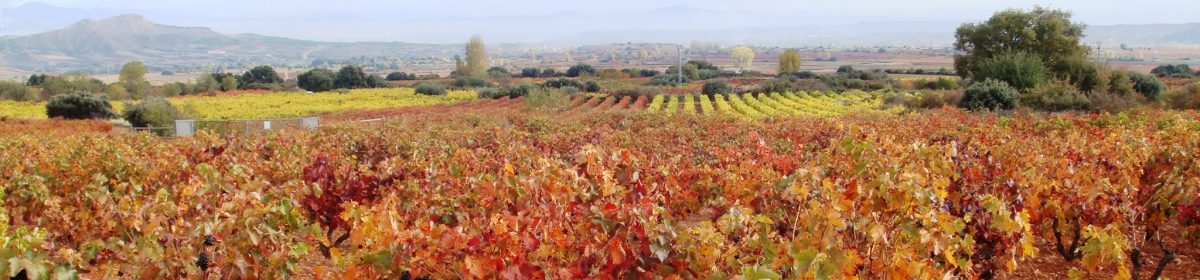
 The vineyards we toured with Pedro and Miguel were a picture of health, despite baking temperatures. The Cabernet Franc, Bobal, Petit Verdot, Merlot and Tempranillo vines have roots that search for water, and what little nutritious material they can find, several metres below the parched surface soils. Irrigation is only used if the plants’ vigorous growth starts to wilt, and the vines, accustomed to suffering already, start to demonstrate that enough is enough!

 And what of the wines? Vinnó 2005 is a sturdy wine that has aged gracefully. It is drinking well now and will last still (though the 2007 will be released soon). There are dark fruits from the Monastrell and a touch of minerality from the Bobal, its three months in oak have added depth and a slight roasted coffee bean flavour on the finish. As with all their wines, decanting is recommended.

 Concepto 2005 has had two more months in oak. It’s a, deeper and  richer, well-structured wine with the Merlot adding more concentrated fruit as well as delicate floral, perhaps violet, notes. Sweet, soft tannins and a touch of spice, it’s drinking perfectly now but has the capacity to age a further one or two years.

 Úvula Coupage 2006 has had three months in two different French oaks as well as Caucasian, the varieties are Merlot, Tempranillo and Petit Verdot. The Tempranillo and Merlot take the lion’s share so as you can imagine this is a fruit-driven wine with the Petit Verdot adding herbaceous notes. A wine for drinking on its own or for pasta, cheeses and lighter meats.

 Úvula Selección 2005 blends Bobal, Cabernet Sauvignon and Syrah, a delightful mix of dark fruits, earthy vegetal notes and spices complemented by integrated oak which adds depth, complexity and subtle toasty flavours. It’s a super wine, still very much alive and pleading to be eaten with game, and other full-flavoured meat dishes.

 Finally Úvula Plattum 2005. Only made in very good years this wine is a blend of Bobal, Cabernet, Petit Verdot and Syrah. It’s 14% abv and fills the palate but it has an elegance about it with flavours of dark fruits, black pepper as well as vegetal green pepper, and a touch of liquorice. Nine months in various different oaks have added complexity as well as subtle toasted flavour notes. The finish is a lengthy blend of brambly fruit with earthy notes which speak of its terroir.

 All wines available through parent company: www.cuinare.com
FIRST PUBLISHED IN COSTA NEWS GROUP SEPT. 2010

BODEGAS RIBAS PROVES THAT

MALLORCA IS NOT JUST ABOUT TOURISM!

 Not a lot of people know this but . . .  I wouldn’t be surprised if Michael Caine has uttered his immortal words about the wines of Mallorca, which in some senses have been a quite closely guarded secret. That is until your correspondent tasted some wonderful wines from this, the largest of the Balearic Islands. It’s just not fair that the locals keep these super wines to themselves!

 Yes it’s true that Mallorca is, quite rightly, known for it’s tourism industry – wonderful, secluded beaches as well as the highly populated sands of the tourist hot-spots; stunning hotels; millionaire-riddled harbours; and A List Celeb-filled restaurants etc. But also take the time to look at the wines, largely made from indigenous grape varieties not grown elsewhere – better still take a taste!

 Two years ago I waxed lyrical about a wine I had been given to taste, Sió, from Bodegas Ribas, Mallorca, established as long ago as 1711! It contained one of the Island’s own grape varieties – Mantonegro, along with globetrotters Syrah, Cabernet Sauvignon and Merlot. As I recall it was a super-juicy mouth-filling wine with blackcurrant jam notes and a pleasing touch of spice on the finish. I’ve tasted it once or twice since and it remains in the forefront of my mind.

 At the beginning of this summer I was invited to present a tasting of wines at an Indonesian restaurant in Javea, one of the wines chosen, Ribas, was the from the same stable – using the same varieties, but in different proportions and with 10 months oak ageing. Again a super wine, with a touch of backbone to it and yet finesse as well as excellent fruit presence.

 Clearly, thought I, this is a bodega that needs some investigation! Their informative website put me in touch with the charming Araceli who arranged for some sample wines to arrive the following week. Such is the power of the Costa News Group!

 Bodegas Ribas makes wines under the auspices of Vi de la Terra Mallorca and Vi de la Terra Illes Balears and if any readers are looking for further proof that VdlT wines can be far superior to some DO wines – then simply sample those from Mallorca’s beacon of vinous excellence. For excellent, is the best description of these wines. Indeed their Soma Sioneta Oliver 2008 Blanc Viognier will certainly be in the Costa News Top Ten and is in fact vying for 1st place amongst the white wines I have tasted in 2010!

 I started though with Ribas Blanc 2009 – a wine that combines Prensal Blanc the island’s own variety with the internationally renowned Chardonnay. Grapes were harvested by hand to ensure their quality when arriving at the bodega and then the selection table was used choosing only the best bunches. It’s a good joven wine the floral Prensa Blanca is complemented by the depth of Chardonnay flavour. A very good start.

 Next their Sió Blanc 2007 made with the indigenous Prensal Blanc variety (aka Moll) but also with an eclectic mix of Chardonnay, Viognier and Chenin Blanc. It was partially fermented in oak and then matured for longer in wood with its lees. There is a super creaminess to the wine which adds depth of flavour to pronounced floral and fruit notes. It’s a wine that will be fine as an aperitif but that will also match food, particularly fish and shellfish. I imagine it is de rigeur in the fine seaside restaurants on the island.

 The Viognier (as above) is a splendid wine – the best example of Viognier (a favourite variety of mine) I’ve tasted in Spain, surpassing the New World Viogniers and being more in the style, and equal to, the wonderful Condrieu of its native France. On the nose, when well chilled, it initially has a touch of exotic fruit about it, which, as the wine slowly develops in the glass, becomes redolent of apricots, a typical characteristic of this noble variety.

 But this is not a flippant, frivolous fruit-salad style wine, designed to momentarily titillate before passing into obscurity. Not at all, this is a serious and subtle wine, a wine of depth and complexity. Half of the wine enjoyed 6 months oak ageing whilst the other half was kept in tank with its lees. There’s a slight nutty element, perhaps some blanched almonds or hazelnuts and floral notes too, but always with that apricot, particularly dried apricot, running through it like a seam of gold found in fine granite. You have to try this wine!

 The fourth white wine (how pleasant to find a bodega that pays as much credence to its white wine production as to its reds) is one I should use in the vanguard of my crusade to re-instate dessert wines as an integral part of any special dinner. Sioneta Contrast Blanc Dolç comes in a slightly chunky 50cc bottle . It’s made exclusively from late harvested (and therefore high in sugar content) Moscatel which is then fermented and matured in oak.

 It is one of those classic dessert wines that has the sweetness required for it to be paired with postres but with that crucial lick of acidity too. There are honeyed citrus notes, orange peel particularly, as well as the expected grape/sultana/raison aromas characteristic to Moscatel which makes such super wines in Spain.

 The final wine (following a further tasting of Sió Tinto and Ribas Tinto, above) was their flagship Ribas Cabrera 2006. This is a wine to grace any dinner table. It is rich, deep and complex with aromas that change as the wine develops in glass over dinner – dark forest fruits, combine with an Autumnal, earthy minerality with a touch of liquorice. Made from very old Mantonegro vines which have never been irrigated, whose roots stretch several metres below the vineyard in search of the limited nutrients available, the wine demonstrates all that can be achieved on this island in the sun.

 I’ll be returning to these wines for sure and hope to visit in the future. In the meantime why don’t you hassle your local wine merchants to get some in – he can’t go wrong!