First Published: Costa News Group SL, May 2011

SOL PARK WINE TASTING

MAINTAINS HIGH STANDARDS
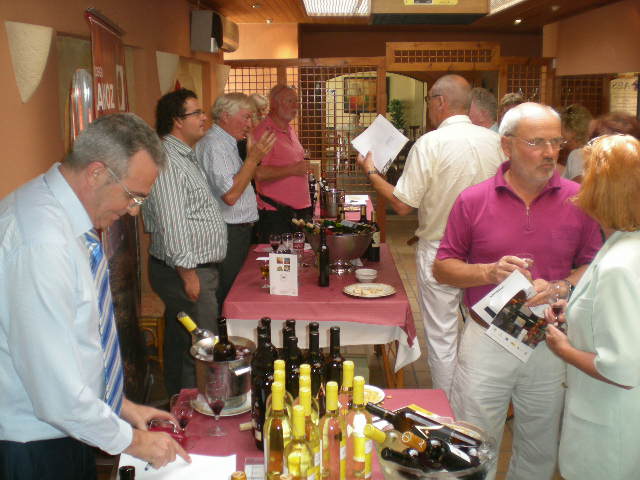
Fellow tasters and Exhibitors at Sol Park's Annual Wine Tasting

I’m not sure if my friends, Michel and Yvon, owners of Sol Park, Moraira, will think this is a rather late report of their annual April wine tasting, or a very early advance notice of 2011’s event! No matter, I’m sure it will be happily received and I’m pleased to be able to, once again, write up this event in glowing terms.

The Sol Park Spring wine tastings started some eight years ago. My other commitments and the odd illness have prevented me from going to a few but I’ve attended most and now in May 2010 I’m looking forward to next year’s. I’m lucky as I go to many professional wine tastings, in Spain and also abroad. Most are huge affairs where a careful plan has to be conceived before you enter or you’ll simply get swamped as there’s so much to see and, of course, to taste.

Alimentaria in Barcelona is an example – I was there in March and I’m still writing articles about my experiences there, only breaking off now as I’m so embarrassed that I haven’t written about Sol Park’s yet. Small, cosy, charming and almost familial Sol Park is not Alimentaria – however for me it has as large an appeal.

As you would expect such a small local tasting attracts local exhibitors and I’m all in favour of this as we should celebrate that which is good in our own area. However the Sol Park wine tasting is not a village fete. Eleven areas of production from all over Spain were represented, essentially with one bodega from each. Thus the variety of wines for clients to taste was large as well as diverse.

As is often the case, time was pressing for me so I just had the chance to taste white wines on the only day I could visit – a shame as I heard lots of good comments about many of the reds and I have to say that some of them really looked the part. This may appear to be an odd comment, but these days packaging is an integral part of marketing in the wine industry – an attractive bottle sells the wine. The secret of course is to make sure that the quality of the book is reflected in its cover!

I started with cava – it’s the best way to prepare your palate for the tstes to come, whilst at the same time assessing the quality of the fizz. Capdevilla Pujol from Cavas Blancher both had an element of sweetness, despite them being Brut and Brut Nature respectively – an indication of very ripe fruit at harvest. From the same stable Seleccio Blanc was disappointing as I’d anticipated when I saw that it was 2008. I said that I thought it was losing its fruit as it was too old the exhibitor looked surprised defending the wine by telling me that it sells well.

I said it was a pity that he didn’t have the 2009 here for such a tasting and lo and behold he went to his car and produced a label-less bottle which was in fact the latest vintage. After chilling the difference between the two wines, both made with Macabeo and Parellada, underlines all that I have always said about most Spanish white wines – they have to be drunk young. I’d buy the 2009, but wouldn’t touch the 2008 – and I bet it’s this younger wine that stocks the chap’s fridge at home!

DO Rueda called me as it usually does and I tried Bodegas Alberto’s  Verdejo/Viura blend which at on 2·5 Euros was a real bargain; the 100% Verdejo was richer of course with green vegetal notes; the more expensive single varietal Verdejo (but at only 5·50 Euros, still a steal) was richer and longer on the palate; and their Verdejo FB (Fermented in Oak) was rich and deep with layers of green fruit and vegetal aromas and flavours.

The single varietal Airén from La Mancha’s Bodegas Lahoz was as good as I’ve tried of this La Mancha-wide ubiquitous variety with a lovely first hit on the palate. Their Sauvignon 2009 had understated grassy and herby notes on the first taste but secondary flavours of kiwi and gooseberry came though making it a jolly nice wine with their FB Sauvignon adding a touch of grapefruit too.

Normally considered the poor relation of the wine areas it abuts in Galicia, DO Ribeira is known for its light, pleasant but not so thought-provoking flavoursome white wines. So I was surprised to taste a 20 Euro bottle, Lagar Do Merens 2008, from Bodegas Alan  – a very good wine, but I think just a little too old. Their 2009 Godello was a bright and fruity as you would expect from this super variety which is not seen as often as it should be. Their 2006 FB was becoming past it – I’m in favour of using oak with some of these aromatic varieties but it doesn’t mean that the wine suddenly has great longevity. Drink FB whites no more than three years after the vintage, generally. Their Albariño was lovely and their 2007 Lagar Do Merens FB having had 5 months in oak was drinking well.

 I tasted more but space is limited – suffice to say I think that this tasting as always was enjoyed by all who attended over the two days, the more so as it is always free of charge! If you are in the Moraira area I’d contact Sol Park and ask to be placed on their mailing list – see you there next year!

SUNDAY BRUNCH PROGRAMME, BAY RADIO

Despite the salt content of Gammon this meat can be overwhelmed by strongly flavoured wines and tannic reds would feel even more harsh in the mouth. Reds just wouldn’t suit cauliflower cheese, being honest a white wine would be its best partner. So we need a compromise and why not use a rosado?
 
Spain is the Rosado Capital of the wine world, with a myriad of choices from light pink to dark crimson and every shade between – one rosado I know, made with the very dark skinned Petit Verdot variety is practically the same colour as most reds and in fact darker than some!
 
I’d go for a Tempranillo Rosado for this dish – Marqués de Cáceres in La Rioja would be a good choice, or one from Valdepeñas where the Tempranillo grape variety is called Cencibel.
 
French Style Chicken with Peas and Bacon
Chicken, still the wine lover’s favourite meat as it sits happily with many different wines. The bacon will make an impact too though, so we are looking here I think for a fruity red wine. You cold try Care Tinto from DO Cariñena – this very fruity un-oaked red is made with Syrah and Tempranillo and is really juicy on the palate.
 
Or if you like a bit more substance with your fruit try a joven (young) red from Ribera del Duero where the Tinto de Pais (aka Tempranillo) always seems to have a bigger fruit content than Tempranillo’s spiritual home, La Rioja. I think Viejo Mundo Roble 2009, which I presented at a tasting last night, would be a super match. It’s had a few months in oak, but it’s understated, being used simply to add some body and a touch of extra flavour. 
 
Salud!
Sunday Brunch Presenters Noelle and Bob, with empty glasses!

Gammon and Cauliflower Cheese

First Published Costa News Group, May 2011

WINE TASTING AT RESTAURANTE CA LA AIAI

PART TWO

 Owned by Jose of Teulada’s: Bodegas A Catarlo Todo; Tapes Tapes; and Diversus, one would expect that this elegant restaurant boasted top wines as well as gourmet cuisine. One would also presume that any wine tasting event held there would be top drawer – and you’d be correct on both counts!

 Some highlights were discussed last week and today there are more. First though a brief repeat mention, from previous Cork Talks, about the remarkable Riedel wine glasses as used exclusively for this tasting. There is no doubt in my mind that Riedel glasses do enhance the enjoyment of wine – and indeed, as clearly demonstrated at Ca La Iaia, the flavour and taste of other alcoholic beverages, on this occasion Brandy too!

The Riedel Challenge - taste the difference!

Clients and the press were invited to attend a special tasting using perfectly adequate and attractive glasses in competition with Riedel glasses, using exactly the same wines from the same bottles. Proof positive that Riedel glasses are superior, regarding the wine’s aromas and first mouthfeel and taste. (I’m not on their payroll, I should add, I’m simply one of the converted!)

 In true Watergate tradition (well ok, perhaps not quite as important!) I feel it my duty to let you in on a secret – Bodegas Care’s Chardonnay 2010 has some officially unapproved Viognier in the blend! My guess is that DO Cariñena’s Consejo Regulador will soon approve the variety – the wine is lovely!

 In fact Care wines were amongst the stars of this tasting. I love their distinctive labels (each has a unique modern art face drawn on it) and this effective marketing ploy is backed up by super wines in the bottle. Their joven (young) wine, made with Tempranillo and super fruity Syrah (when grown in a hot climate) has a touch of oak ageing to add some depth to the fresh fruit flavours.

 Xclnt 2004 is their take on ‘excellent’ – and it’s not far off! As deeply flavoured as it is coloured the Garnacha, Cabernet and Syrah grapes harvested from old vines also make this a complex and highly flavoured wine. Sixteen months in French oak have added a slight aroma of well-used leather to the liquorice and blackcurrant fruit with a touch of spice from the Syrah grown at altitude – a minty minerality completes the picture!

 Bodegas Alegre, whose logo you’ll see on my website, continues to make super wines. Their Selección Especial 2004 (an excellent year in la Rioja) is made from Tempranillo with the addition of Graciano for added flavour and Mazuelo for acidity. This wine will last for several years yet, lovely!

 Their flagship wine, Pontiac 2005, is elegant and subtle, with dark chocolate notes on the finish and a great length. There are dark fruits and mature tannin to seduce the drinker followed by a warm glow after swallowing that lasts and lasts.

 NB when I was there three years ago there was a wine that had just finished fermenting which was going to be the next generation of Pontiac – they didn’t have name for it them, so called it Pontiac+. Watch out for Pontiac de Portiles when it becomes available soon – I’m certain it will be outstanding!

 There was also a ‘Super Tuscan’ wine from Italy, Insoglio from the Antinori stable. Damson fruit from its Cabernet Franc, Merlot and Syrah, this surprise package was of the ‘best in show’!

 I liked Pago de Vicario’s Soto De Vicario, made from that unique variety Bierzo and aged in 300 litre Caucasian oak with its violet colour and aromas plus mineral notes too.

 However the wine I came away thinking about, and one to which I’ll return

A lasting memory - super Martúe red wine!

 for sure, was Martúe from Bodegas Martúe La Guardia (the only bodega in DO Campo de la Guardia!). Put simply it’s such a lovely, fruit driven but deeply textured, layered wine that it’s a real pleasure to drink! (Note also that their white Verdejo Pie Franco, a past Costa News Top Ten wine, remains perhaps the best Rueda wine I’ve tasted!).

First Published Costa News Group, April 2011

WINE TASTING AT RESTAURANTE CA LA AIAI –

THE MORAIRA EXTENSION OF TEULADA’S CENTRE OF WINE EXCELLENCE

Entrance to Restaurante Ca La Aiai

 When the first stand you see at the entrance to a wine tasting is that of Pol Roger Champagne you know you are onto a winner! So it was when I took up my invitation to attend such an event recently at Restaurante Ca La Aiai in Moraira.

 Recently I presented a wine tasting for Jose who owns Teulada’s Centre of Wine Excellence, well he also owns Moraira’s gourmet quality restaurant, Ca La Aiai, as well. And, as a part of this elegant edifice is also a wine retailing emporium, it seems that Jose has something of a monopoly over quality wines consumed in this part of the Costa Blanca!

 It’s not surprising therefore that he is the area’s exclusive stockist of several bodegas’ wares. Understandable too, that many of these wineries are happy to exhibit some of their finest wines as a favour to Jose and a real plus to local inhabitants.

 Pol Roger’s Brut Reserva is made from the triumvirate of Champagne grapes: Pinot Noir, Pinot Meunier and Chardonnay from three different vintages and blended from thirty different vineyards. It is an elegant fizz with a tiny touch of sweetness on the first hit.

 Sir Winston Churchill, who declared Pol Roger to be his favourite Champagne, has a cuvee named after him – it wasn’t available at the tasting (it’s their flagship special cuvee and priced accordingly!). Their highly praised Brut Reserve, probably the one that the great man actually drank, was being served – the MillesmeVintage 2000 in fact. It’s a Premier Cru wine made from Pinot Noir and Chardonnay selected from the best vineyards aged for many months in bottle and in the cellars and is excellent, a highlight of the tasting!

 There isn’t space to list all of the wines tasted, even in two articles, so I’ll focus on the highlights – some of which were quite outstanding!

 You would be entitled to expect wines priced as high as those from Bodegas Arzuaga to be a cut above the rest, and you’d be correct to do so. This Ribera del Duero winery is being aggressively marketed in the Spanish wine media, boasting not only top level wines but also a spa hotel and their own wine products massage and therapy! Indeed I’ve just received information about their forthcoming Spanish Mothers Day special wine therapy treatments for mothers to be and young recent mothers (I’m not sure why, I’m not expecting!).

 Pago Florentino 2008 is a single vineyard wine made from Cencibel (aka Tempranillo, Tinto Fino etc!). It has noticeable Vanilla notes on opening which develop with time in glass to minerally undergrowth aromas. Good fruit and mature tannin.

 Arzuaga Crianza 2008 has maturing tannin plus acidity to make it very much alive. Good fruit content from the Tempranillo, Merlot and Cabernet, again with vanilla notes from its time in oak. This wine has three more years I think.

 Their reserva 2006 was a touch more closed on the nose, though this may be because the bottle had been open for too long. There was good fruit but the tannin (as with all the Arzuaga wines I tasted) makes it more suitable for enjoying with food than on its own.

 Reserva especial 2004 at 54€ had a more subtle and balanced nose with an inviting light mouthfeel, but big taste. It was one of my favourites of the tasting. Arzuaga Gran Reserva 2001 is a very good wine with lots of flavour levels and a long finish, though I’m not sure I’d pay 72€ for a bottle! Gran Arzuaga (145€!) with an attractive label was not available when I was there – shame!

 * NB Part Two next week!