San Isidro

EASY DRINKING WINES FROM BODEGA SAN ISIDRO

MORE WINES FROM DO BULLAS

 BULLAS DO LOGO vino-do-murcia-bullas

I taste wines all the time. If it’s not every day it will be thirteen in a fortnight. Unlucky for some? Well, no, I’m happy in my work! Wouldn’t you be?


However it’s not quite that simple – notice that I used the word ‘taste’, not ‘drink’. There’s a big difference. Please don’t misunderstand me – I drink wine too, but only from the second glass onwards. The first glass, which of course is never full (regular readers will know that a wine glass should never be more than a third full) is for tasting.


Wine tasting is of course a major part of wine appreciation and there’s an important technique for tasting. Those readers who’ve attended any of my tastings will have heard me talk about various parts of the technique: the sniff and swirl; vaporising the wine; the olfactory passage; etc.


My first glass of any wine, whether I’m officially tasting, perhaps as a panel member judging, or at home in preparation for a Cork Talk article, or when we are out in a restaurant or at friends’, is always taken seriously. If I’ve tasted the wine before, is it the same as the last vintage, or if it’s the same vintage tasted some months/years later, has it developed in bottle since the last time?


If it’s the first time I’ve tried the wine, what do I detect on the nose and the palate from the first sip? How do those aromas and tastes evolve over the time it takes me to finish the glass? And, if it’s in a restaurant, or perhaps over dinner at home, how different, if at all, is the second glass?


Yes, I can see that I could be a complete nightmare when dining in company! And then when I start to ask others their opinions too – well it may just be too much! And so it is sometimes when Claire and I have dinner!


I’m often waiting impatiently for Claire to comment on the wine I’ve just poured her to accompany (and hopefully improve immeasurably) the meal I’ve just made us! Sometimes her comments just aren’t forthcoming and when probed, the answer comes back that she’s just not in the right mood to dissect the wine – after a hard day she just wants to drink it!


Easy, uncomplicated, pleasant drinking is what a lot of us are after much of the time – and if this applies to you, you may like to try the wines of Bodega San Isidro, DO Bullas.


Although dating from the 19th Century Bodegas San Isidro is now a co-operative, founded in 1950. There are two hundred growers who are member/owners whose holdings total 450 hectares of vineyard. Grapes are therefore sourced from all over the DO Bullas bringing with them the various different characteristics that the consequent variety of vineyard: altitude, aspect to the sun, micro-climate, soil make-up – terroir, impart. All this will impact on the wine, of course, but the Cepas del Zorro (Fox!) is not about close inspection, dissection complexity. Remember we’re talking uncomplicated easy drinking wines here!


The favoured white wine grape variety of Bullas is Macabeo. Known as Viura in other areas of production, La Rioja for example, this variety is one of the triumvirate of traditional grapes that are used to make Cava. Often described as having green apple notes, wines using Macabeo can be quite full, always refreshing with keen, but when handled correctly, no overstated acidity.


Such is Bodega San Isidro Cepas del Zorro Blanco Macabeo 2012. I’m sure that this wine will be available in most of the bars of the area and hotels too as a tasty, uncomplicated white house wine. I enjoyed its freshness as an aperitif but it will also suit green salads and fish dishes, of course.


In the same range their Rosado 2012 is made with Monastrell (to my mind and palate, this is one of the best varieties in Spain) and Garnacha (in fact the most grown variety in the country). The two complement each other – I liked this wine the best of the three samples I was sent.


There’s a typical raspberry nose with a slight red rose petal aroma too. On the palate there are soft red fruits, a lick of acidity and just a slight touch of bitterness on the finish making the wine a good match for paella.


Cepas del Zorro Tinto 2012 is a joven (young) red which is now about a year old. It’s made with Monastrell again, but this time supported by Syrah. It’s light in the mouth with a touch of Syrah spice (I suspect that vineyard supplying these grapes are around 700 – 800 metres above sea level, in other words approaching the highest in the DO).


It’s an easy drinking red wine which still has another year and is one of those wines that needs no discussion – just drink and enjoy!

Bodega Monastrell, DO Bullas

BODEGA MONASTRELL

DENOMINACIÓN DE ORIGEN BULLAS

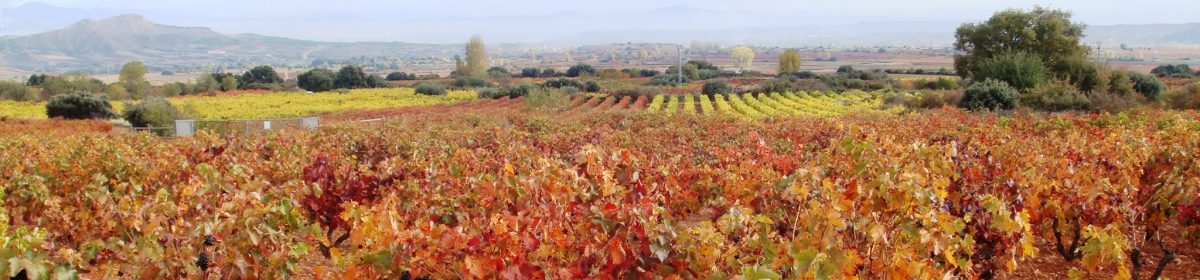
BODEGA MONASTRELL VINEYARD

It’s a pleasure, this week, to return to the recently discovered happy wine hunting ground of DO Bullas. Regular readers may remember the two articles I’ve written in recent months about wines and bodegas from this small and relatively little known area of production. My research so far tells me it’s a safe bet to buy wines from DO Bullas – and you can surely start with those of Bodega Monastrell.


Now there may be some understandable confusion here and I hope that it is not to the detriment of the bodega in question, whose wines should not remain relatively undiscovered. Bodega Monastrell seemed to have usurped the name Monastrell, which as you’ll know from reading Cork Talk is the name of the grape variety, favoured in the South East of Spain, and which in France is known as Mourvedre.


Nobody’s complaining though, and as their three wine portfolio is based on Monastrell, two of them exclusively, well why not name their winery after such a noble variety!


I like the minimalist labels, front and back. Also their succinct pamphlet gives only sufficient information, without elaborating with flowery tasting notes and self- praising poetic prose. No, Bodega Monastrell is content to let their wines do the talking.


Established just in 2005 in the Valle del Aceniche area of Bullas where their vineyards are located at between 800 – 900 metres above sea level, the bodega’s stated aim is to provide consumers with easy-drinking pleasurable wines. They succeed, but I feel they are perhaps being a little too modest here!


Yes, the two wines I tasted, their Almudi Monastrell/Tempranillo/Petit Verdot blend 2010 and their monovarietal Chaveo Crianza 2010, both of which have enjoyed some oak ageing, do provide simple enjoyable drinking, but offer more too!


There is rigorous selection which starts in the vineyard with damaged grapes being discarded straight away. They are further scrutinised in the bodega and only the best bunches pass muster. Like so many of the successful bodegas in Spain there is not only the blend of varieties but a harmonious mixture of wine-making technique too. Tradition meets modernity and the result is something to savour.


Organic and environmentally friendly methods are used, though the wines are not, as yet, certified organic. Yields are kept low to add depth to the finished product.


BODEGA MONASTRELL 2Almudi 2010 uses Hungarian and French (Allier) oak for its ageing. It’s drinking perfectly right now with very good fruit, as a consequence of the dark plum Monastrell and the blackberry fruit that can come about from Tempranillo grown at altitude and oak aged. The Petit Verdot gives the wine extra dark, seductive colour with some vegetal notes too.


The mouthfeel is lovely, you know you are in for a good sensation when the wine first hits the palate – and the depth of flavour stays with you until way after you’ve swallowed.


Chaveo Crianza 2010 has had 11 months in new French oak, this subtle contribution isBODEGA MONASTRELL 1 noted in the whole, rather than it being an easily identifiable, almost separate part of the wine, as the added flavour and depth are fully integrated. The vines used for this wine are the oldest in the vineyard. The naturally low yields mean that each grape has an enviable richness and the result is a very enjoyable, fruit driven wine.


There’s a slight pleasant mineral identity too, with some vanilla and tobacco notes and a rich fullness that nevertheless doesn’t hide its elegance.


I’ll be looking out for the wines of Bodega Monastrell and I hope to also find the one that I haven’t yet tried, their Valché!

The Wine Place Wine Club (www.thewineplace.es) Part Two

THE WINE PLACE WINE CLUB

PART TWO

 THE WINE PLACE - AUTUMN SELECTION

The Autumn Selection – www.thewineplace.es

Last week’s article told of a new wine club, www.thewineplace.es whose aim is to satisfy our desire for international wines whilst living here in Spain. This week I’ll be telling you about the three impressive, and expressive, wines I’ve tasted from their Autumn Selection. Put simply, I recommend them and therefore the Wine Club!


I love the wide variety of Spanish wines that are so easily obtainable here in Spain and I pity those who live in the UK where the Spanish wines that are easily found are not always representative of the quality that is available here. There is nothing like the variety either!


However, whilst it’s true that we have any number of really good Spanish wines available in all styles here, it’s also true to say that many of us find ourselves missing wines from other countries – of which there is a dearth in Spain. Well thewineplace.es seems perfectly placed to help!


As explained last week (still available to read at www.costa-news.com click Cork Talk) the club offers a carefully selected (following extensive tastings by club founder Mark O’Neill and his team) quarterly twelve bottle case of wines from all over the world. For example, my three were a Champagne, a white from Australia and a Rhône red, though the full case included wines from South Africa, Argentina, Chile and Italy, to name some of the other countries represented.


Champagne Lallier (given 91 points out of 100 in the well respected Wine Spectator publication) is made with 65% Pinot Noir and 35% Champagne, all sourced from Grand Cru vineyards. This is a style of Champagne that I really like – for the black grape Pinot Noir contributes a greater depth to the wine as well as different flavour nuances too.


Champagne lovers can’t fail to be pleased with this wine. It has all the classic brioche, patisserie, yeasty notes and a certain elegance on the palate too. There’s depth of flavour and length of finish making this Champagne just right for celebrations but also for aperitif and starter dining too. Super!


I, and my fellow tasters over a super lunch, were enamoured by the lovely Australian white wine, The Rude Mechanicals Ephemera 2012 – the name itself (plagiarised from Shakespeare’s A Midsummer-Night’s Dream, incidentally!) is a mouthful, and so is the wine, in the very best possible sense!


A blend of the ultra aromatic Viognier and Pinot Gris varieties, the wine is a riot of fruit (apple, pear, apricot) and floral (white flowers and honeysuckle) notes – aromas and flavours! On it’s own it’s a wonderful aperitif but it’s also perfect with light starters, fish, shellfish; and because of an endearing ginger spice note it will be super with Thai and Indonesian cuisine too! We all loved this unusual, eclectic wine – even the label is wild!


The final wine that I tried was a splendid multi-layered Côtes du Rhône Villages. So mellow on the palate and yet rich with depth of flavour, there’s a weighty mouthfeel,  but there’s elegance in abundance too. It’s long lasting and if any of us has doubts about Rhône wines, this will dispel them immediately. There’s nothing harsh here it’s all red wine pleasure.


Les Coteaux 2010 is a blend of Grenache and Syrah which must have been harvested at optimum ripeness. Yes, there’s the spice of Syrah – some black pepper, but it’s all integrated in the delicious berry fruit – blackberry, but also lighter fruit, loganberry and red currant, for example, along with a subtle oak influence that adds to the experience.


I’d gladly drink this wine on its own and with meat orientated food, including chicken and here’s a possibility, with Roast Turkey. Are you thinking what I’m thinking?!


Contact Colin: colin@colinharknessonwine.com and through his unique website www.colinharknessonwine.com as well as Twitter @colinonwine


PS Like Sherry and want to taste and learn more? Like to try the high altitude wines of Granada mentioned in Cork Talk? If so, watch this space for details of a great Short Break I’m organising, early Spring 2014! Or e-mail me for details!

www.thewineplace.es

www.thewineplace.es

A NEW WINE CLUB SPECIALISING IN INTERNATIONAL WINES!

THE WINE PLACE logo

Considering that approximately 95% of the approaching one million words that I’ve written about wine in Cork Talk over the sixteen+ years I’ve been writing the column has been specifically about Spanish wine, I don’t think that I’m turning traitor by writing, this week, about imported wines! I hope you agree.


Indeed it wouldn’t surprise me at all if you like to occasionally step off the Spanish piste and taste some wines from different countries, as indeed I do. Please, don’t misunderstand me – my love affair with Spanish wines continues. There is such a wealth of super wine made in this country that it almost seems greedy to try wines from other countries too.


But it’s nice to see what the opposition are up to sometimes! And yes, of course, there are excellent wines being made all over the world. The problem is that, if resident in Spain, one rarely has the opportunity to taste them here. Spain, essentially just doesn’t do ‘foreign’ wines!


Yes, it’s true that some wines from different countries can be found here, but I’m not always sure they are so well chosen and also, given that sales are relatively slow, I’m not sure either if the international wines we are able to buy are in their best condition, and are truly representative. I’m also a little worried about the prices of these wines!


Well no worries – there is now a new Wine Club established in Valencia city with the ability to deliver all over the Valencia Community, and beyond, to satisfy a need which is common to many of us. www.thewineplace.es, having being started simply by a group of friends who craved some international wines, is spreading its wings!


It’s founder, Mark O’Neill, is actually in the wine business, here in Spain. His company, Verde Marte SL, is involved in various wine making projects all over Spain (more on this interesting company in another Cork Talk!). Mark and his friends therefore have access to many Spanish wines but, like ourselves, they also crave some international variety.


Their initial thoughts, no doubt over a glass or two of wine, developed into a hobby idea where they sourced wines from different countries for their own consumption. Without realising it, initially, this was a nascent wine business in embryonic form. No doubt over more glasses of wine, this time internationally produced, the idea took shape, morphing into a new and exciting Wine Club www.thewineplace.es.


Following my article on fellow Irishman, Kevin McAlindon, Caballero del Vino, Mark called me to ask if I was interested in hearing about his fledgling business. Of course I was as I knew it would be of interest to Cork Talk readers too, for the above reasons!


Mark heads a team of four, all of whom have a passion for wine as well as qualifications, experience and expertise. Their contacts in the wine world provide them with plenty of opportunity to source quality (they only deal in quality wines) from all parts of the globe. To give an example their current, Autumn, selection includes wines from countries as diverse as: France (including Champagne), Australia, New Zealand, Chile, Italy, Germany, South Africa and Argentina!


What’s more, the above selection includes classic grape varieties known to, and loved by, us all, but also some varieties that are perhaps less well known, and certainly less available here in Spain – Cinsault, Malbec, Pinot Gris, Viognier and Riesling, for example!


And how does it work? Well there is a quarterly selection of a dozen wines – above gives some detail of the Autumn selection, and of course there’ll be a Winter Selection available soon, if not already. Each selection is comprised of different wines of course, so over a year’s membership you are sure to have tasted a considerable number of different countries’ wines, different grape varieties and blends as well as different styles of wine. Sounds great doesn’t it!


And if you read Cork Talk next week you’ll see just how good the wines are too. I tasted three of the Autumn Selection and was delighted – read my comments next week!


Contact Colin: colin@colinharknessonwine.com and www.colinharknessonwine.com and also via Twitter @colinonwine