Non-Catalan Cava

IT’S CAVA, JIM, AND JUST AS WE KNOW IT!

Dear Reader,

Trekkie or not, you know where I’m coming from here – don’t be coy, admit it!

And the relevance to the weekly wine column, you might be asking? Well, the clue is in the name, Cava, Spain’s most famous Sparkling Wine. Approximately 95% of all Cava is made in Cataluña – that’s millions of bottles per annum. And if it’s stats that you’re after, here’s another – roughly 50% of the annual production of Cava is sold over the Christmas period! That’s a staggering amount of Cava for a myriad of celebrations up and down the country, as well as abroad.

However, this week’s column is in support of the underdog, the other 5%. The British are traditionally on the side of the underdog: David, rather than Goliath; Wimbledon’s bottom seed, rather than the top; the ‘also-ran’ before the bookies favourite; and of course Man Utd when playing Liverpool! We are a fountain of sympathy and empathy – but in the case of Cava’s minnows, the producers who are not making their bubbles in Cataluña, there’s no need to be sympathetic.

The 5% are doing very nicely thank you – at least in terms of the quality of their produce. It may well be (probably is) that those who craft their Cavas away from Cataluña, are envious of their big brother’s fame, success and of course, their huge volume sales. But their plea is not for your sympathy, it’s for your attention, for you to divert your purchasing power towards them as well!

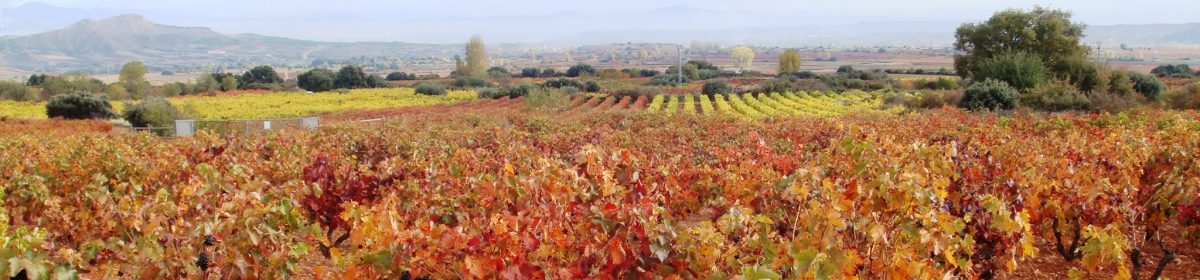
The DO Cava is an unusual one in that it is not just in one geographical area where Cava is allowed to be made, like it is for example in: DOCa Rioja, DO Ribera del Duero, DO Jumilla et al. Cava can also be made, in fact, in La Rioja, as well as Cariñena, Valencia and even in Extremadura – which is just about as far away from Cataluña as you can be, whilst remaining in Spain.

However, the non-Catalan Cavas are, in almost every way, the same as those that we can term Catalan Cavas. The same grapes are permitted, the rules and regulations set down by the Consejo Regulador (Regulatory Committee) are the same, and the same stringent quality control measures are applied. The only differences (and yes, it is a significant difference) are the soils and micro-climates.

However, this is positive – think instead of the diversity of flavours and aromas that are thus obtainable by drinking non-Catalan Cava. Cabernet Sauvignon in Bordeaux is different from Chilean Cabernet, Italian Cabernet and so on. To coin a phrase, ‘Vive la Diference!’

In fact the first non-Catalan Cavas I received were from my old friends at Bodegas Muga, that world-wide respected producer of fine Rioja Wines. I find their Rosado Brut Cava quite enchanting. The colour is that of Billecart-Salmon Rosé Champagne (a favourite French Fizz of mine) and very similar to Muga’s delicately pale still rosado wine.

Conde de Haro Brut Rosé has lovely pink and red rose petals on the nose with raspberry too. On the palate, the depth of flavour takes one by surprise – it’s delicate and elegant, and yet full flavoured too. Drink this with Paella – it will be a knock-out!

FIZZ 004

 Muga’s white Conde de Haro Vintage 2011 Brut has a super nose of white flowers, pear and a touch of cider, rather than citrus notes (see what I mean about diversity!) along with the unmistakable lovely aromas of your Mum’s baking. It’s a Brut, but one of the drier styles, making it a lovely aperitif as well as being fine with fish!

Next of the non-Catalan Cavas I received were from the Cariñena area. Many readers will know of the Gran Ducay, DO Cariñena, wines. Well-priced fruit driven still wines that are as easy to drink, as they are to find. Their Cavas, though not so readily available, are just as pleasant to drink and will get any party off to a good start!

The first point to note here is the value for money. The Rosado Gran Ducay, made with Garnacha and so pretty in the glass, retails for around 6€; and the Reserva Brut Nature for under 8€! Both embody the essence of Cava, the celebratory nature of the drink, with the reserve adding some depth on the palate which will make it a lovely fizz to accompany various different dishes.

Extremadura is a considerable distance from Cataluña. The Cava making area is centred around Almendralejo, slightly south and east of Badajoz and therefore not so far from Portugal. Although some way from the sea the huge expanse of, not the Mediterranean, but the Atlantic Ocean does impact on the climate, as do the soils of the Cava vineyards that are at a somewhat greater altitude than most of those in the Cataluña area.

Accordingly the Cavas I’ve tasted, from Bodegas Marcelino Díaz, have a slight difference too, with flavours and aromas ranging from chilli through to toffee apple! Fascinating – and I recommend you seek them out!

The distinctive leaf motif on the label of the first, a Brut Reserva, will make it stand out on the shelves of the wine shop, and if the proprietor opens a bottle, the aromas that assail the customer (in the nicest possible way!) will surely make him/her demand a taste! You’ll find a compelling, if faint whiff of chilli, then some herbs – a little sage, some thyme and a little wild fennel.

FIZZ 005

 Just as you take a taste, you’ll smell a cider-esque fragrance, which follows onto the palate turning to under-ripe apple pie and finishing with the forgotten flavour (perhaps more aroma) of toffee apple! Wow!

From the same stable Cava of the bodega, Puerto Palma has slightly sweet-scented white flowers on the nose, followed by hazelnuts on the palate and perhaps blanched almonds. It has some weight on the palate with a roundness that provides a mid-length finish.

I knew before I tasted it, that Cava Chozas Carrascal Reserva Brut Nature was going to be a very good sparkling wine! As the cork was gently eased out (the antithesis of post-F1 Champagne opening! Why?!) the wine began to speak to me already. There was an instant floral, biscuit nose that, genie-like, escaped and immediately enticed me!

CHOZAS & CAVA BOOK 002

 The Macabeo makes an immediate impact – the apple, slightly cider style aromas are a give away. Here the autolysis aromas, pleasant smells that are produced by the reaction to the second fermentation, are particularly biscuity, rather than bread, brioche and pastry. It reminded me of digestive biscuits, but with a very faint, exotic ginger spice as well.

Full, and it’s here that the Chardonnay makes its contribution, weighty with a mid to long length, the wine has elegance too. The still wines from this bodega, situated in-land from Valencia, in the Utiel/Requena area, are sought after and this Cava is certainly up there with the best!

NB The above are just a few of the Cavas that you can find that are not from Cataluña – my advice, experiment with more!

Contact Colin: colin@colinharknessonwine.com  and Twitter @colinonwine; & visit www.colinharknessonwine.com – and of course you can join his e-mail list for updates on wine tastings, bodega visits etc!

The Christmas Wish List

THE WISH LIST!

SPANISH WINES FOR CHRISTMAS 2014


Yes, I know, it seems a bit late in the day to me, too –  but this article, recommending wines to be served with the Christmas Dinner, available at best just six days before the big event, is a response to readers’  comments and requests!


A number of readers have said that in previous years my recommendations, published a few weeks in advance of Christmas, have been lost, along with the rest of  whichever of the Costa News Group’s four main English language newspapers they regularly purchase, before they’ve had the time to go and buy them! I guess that those who buy the papers (about 150,000 of us each week) don’t naturally think of referring to the internet (www.costa-news.com click Cork Talk) where recent articles are all archived.


So if this is perfect timing for you, I’m pleased – if, it’s a little late, my apologies, but  blame the others, willya!


The opening celebratory/ice-breaking/aperitif/starter wine, at that rate, an almost  catch-all wine, just has to be a sparkler! But which one? A Cava from Cataluña, a Cava from one of the other zones permitted to make Cava, or a Spanish Sparkling Wine, other than Cava! What a wonderful, if difficult, choice!


This has been a very difficult decision for me to make – I love Spanish Sparkling Wine, in practically all its forms (almost all of the sweet styles, are not for me) and this year in particular I’ve tasted more than ever before. I’ve been lucky enough to try young, Reserva and Gran Reserva Cavas in the natural home of Cava, Cataluña; as well as those styles, but from outside of this zone.


I’ve also had great pleasure in tasting sparkling wine from Cataluña that is not, in fact Cava, as well as wonderful fizz from several different parts of Spain. Tough call – but in the end, for this Christmas 2014, I’ve gone for the sparkling wine that has delighted me more (albeit, marginally more) than all the others.


You are certain to impress your guests as well as yourself with Albet i Noya’s Brut Barrica 21 Reserva 3, Clàssic Penedés Sparkling Wine. It is simply stunning!


The Pinot Noir and Chardonnay (the mainstays of Champagne) which make up the cuvée have been fermented for three weeks in French (Alliers) oak which, on opening, gives rise to the tantalising initial aromas of caramel and butterscotch which quickly make room for the traditional panaderia Sparkling Wine aromas of brioche as well as Danish pastry notes, with a citrus and heady floral suggestion too.


On the palate the wine is rich, voluminous, weighty and yet, elegant and subtle. You’ll find a tight acidity which keeps the wine fresh even after its 36 months ageing on its lees, En Rima, in the depths of the cellars. This ageing, which in Cava terms would qualify it as a Gran Reserva (Clàssic Penedès has different regulations), ensures a depth and complexity that is not normally found in many Sparkling Wines.


The oldest vines harvested for this outstanding Sparkling Wine are not yet 25 years of age so we can expect even more opulence, complexity and depth in future vintages. With only 6 grams of residual sugar it’s one of the drier Bruts, and all the better for it. Perfectly crafted, wonderful fizz, which you can happily pair with many dishes, including meat!


I’m taking you back to Cataluña for my white wine selection, in fact to a much vaunted Cava producer, Canals & Munné. However, whilst I love their Cavas, I’m recommending one of their still wines this year.


The still wine production, red, rosado and white, is somewhat in the shadow of Canals & Munné’s world famous Cavas, but it shouldn’t be, as there are excellent wines within this portfolio.


My favourite of the still wines (though it was very close, with both this wine and one of their red wines achieving the same scores) was their Gran Blanc Princeps Xarel.lo Fermentado en Barrica 2013.


For me, Xarel.lo is the new Chardonnay. It’s everyone’s friend as it can be fresh and fruity, more citrus than Chardonnay-esque exotic, with white floral and nutty notes too. Plus, like Chardonnay, it can take on very different flavours and aromas when oak is used in its elaboration, as with this wine. Either way, you’ll have a wine that is aromatic, quite deeply, to deeply flavoured, rounded and rich, with elegance too.


It’s the depth of flavour and the elegance of this FB (fermented in barrel) wine that I find most enchanting – a style that I can just go on drinking until the bottle is finished! It’s also a style that will sit wonderfully well with starters and, for those who prefer white wine to red with their turkey, it will pair perfectly with the main event!


As you might imagine, this being a country where there are so many excellent red wines, there was a plethora of real quality wines from which to choose the red wine that I am recommending for Christmas Dinner 2014.


Ultimately I had to choose just one. Acusp 2012 is made with 100% Pinot Noir! Unfortunately one doesn’t have much of a chance to taste good, and above, Pinot Noir in Spain. In Burgundy, it’s wonderful – rich but always with great elegance. It needs a cold climate really. But, with the average 1,000 metres altitude at which the vines are situated and the high density planting of Bodegas Castell D’Encus’ (DO Costers del Segre) Pinot Noir vineyard, the aroma and flavour profiles required of this demanding variety can be emulated.


It has a lovely silk negligee feel, with ripe, but not over-ripe, strawberries on the palate slowly overcoming the earthy forest leaves aroma. It’s juicy in the mouth and the fruit makes a presence throughout, but there are layers of flavour and a depth of pleasure as well as thought provoking complexity. The personification of elegance, this wine has everything!


I’m going to Jerez, for my final choice, the wine to accompany Christmas Pudding/Cake/Mince Pies, though I’m not, this time at least, going to recommend a Sweet PX (Pedro Ximénez) Sherry. But it’s close.


Lustau East India Cream Sherry is mahogany coloured and is one of the finest examples of this sherry style, so popular in the UK. It’s made by blending aged sweet sherry, made with the PX, and equally aged dry Oloroso made from the Palomino variety, the most widely used grape in Jerez.


It is then returned to large wooden casks and kept in the hot and humid atmosphere of the ‘sacrista’, the cellar – in a successful attempt to replicate the conditions under which the sherry casks of the 16th Century would have been kept whilst lashed to the decks during its voyage from Spain to the Americas! The resulting wine has an extraordinary smooth, deep and complex character.


It’s sweet and rich with raison notes on the palate and nose and some coffee liqueur hints with a dash of caramel on the finish. A truly excellent finale to a wonderful feast!


Merry Christmas!


Don’t forget you can hear about all the wine related events I organise by simply being on my e-mail list – plus there are some exciting developments which will be read first by those on the list. There’s no charge, of course, and it’s so easy – just send me an e-mail and I’ll add your name and e-mail address! colin@colinharknessonwine.com


Also don’t forget to regularly visit www.colinharknessonwine.com + you can follow me on Twitter @colinonwine

Tasting, ‘The Venue’ Gastro Bar, Moraira!

Hi Colin,
Thanks for a great presentation last night at the Venue.  My friends and I really enjoyed this.
Could you please add my email address to your list.
I would like arrange a wine tasting for about 20 guests at our home in Golden Valley next year with you, possibly in June or July.
Kind Regards,
Neil