Articles

First Published Costa News Group November 2011

AND SO TO SHERRY!

IF T’WAS GOOD ENOUGH FOR SHAKESPEARE

IT’S GOOD ENOUGH FOR US!

GRUPO ESTEVÉZ RE-VISITED

It’s mid-November and I’m writing this in Granada, shivering under the majestic snow-topped Sierra Nevada, on my return from the rolling, chalky hills of sunny, 28ºC, Jerez. My cases are much heavier than when I left home – the reason, I’ve stocked up on what must be the most undervalued ‘wine’ in Spain and maybe the world!

Jerez (aka Xerés and Sherry, because it was misspelt by our forbears in times before the Bard was born, let alone before he’d picked up his celebrated quill, calling it Sack – but hey, a Sherry by any other name . . . ) is a very special wine, fortified by grape spirit to about 16 – 20% alc. The happy and up-for-it group I am with have of course tasted Sherry before. However, by their own admission, they would rarely think of ordering it in a bar as an aperitif, and probably never would have contemplated it as an accompaniment to dinner.

Well I’m delighted to say they may well think differently from now. You see, Sherry is not just about ancient Aunt Matilda’s Christmas tipple, bless her. Sherry comes in several different styles, thus lending itself to many varied dishes and I implore you to give it a go and become a born-again sherry sipper! This is the first of a duo of articles, written not long before Christmas, but to ask you to think above and beyond simply the festive season. Sherry rocks!

I was first at Grupo Estevéz’s elongated white painted premises, probably three, maybe four, years ago. I was invited to bring another group of disciples along to see how things are going, bearing in mind the

The Beautiful Reception Hall at Grupo Estvéz

latest challenges brought about by La Crisis. I’m very pleased to see that all continues as normal, as it has for centuries in this unique wine-making area.

The company as it is now only started in 1982 – a new kid on the block really. But they soon acquired for example the brand name Valdespino, which has been in operation since William’s time (no not the Prince, the Poet!), and continued a fine old tradition exporting around the (Globe, no, not the theatre, the world)!

It’s a beautiful place to visit. The tranquil setting (if you ignore the shopping centre that gradually creeps forward like lava burning land before it) is a delight. It’s not only home to tens of thousands of oak barrels holding some twenty five million bottle’s worth of sherry. It also is a stud for the stunningly beautiful black-caped Jerez horses whose stables we visited, as well as the the tack room and of course the wonderful antique carriages used on special occasions and for competition too.

Plus there’s an assortment of dogs (including Spanish speaking Jack Russells) left to roam and deal with any vermin daft enough to come sniffing for sherry! But that’s not all – there is a magnificent collection of antique furniture, particularly Long Case Clocks (Grandfather Clocks), as well as an art gallery – which would be worth the visit, without the sherry! In some ways it’s a living museum and all with a sense of history and quiet elegance.

We tasted seven different styles of wine – first up was Tio Mateo. It’s something of a cash cow as sales are wonderful – a dry slightly salty fino which we enjoyed with olives. Finos are super aperitif drinks very often used as such chez nous.

Then an Amontillado (remember that in its natural state Amontillado is

Two Fellow Tasters and the super Sherry!

dry and light brown in colour). Del Principe Amontillado Muy Viejo is 18·5 alc and was one of my favourites. We enjoyed it with some darkly coloured jamon.

Contrabandista Amontillado Valdespino has had a small amount of the naturally very sweet grape PX (Pedro Ximenez) added to the blend to make it a little more like the Amontillado’s found in the UK where, traditionally, there has been a demand for a sweeter style.

Solera 1842 Oloroso VOS was a star! Oloroso is also naturally dry – until doctored for the imagined (and often correctly) British palate. This dry 20 year old wine has a rich acidity and very dark colour from it’s slow oxygenation and a faint toffee nose.

The Pale Cream Sherry (now we’re getting into the Aunt Maude zone) is 17·5 % and has a whiff of sweet orange peel and fruit about it. Royal Cream Marqués de Real Tesoro would suit Maude down to the Zimmer and was accurately and delightfully described by group leader, Glennys. as being ‘quite custardy’.

Finally we moved onto the Pedro Ximenez (PX) 100% – a sherry that is a dessert in itself. It can also be enjoyed with rich fruit cake, Christmas Cake and, as it is often described (by me anyway) as liquid Christmas Pudding, you’ll love it with that final taste of our traditional Festive Food.

Technical Problems

My apologies – technical problems, soon to be overcome (hopefully!), mean that for the moment I am unable to post articles that I have written. This explains why I am, regrettably, woefully behind with the articles from the Costas News etc and why there have been no additions to the Articles Page of my website for too long. I am trying to solve the problem, please be patient. Thanks, Colin

First published Costa News SL October 2011


PRIMERO

SPAIN’S BEST CARBONIC MACERATION WINE?

 You have to hand it to the French. There’s many a maiden who can testify to the power of Gallic charm and persuasiveness, of course. But it’s not just the fair sex which has a history of being taken in by heavily accented French Lotharios.

 The wine buying consumers of the 60s/70s were desperate to drink Beaujolais Nouveaux following a Napoleon-scaled (I’m referring to his egotistical expansion plans, not his height!) advertising campaign which saw famous Thespians/Models/Celebs racing to bring back the first bottle direct from the vineyards of Beaujolais in: a vintage Rolls Royce, a Hot-Air Balloon (perhaps inflated by the instigator of the campaign!), an F1 racing car of the era, you name it!

 And the quality of the wine? Well, the French didn’t want it – say no more! The stuff that was shipped over to us ill-informed Brits was the dregs of the barrels, made from the last percentage of juice from over crushed grapes which had been ejected at the selection tables where only the finest Gamay grapes were chosen to make the super and at times, excellent, Beaujolais Villages and Beaujolais Cru wines.

 But Nouveaux and Cru did have one thing in common – they were made by the Carbonic Maceration method, a way of making wine invented and perfected by the French and producing, for Villages and Cru standard et least, a remarkably fresh, brightly-coloured, light-bodied, fruity style of wine, adored by the French themselves and by those Brits who weren’t taken in by the hype!

 Carbonic Maceration is where whole bunches are carefully placed into fermentation tanks so that the skin does not break and release juice. Carbon Dioxide is then pumped into the tank to expel oxygen and provide a different atmosphere in which the grapes macerate and where the still whole berries start to develop ethanol and various attractive flavour compounds. Fermentation then takes place but with the juice and grapes surrounded by Carbon Dioxide instead of oxygen. The result is a distinctive wine as described above.

 It’s not just France that uses this method, Spain is doing the same. A number of bodegas intent on keeping their heads above the rising tide of shrinking sales are looking for ways of maintaining, and hopefully expanding, their market share. In these days when lighter bodied, fruit-driven red wines are in vogue, Carbonic Maceration wines are seen as a beneficial addition to the bodegas’ portfolio.

 I’ve tasted lots here in Spain, all properly crafted and using grapes of the regions but for me, they mostly don’t reach the same pleasure levels as those made from the Gamay grape back in Beaujolais. Perhaps it’s a personal taste thing (though as an impartial and professional wine taster it shouldn’t be) or maybe it’s that the grape varieties used just are not as happy with the method as Gamay clearly is.

 However there are exceptions where winemakers have managed to produce wine in a similar style to good Beaujolais using the same, or maybe slightly adapted Carbonic Maceration method, but with a different spin provided by the variety used. I’ve tasted some good ones too.

 For me the best in Spain, by a distance, is Bodegas Fariña’s Primero, from the DO Toro, where Tinta de Toro is the variety used as it too seems content with this ‘foreign’ fermentation method. However, I need to add a rather odd codicil here.

 On the back of the Primero label they proudly proclaim that this wine is available in the November following the harvest in September, that’s just two months from vine to glass! It’s quite remarkable I know, but for me this is not the best time to drink Carbonic Maceration wine. I tasted Primero 2010 very early last year, I think in December. I liked it but it didn’t quite seem to be the finished article.

 In June this year I tasted another bottle, and wow, it’s lovely! As is said, the best Carbonic Maceration red wine in Spain!

 The wine has a combination of red and dark red fruits (loganberry with blackberry) which remain in the mouth long after the wine has been swallowed. This is the mark of a good wine, but usually one that has had some oak influence. This makes Primero all the more remarkable as it has seen no oak. It is simply the evolution in the bottle that gives it this rounded, full-flavoured and yet light-bodied taste, feel and length.

 And there’s another clue too – the 2010 vintage was excellent in most wine producing areas of Spain following a year of practically perfect growing and harvesting conditions. Obviously the grapes used for Primero 2010 were as good as it gets!

First Published in Costa News SL September 2011


BARBAROT

VINO D’AUTOR DE LA RIOJA, DE PALACIOS!

Barbara and Antonio Palacio showing me around the Barbarot vineyards

 Last week’s article (www.costa-news.com click Cork Talk) dealt with Señor Antonio Palacios, my good fortune in befriending such a warm family and first class wine educators, plus of course his excellent MdeT La Rioja wine. I also alluded to the wine made by the next generation of this, the most famous wine-making family of Spain.

 Was it destiny that shaped Bárbara Palacios’ life? A typically modest shrug of the shoulders accompanied by her charming smile and the statement that she simply loves making wine, was all the answer I needed. With a wealth of family tradition, knowledge and experience behind her, Bárbara went willingly to Bordeaux to study oenology (including working at Chateau Margaux, et al) and thence to Australia, New Zealand, Italy, Chile, Argentina and California seeking out even more wine-making understanding and methodology. The result is almost an encyclopaedic cognition of wine-crafting!


Barbara & Merlot - BARBAROT!

Not that there is anything nurdy about Bárbara – look for example at the name of her super first wine, Barbarot. Then look at the back label (you must also visit www.barbarot-wines.com) – there’s a charming hand-drawn picture of a little girl holding onto a lovely dog, Golden Retriever actually, with whom we walked the vineyards, and whose name is Merlot. Yes, you guessed it – Barbarot is a combination of her name and that of her adoring dog!

 Barbarot is a limited production wine, the small quantities mean that at present it is only sold in the La Rioja region. However, with the acclaim it is receiving it surely cannot be long before distributors are forming an orderly queue (oh no, that’s a British thing!) outside her door asking for pallets of the wine to sell on. Watch this space and then watch your local wine shop!

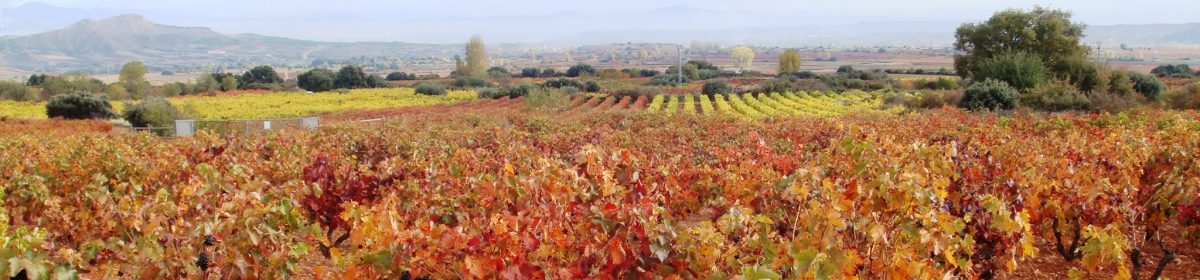
 The vineyards that supply the grapes for Barbarot are located just about as far north that you can go in the DOCa La Rioja. Behind them the Cantabrian mountains (also drawn on the label) rise to touch the sky and in August the sun beats down (mercilessly, even at 6pm when we visited, causing Merlot to seek the shade of the neatly trimmed vines, uncharacteristically ignoring any possibility of a rabbit chase!). About an hour later, almost every night, relief from the grape-ripening sunshine arrives in the form of cooling breezes, covertly adding a touch of acidity to the finished wine.

 The limestone soil, similar to that of St. Emilion, plays host mostly to Tempranillo, Prince of La Rioja, but also to, you guessed it again, Merlot. Special dispensation has been given to the Palacios family to use a little of this, Consejo Regulador unapproved, variety in their wines. It’s addition is crucial.

 Merlot brings colour, aroma, freshness and finesse but also, from these specific vineyards, it arrives with a lower Ph. and this is significant. Sulphur, used in all wine-making, acts much more powerfully when used with a lower Ph. Therefore, using Merlot in the blend also means that less sulphur is needed, hence an altogether different flavour and nose.

 On the back label you will see (you can order via the website above by the way) that the wine is a DOCa La Rioja Cosecha wine. It’s a touch confusing – this is the prosaic, generic term that indicates that the wine is simply a young Rioja wine. As yet the Consejo Regulador hasn’t approved a more pragmatic and informative suggestion that wines such as Barbarot should be called, for example Cosecha Vino D’Autor.

 For that’s what Barbarot is – a wine containing the oenologist’s fingerprint as well as the terroir in and under which the Barbarot’s vines grow. It is an expression of all that’s good in La Rioja, all the Palacios know-how plus all the passion of its creator.

 12 months in American, Spanish and French oak and a further time in bottle have enabled this intense ruby coloured, well structured and balanced wine to mature into a sensual, silky, fruit driven Rioja with plum and damson jam notes and fresh acidity. It’s drinking perfectly now!