Articles

Spanish Palate – French Négociant Concept Comes to Spain!

Recently, I had the pleasure of presenting the full range of six wines at a Musical Dinner with Paired Wines and beautiful music from www.clairemarie.es. A perfect fit!


MUDDY BOOTS AND WINE


The French have been making a significant contribution to the wine world for centuries. Nowadays there are wonderful wines from many parts of the world, of course (Spain included, seguro) but there are many who still use top Bordeaux and Burgundy as yardsticks by which all others are measured.


French has also been prominent in the development of the English language. Since the Norman Conquest and the consequent influx of the French Nobility, French has impacted on English. This is true of ‘wine language’ too. Think of the wonderful, seemingly catch-all word ‘terroir’, meaning all external influences on a vineyard – the soil, micro-climate et al (French comes from Latin, be fair!). Think also of the French word Négociant, which, in reality, is more of a concept than just a simple word.


Wikipedia defines a ‘Négociant’ as ‘. .  the French term for a wine merchant who assembles the produce of smaller growers and winemakers and sells the result under its own name. Négociants buy everything from grapes, to grape must, to wines in various states of completion. In the case of grapes or must, the Négociant performs virtually all the winemaking.


There’s many a fortune been made by ‘savvy’ French Négociants over the years. Historically mostly men, but in more recent times, women too, who have the wine-making know-how, the wherewithal and, indeed, the wine appreciation and business nose to be able predict (and sometimes lead) market demands.


In Spain, the concept as well as the personnel, are not so well known. Enter Nicola Thornton, her business partner, wine-maker Álvaro Martín, and their joint venture ‘Spanish Palate’ (www.spanishpalate.net). They’re not the only Negociants successfully working in Spain, nor the first, but I’m not sure that there are many more successful!


Spanish Palate sells wine from a number of specially selected bodegas, in various different zones of Spain – regular readers will know of several of their wines, having been showcased here in Cork Talk, since the company’s inception, perhaps four years ago. However, they also have a portfolio of wines made in boutique bodegas in six different areas of Spain, from the famous area of, for example DOCa Rioja, to the hardly known area of DOP Almansa.


The Botas de Barro (Muddy Boots) range of wines are made by Álvaro and Nicola in partnership with the bodegas in question, just like the French Négociants of yesteryear. In their opening spiel, Nicola writes about the number of muddy boots that have walked the vineyards for generations whilst their owners have toiled in all weathers. There’s a certain, comforting continuity abut this project, which is sure to bring the associated bodegas to a new level of prominence.


And I don’t think I’m alone in this prediction – recently I had the pleasure of presenting the full range of six wines at a Musical Dinner with Paired Wines and beautiful music from www.clairemarie.es. A perfect fit!


Although there is a certain suggested order in which wines should be tasted, at an event such as this, it’s fine to walk on the wild side a little. Meaty and vegetarian starters were paired with two Spanish Palate reds, the fish course that followed, with the only white in the range, and so on. Unusual, I grant you, but it worked.


Nicola first started her wine journey in Toro. Appointed as Export Director at one DOP Toro bodega, the company was bought, the philosophy changed and, out of the blue, and never more timely, she was headhunted by the well established and excellent Bodegas Fariña, nearby. It’s a long story, written in Cork Talk before, but I mention now as it is perhaps a natural development that Nicola, having decided to branch out on her own, after so many highly successful and loyal years, should start her Négociant business working in tandem with a small producer in the same area.


So, I wanted to start our presentation with a wine from DOP Toro too. This wine is made from very old vines, 80 – 100 years of age. It’s had ten months in  oak, five in French and five in American. It’s an expressive wine with some dark brambly fruit and maybe a trace of liquorice. It went very well with the selection of dried meats, and on the night, was the equal favourite of the tasting.

The Botas de Barro Ribera del Duero is made from centenary vines – and there aren’t many of those in this ever more popular area of production! This is what would be called a ‘Roble’ wine, some oak influence, but not much. There’s a lovely aroma of Granny’s blackcurrant jam, though without the sugar. We had this wine with vegetarian cocas and small flavoursome sausages.

Our next course was Lubina, Sea Bass, and it’s here that we tried the only white wine in the portfolio (I’m going to ask Nocola if it might be possible to find a willing bodega in DO Valdeorras – I think a 100% Godello would be good to add to this range!). Rueda is the area, so you can guess the variety – Verdejo, of course. Aromatic, claro, with a little cream on the nose and certainly a creamy texture, following its three months of lees ageing.

Our vinous tour of Spain then took us to DOCa Rioja – where we tasted a 100% Tempranillo, not so common in this area famous for this variety, as it’s often blended with others in Rioja. Twelve months in oak and a further year in bottle qualifies it for Crianza status, though there’s no mention of this on the label – part of a modern trend. Dark cherries along with typical strawberry notes, and a sturdy backbone to let you know it’s a serious wine!


Monastrell from 60 year old vines in DO Jumilla went rather nicely with the Spanish beef steak and was typically (for Monastrell) a lovely juicy mouthful of plums and damsons. I’d like to taste this particular wine in a year’s time, when I think it will have developed a little more.


Finally, with a cheese course, and then, as a surprise from the restaurant, with some chocolate bizcocho, our other most preferred wine o the night – coming from the largely (until now) unheralded DOP Almansa, made with this distinct variety, Garnacha Tintorera, whose flesh is also a soft red colour, giving rise to an intensely dark coloured red wine. It’s had just four months in oak to give is some extra character and, well, it’s lovely!

NB! The next Fine Wine & Gourmet Dine programme on Total FM 91.8 and www.totalfm.es Sunday 16th July 18:00 – 20:00 hrs, features the Botas De Barro co-founder, Nicola Thornton (see above) – we’ll be tasting some of these wines and pairing them with fine food too! Great fun, super music, wine and food tasting, info and chat – can it get any better? Please join us!

Spanish Wine Tourism Part Two

Fast forward to these days and there are many sublime wine tours on which people can go. I’ve tasted wines onboard a boat on a short river journey as part of a tour; the same, but this time in a hot air baloon; on a subterranian train; in the ancient cellar from which Columbus bought his wines; and again in a beautiful horse-drawn carriage (it’s all on my TV series, DVD copies available!).

WINE TOURISM PART TWO


This week I’m celebrating again the encouraging success story of Spanish Wine Tourism, a now burgeoning, integral part of the Spanish Wine Industry!


A recent article (archived here www.colinharknessonwine.com click Articles) proudly reported on a considerable percentage increase in Spanish Wine Tourism, in terms of both number of visitors, and in revenue. Enoturismo now rocks and I’d like to expand on how, and what’s now available, after humble, and occasionally dreadful beginnings!


I’ll start with two laughable (that’s now – neither I nor my clients found it so amusing at the time!) incidents in the very early days.


Although I’d had a house on the Costa Blanca for a number of years before I moved here, 20 years ago this coming August, I was pretty green when arriving to make Spain my new home. Yes, I liked the sun, the prices and the layback feel of the place. However, I wasn’t one to be content withy just that, nice as it was. I needed to travel a little and see more of Spain.


Wine was an ‘in’ for me. I came armed with a pretty good knowledge of wine in general having passed the first of a possible four-part journey to Master of Wine status, but I didn’t know enough about Spanish wine. As it happened, it was this thirst for knowledge and experience of the wines of my new adoptive country that really stopped me taking the next steps to attempt to become an MW. It was clear that there was enough to learn here, as well, of course, as a huge variety in wines to taste!


I started on a crash course re Spanish wines and was soon pleased to see that part of the itinerary of a day trip I’d seen advertised included a visit to a winery. It was to be my first wine tour, and was certainly a cathartic moment. The day was fine, the bodega visit, a disaster – I knew I could do better, much better!


I won’t go into all the details, but let’s just say it started badly, and failed! In a warehouse whose temperature must have been over 30ºC (I cringe nowadays to think of the poor wines!) we were offered a tiny white plastic cup of undrinkable wine drawn from some sort of receptacle by an old chap, who clearly would have preferred to be finishing his siesta and whose cigarette dropped ash around the wine, and occasionally in it too!


That said, not all the trips I subsequently organized with my own small business went perfectly.


We arrived in mid-Spain – for fear of being sued, I think I’ll leave the location at that – 55 of us, ready for a tour and some refreshing wine. This was a bodega whose wines were doing well (I’d tasted several) and had made a commitment to wine tourism. Part of the tour was around the as yet unfinished visitor centre, impressive already with its stone façade, sweeping staircase etc.


I wasn’t dismayed to the shown into the far smaller, converted finca building that wasn’t large enough for our tasting, this was a period of transition – rustic, was how I put it. However, the tasting went dreadfully downhill from there! Plastic cups again, only two wines tasted, nowhere near the correct temperature, and, worst of all, it was clear that these were their worst wines, the ones they needed to get rid of!


Despite my advising that this was not at all representative of the fine wines that the bodega made, and my apologies for such a shabby tasting, I was the only one who bought wine! Not, of course, the foul brews that we’d been given, but the good quality stuff that I knew. Unbelievably bad business!


Well – that was the ridiculous, and a long time ago; now I’m moving to nowadays, and the sublime!


Firstly, to briefly track the development of Enoturismo, following the end of the first part of this two part success story.  The wineries who were the first to cotton on to the fact that there was money to be made from wine tourism, started to commit to it. A mini-budget would be allocated – glasses would be required, for example. Some realised early on, that at least one toilet would be needed!


And so it went. Gradually bodegas established Wine Tourism Departments, English speaking staff were at a premium, even better if they had a personality and were charming! Roads were widened (and tarmacced!); entrances were made grander and larger, allowing coach access; car parks were extended, re-surfaced and marked, often with mini-walls or hedges; floral gardens developed, roses were popular because of their association with vine growing, perhaps with some herbs for the olive oils mentioned in the first article, and why not a centenary olive tree, uprooted and repositioned (don’t worry, no olive trees have been harmed for the purposes of this article!).


Fast forward to these days and there are many sublime wine tours on which people can go. I’ve tasted wines onboard a boat on a short river journey as part of a tour; the same,  but this time in a hot air baloon; on a subterranian train; in the ancient cellar from which Colombus bought his wines; and again in a beautiful horse-drawn carriage (it’s all on my TV series, DVD copies available!).


Many tours include amazing architecture, look at the ultra-modern Marqués de Riscal  building, housing the outstanding restaurant and hotel; and contrast this with the beautiful, almost castle-like building that is Rioja’s oldest bodega, Marqués de Murrieta. Wine tourism can also include visits to historical and cultural centres nearby as well as world famous fiestas, such as the wonderful Horse Fair of Jerez, being included.


Wherever you go (I can help here by the way!) you are sure to be welcomed with open arms and nicely charged wine glasses, assailed, in the nicest possible way, with the history of the bodega, its philosophy, its fine wines, its own particular style and spin, and very often the fine cuisine of its restaurant! As I said, Wine Tourism in Spain rocks – so why not go out there and taste it!


Next Fine Wine & Gourmet Dine Programme on Total FM 91.8 & online www.totalfm.es is Sunday 4th June 6pm – 8pm. Great Music, Restaurant and Wine Chat – why not join me?!

I’ve been involved in this industry since before it was ever recognised officially as such, and indeed, since even the name Enoturismo had been coined! Thus I have a natural interest in its development, the more so, as I continue to work within the sector.

WINE TOURISM IN SPAIN


I’m delighted to read that in 2016 Wine Tourism in Spain, Enoturismo, registered an increase of 21% on the previous year. in terms of visitors, as well as an almost 11% rise in revenue.


I’ve been involved in this industry since before it was ever recognised officially as such, and indeed, since even the name Enoturismo had been coined! Thus I have a natural interest in its development, the more so, as I continue to work within the sector.


When the bad, sad old days of the recession started (known here, rather appropriately,  as ´La Crisis’) the wine industry, in common with most other sectors suffered diminished sales, and expectations too. I say ‘most’ because in such times there are industries that do the opposite – rather than contract, they expand.


An example is the DIY trade – folk who find that their income no longer supports a budget for home improvements exectuted by the professionals, often turn to ‘doing it themselves’. (I include even myself here, a guy who is totally inept at all things DIY)


Another sector that benefits in times of ‘crisis’ is the BBQ industry – sales of BBQ equipment increase as those who like to dine out, start to feel the pinch. Related here, of course, are the butchers, whose domestic sales rise while their ‘trade’ sales decline, perhaps therefore, whilst not registering increased revenue, they at least maintain their levels. Which, in hard times, is also a result.


The wine industry, like most sectors, began to suffer. The first things abandoned in such times are the luxuries – sadly, wine is considered to be one that can be done without. Bottle sales decrease, but the winery still needs to harvest its crop and make the resulting wine. It still has to replace its barrels and it still needs to retain staff, service equipment and so on.


So Plan A – ‘make wine and sell it’, had to be revised. Plan B came about, often in two phases. How many readers noticed, as did I, that, gradually, there were more bodegas selling Extra Virgin Olive Oil as well as their wines? Well, it’s a natural progression in a way – many bodegas are founded on old fincas which originally made wine from the vineyards and oil from the olive trees, for the family.


Wine production became the best bet for commercial revenue, so efforts and resources were directed towards the vines, relegating the olives to the lesser role of simply providing oil for the family.


A marketing opportunity arises for the cash-strapped wineries – let’s try and supplement declining wine sales by selling ‘Prestige Finca Olive Oil’. Let’s also use the wild Rosemary et al to add to the olive oil and diversify still further. Phase One.


Phase Two, was really only for those who had the wherewithal – the bodegas who could afford it, realised the way forward re wine sales was to expand horizons. Whilst many countries in Europe, and further afield, were also suffering from recession, other countries were enjoying an improving economy, with some actually booming!


These were the countries into whose markets Spanish wine producers had to make inroads. Emmisaries were despatched and over time clients were gained and sales achieved. No doubt these lucky bodegas were also selling their prestige olive oil there too!


Clearly though, a Plan C was needed for those who weren’t able to evolve as above, and indeed for those above too. Wine Tourism had found a raison d’etre! But not yet, the name!


The development was gradual. Most bodegas initially dipped a toe into the water. With some, it was just the little toe, manifesting itself as simply a sign in the grass verge at the entrance to the winery advising ‘Visitors Welcome’. Some went for the big toe option, though nevertheless still hardly dynamic, perhaps advising travel firms that they were open for group visits, with maybe the occasional advert in the local or regional papers.


However, those producers who could see the potential, went for full body immersion! Firstly, the above, but also with a changed job description, perhaps for the ‘commercial’, the sales rep, who was spending too much time in those days kicking his heels instead of selling his wines. He (usually, there has been a dramatic sex change [in a manner of speaking!] during the intervening years, with the fairer sex far out-numbering men these days!) would now also be I/C visitors.


From an often, uninspiring, and always humble start, during the intervening years there have been amazing, occasionally incredible, developments in this, now integral, part of the majority of wine businesses in Spain. Part Two of this article will be published soon, entertaining readers with some of the risible experiences that I suffered when visiting bodegas in the early embryonic past, right through to the present day, giving you some very positive ideas as to how you can take advantage!


NB There may be a few places left for the already almost full (at time of writing) Musical Dinner with Wine Paring and Claire-Marie (www.clairemarie.es) at Restaurante Casa Cantó, Benissa, Friday 12th May. Please call me on 629 388 159.


Next Fine Wine & Gourmet Dine Programme on Total FM 91.8 & www.totalfm.es is on Sunday 21st May 18:00 – 20:00 hrs when, talking of Wine Tourism, my guests will be Kathrine and Harald, of Bodegas & Boutique Hotel, Casa Boquera, Yecla.

Bodegas Jorge Piernas – The Wines!

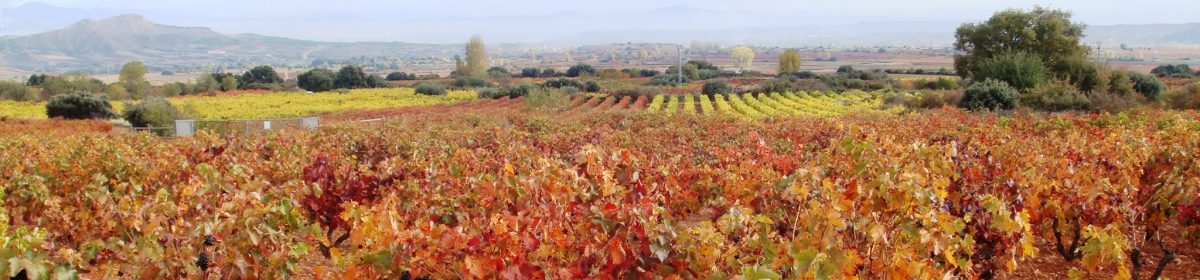
Vineyards have their own personality – odd though that sounds. So do vines – even stranger?

BODEGAS JORGE PIERNAS

PART TWO

If you missed Part One (Wines With Legs) you might like to read it here www.colinharknessonwine.com click Articles – it’s an interesting story!


Vineyards have their own personality – odd though that sounds. So do vines – even stranger? Let me explain: you may have seen the Oz Clarke/James May wine series of a few years back. Although I often found the director’s stage-managing of the programmes rather irritating (they dumbed-down James May trying to make him into an uncultured guy, when he clearly isn’t!) I did enjoy them, learning from them too.


Well, James ‘learned to his astonishment’ (yeah, right!) that there can be remarkable differences between two adjacent vineyards separated only by a hardly used road. Same vines, same age, same production methods etc, but producing very different wines. Each vineyard has its own personality.

The same can apply to vines. Exhibit A is the WHITE Tempranillo variety found growing happily in the same vineyard as all of its fellow red Tempranillo vines at the end of the 20th Century. Over decades it had mutated from red to white! Cuttings were taken, once it had been declared a wholly distinct variety from its red cousin, others were sought and now there are whole vineyards planted with Tempranillo White Grapes! (Watch this space for my take on wines made with this ‘new’ variety).


Also in Rioja, some years ago I was taken to a famous bodega where I learned the story behind one particular wine, in fact the flagship wine of an already acknowledged producer of excellent red Rioja wines. Some years previously the Head Winemaker, when doing the rounds of the vineyards, stopping and tasting the grapes from various vines, as part of the process by which the optimum harvest time is decided, found one vine whose grapes had a totally different taste profile to all those surrounding it.


He searched through all of the plots and discovered that there were others whose flavour was the same – wholly out of synch with their near neighbours. There were enough such distinctly different vines to make a special wine – an icon was born (at about 150€ per bottle, incidentally!).


I was amazed to learn from Antonio that a similar scenario is being played out in the vineyards of Bodegas Jorge Piernas! I asked Antonio why it was that certain vines (still leafless at that time) had a marker by them. Well, you know the answer now! There may be enough to make a special wine now, but there certainly will be in the future – the adjacent field has been bought and the offspring of the identified vines will be planted there. Again, watch this space – I have to try this wine, when it eventually becomes available!

Fast forward from the cold vineyards to the bodega, where the wine is made – but when you visit, don’t expect a rustic old finca, modernised for purpose. Bodegas Jorge Piernas is housed in one of the very modern warehouses on an industrial estate in nearby Mula! Romantic it ain’t! But it certainly serves its purpose, for it is here where I tasted their wines, and this in several different stages of development.

First up was a 2016 vintage Syrah tank sample, taken as I watched from a steel fermentation vessel, now being used to store the wine under perfect conditions, ready for its next stage in a short time. On the nose blackberries, initially, very fruity and soon joined by black cherries on the palate. A lovely wine to drink now –  but, no, it’s not for sale, yet.


It will have its time in French Oak 500 litre barrels and then blended with Monastrell, which will have gone to a similar process. The mix will be 70% Monastrell and the rest Syrah. In the soils and climate of Bullas it’s a winning blend – when I was there recently I tasted several wines made with these two varieties, and like them all.


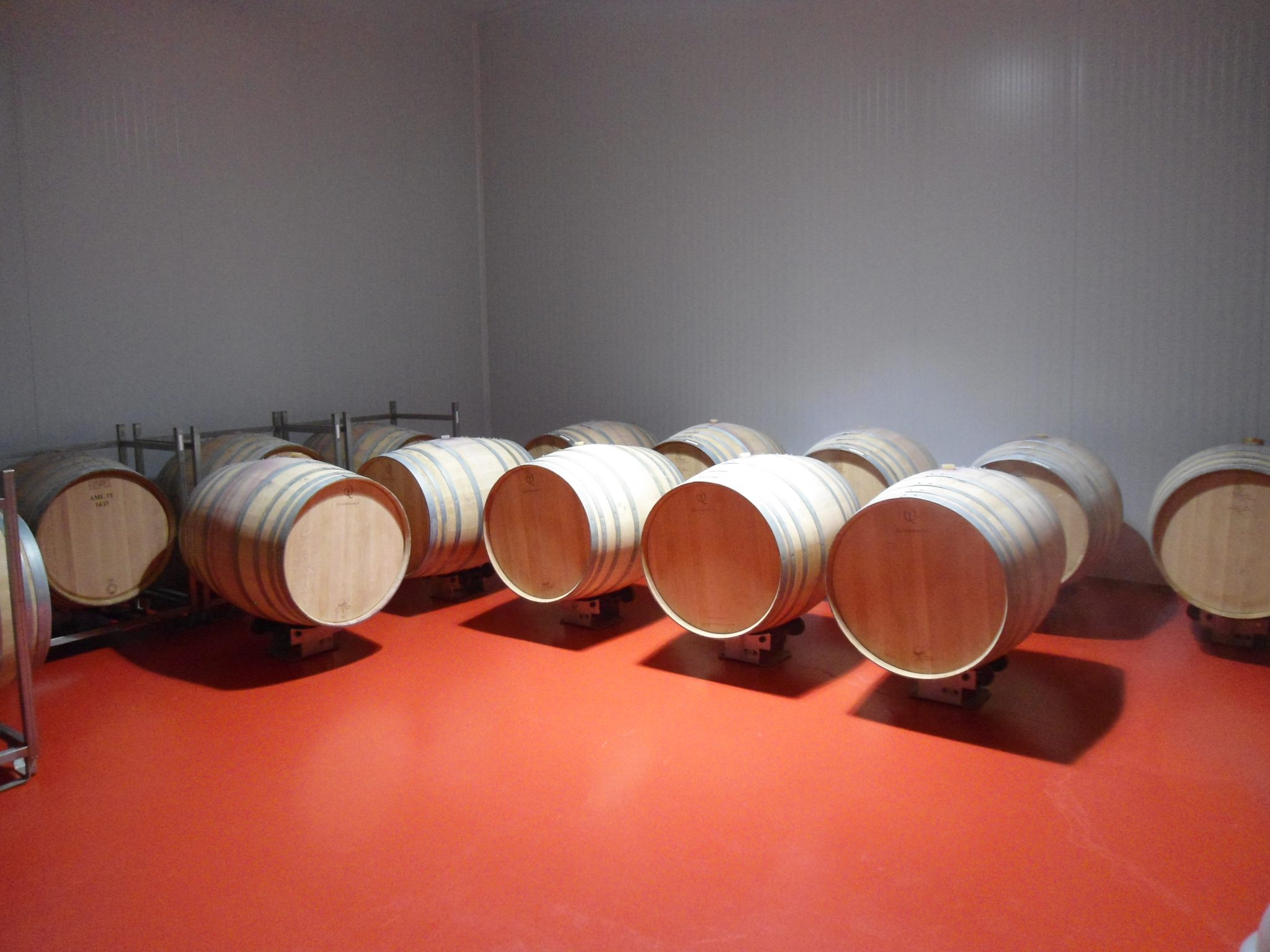
Next I tasted the aforementioned Monastrell, the 2016, which had been placed in the barrel, from which my sample was drawn, just three months before. Extremely fruity, again, with a little complexity following even a short time in barrica. I’m told that it will be in oak for a maximum of only 5 months. Dark cherries again and a touch spicy with a little minerality.


I next tried another barrel sample – the same harvest of Monastrell, but in a different French oak – and there are other different oaks too! This is because Jorge is trying to get the balance perfect for what he wants. Don’t be concerned about talk about the wood, whichever the balance decided upon, the wood will only ever be there to add some body and complexity. It will never be allowed to mask the pure fruit, which is the mark of this bodega.

This wine was different – it goes to show how oak barrels can be different. I’d say that wine aged in this oak would need a little more time to mellow and reach their optimum drinking time. Compared to the first barrel sample it was a little more tannic and a touch greener, not quite there yet. My guess therefore is that there will be a blend between not just the Monastrell and the Syrah, but also the Monastrells that are aged in  the different barrels!


Finally, after several barrel samples, like the above, the flagship wine, Juan Piernas, in the Burgundy style bottle, priced at the moment at about 25€ (the first wine, the 2015 vintage, tasted after the above, and called Sinesquema, retails at about 15€). The 100% Monastrell grapes which came from the highest plot (800 metres) were fermented in steel then placed in French oak barrels, Jorge believes French oak is the best for Monastrell!


This wine is outstanding. It celebrates the perfect harmony of elegance and power. Lots of dark plums, some juicy damsons with black cherry in there too. An element of spice and a little earthiness. A wine labeled solely as ‘Red Wine From Spain’, can’t be this excellent – can it? (www.jorgepiernas.com)


NB There’s a multi-medalled wine from DO Yecla up for grabs on the Fine Wine & Gourmet Dine Programme on Sunday 21st May! 20 years in the Spanish Wine Scene and I’ve not known a new wine to be entered for its first three competitions ever and win a medal in each! That’s 2 Golds and a Silver! Bodegas Casa Boquera Joven Monastrell will be tasted live on-air and there’ll be another bottle given away to the first listener to answer a simple question during the programme. Just text (00 34) 629 388 159. Show starts 18:00 – 20:00 hrs www.totalfm.es and Total FM 91.8