Articles

Wine Related Christmas Presents – 2017

WINE RELATED CHRISTMAS PRESENTS 2017

I’m often asked about any wine related presents I might recommend for the lady who wants to surprise her man, and indeed, vice versa for the man who is keen to please his lady. And, as it’s the 1st of December – here they are!

Many of us love wine and all that’s associated with it, so here are some recommendations for you to buy as stocking fillers and/or full-on presents. Not forgetting, of course, that often, with wine presents, the giver and the recipient both benefit in equal measure!

Let’s start with the paperwork. This year I had the great honour and pleasure to travel to Bucharest, Romania to join the judging panel of the International Wine Contest Bucharest 2017. A fantastic trip, judging excellent international wines with likeminded eminent wine judges – and indeed, socializing with them too, at the various scheduled events and visits.

I was part of a super group of friends of various nationalities – East and West Europe and even an Aussie! Mike Mazey is an Aussie wine-maker and English teacher now living in the Czech Republic (it’s a long story!). He is the Lead Author of an impressive small group of wine orientated scribes whose book ‘Wine Words’ I would highly recommend. ‘Wine Words’ can be bought online (www.winewordsthebook.com/en/).
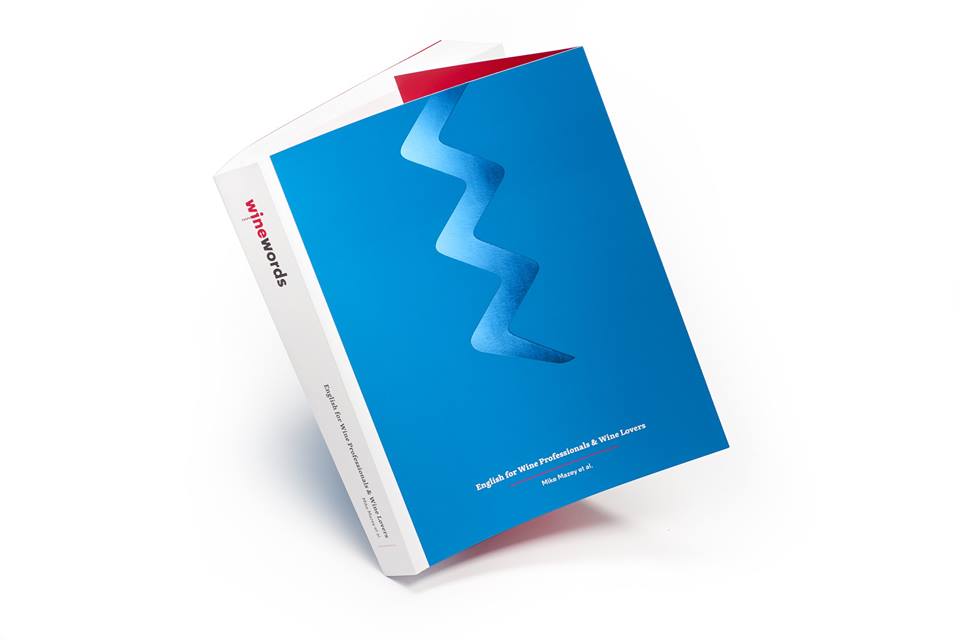
Although written with a view to help those for whom English is a second language progress in the professional wine world it is also a great read for people who are native English speakers who want to learn more about wine in a fun way. It includes an online video library and looks at the world’s wines as well as focusing on specific wineries in both hemispheres. There are plenty of contributions from Masters of Wine and Wine-Makers themselves.


Perhaps one of the testimonials on the cover sleeve says it best: “The Wine Words bookand online  video library is a wonderful collection of wine insights and clear explanation of wine terminology, that will enlighten and delight those wanting to build on their wine knowledge. . . . . .” Nick Butler, Bottle Green LTD, England. I have a copy and really enjoy it!


Then there are the guides. By far the most comprehensive is the Guía Peñín (the Peñin Guide) whose tasting panel tastes around 20,000 wines each year for inclusion in the guide. Originally in Spanish only, it has proved so popular that it is now printed in English and in German and it also has an online version. www.guiapenin.wine . You’ll find that it is well organized with interesting sections extra to the huge list of wines and their marks out of 100. Considered by many to be the ‘bible’ of Spanish wines.
The 2018 Guía Peñín is now available – in English! A super present for those interested in Spanish Wine!

Don’t forget Señor Andres Proensa though – the Proensa Guide is for me indispensable. Los Mejores Vinos de España is always on my office desk – it’s smaller than the above, restricting itself to just those which the panel considers the top 500 wines in Spain. www.proensa.com . It is also online.
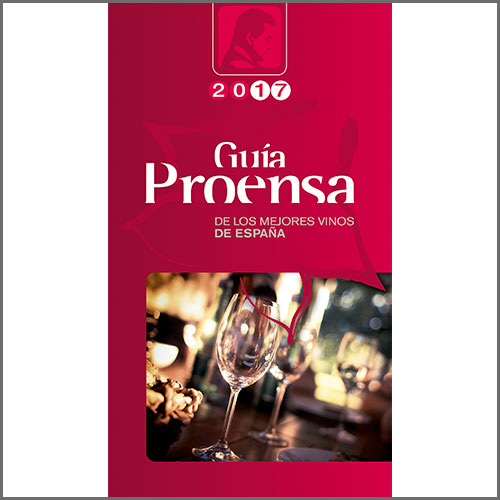
The 2018 edition of this excellent guide to the top Spanish Wines is now available!

Now what about wine accessories? I have two possibilities for you. Lazenne, specialises in wine travel accessories; and Avina in wine tools.

www.avina.com makes beautiful corkscrews which really will be ideal presents. They work perfectly, suiting all preferences. Their designs are as sensational as the wines whose bottles they open, effortlessly and with style. You’ll also find bottle stoppers (including for Sparkling Wine), and more, with still more products being developed. The presentation and packaging is excellent too! I use them exclusively!
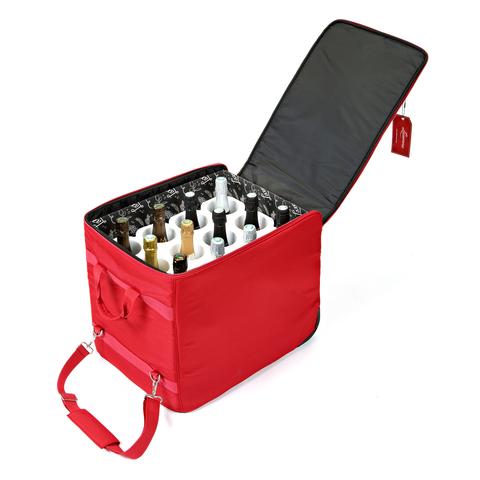
www.lazenne.com specialises in protective, airline approved luggage to keep your wine bottles safe in the hold of the aircraft. It’s simple but effective – airport security won’t bother you and when you arrive your bottles will be in one piece, ready for you to enjoy them as you did when tasting before you bought, in any of the world’s wineries! There are a number of different fashionable designs to cater for varying numbers and sizes of bottles, including sparkling wine bottles. I use one!

Now, wine tourism – Enoturismo, whose humble beginnings contrast dramatically with what’s on offer now! Many wineries have their own boutique accommodation, Casa Rural style, which is of course perfect as there are no drink-driving restrictions.

If it is sheer luxury you are after, not too long a journey from the Costas and making medal winning wines I’d highly recommend Casa Boquera (www.casaboquera.es), Yecla, Murcia. A small, family owned boutique luxury hotel whose restaurants are overseen by a Michelin Starred Chef, Casa Boquera sits amongst its own vineyards and is beautiful! I’ve been, of course, as well as friends to whom I’ve recommended it.

So, several suggestions for wine related Christmas presents – and I hope you enjoy any that you choose!

Bobal – How did this grape variety get its name?

WHAT HAVE THE ROMANS EVER DONE FOR US?

You’ll remember the classic Monty Pythons sketch, I’m sure, though you might not have realised at the time that there is an oblique reference to the subject of today’s Cork Talk.


The Romans also came to Spain, bringing with them their aqueducts, sanitation etc and, unknowingly, would ultimately leave the enduring legacy of the Bobal grape variety! The story, in fact, isn’t so well documented – Wikipedia, will give you the vaguest reference to the Romans, without at all capturing the romance of the true story. For this, please visit www.colinharknessonwine.com/articles/, where you can scroll down a little and see it as I wrote it a few years ago!


Recently a select group of wine cognoscenti on the Costa Blanca attended a wine Masterclass whose somewhat grandiose title, ‘All You Need To Know About Bobal’, may, I admit, have been something of an exaggeration! But then, as a features journalist of 20+ years standing you might expect a little overstatement from me!

Not many people realise the versatility of this variety, indigenous to the Valencia region, where it is the darling grape of DO Utiel-Requena and DO Manchuela as well as being grown in DOs Valencia and Alicante too. Historically, Bobal had been used in blends. Prized for its deep colours and ripening certainty, in such areas, it has been exported to add a Spanish dimension to wines of Northern Europe.


But it is only in, perhaps the last decade, that Bobal has been recognised as a stand-alone variety with the necessary characteristics to make fine, red wine. And, there are a large number of producers who are using it for their flagship wines, often mono-varietals, as well as giving Bobal the lion’s share in their blends.

So, you might think it a bit odd to start this Masterclass, in fact, with a Sparkling Wine, made, like all the rest of the wines tasted, from 100% Bobal! Well, you might – if you hadn’t tasted Pago de Tharsys (www.pagodetharsys.com/en/) Único Blanc de Negro Vino Espumso – which is excellent!


Blanc de Negro, of course, refers to a white wine made from black grapes. The Bobal skins are extracted from the juice before releasing their colour. The second fermentation, which produces the bubbles, occurs by virtue of the Traditional Method, and after some 36 months ‘en rima’ (which easily would place this fizz into the Gran Reserva category, were it Cava [it’s not Cava because it uses Bobal which is not permitted for Cava production]) this 2014 wine is perfectly ready to meet its public!


There are some patisserie notes on the nose as well as some forest fruits. On the palate the wine has presence and a long finish with a fruit reference of both dark and lighter cherries. Its weight, mature notes and depth make it a sparkler for all occasions and many different dishes – try this with your turkey!

Also, this black grape of note can make some splendid rosado wines. Bodegas Sierre Norte (www.bodegasierranorte.com/) goes for the crowd pleasing, Provencal-esque pale shade of rosé, like a maiden’s blush whilst imagining moments of passion! It certainly looks pretty, but this isn’t the only attribute that Pasión de Bobal Rosado 2016 wine enjoys.


There’s a lovely raspberry first, then ripe strawberry fruit nose, coming from the 900 metres above seal level where this Bobal is grown. The fruit combination is amplified in the flavour of the wine, which also maintains elegance and a very slight earthiness. For a rosado it’s quite substantial on the palate, credited, no doubt, to the 40 year old vines.

Juan Antonio Ponce’s P.F Bobal 2016 is made from 88 years old Pie Franco vines grown, organically, and indeed biodynamically, at altitude in DO Manchuela. Whole bunches are foot trodden in large oak vats, as indeed they would have been centuries ago! Fermentation also takes place in oak, but, in a very successful attempt to retain this integrity of the fruit, the whole time in oak for this classic, highest Peñin Guide scoring Bobal wine, is just 8 months! www.do-manchuela.com/paginas/bodegas/id30-bodegas-y-vinedos-ponce-s.l.html


Rayuelo 2014 is also from DO Manchuelo, but this time from Bodegas Altolandon (www.altolandon.com/en) , about whose wines I’ve written, in glowing terms, before. This, their flagship wine, is made with 100% Bobal whose vines are clearly loving the microclimate at their altitude of around 1,100 metres above sea level!

This wine has a subtle oak nose blending, in the background, with the classic black cherry fruit notes, so typical of the variety. There is also a mineral quality to the wine which leads me to believe that the roots go well down into stony soil. It’s intense in colour and flavour too with a long finish.


Well, not quite ‘All You Need To Know About Bobal’, so I recommend  some more research! Enjoy!


NB Two excellent wine related events have some places left: Sat. 25th Nov at Moraira´s Club Nautico, Four-Course Dinner with paired wines and music from Claire-Marie www.clairemarie.es, 40€ ; and Friday 1st December at Bodegas Blasco, Teulada – five wines being tasted with nibbles too, just 10€! Please call me to reserve 629 388 159!

In what seems to be a proposed colonial style move, the reverse of the separatist intentions of the Government of Cataluña, DO Valencia has laid claims to the vineyards of DO Alicante and of DO Utiel Requena! . . . . . . . . Essentially, DO Valencia insists that it is not they who wish to change things. Since 1995 and 2001 respectively the vineyard areas of DOs Utiel-Requena and Alicante have officially been part of DO Valencia.

LAND GRAB!

I’m writing this on the final day of the debate in the Cataluñian Parliament which will determine if the autonomous regional government goes ahead and declares independence from Spain. This is also the day that the Spanish Senate meets to discuss a plan by the Madrid government to take away some of that autonomy, thereby quashing any such move.

Unlike me, now writing this article, you are reading it several days later, therefore, with the knowledge of what transpired. Taking no side, I can only hope that a peaceful solution is found.

This hope for calm also applies to those involved in today’s article. It’s not of such a serious nature, but nevertheless there are those becomin g a little hot under the collar!

And, yes, you may be wondering if you are reading ‘Cork Talk’, the Costa News’ dedicated wine column, considering such a politically charged opening. Well, it seems that politics have also entered the realm (no pun intended!) of Spanish wine.

In what seems to be a proposed colonial style move, the reverse of the separatist intentions of the Government of Cataluña, DO Valencia has laid claims to the vineyards of DO Alicante and of DO Utiel Requena! At first glance, I find it as ridiculous as it is outrageous.

In order for a wine producing area to gain recognition as a Denominación de Origen it has to satisfy many requirements and then present its case to the Spanish Government’s Ministry of Agriculture for a decision. It’s the same for all other food products – there are DOs for Cheese, Oils, Hams, Sausages etc.

Regarding wine, one of the requirements is that there must be proof that the wines of the area in question are distinct from others in the same zone, with different soils, climates and more. In 1957 wine makers, independently and coincidentally, in Valencia, Utiel-Requena and Alicante convinced the Government that they should all be granted DO status. Therefore, in that year three different entities were created: DO Valencia; DO Utiel-Requena; and DO Alicante.

That’s sixty years of coexistence and as far as I’m aware, having lived here for twenty – that’s three score years of harmony! Each DO has, of course, promoted itself, but this has never, to my knowledge, been to the deliberate detriment of the others. I’ve never heard any ‘bad-mouthing’ and don’t expect to either. Wine-makers the world over are aware of the many difficulties they each have to surmount in order to perfect their craft – the weather, of course, and also, tragically recently, the dreadful fires, for example!

So why has DO Valencia seemingly put a pair of secateurs in the works?

For clarification and to canvas opinion I contacted representatives of DO Utiel-Requena and also of DO Alicante, whose beliefs, of course, must be considered to be subjective. For an independent assessment I also had some excellent feedback from one of the two new Spanish Masters of Wine, Fernando Mora MW, who was kind enough to give his valuable time.


Clearly, in the interest of balance, I needed to seek the views (also, subjective) of those in DO Valencia – you’ll remember my comment above, ‘at first glance’!

DO Alicante confirmed that they are fighting vigorously, through the courts and the Government, against what they consider to be a potential violation of their independence. They also said that they had had some good news, but were hoping for more, of course. In August they received notification from the Agriculture Conselleria advising that the new ‘articles’ for DO Valencia did not include any reference to the production area of DO Alicante.

A spokesperson from DO Utiel-Requena said that they too are fighting this intrusion adding that in his view DO Valencia are trying to take over their lands in order to satisfy the demand for DO Valencia wines, a demand that cannot be met by their current vineyards. A remark which again made me think of the concept of colonialism!

TWO SIDES TO A STORY!

Señor Fernando Mora MW (http://bodegasfrontonio.com/en/the-team/) was most helpful when I asked him his opinion about the apparent attempt by DO Valencia to list the vineyards of DOs Alicante and Utiel-Requena as theirs. He also explains that, if this were to go ahead, it would be similar to the generic AOC Bordeaux, a large area where wines can be labelled ‘Bordeaux’ but are considered lesser wines than those from the famous areas within, such as AOC Pomerol et al.

He goes on to say that in this case DO Valencia would also be like DO Catalunya, which is a large area that takes in all of the current DOs

(Penedés, Tarragona, Montsant, Cava etc), which continue to work independently, as well as some smaller municipalities that make wine as well.

Señor Mora MW ends by noting that for every bottle of wine that has a DO name on the label, the DO receives 1€!

So, over to DO Valencia!

Apparently, it was in fact DO Utiel-Requena in 1995 and DO Alicante in 2001 who asked if their vineyards could be listed under DO Valencia. This, I am told, is because, at that time, they were not able to fullfil the requirement that in order to be a DO, 50% of production has to be ‘commercialised’. I am also told that this is still the case today. The figures I have been quoted, if accurate, do confirm this.

DO Valencia advised that these other two DOs within the geographical area of Valencia in 2011 petitioned the courts against something that they had earlier sought, and been given (in 1995 & 2001 respectively), and denounced DO Valencia at the same time! The courts decided in favour of DO Valencia.

Recently the two DOs Alicante and Utiel-Requena, working in tandem, have appealed to the Tribunal. We are all awaiting the outcome – the case continues!

Confused? So am I, and I’m left wondering if it is really Much Ado About Nothing!

Essentially, DO Valencia insists that it is not they who wish to change things. Since 1995 and 2001 respectively the vineyard areas of DOs Utiel-Requena and Alicante have officially been part of DO Valencia.

Also as mentioned last week, it is not unusual for a larger geographical area to have an overall DO, but include within it, other smaller DOs. There is ‘previous’:

Bordeaux is mentioned above, but also there is generic Burgundy wine, as well as the famous smaller AOCs within. DO Vinho do Porto and DO Vinho do Douro share exactly the same geographical area in Portugal. In Spain, DO Uclés shares its whole territory with DO La Mancha. The similar situation in Cataluña was mentioned last week and, much nearer to home, Requena, the village, is included in DO Utiel-Requena as well as in DO Cava and DO Valencia!

Well, for me, the importance is that each area of production is allowed to keep its own wine identity, no matter what it is actually called. I’ve written admiringly many times about wines from all three DOs, for example:

The wonderful whites only of Clos Cor Vi, and the super reds and whites, with the occasional rosado thrown in, of all 12 or 13 bodegas within the Terres dels Alforins group – to name but a few, all DO Valencia!

The outstanding wines of my friend Felix at Bodegas Vera de Estenas; also those making all the headlines at the moment from Bodegas Hispano Suizas; and the Dominio de la Vega portfolio – again, but a few, this time from DO Utiel-Requena!

And who can forget any of the wines made by Pepe Mendoza at the winery his father Enrique started; also, at 95 Peñin points El Sequé (soon to be the subject of Cork Talk!); plus Bodegas Casa Sicilia, Sierra Norte, Nodus et al – from DO Alicante.

My advice to the three DOs in this present conflict is that they read my archived article ‘DO’s Demise In Spain’ – and then please stop bickering and get on with what you all do so very well!

PS We have a few seats left for our 2017’s final Musical Dinner with Paired Wines, Saturday 25th November at Moraira’s Bella Dama Restaurant, Club Nautico. Four courses each paired with a different, fine wine, plus the beautiful music of Claire-Marie (www.clairemarie.es) – all for just 40€! Please e-mail colin@colinharknessonwine.com or call me on 629 388 159 to reserve your places!

An Old Cork Talk, for reference re New Bobal Article NOV 2017

BOBAL – NOT LOST IN TRANSLATION!

THE GREAT BOBAL TASTE-OFF – PART ONE!


Are you sitting in comfortably? Then I’ll begin!


Now if you remember that, you must be of a certain age. I do, and I still love a good story. Hope the same applies to you, because here’s one coming up:


The Romans were in most places known to man over two thousand years ago, including Spain. The area we now call Valencia didn’t escape their attention. They came, saw, conquered – and stayed. Well why wouldn’t they? The verdant land, the rivers (there was some water in them in those days!), the natural harbour, and hey the beach as well – I’m sure bronzies were popular at their orgies too! (I’m using poetic license here to sex-up the story a bit, okay?).


Of course not all Romans were soldiers. The new lands their soldiers had expropriated were populated by all manner of regular Romans and their families who caught the next galleon-ferry. Among them were farmers, their seeds and of course their animals. One such species was called Bovis – Latin for Ox. Bou, the Valenciano word now for ‘bull’ has its roots in the Latin name.


Oxen had to be grazed and the area where the Roman Bovis grazed was called the Bovalar – figures doesn’t it? However, rain was also in short supply in those days so these pastures where the oxen grazed had to be huge in order to support the number of animals using it.


Then, guess what – the Roman Empire fell, society followed suit, population decreased, any remaining oxen were slaughtered by the people left, and vast swathes of land were left unattended. Nature took over some trees grew and, yes, so did some grapes!


Survivors went into the forests and found vitis vinifera, the common grape vine. They dug up the vines and replanted them in the areas which had previously been known as Bovalares. Over time this particular vitis vinifera developed into a variety, commonly known as Boval, which over time and with the Valenciano and Castellano ‘v/b’ confusion was corrupted into the word Bobal!


The Bobal grape is indigenous to the Valencia area – and now you know why! It’s the mainstay variety of DO Utiel-Requena and of DO Manchuela and is also used in Valencia as well as, to a lesser extent, in Alicante.


Now for an acknowledgement re the source of the above story, and the source of some of the best Bobal wine available – my philosopher/traveller/Photographer/winemaker friend Alvaro Faubel, one of the founding  Directors of Bodegas Dominio de la Vega!


Arte Mayor 111 from Bodegas Dominio de la Vega is the wine that inspired me to write this article and its sequel. If Bobal tastes this good, and it certainly does, the good readers of Cork Talk need to know about it! Thus a concept was born – a taste-off between wines made with Bobal coming from various bodegas in DO Utiel-Requena and DO Manchuela.


Only wines gaining 90+ points in Spain’s most comprehensive wine guide, Guía Peñin (available in English and really well-worth investing in, if you are at all interested in Spanish Wines). Also, only wines described as Bobal  would be included  (remember, though that the rule in Spain is that a wine that has, I think, 80%+ of one variety can call itself by that variety’s name, despite there perhaps being some other varieties in the blend).


At a very impressive 93 Peñin Points, Domino de la Vega’s unique wine certainly satisfies all the criteria. Unusually, this wine is made from three different vintages of Bobal, 2005, ’06 and ’07 – all the grapes were picked by hand, and at night, from the 80+ years old vines. The earlier vintages were kept in waiting until the final 2007 was fermented and, like the others, aged in French oak for an average of fourteen months.


The wine is sensational, in every way! On the nose there are mineral notes aiding and abetting black cherry, wild herbs and flowers, with some black pepper and smoky cinnamon spice mingling too. On the palate it has a weighty, rich presence and yet it is perfectly balanced and elegant. The black cherry is prominent amongst some notable dark, brambly fruit and there’s a final flourish of blackcurrant liqueur!


So, an excellent start for The Great Bobal Taste-Off – watch this space; and drink this wine!