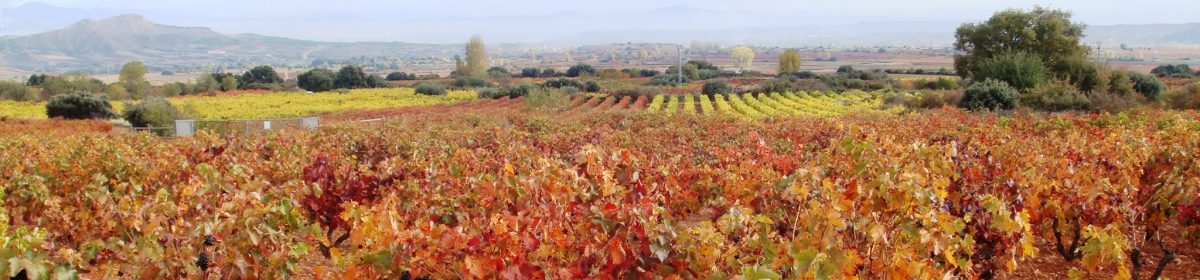
In August 2011, whilst serving on my first Spanish Wine Judging Panel (Denominación de Origen Rías Baixas Cata/Concurso), I was fortunate to meet and chat with one of the legends in this country’s winemaking fraternity, Antonio Palacios, no less, and his daughter Bárbera, herself a bourgeoning winemaker.
When I met her nearly eight years ago, Bárbara Palacios Lopez-Montenegro, had just made her first, personal, commercial wine. As you’ll read above (go on, it’s one of my favourite articles!) that wine, still being crafted today, is called Barbarot – a combination of Bárbera’s name and that of her gorgeous Golden Retriever, Merlot.
Barbarot, then as now, goes
under the auspices of DOCa Rioja. Termed simply, a Cosecha wine, Bárbara wasn’t
keen on following the Rioja recipe and making a Crianza, Reserva or Gran
Reserva wine, where minimum lengths of time in oak are prescribed according to
the style required. Eschewing the use of such handcuffs, Bárbara’s illustrious,
yet charming and down to earth father, Antonio, described her wine as being a
Vino d’Autor. In other words a wine, made according to how the enologo
(winemaker), wants to make it.
Recently my esteemed
colleague, Tim Atkin MW, visited Rioja to make an assessment of the famous
area’s wines as they are right now. He made sure that he spent some time with
Bárbara and, as can be seen on her Facebook page, she’s delighted with Tim’s
marks and comments – for both her established wine Barbarot, and for Puppi
Barbarot, the new puppy on the block!
In 1994 Bárbara’s famous
father applied to the Rioja Consejo Regulador for permission to plant some
experimental Merlot – a variety not normally permitted in DOCa Rioja. They’d
hardly turn down a request from such a famous family, so Merlot was indeed
planted. The site of the planting was crucial. Antonio Palacio had studied the
soils of two vineyards that he owned and on analysis had determined that they
were similar to those in Bordeaux
– home, of course, to Merlot.
In an interesting
French/Spanish alliance he determined to produce a wine made from one of
France’s most famous varieties, and one of
Spain’s, Tempranillo. Meanwhile, his daughter, Bárbara, was learning the
trade. Working the harvests and making wine in Bordeaux,
Italy, California,
New Zealand, Australia, Chile and Argentina Bárbara was
honing her skills whilst developing her passion for making high quality wine.
On her return she was given
the reigns of the new vineyards, now maturing nicely. The result, was the
introduction of Barbarot, the latest vintage of which, Tim has just been given
a whopping 95 points!
Recently, the vineyard has
been extended, with new plantings and Bárbara has decided to therefore extend
her portfolio, to two wines – not a huge number, but when the wines are this
good, you don’t need more!
A bottle of Puppi Barbarot 2016 recently arrived at my door and after a resting period I had the pleasure of tasting the newcomer (wine needs a rest after travelling, it’s a little like ‘bottle shock’ where the wine which is perfectly good in barrel or tank, takes a slight step backwards on bottling, and needs a little rest before returning to its best).
Made again with Tempranillo
and Merlot it’s enjoyed six months in two years old French oak. Such a time in
oak would enable the wine to be described as a ‘roble’ wine, or semi-crianza
(it couldn’t officially be a crianza in Rioja as, although the legal minimum
time in Spain
is indeed six months, Rioja insists on 12 months). However, sticking to her
Vino d’Autor game plan, the wine has Cosecho only on the back label.
Here you’ll also see a description from Bábara telling consumers that this wine is inspired by her loyal dog and companion and represents the youth and joy of a puppy! And if that’s not enough charm, take a look at the front label, where you’ll see a ‘Merlot’ puppy running amongst the vines – it’s lovely!
So is the wine! The used oak
adds depth without contributing greatly to the overall flavour – it’s a fruit
first wine, as it’s meant to be. Some damson on the nose with a little ripe
strawberry and a trug-full of red currant too, with some added herby notes for
good measure!
Anybody who’d been away from Alicante for a few years
would have been pleasantly surprised if they’d returned, perhaps looking for
the Number 48 at what used to be the Bus Station in November!
Come to think of it, ‘Old Bus
Station Wines’, sounds rather like the name of an Australian winery, bringing
forth images of a wide expanse of vines just outside the dilapidated, Walk
About Town, where once Crocodile Dundee types waited to catch a bus to Far
Away! But there were no foreign wines when I was invited to sample what was on
display at the grand Verema Alicante Tasting!
Verema is a sort of catch-all
wine community. Go to their website (https://www.verema.com/)
and you’ll find pages detailing wines they sell, Denominación de Origen details
and info, forthcoming tastings, Videos, Guides, Wine Tourism and a plethora of
other wine stuff! It’s a fascinating and most useful resource.
As a gentleman of the Press,
(well, OK, gentleman, is going a bit far!), I was invited to attend, and having
heard of the quality of the wines usually presented at these events I responded
in the affirmative with some alacrity. I wasn’t disappointed!
The whole, quite compact area
has been given an impressive make-over, with flowers, plants and walkways
leading to the main building. It’s an excellent venue for presentations and the
Verema staff were most professional and helpful. There was a wine glass to
collect, which was mine to take home, having sampled, well, as many wines as
Iliked. And I did like!
At such events I always find
it best to have a plan, otherwise the eye can be distracted as you weave
between the massed throng, in and out of the exhibitors’ tables. It’s easy to
be overwhelmed. My usual plan is to start with the sparkling wines – there are
a number of reasons why I take this approach. Fizz is usually a little lower in
alcohol than still wines, which helps when there are some many more wines to
taste! Also, I find that sparklers freshen and lift the palate, whilst, let’s
be honest, putting one in a good mood also – ready for the onslaught to come!
I was pleasantly accosted by my friend based at Balmoral wines, the subject of a Cork Talk some years ago. Their winemaker there learned his trade in Champagne and has honed his skills in the Albacete area, here in Spain. Their Edone range of Sparkling Wines are exemplary, and well priced too! (http://vinedosbalmoral.com/en/edone-en/)
I was also taken by the whole
range made at Montesquius (www.montesquius.com),
which were again very well priced – from about 8€ up to about 20€, with a
superb Magnum Gran Reserva Brut Nature, coming in at 50€ (remember, a magnum
holds two bottles worth!). It has star quality in that it would look
magnificent when unveiled at a dinner party, and would knock out your diners re
its depth of quality!
I next visited Bodegas Muga,
one of the great stalwarts of DOCa Rioja. Having tasted it in situ several
times, I certainly could have been tempted by their Cava (yes, the Rioja area
is one of those zones outside of Cataluña where Cava can be crafted), but I’d
moved on to still wines by this time. I wanted to taste their white wine.
Made with Viura and Malvasia
it’s still a jolly nice white. Their Rosado, quite Provencal in colour, is
always a treat – the epitome of elegance. I was also keen to try again their
Gran Reserva Prado de Enea – one of the reasons I moved to Spain all those
years ago! I enjoyed it, yes, but thought it a little too oaky – not how I
remembered it. However, it was certainly a delight to taste the Selección 2014
– firstly because it is such a gorgeous wine now, and potential to age so well;
and secondly because we have a magnum of the 2004, the year of our daughter’s birth,
biding its time until she turns 18 yrs old! Boy, I hope she doesn’t like wine
then!
I expected to like Bodegas
Martin Codax’s Organistrum, from DO Rías Baixas, and I certainly did. As you
might expect, given the area of production, it’s made with Albariño, 100% in
this case. This winery also makes fine quality red wines Galicia, but
it’s true to say that it made its name with the whites.
Whilst the basic Martin Codax
Albariño isn’t a bad intro to the variety at all, it’s really the finer white
wines (yes, a little more expensive, but so worth it) that define the bodega. I
have really enjoyed each that I’ve tried – and it’s not just Albariño that they
put to such good use!
Well, there were plenty more,
but space runs out, and anyway, I have to catch a bus!
With some ‘previous’ under my belt (a visit to help judge the IWCB in May 2017), along with the reference book, ‘The Wines of Bulgaria, Romania and Moldova’, by fellow CWW member, *Caroline Gilby MW, plus having some friends in situ, I recently joined a Clementine Communications Press Trip to Romania – the eponymous ‘Star in the East’.
Feted as usual when judging
abroad, my colleagues and I in 2017 were taken to various Romanian wineries as
well as enjoying dinners with wine supplied by others. Thus began my interest
in wines from Eastern Europe, spurred on by
Caroline’s excellent book. Therefore when the Clementine offer came in I jumped
at it with some alacrity.
The itinerary took in the
wine regions of: Oltenia and Muntenia which includes Dealu Mare and Dragasani,
home to two each of the wineries we visited; and Banat, Romania’s
smallest wine region which in fact houses the country’s largest individual
producer, which we visited first.
Our travels enabled us to
meet people as diverse as an ex-pat Bristolian, who, with two partners,
established their winery only at the beginning of the 21st Century;
through to the aristocracy of Austria
and Romania,
a Baron and Baroness, no less, whose families between them have racked up 800
years of wine making experience!
True stories of persecution
under the Communist regime, including imprisonment, even death, escape,
eventual repatriation and restitution, as well as continuing frustration with
the lack of political will, punctuated our visit. However the common
denominator linking all our hosts was, and is, passion! Passion for their
craft, for their wines and for further consolidating the wines of their mother
country in the wine markets of the world. I admire them all!
The trip was sponsored by the aforementioned Bristolian, Philip Cox, founder of winery Cramele Recas, which became famous, or infamous, depending on your viewpoint, when they launched a cut price Orange Wine on the shelves of Aldi in the UK market. When defending himself against the torrent of criticism he received from many quarters he simply quoted the philosophy of the winery – their intention is to always over-deliver in terms of their price/quality ratio. Punching above their weight!
Cramele Recas produces 60% of
the grapes it requires to make the 24 million litres needed for its 68
different labels. For such a large holding, and considering as well the 40%
obtained elsewhere, it’s no surprise to learn that there are many different
microclimates affecting their vineyards.
Generally speaking the
climate is relatively mild with Mediterranean and Atlantic
influences. Soils also vary, of course. There is clay with sand and limestone
as well as iron rich soils. Wine making in the area goes back to the Romans and
Phillip has a document detailing the purchase of vines from 1447. There is a
rich history here, which, as always, has been peppered with wars, land
confiscation and political strife. However, Cramele Recas is a success story
with export sales booming, along with the home market too.
We tasted a total of 19
wines, from entry level through to flagship, made from young vines to those
which have seen 50 vintages. Of those that we tasted, approximate pricing was
between 2·50€/bottle to the most expensive retailing at about 20€. I think we
all agreed that there were no poor wines and that all did indeed offer very
good value for money.
There was a very long drive
of approaching four hours the next day taking us to Dragasani, firstly to the
immaculate and beautiful Avincis winery, and thence to the charming, Prince
Stirbey winery, with the smallest production of all wineries visited.
Our hostess at Avinci, Dr. Cristiana
Stoica, along with her daughter, Andreea, were as pleased to see us as we were
to meet them and visit their stunning location! It was here, sitting in the
perfectly tailored grounds over coffee in glorious sunshine, where we heard
about the family history and the first of many sad and tragic stories about the
Communist era – stories similar to those which were heard everywhere and from
everyone we met!
Those who had been banished and/or forced to leave Romania during these times, their lands, houses etc confiscated by the state, were only able to start returning from the late 80s. The Stoica family, like many others, came back and attempted to reclaim the land and property stolen from them. It was a bureaucratic nightmare which is yet to be fully resolved!
Our tour around the grounds,
first purchased over 100 years ago, including the magnificently restored
mansion, built in 1905, which contained a ‘message in a bottle (a tradition of
the time) commemorating the building and its blessing by a priest, was a
delight.
So were the ten wines we tasted, with Cristiana and her Head Winemaker, the 24 years old, petite Madalina, who was as charming as her wines. Madalina led us through, certainly my first taste of the indigenous variety Crâmposie, plus another first for me, the Feteasca Regala, which translates to Royal Maiden! I particularly liked this variety, here, and at other wineries to follow. I think that, were I tasting it blind, I might identify it (wrongly, of course) as Viognier – and for me that is a definite plus.
Head Wine Maker, Madalina – as charming as her wines!
We also enjoyed the opened
wines over an excellent, gourmet lunch, cooked on site. We noted that there are
also rooms here, with various activities to enjoy, like tennis and others, as
well as the wine and dining!
It was a relatively very short drive to the Prince Stirbey winery, where we were honoured to meet owners Baron and Baroness Jakob and Lleana Kripp-Continescu. The former, from a 500 year dynasty of Austrian winemaking, the latter with a mere three hundred years of their family winery!
Those who have flown into Bucharest will have
landed at the Henri Coanda airport, named in fact after the man who, secretly
smuggled out the Baroness when it became too dangerous to stay under a
Communist regime, intent on expropriation of all private property, and heaven
help anybody who stood in their way. Indeed, some of the Baronesses family were
imprisoned, one losing his life!
The bucolic winery is the
same as when it was built in 1913 and is surrounded by the unchanged beautiful
rolling hills, leading eventually down to the river and lake, that are home to
the Prince Stirbey vineyards. Stunning!
The contrast between this
winery and the first we visited, Cramele Recas, couldn’t be more marked. The
production here is a mere 100,000 bottles (a percentage of which, though, are
found in the cellars of The Wine Society and Oddbins!). Wines are made
exclusively with indigenous Romanian varieties and all of the oak barrels,
that’s 225 litres, 300 litres and 500 litres are Romanian too.
It’s true that there is some
fermentation done in French oak foudres, but essentially this is a thoroughly
Romanian enterprise, excepting also the winemaker, Oliver Bauer, a German who
fell in love with the area, and a local girl too! There are also some small
stainless steel tanks, from Slovenia.
There is no racking when the
wines are in barrel, gravity takes its course during the year that most of the
red wines stay in oak. There is as little intervention as possible, with
spontaneous fermentation provoked by the home yeasts.
Classy sparkling wines with
lengthy ageing on lees, whites, reds and a dessert wine, all made from their
own local varieties. A super array!
Next morning, our last full
day in Romania we visited the
first of two wineries in the Dealu Mare (meaning Big Hill) wine region, whose
temperate continental climate and iron rich red/brown soils are behind some of Romania’s
finest wines. We were delighted to find that the young winemaker, Silviu, of
the S.E.R.V.E. winery was to travel with us from the hotel. It was largely
their Cuvée Charlotte (which we tasted!), using Romania’s most famous variety,
Feteasca Negra, in the blend, that persuaded critics to start to believe in
Romanian wines!
The winery opened its doors
in 1994 and is now making 700,000 – 800,000 bottles of wine, 40% of which are
for export, to countries such as Canada, Belgium and Germany, with Silviu and
his colleagues hoping to break into the ‘very difficult’ UK market too.
International varieties,
including Pinot Noir, Riesling and Chardonnay, (amongst others) rub shoulders
with indigenous grapes, in the vineyards and in bottle. Our tour took us to the
hills which eventually climb to form the Carpathian
Mountains, which in fact protect the vineyards from the very worst
of the weather. When we were there however, and this at the end of October, sun
tan lotion was the order of the day, for me at least, and shade was often
sought – testimony to the factual reality of Climate Change, postulated Silviu!
After tasting we were treated
to a virtual banquet of local dishes for lunch, accompanied by whichever wines
we liked most – exceptional hosts, a pleasure to visit.
Finally, to the south of the
Dealu Mare region we visited the second largest of the wineries on our
itinerary, Budureasca, one of the most modern in all of Romania. A huge
investment (that’s 15 million Euros, 9 million of which came from the owners)
has put this winery in the centre of the home market in terms of sales. The
limestone, Calcium rich soils here give rise to a current 2·5 million litres of
wine, with a maximum capacity of 3·6 million with 90+% sold within Romania! The
approximate 3% – 8% in export sales is something on which the winery is now
focussing.
55% of production is red
wine, the rest is white, and our hosts, Dumitru and Laurentiu are pleased with
sales of the sparkling wine, started only two years ago, largely because they
could see the worldwide rise in fizz sales.
There is a confidence about
the whole winery and no wonder considering sales such as these and indeed the
quality of the fifteen wines we enjoyed at an impressive tasting, which
included the variety Tamaioasa Romaneasca. This variety, thought to have
originally come from Greece,
has a remarkable likeness, in aroma and taste, to Gewurztraminer, making it,
for me, an ideal partner to Oriental cuisine, along with South East Asian
dishes.
An excellent, eye-opening
trip!
It was interesting that our
colleague, Jürgen Schmücking, whose taxi collected him at 03:30 hrs for his
flight back to Austria, and I (at 6 am) were rushing back (myself to UK via
Dublin!) to make it in time for the same reason, our respective wives’
birthdays. There are some things more important than wine!
*With thanks to Caroline
Gilby MW for her book, ‘The Wines of Bulgaria, Romania and Moldova’, which I
have used for reference purposes for this article.
Thanks Colin @colinonwine , it’s taken me until now to start, and finish, your Year in the Life blog. I have enjoyed reading of the trials and tribulations of the vine (and you), and hope for a healthy 2019 for both you and the vine!